
Country of Origin

Reviewer: Srajan Ebaen
Financial interests: click here
Main system: Sources: Retina 5K 27" iMac (i5, 256GB SSD, 40GB RAM, Sonoma 14), 4TB external SSD with Thunderbolt 3, Audirvana Studio, Qobuz Sublime, Singxer SU-6 USB bridge, LHY Audio SW-8 & SW-6 switch, Sonnet Pasithea, Laiv Audio Harmony; Active filter: Lifesaver Audio Gradient Box 2; Power amplifiers: Vinshine Audio x Kinki Studio Dazzle & Gold Note PA-10 Evo in mono on subwoofer; Headamp: Enleum AMP-23R; Phones: Raal 1995 Immanis; Loudspeakers: Qualio IQ [on loan] Cables: Exact Express Flame, Furutech; Power delivery: 2 x Kinki/Vinshine Tai Hang on amps and source stack, Furutech DPS-4.1 between wall and conditioners; Equipment rack: Artesanía Audio Exoteryc double-wide 3-tier with optional glass shelves, Exoteryc amp stands; Sundry accessories: Acoustic System resonators, AudioQuest FogLifters; Room: 6 x 8m with open door behind listening seat; Room treatment: 2 x PSI Audio AVAA C214 active bass traps
2nd system: Source: FiiO R7 into Soundaware D300Ref SD transport to Cen.Grand DSDAC 1.0 Deluxe with POW; Preamp/filter: Lifesaver Audio Gradient Box 2; Amplifier: Kinki Studio EX-B7 monos; Loudspeakers: Virtual Hifi Cobra [on loan]; Subwoofer: Zu Method; Cable loom: Exact Express Earth; Power delivery: Vibex Granada/Alhambra, Akiko Audio Corelli Corundum & Castello Solo; Equipment rack: Hifistay Mythology Transform X-Frame [on extended loan]; Sundry accessories: Furutech cable lifts, Furutech NFC Clear Lines; Room: ~3.5 x 8m
2nd headfi system: DAC: Cen.Grand DSDAC 1.0 Deluxe with POW; Headamp: Cen.Grand Silver Fox; Headphones: Raal 1995 Magna, HifiMan Susvara
Desktop system: Source: HP Z2 work station Win11/64; USB bridge: Singxer SU-2; DAC/preamp: Audalytic DR701; Headphone amp: Audalytic HP70; Speaker amps: Topping B200 monos; Loudspeakers: Virtual Hifi Viper; Headphones: Final D-8000, aune SR7000, FiiO FT7
Upstairs headfi system: FiiO R7; Headphones: Meze 109 Pro, Fiio FT3
2nd upstairs speaker system: Source: FiiO R7; Integrated amplifier: Simon Audio Lab i5; Loudspeakers: ModalAkustik Musikboxx with Dynaudio S18 subwoofer
2-channel video system: Source: Oppo BDP-105; All-in-One: Gold Note IS-1000 Deluxe; Loudspeakers: Zu Soul VI; Subwoofer: Zu Submission; Power delivery: Furutech eTP-8, Room: ~6x4m
Review component retail: $499
 Santa's little helpers. Each audio system can use its own elves of busy li'l problem solvers. Having recently downsized but upgraded my desktop, I looked at a minor hole I wanted plugged. Audalytic's small though seriously sassy DR70 DAC with 25-bit discrete R2R ladders in NOS mode sounded best with Audirvana's r8brain algorithm handling 705.6/768kHz upsampling. Check. I could route such data via LAN by having Audirvana Studio act as UPnP interface. Check. It simply meant that even local files would go retrograde so exit my HP Z2 workstation via CAT8a into my router, from there into the DAC. I dislike rerouting music traffic through that noisy hardware. Uncheck. I could use USB instead. Check. That meant bypassing my usual Singxer SU-2 bridge whose I²S port for hi-rate data had no I²S mate in the DR70. Also, the SU-2 acts as noise moat between PC and DAC. Uncheck. Like a Stack Audio LAN regenerator isolates my PC from the web, so does that bridge isolate my hifi from the PC.
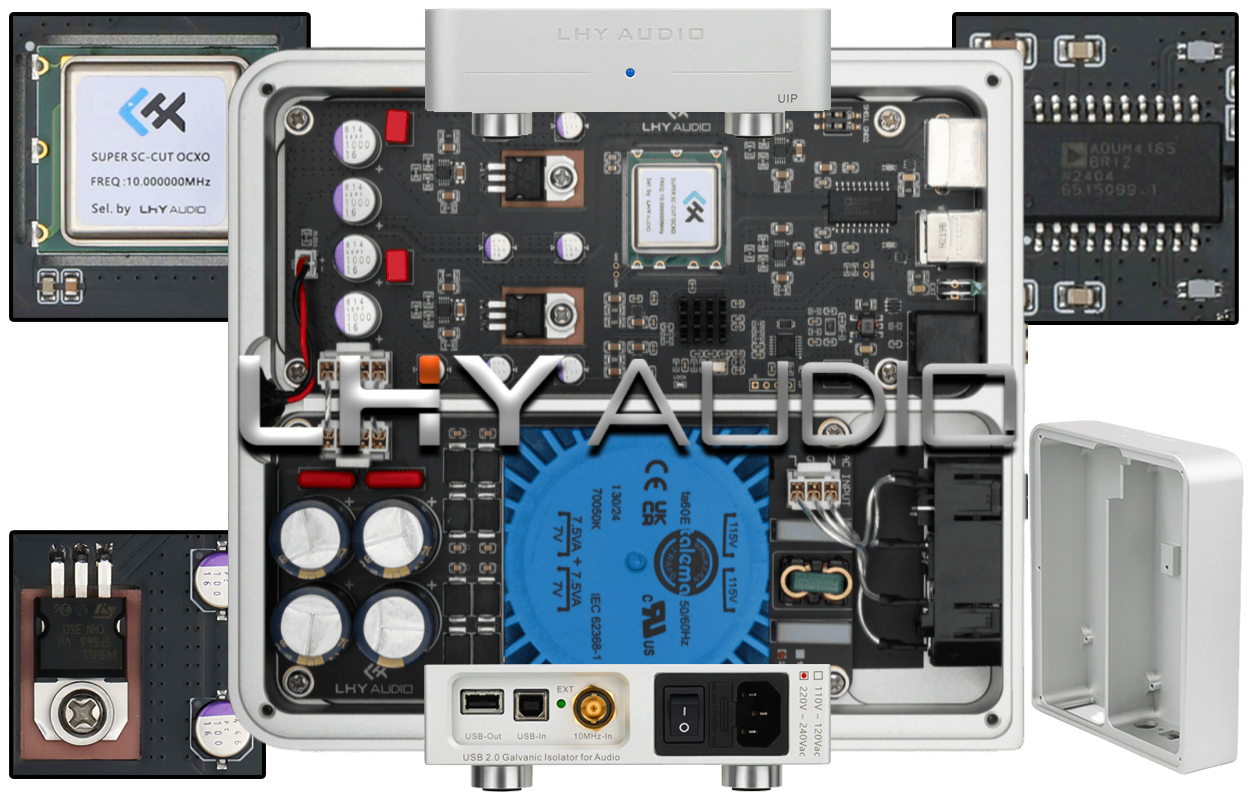
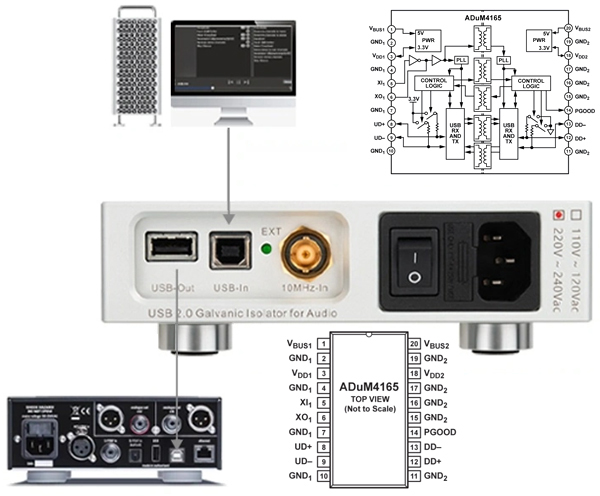
For years that's been my preferred MO. What I needed now was a basic but quality isolator cum reclocker of single i/o both on USB. Instead of a DDC aka digital-to-digital converter like USB⇒I²S or ⇒AES/EBU, we might call USB⇒USB a signal conditioner. Nothing gets converted. Here it just runs across a 5.7KV isolator from Analog Devices re-timed by oven-controlled crystal oscillator with its own precision regulators just like the output on the other side. I flashed on LHY Audio, purveyor of digital ghostbusting solutions. Had they something to fit my bill? Check, please. For $499 delivered, UIP¹ of the grotesque name it was. It supports 480Mbps bandwidth thus PCM768 and DSD512 but needs no drivers². The lot packs into compact 15×17.5x5cm WxDxH threads weighing a solid 1.5kg. Had I identified the perfect companion for my new Audalytic DR70 DAC? I would finally be all silver like my hair simply by pulling the lone black Singxer from the below setup.
________________
¹ Singxer have their own €279 UIP-1 Pro that's functionally identical but supplied with a switching power adapter. Whilst accepting 6-9VDC linear replacements, that would mean an extra box.
² Why that had my attention is simple. Comprehensive PC protection routinely flags certain websites as unsafe from which to download Windows drivers. I certainly wouldn't want to unzip a driver file only to install malware on my PC. Doing away with this entire rigmarole of new drivers for each USB DAC coming through my office was an exciting prospect for this Windows user.













 I don't really comprehend how high-rate USB past 192kHz works on Windows without custom drivers. Google AI had this: "The LHY UIP works without Windows drivers because it is a transparent hardware device and not an audio interface or a device that requires specialized software to function. It operates using built-in generic USB device classes that all modern OS including Windows support inherently. It complies with standard basic USB device classes, likely a generic hub or data repeater function, for which Windows already has built-in drivers. Galvanic isolation and reclocking are hardware-level processes that manage the signal within the device, not a function that requires a PC's software to control its core operation like low-latency Asio drivers for professional recording/playback. Most modern audio devices use USB Audio Class (UAC) drivers already built into Windows 10/11. The UIP facilitates the connection for these class-compliant devices without interfering with their communication protocols." My techno-peasant brain couldn't help wonder why so many USB transceivers of modern DACs don't speak UAC to need specialized Asio drivers. As it happens, a direct USB link to my new Audalytic runs 705.6/768kHz PCM without custom driver. Or does it use one of the many I previously installed for other DACs? Colour me confused. If you're likewise—about the meaning of UIP—I asked and was told that it stands for USB 2.0 Galvanic-Isolator Purifier.
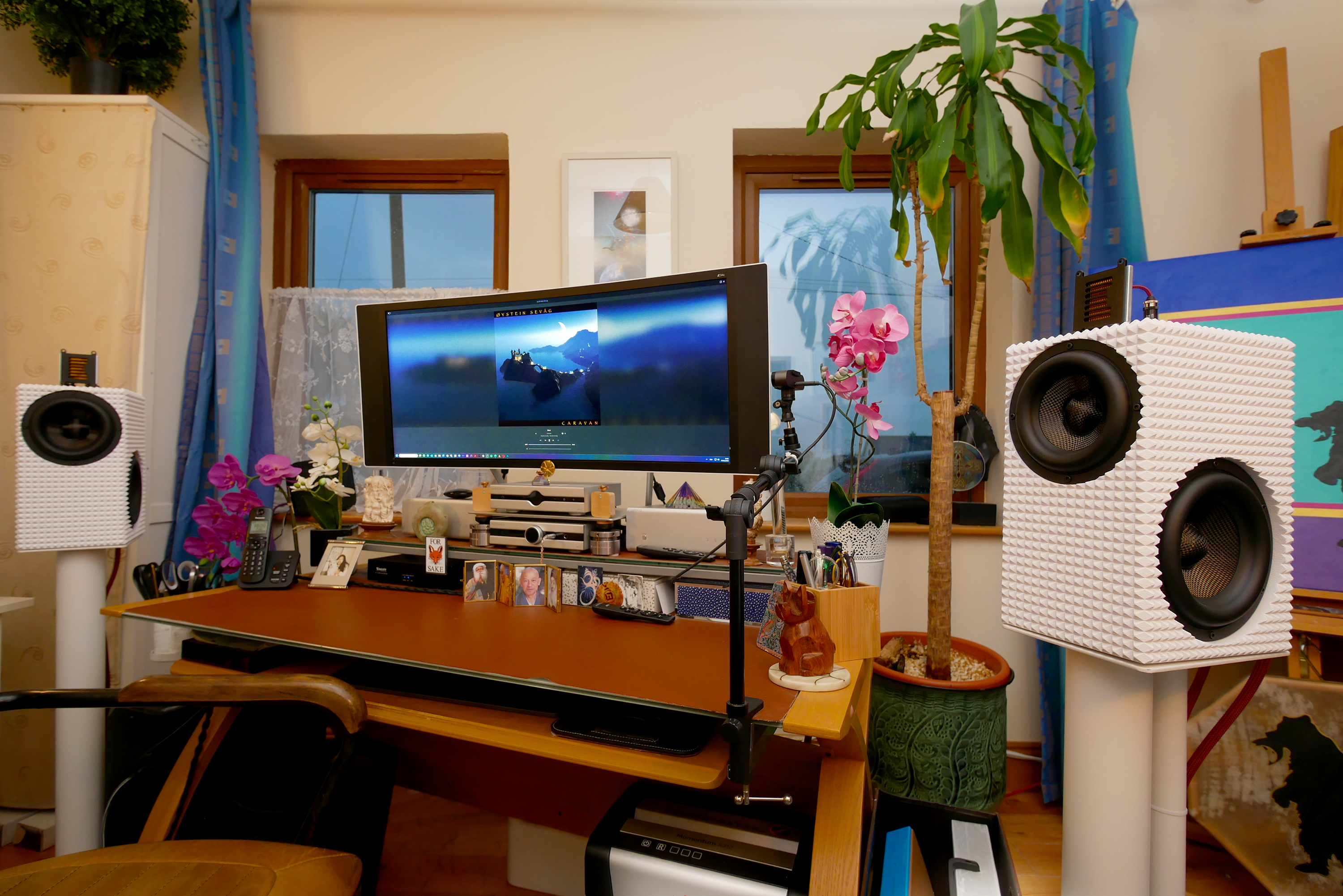
Just as the concept implied, my Window PC couldn't see the UIP but rather, what connected to it. So whatever interface window you operate to select your output device which the sound will route to, the UIP itself won't show in it. Like a ghost, it's perfectly transparent to what stands behind it.

12
