
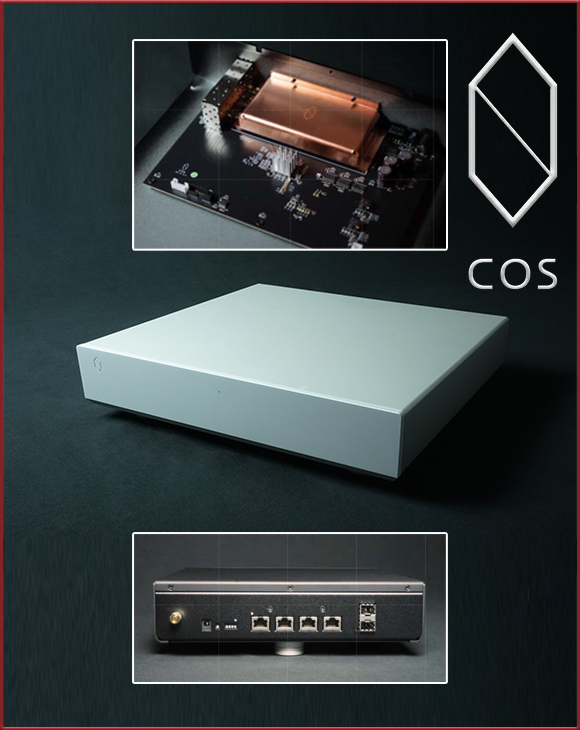
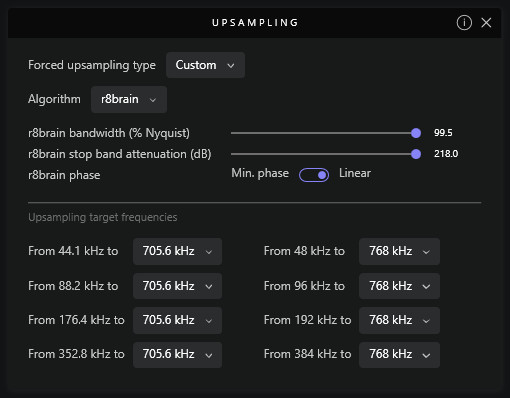
 A small but sweet secret weapon. As users of Grimm's DAC/streamer know, the company takes special pride in their self-written upsampler algorithm which multiple reviewers have praised for its sonic excellence. On a poor review peddler's pension, the r8brain or SoX engines embedded in Audirvana Studio too eclipse the generic on-chip SRC aka sample-rate converters of most DACs particularly in the budget realms. With LHY's UIP, I could feed Gustard's baby DAC signal already upsampled 16 times to unload its own SRC. The processing powers of my big workstation far eclipse it so can run more sophisticated real-time math. Once we've shined up a system's resolution—room interactions sorted, noise floor down—chicane that might otherwise be premature kicks in to matter.
Now it's academic to reverse inspect whether AES/EBU or BNC are superior to USB if the former limit to 192kHz whilst the latter sounds better. Is superior upsampling the reason? Is it another season altogether? Looking for enjoyment not a doctorate in Audiophile Analytics, I couldn't care less. I know that the detour through the UIP sounds better than a direct USB connection between PC and DAC. I've known for years. It's how I beat 'audiophile' servers at the posh game whilst using far larger displays as GUI and hardwired not WiFi-based navigation. Where a PC/Mac is our streamer/server platform, shielding it from incoming noise whilst isolating what comes downstream from the PC's self noise accomplishes the same thing which headless audiophile servers charge the often very long green for. Install sound-first software like Audirvana to handle all signal routing and sound optimization aboard your computing hardware. Coughing far less cashish, you can assemble hardware that performs at a very high level indeed. You can even convert your entire RedBook library to DSD by simply resampling it in software. That too can make a rather noticeable difference. On my desktop, I prefer PCM 705.6kHz to DSD256.
In any event, responsibility for a squeaky-clean noise-free USB feed on my desktop now rests on the silvery shoulders of LHY's compact warm-running UIP. My ears are well pleased indeed. That's no lie! But soon there'll be more LHY laying about. Already ordered is their LPS-80 Dual, a 15V+15V linear supply to power both compact Audalytic boxes in lieu of their built-in switch-mode modules. Santa's little helpers? This will be my office army of Sino elves to sharpen my sonic sleuthing and sweetly self-indulgent sessions.
Now my Singxer SU-2 bridge has exited this setup. Thank you for your long impeccable service.
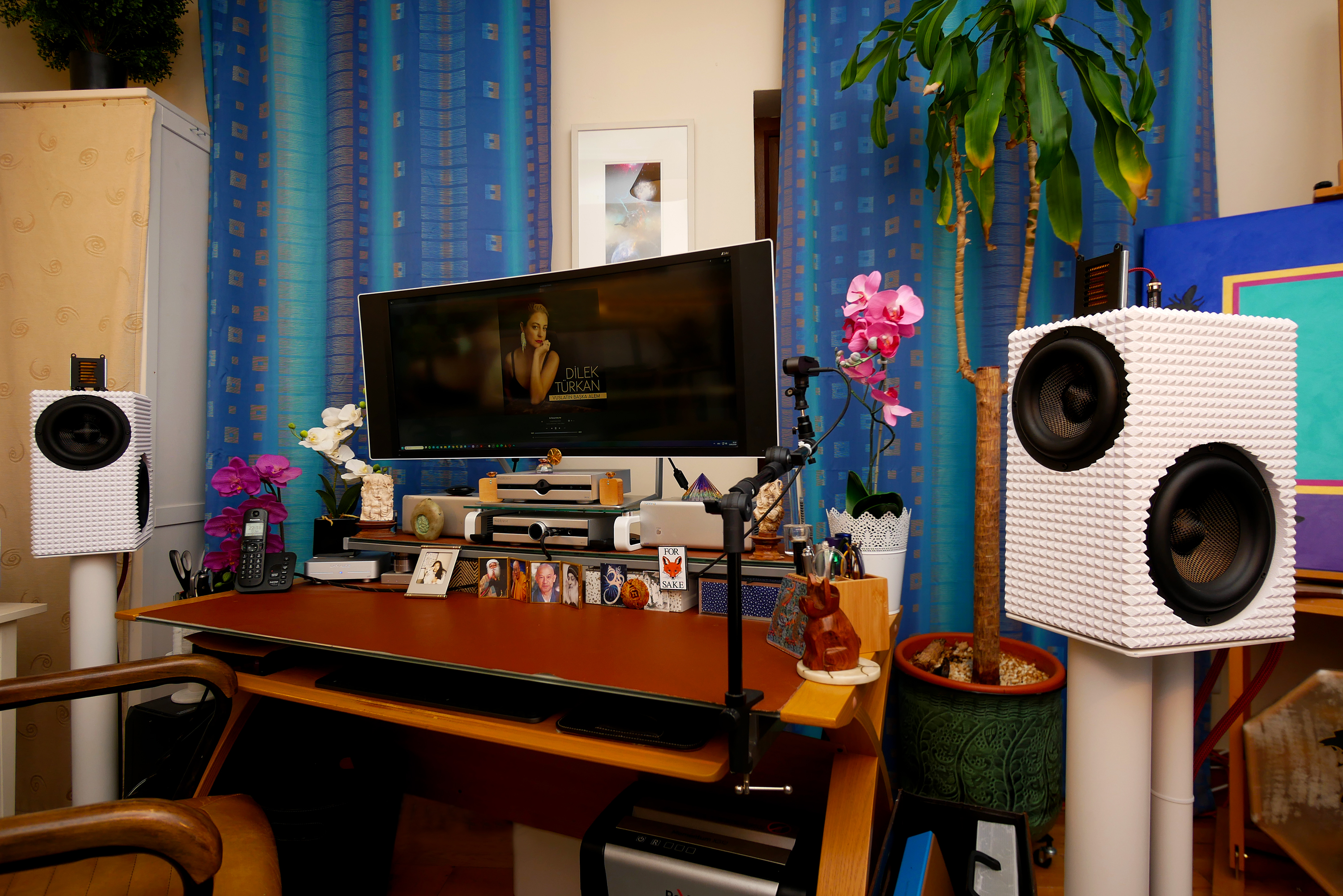 UIP to the right of the telephone.
My self-imposed missive of running one high-performance rig assembled of more entry-priced kit has realsized nicely. The Audalytic and LHY boxes all want less than €500 each. The Topping monos were closer to €600/ea., the active Stack Audio LAN regenerator €887. Only the speakers bust my budget bubble. Hey, not bad for a dyed-in-the-wool audio nutter. Not only do I now know that it can be done. I'm reminded daily of just how good it sounds. This will keep me honest and place heavier demands on posh poseurs having to justify themselves. And in case you hadn't yet made the connection: nearfield listening is this grand enabler. 1/ it subtracts most the room without any conniptions. 2/ even at good SPL, it keeps actual power consumption in check because we don't incur distance losses. 1+2=3/ possible resolution can go way up. Yet our hardware doesn't work as hard so can get more compact and cheaper. It's how small can stand tall.
Before all of this begins to reek to the high heavens—or lower hells?—of way too much self congratulation, over & out.





PS: After publishing the above, I remembered. One of my hifi storage racks held an older 6-port LHY master clock. My new UIP has a 10MHz input. Let's hook up? Yawn. I couldn't tell a difference. Nada. Of course the whole notion of 'upgrading' a single built-in clock with an external one involving a cabled connection across four terminations—the cable's two BNC ends plus the i/o BNC of the hardware—whilst hoping for perfectly matched impedance is probably flawed. As I understand it, the real purpose of an external masterclock is to slave multiple digital components together so they march to the same drummer. My desktop DAC has no clock input to sync it and the UIP to one common oscillator. Out the clock came again. Simpler does it. Now the best clock is the one closest to the circuit it controls – just a few short circuit traces removed rather than roped in via far longer external cable with additional connector transitions.
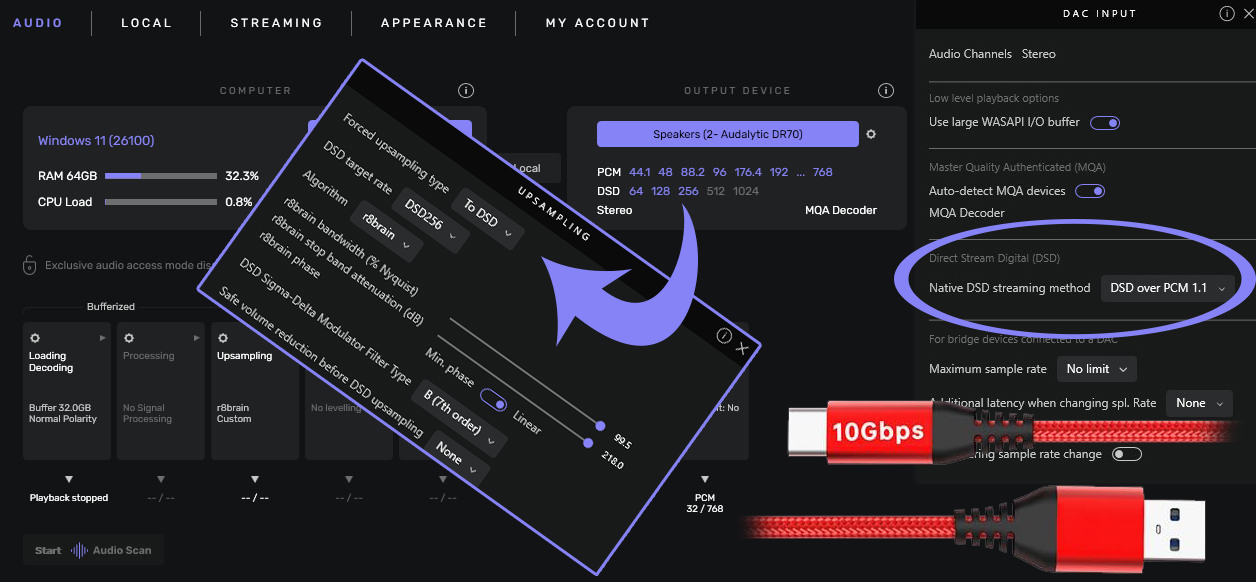
PPS: After another week, I figured out that an internal FIR interpolation filter automatically resamples DSD to PCM unless the DR70 DAC is set to DSD Direct in its menu. Duh. Somehow I had overlooked it. Hola, DSD Direct mode really changed my assessment of what I had thought was the DAC's underwhelming 1-bit performance which really wasn't. Now it runs at a native DSD256 aka 11.2MHz. My desktop sweetness just weaponized further; and the UIP played enabler by letting me use the bandwidth of USB whilst having the connection properly isolated from my PC.

LHY's product page
12
