
Country of Origin

Reviewer: Srajan Ebaen
Financial interests: click here
Main system: Sources: Retina 5K 27" iMac (i5, 256GB SSD, 40GB RAM, Sonoma 14), 4TB external SSD with Thunderbolt 3, Audirvana Studio, Qobuz Sublime, Singxer SU-6 USB bridge, LHY Audio SW-8 & SW-6 switch, Sonnet Pasithea, Laiv Audio Harmony; Active filter: Lifesaver Audio Gradient Box 2; Power amplifiers: Vinshine Audio x Kinki Studio Dazzle & Gold Note PA-10 Evo in mono on subwoofer; Headamp: Enleum AMP-23R; Phones: Raal 1995 Immanis; Loudspeakers: Qualio IQ [on loan] Cables: Exact Express Flame, Furutech; Power delivery: 2 x Kinki/Vinshine Tai Hang on amps and source stack, Furutech DPS-4.1 between wall and conditioners; Equipment rack: Artesanía Audio Exoteryc double-wide 3-tier with optional glass shelves, Exoteryc amp stands; Sundry accessories: Acoustic System resonators, AudioQuest FogLifters; Room: 6 x 8m with open door behind listening seat; Room treatment: 2 x PSI Audio AVAA C214 active bass traps
2nd system: Source: FiiO R7 into Soundaware D300Ref SD transport to Cen.Grand DSDAC 1.0 Deluxe with POW; Preamp/filter: Lifesaver Audio Gradient Box 2; Amplifier: Kinki Studio EX-B7 monos; Loudspeakers: Virtual Hifi Cobra [on loan]; Subwoofer: Zu Method; Cable loom: Exact Express Earth; Power delivery: Vibex Granada/Alhambra, Akiko Audio Corelli Corundum & Castello Solo; Equipment rack: Hifistay Mythology Transform X-Frame [on extended loan]; Sundry accessories: Furutech cable lifts, Furutech NFC Clear Lines; Room: ~3.5 x 8m
2nd headfi system: DAC: Cen.Grand DSDAC 1.0 Deluxe with POW; Headamp: Cen.Grand Silver Fox; Headphones: Raal 1995 Magna, HifiMan Susvara
Desktop system: Source: HP Z2 work station Win11/64; USB bridge: Singxer SU-2; DAC/preamp: Audalytic DR701; Headphone amp: Audalytic HP70; Speaker amps: Topping B200 monos; Loudspeakers: Virtual Hifi Viper; Headphones: Final D-8000, aune SR7000, FiiO FT7
Upstairs headfi system: FiiO R7; Headphones: Meze 109 Pro, Fiio FT3
2nd upstairs speaker system: Source: FiiO R7; Integrated amplifier: Simon Audio Lab i5; Loudspeakers: ModalAkustik Musikboxx with Dynaudio S18 subwoofer
2-channel video system: Source: Oppo BDP-105; All-in-One: Gold Note IS-1000 Deluxe; Loudspeakers: Zu Soul VI; Subwoofer: Zu Submission; Power delivery: Furutech eTP-8, Room: ~6x4m
Review component retail: $390
 The endless tail? Bushy. Soft. Freckled like raisins on a bed of cinnamon. That belongs to my Bengal cat, Chai Baba. Oops. Wrong story. I shoulda said endless tale, question mark. It pokes fun at our communal upgraditis; in my case, its re-emergence in the midst of a small downscaling adventure. What am I on about? My recent desktop remodel. It resulted in the addition of two small Audalytic components sat between the Topping B200 monos. In their wake I ordered a LHY UIP to replace the Singxer SU-2 bridge. LHY are a subsidiary of Jay's Audio, purveyor of popular upscale CD transports. They recently launched their own webstore.
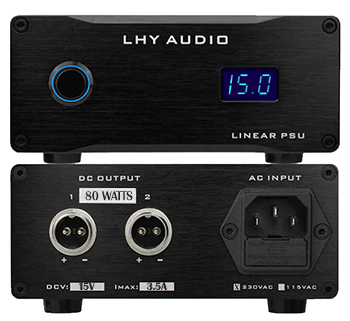
Whilst canvassing for potential wallet casualties, I came across today's dual-output LPS-80 linear power supply. I learnt that it can be configured for twin 15V DC feeds; exactly what the Audalytic twins take to bypass their internal SMPS. I had excellent results years back with LHY's big LPS-160 with 24V/6.5A feed for a pair of active Polish speakers from Fram. I maintain ongoing thrills from two of their LAN distributors slaved in series in my main system. Now gussying up the small kit with top-quality linear power seemed like a brilliant idea.
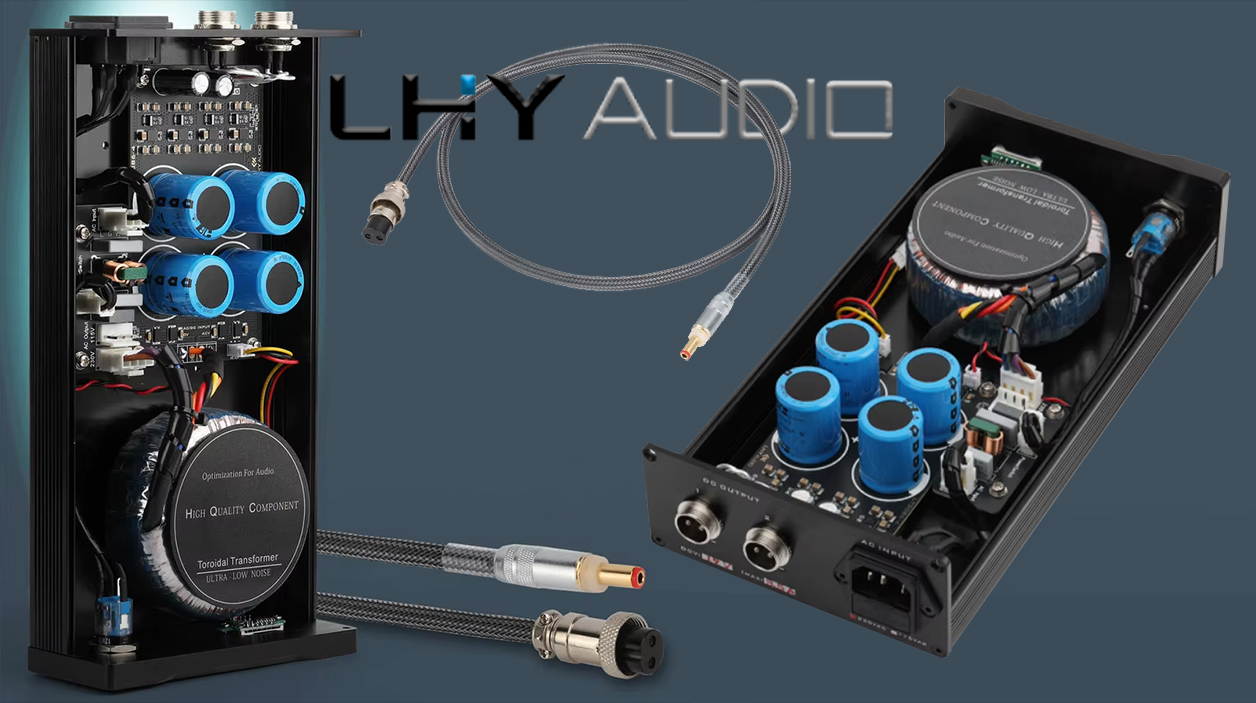
The innards rock "new high-performance voltage regulation of 4 x LT3086 in parallel; high-end 4-layer PCB with thickened outer copper foil and gold immersion process; high-current low-resistance Schottky diode rectification; Vishay BC electrolytic filter capacitors; output short-circuit and over-current protection; low resistance and high transient response; µV-level ripple and noise." The ripple rejection ratio is published as 80dB/120Hz. At 13x25x6cm WxDxH, it'd slot where I wanted it to, out of sight behind my wife's travel altar. The frontal power switch would be within easy reach. I'd use one less AC socket. The small black box veritably cooed "do me" sitting there on its webpage. So I placed the order and share my result here. After all, offboarding to linear power is a popular pursuit with owners of small DACs, USB decrapifiers, phono stages and such. They might like to know of another source for them besides ferrum, Keces, SilentPower, Sean Jacobs & Bros. plus various AliBaba and Amazon offers of unknown providence.
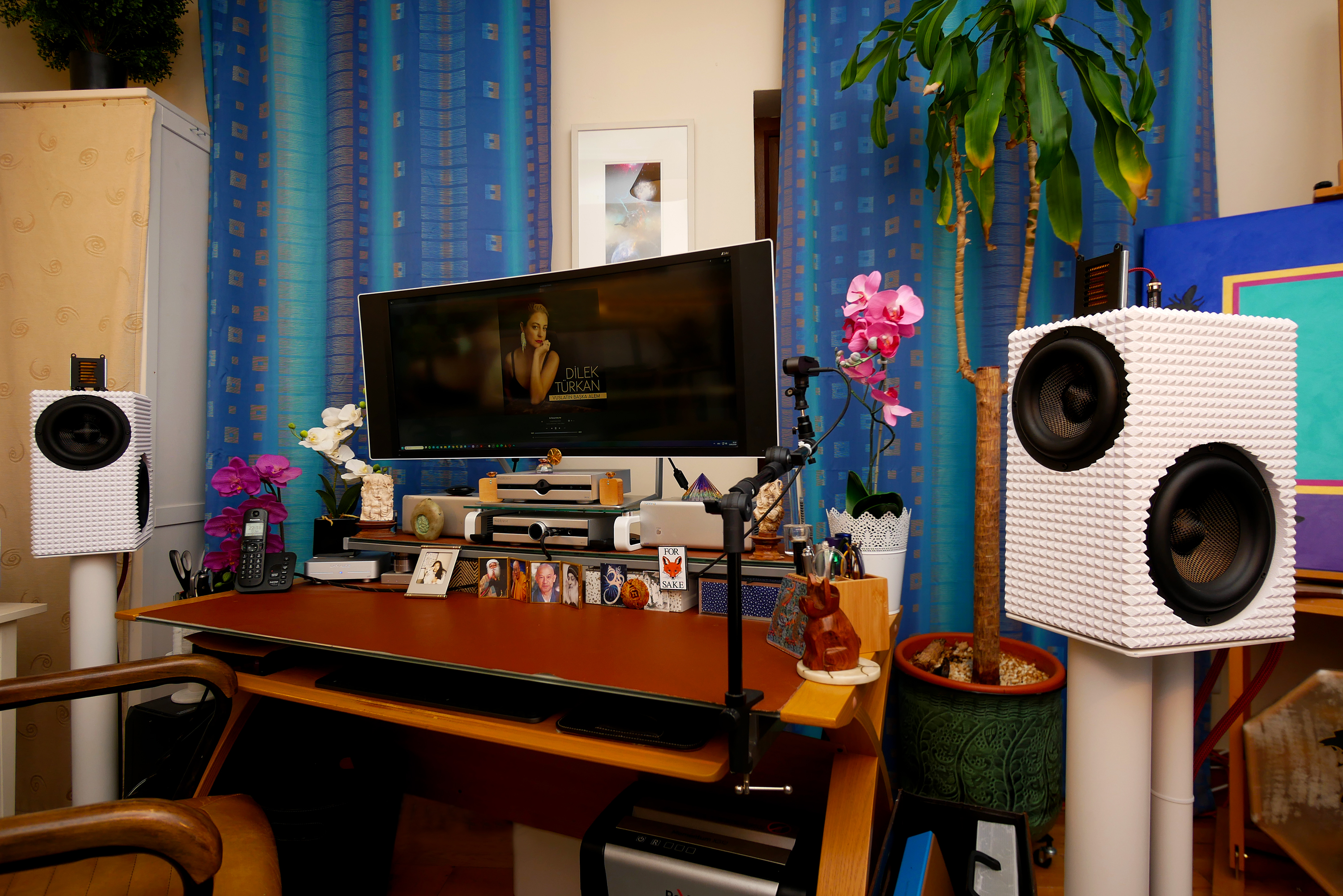 Silver LHY UIP to the right of the telephone.




It all hinges on audiophilia's 'power is 80%' tenet—alter the percentage according to your belief—which states that the quality and headroom of a component's power supply are disproportionately responsible for its overall performance. A forthcoming COS S6 review of a LAN distributor aka network switch for example will evaluate its performance with the built-in SMPS vs the external optional linear PSU. The latter costs the same as the switch. If it built in, the switch would cost twice so minus the second chassis, the linear supply consumes half the build cost by covering a low-noise transformer, rectification, filtering and voltage regulation. Meanwhile a switching module from Taiwan's MeanWell for a popular source is a fraction of the cost and requires no in-house engineering with its associated development expenses. The takeaway is simple. Quality power matters and costs accordingly. It's why Audalytic and FiiO add to some of their small kit's standard power IEC an umbilical DC port for an easy upgrade path. Kit that only has a DC input because its stock supply is an external switching adaptor aka wall wart has always offered that path. Just be sure that your alternate PSU's voltage rating doesn't exceed what your component specifies: in my case, 15-18VDC. The ampere rating can be higher. Our component will only draw what it needs. But the voltage rating must match or be lower to avoid issues.
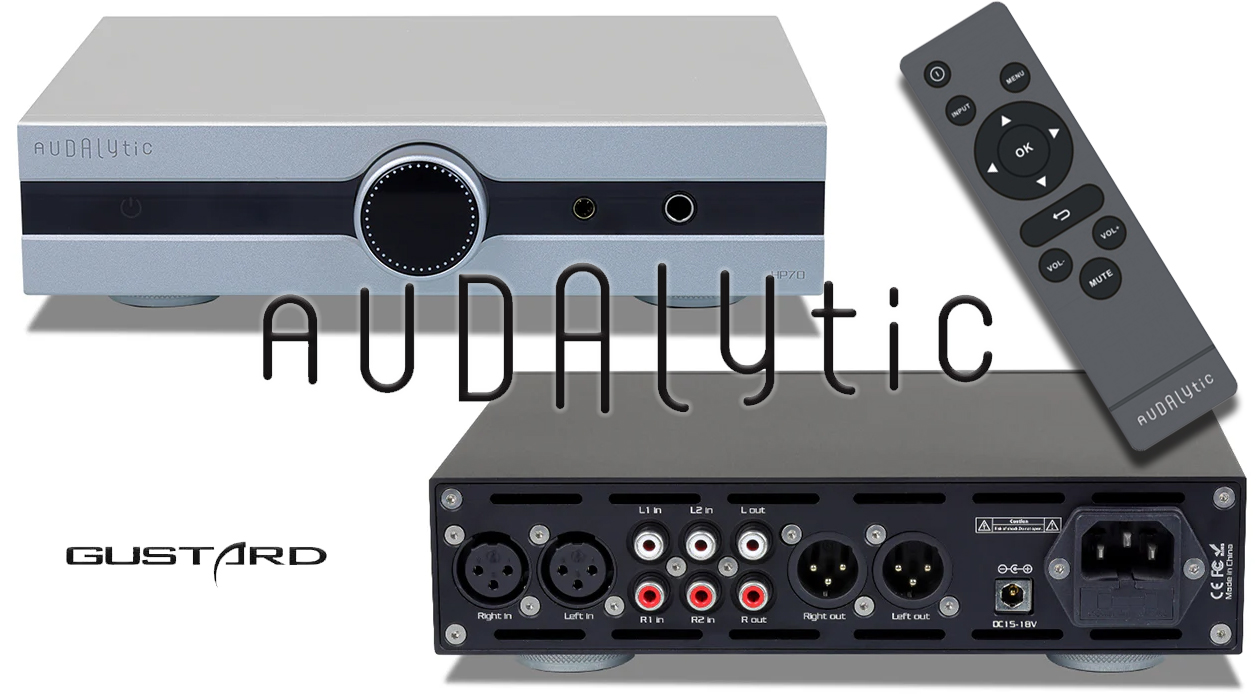
If you're still hazy on why performance listeners would chase power quality, think on why Hindus call our fleshy abode the food body; because it's literally made of the food we eat. Likewise for electricity. Modulated by the music signal, it's what we hear when said electricity plus magnetism are put to work to move our speaker drivers. Alternating wall current converted to direct current stepped down to various supply voltages 'played by' the music signal are what we listen to. Hence the audiophile pursuit of equating eating better to be healthier with superior sound from cleaner power. How would my Audalytic twins react to no more McDonald's? Of course posh power supplies apply plenty of premium filtering to serve up purified DC to their signal-path circuitry. But then they never sport a bypass port. No need with a Pass Labs or d'Agostino amp. Today's exercise concerns budget gear with cheap switch-mode power modules.
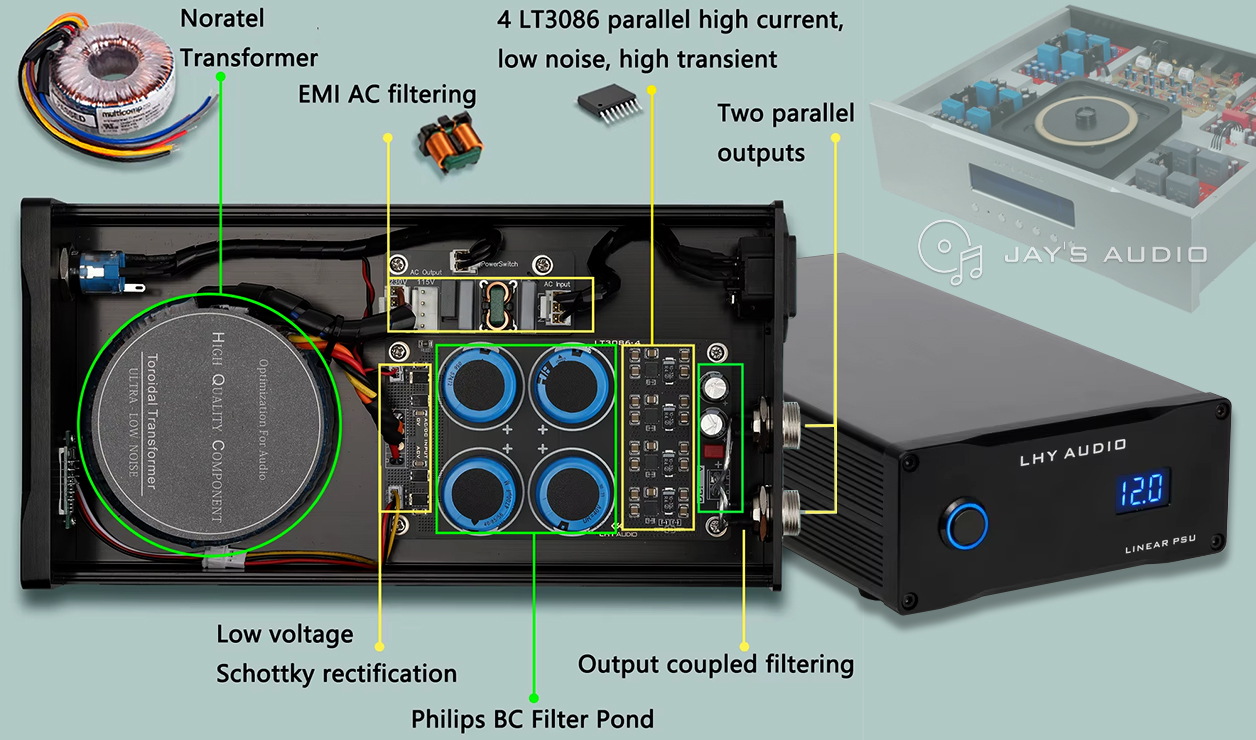
Being able to swat two of 'em with one straight linear stick is this Dual PSU's special appeal.

12
