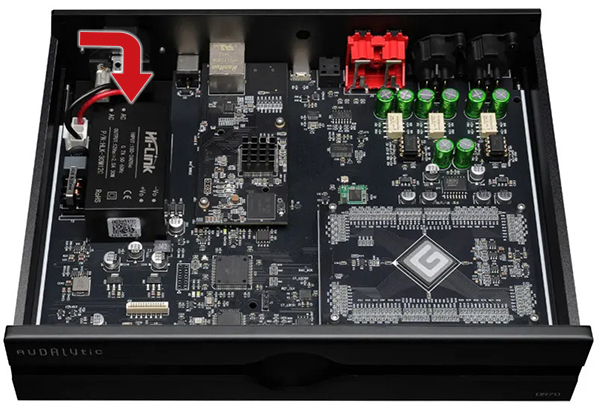
 For a clear look on what the LHY replaced, this red arrow points at one of the switching modules. It's roughly the size of a box of matches. This DAC would need to be twice as tall to build in a lower shielded storey à la Denafrips and contain my new 80W linear power supply. That would make it easily twice the price. In short, all is right with the DR70 as is. I was simply curious whether its performance could still be boosted.
Willing and able. If that's the state of your wanton wallet on any PSU upgrade matter, your grey one should ask what I think is a pertinent question:
What else have purveyors of such goods designed to warrant your attention on this subject?
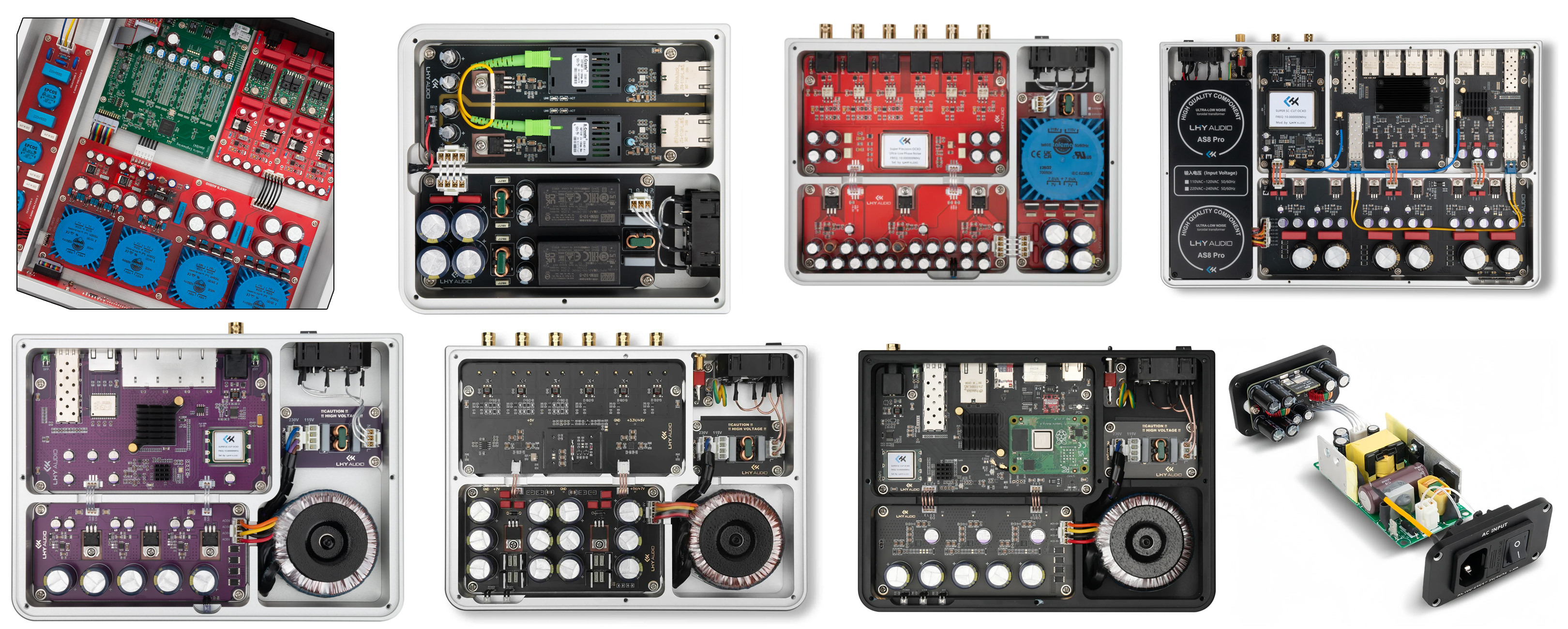
After all, we don't want just power. We already have that. We want premium power of ultra-low µV noise with very low Ω. In LHY Audio's case by way of "what else", below is a sampling of other kit in their roster; including the discrete R2R DAC top left under the Jay's Audio banner. The power supply to the lower far right configurable for up to 24V/3.5A is a switcher for a change, something this engineering team can do as well where small size and a $130 budget matter. The network switch second from the left in the upper row uses dual MeanWell SMPS from Taiwan instead of linear power.
Compare this expertise and execution to what certain web portals offer.
At least that's how my remaining inventory of grey looks at it. Provenance matters. Caveat emptor.
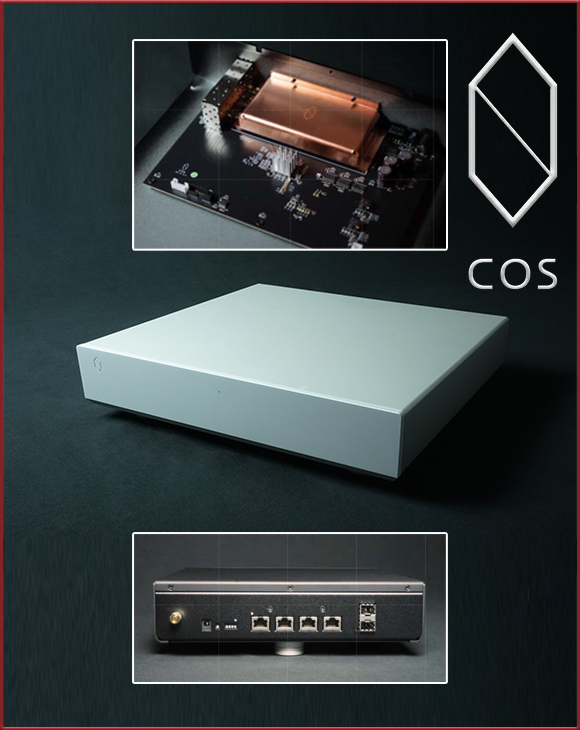
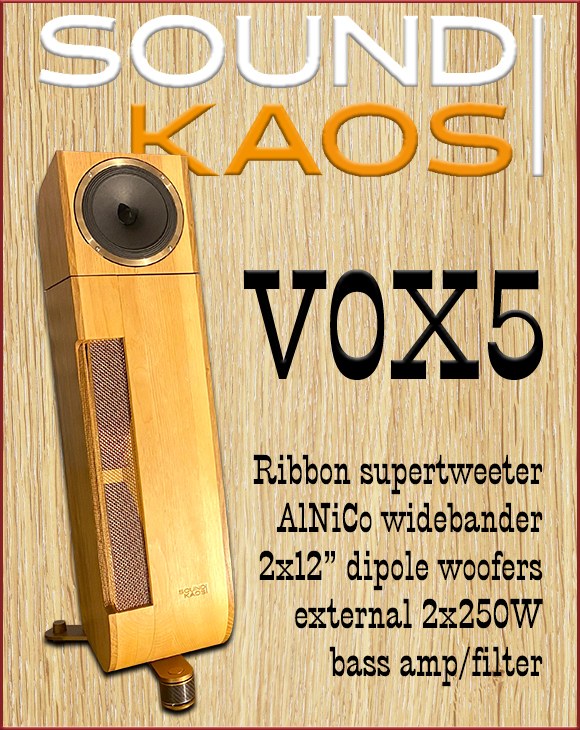
Now we go full colour via the two included umbilicals shown on the intro image.









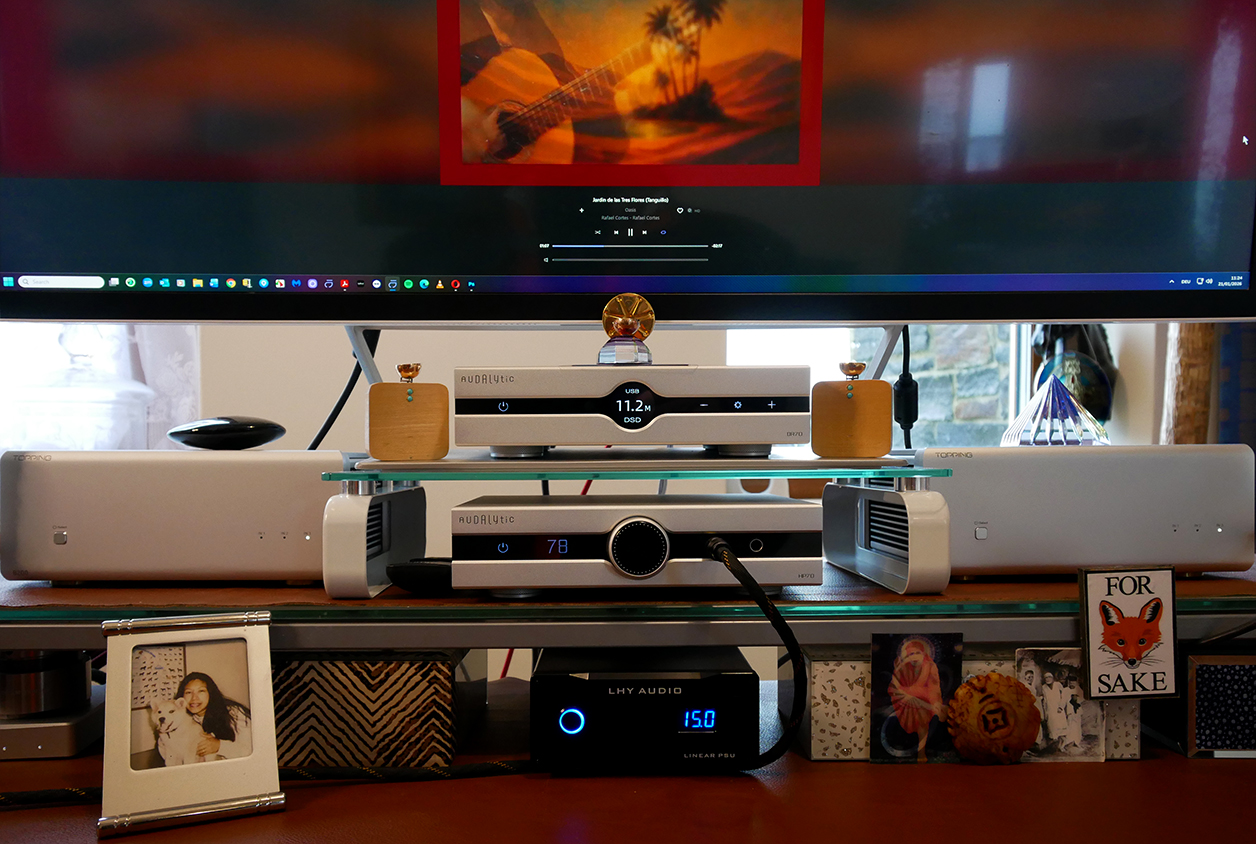
 John Darko penned a recent editorial on why he won't use 'musical' to describe a component. I too find it far too amorphous and ambiguous. How about another 'm' word by way of materializer? Ever since Star Trek, the associated beam has been part of our global culture. When calling my front end's sound on linear power more materialized, pretty much anyone is guaranteed to make the right association. Ditto ex Stereophile columnist Sam Tellig's phrase 'more there there'. How did the LPS-80 Dual do this? None of the soundstage markers moved forward, backward or sideways. Yet on switching power, my sonic scenery felt farther back. With perfect vision for sharp depth of field, one way our eyes register distance is size. The farther objects are from us, the smaller they look. Colours too are affected. They're most intense close up. Et voilà, two qualities which in combination suggested more nearness and presence for linear power despite zero change in subjective perspective. Another shift was textural. On their SMPS, the Audalytic twins applied more gloss or sheen atop their particular transparency. On linear power, that texture became satin to feel a bit drier. I heard superior intelligibility—the three ions of separation, articulation, definition—in the bass. It didn't go lower or louder but had higher resolution. Finally, dynamics scaled up. Subjective expressions of these attributes included less top-end citrus; an overall calmer more relaxed gestalt of more dynamic gravitas. Whilst not massive in isolation, the sum of these changes was most obvious and undeniably attractive.
 Truth told, now the sound quality of my desktop's current incarnation is astonishing. It speaks to my oft-reiterated belief that it's easiest—and cheapest, let's not forget that!—to make brilliant sound in the nearfield. Since we aren't cows with four stomachs, this isn't the place to regurgitate all the reasons why. Suffice it to say that if we shop smart, the usual suspects of DAC, headfi, speaker power and standmounts needn't be grand to add up in a really big way. With my lot eight deep from China (FiiO and aune for headphones) and only the LAN regenerator and speakers from the UK and Poland respectively, I practice obvious notions on where most the best buys for non Americans are to be had these days. Communist capitalism can rub those the wrong way who conveniently forget the many earlier ills of Western industrialization and its impact on the environment and labour conditions. These waters quickly turn murky and everyone must follow their own conscience and beliefs. On my own score, the Chinese hifi brands I've owned and thus promoted over the years have been most reliable and of high quality. Without them I couldn't afford to enjoy playback at the level I do; simple as. If LHY were still unknown to you, today's short report introduced them. You might now consider them a potential resource for addressing very specific audiophile challenges routinely encountered with networking, streaming and generic switch-mode power.