 Tender and hard. "What could possibly happen to the big picture?" was my initial question. It's no easy answer with the usual criteria but experienced quickly when Campanile confronts us. If you want to know what happens on a grand scale, cue up some big classical music so symphonica even opera. The most obvious thing is its dynamic range which only a few loudspeakers can convey in a realistic way. It usually pays off to equip them with the right drivers because this job includes realistic bass dynamics. It was fascinating just how solid, substantial and 'simply real' impulses from drums and timpani came off with Zappa's "Be-Bop Tango" from Yellow Shark. Here an otherwise fully grown but significantly smaller speaker like Dali's Epikore 11 or Magico's A5 no longer keeps up. But if it were just about timpani, the €40K/pr active Lyravox Karlmann Monolith could be cited as being just as powerful. Its active 15-inch woofers are not without merit. But something also happens to space when an orchestra expands dynamically, gains in scale and its enormous composite sound body seems to breathe. That is even more difficult to portray than pure level jumps of a single instrument. Those the Lyravox too conveys convincingly but this bell tower is completely different. That's probably not just due to its lavish woofer array but also its extraordinary height. Spatial stimulation feels different. It happens faster in both directions so to speak. Nothing ever thickens during acoustic turmoil. Au contraire, it seems very easy and natural even when the room floods with music. Orchestral tutti can literally overwhelm but then fade away as quickly as they came. No matter how great the assault of low-bass content, level and number of combatants, it carries out with such a light touch as if it weren't worth a mention. Really great.
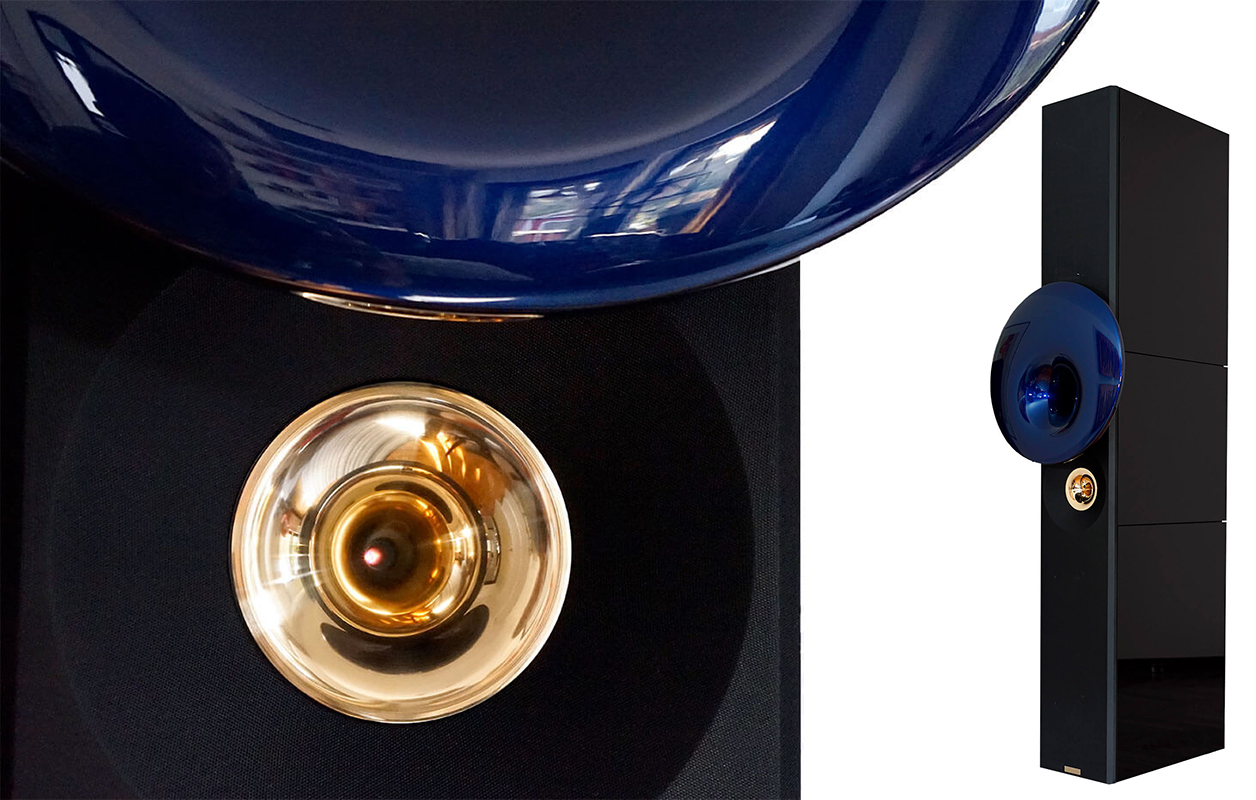
 But perhaps that's to be expected when hosting such a monster? What actually amazed me even more was its absolutely sophisticated overtone range, these completely natural timbres which you don't need years of audiophile training to recognize. My daughter appeared in the living room, grabbed the tablet, selected some Vivaldi (Julien Chauvin, Vivaldi: Concerti per violino X 'Intorno a Pisendel'), listened for a few minutes then succinctly stated that it now "finally sounds somehow right". The brat is getting cheeky but she's not entirely wrong. Unlike her, I not only enjoyed the result but asked myself how it came about. My theory is super tweeters. Often available as add-ons and not perceived when run solo, in conjunction with a loudspeaker and when well designed, with them we don't perceive a hotter treble but more authentic timbres and a richer midrange. But that comparison is still flawed. The harmonics are true but you cannot hear the Campanile without plasma tweeter because then something is really amiss, not just a little air. The plasma flame also seems to be the main reason for the speaker's first-class impulse response. The plucked strings in the first bars of the Cuarteto Casals album Boccherini: La musica notturna delle strade di Madrid felt noticeably harder, more unadulterated, real and authentic. The accuracy with which the vibrations then tracked as the strings fade away was truly unheard of. I have never experienced anything like it in my humble hifi hut. Even in general, the lifelike way in which quiet background noises and room reverberations came off was simply fantastic.










You may recognize that this review is as unusual as its subject. That's because the High Campanile 2 not only stands out from the crowd of high-end speakers physically and on price but also sound. The main reason why is, in my opinion, its unique combination of unconditional dynamics and complete naturalness especially in the midrange with its unadulterated true tone. It can be hard and tender on a completely new level; for me, anyway. The overall tonality is described more soberly because in the end that's a matter of taste. As already mentioned, the High Campanile 2 is balanced, fairly neutral and has extreme bandwidth. The top end is unlimited and how deep you can go is impressive although can also be achieved with very high-quality cheaper active concepts. The distinctive wrinkle about Campanile bass is not so much sheer quantity or reach—both should be taken for granted—but the absolutely coherent detail and structure coupled to extraordinary dynamic coherence and competence right down into the infrasonics. Level jumps are equally confident across the range even in the LF. There is no ‘rush' as so often is the case with smaller speakers. Impulses are simply loose and fluffy no matter how low the signal. These bass dynamics are, in my opinion, simply perfect or put more cautiously, I have not come across anything better.
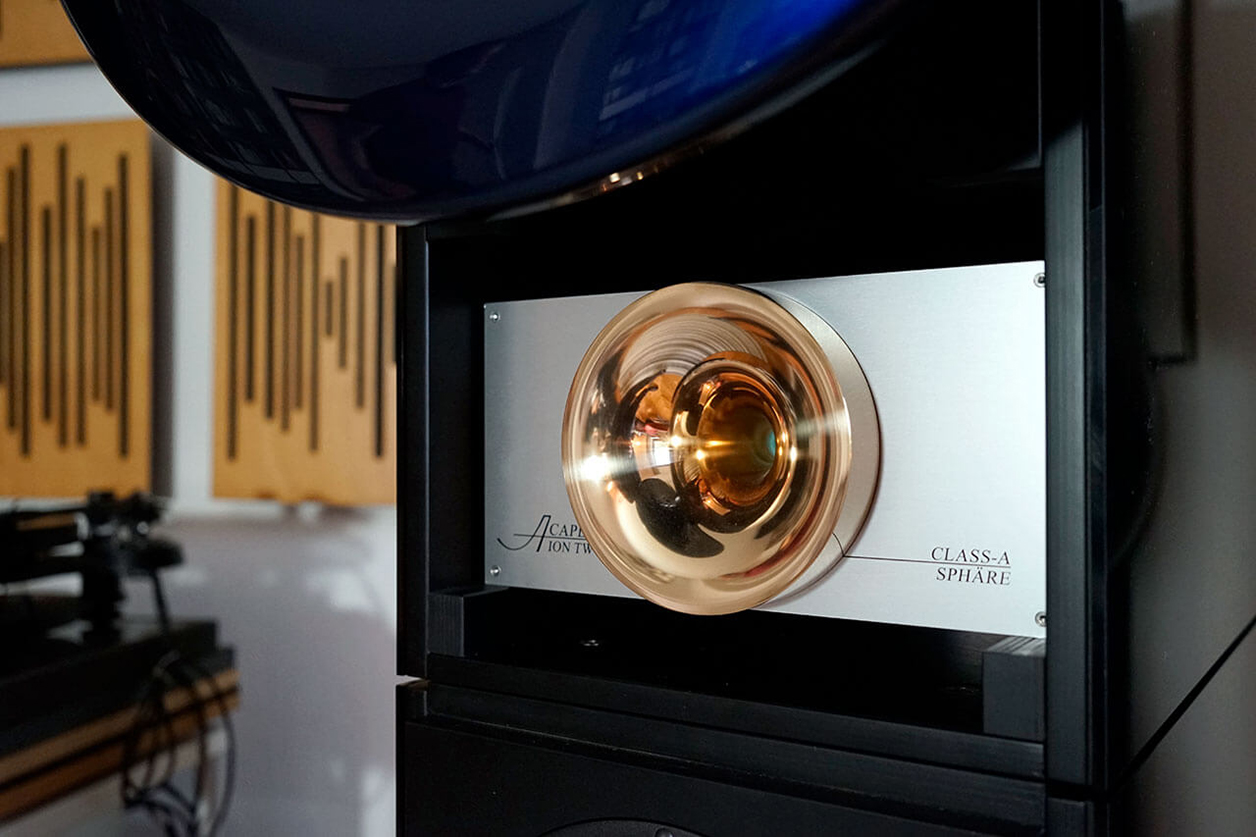
 The mid and high frequencies can be adjusted, the big horn by ±2.5dB, the plasma tweeter by ±4dB. Of course I tried but ultimately ended up with the defaults which I found to be the most harmonious for tone and imaging. But it's good to have this on board when every room is different not to mention listener tastes. Since these adjustments aren't subtle, one gains a fairly large window to define one's personal sweet spot. But not just the question of tonality is a matter of taste. So often is imaging though here I assume that those interested in such a large loudspeaker will find its soundstaging simply fantastic. Of course one must be prepared to be overwhelmed by dynamic programmes. The High Campanile 2, although not one of those that balloons by default, can easily take over half the living room with a single fortissimo. This is a side effect of its dynamic calibre. Since large sound bodies like orchestras seem to expand as they play louder, I consider this a virtue. But if you value a certain safe distance from the music and want your stage to isolate obediently at the speaker base, this approach is probably not for you. Imaging quality and depth layering on the alt-country piece "Just to See My Holly Home" by Bonny Prince Billy from Ease down the road showed clearer separation between solo and backing vocals than usual, the layering and framing cleaner. This may also have been because my shorter BassoNobile likes to draw its images a little more organic and round. In any case, the imaging precision of the Campanile 2 was impressive. However, as with the topic of absolute depth, you can also get that elsewhere for less. The positive thing to stress here is that it is also possible at this high level from such a huge speaker which then adds other advantages already covered. In short, the Campanile does not stand in its own way but rather casts a very free, precise and above all dynamically breathing soundstage.