Country of Origin

 This review first appeared in January 2025 on fairaudio.de. By permission of the author, it is hereby syndicated from the German original to reach a broader English audience. Ed.
Reviewer: Ralph Werner
Analogue sources: Drive: SME Model 15 Tonearm: SME 309 Pickup: Denon DL-103R, Dynavector DV-20X2 H, Transrotor Figaro; Shelter 201 Other: Flux-HiFi (needle cleaner), VPI HW-16.5 (record washer)
Digital sources: D/A converter: Rockna Wavelight+; Music server: Antipodes K22 G4 w.Pink Faun LAN Isolator
Preamplifiers: High level: Electrocompaniet EC 4.8 MKII, Pass XP-12 Phono amplifier: BMC Audio MCCI Signature ULN
Power amplifiers: Electrocompaniet AW 800 M, Pass X250.8
Cables: Speaker cable: Dyrholm Audio Phoenix, fis Audio Studioline NF cable: Dyrholm Audio Phoenix XLR, Boaacoustic Blueberry Signal, fis Audio Livetime, Vovox and others Digital cable: Audioquest Cinnamon Toslink, Audioquest Vodka 48 HDMI/I²S, Boaacoustic Silver Digital Xeno USB, fis Audio Magic LAN cable, Wireworld Series 7 Starlight Gold coaxial; Power cable: fis Audio Blackmagic, fis Audio Studioline Power strip: fis Audio Blackmagic
Rack: Creaktiv Trend 3 on bFly Audio b.DISC, Stack Audio Auva EQ decouplers
Power filter: Audes ST-3000 isolation transformer
Size of the listening room: 40 m², 2.45m ceiling
Review component retail: €89'580/pr
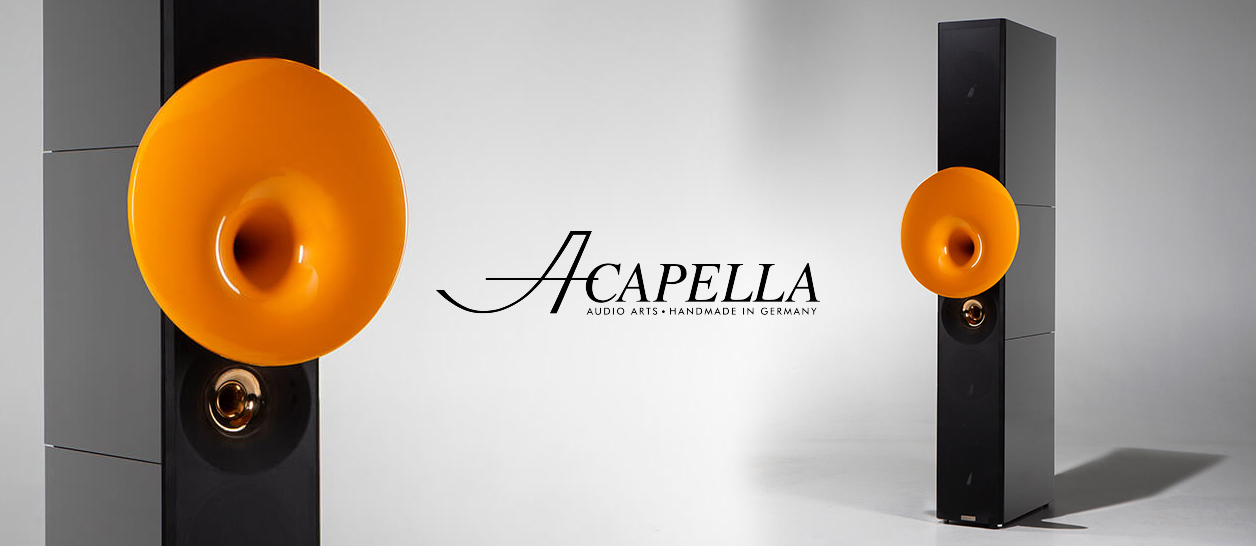
Size don't matter. Oh yeah? Zero wobble, perfect fit with clearance to spare if you've got a hand's breadth before the ceiling interferes. This speaker breaks several records including size. It stands a cute 2.36 meters tall. Thank goodness I didn't get my room height wrong. It would have been super annoying to send the Acapella guys packing with half a ton of speaker tech just because the ceiling wouldn't cooperate. To be sure, if Acapella's Campanile gets you hot under the collar, grab your ruler and measure the fit. Then take a critical look at your floor to see whether it's strong enough—that should generally be no problem—then do the same with your bank balance. The normal version collects €67'860, the tested High Campanile 2 with silver wiring and upgraded filter parts €89'580. That makes it the most expensive, largest and heaviest loudspeaker we've ever booked for review. Funnily enough, one gets used rather quickly to towers which initially seem quite imperial. As the pickup date drew near, my daughter opined just how stupid it would be to have to listen to the litlins again by which she meant my Acapella High BassoNobile Mk2. The kid seems to be growing up in a very messed-up household indeed. However, I actually agreed with her. More on that anon.
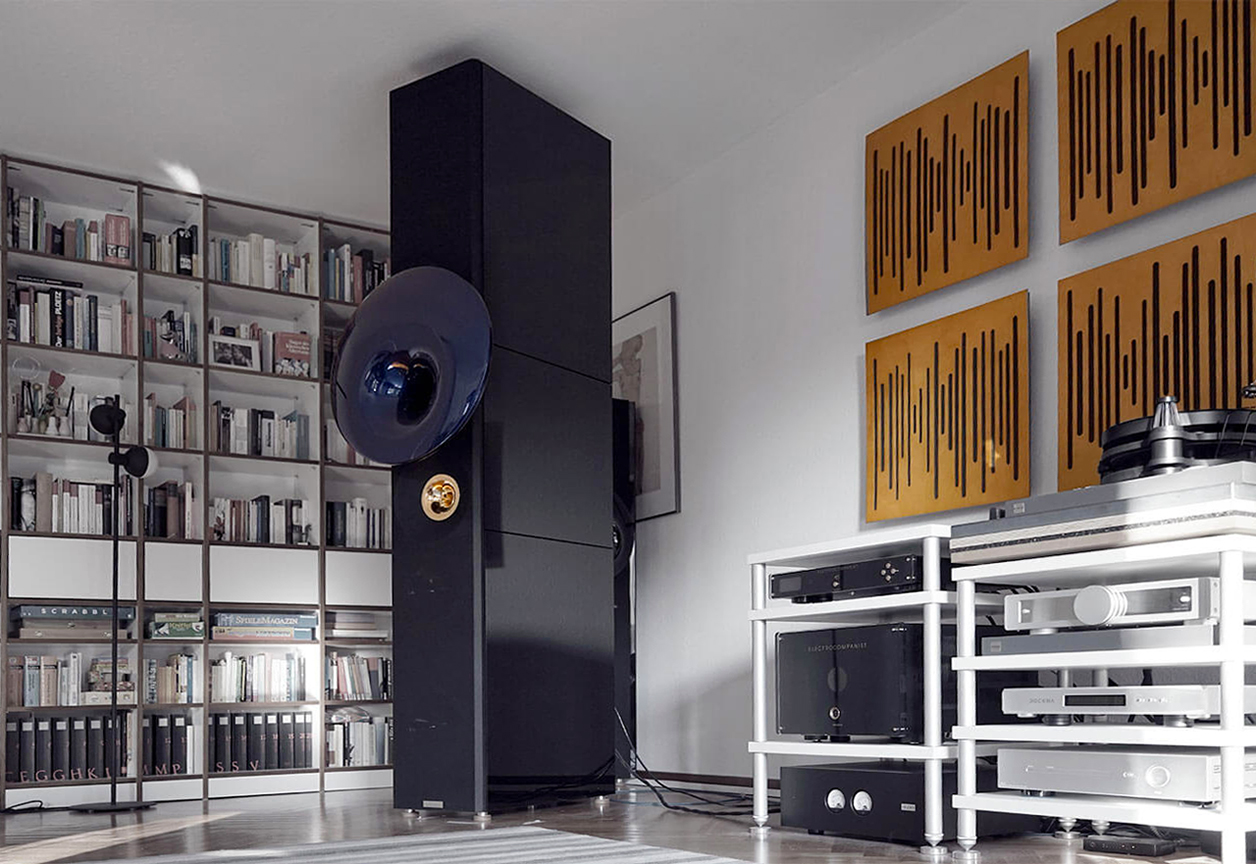
At Acapella Audio Arts, loudspeaker models aren't pushed out according to a marketing calendar but carefully curated over years even decades. This is also the case with the Campanile which has been part of the Duisburg firm's portfolio for a long time. The latest version introduced last year boasts a new plasma tweeter among other refinements. The basic architecture remains unchanged: a passive sealed 3-way modular skyscraper. Otherwise this bell tower—campanile in Italian—would hardly move. There's a lower and upper bass module each equipped with two 10-inch woofers seeing 60 litres of sealed volume. The mid section carries two horns: the large hyperspherical 62cm broadband horn for 1-7kHz; and the central spherical shiny bronze horn wherein sparks a plasma flame to hit 40kHz without moving mass. The three modules bolt together then the horns get mounted. In the box behind the hyperspherical horn sits not just a 25mm silk-dome tweeter without a pressure chamber but also a potted crossover with "phase-correct low-order filters" about which no further detail is published.






Since I own the aforementioned ‘small' High BassoNobile Mk2, some of the ingredients seemed familiar like the horn-loaded fabric dome and 10" paper-cone Seas woofers coated by Acapella though today's samples double up on bass pumps. According to designer Richard Rudolph shown next, Campanile's extra height and placement of a top woofer module are advantageous for bass reproduction because this creates a line-source cylindrical rather than spherical wave to minimize our room's LF influence. There are more fundamental similarities in the housing construction's mix of plywood, MDF and outer 3mm acrylic skin forming constrained layers to combat resonances which complex internal bracing and carcass tensioning attack as well. Last but not least, the patented hyperspherical horn shape is the same if here significantly larger as is the entire loudspeaker. This makes it possible to align the horn symmetrically instead of facing the wider side out as does my BassoNobile.
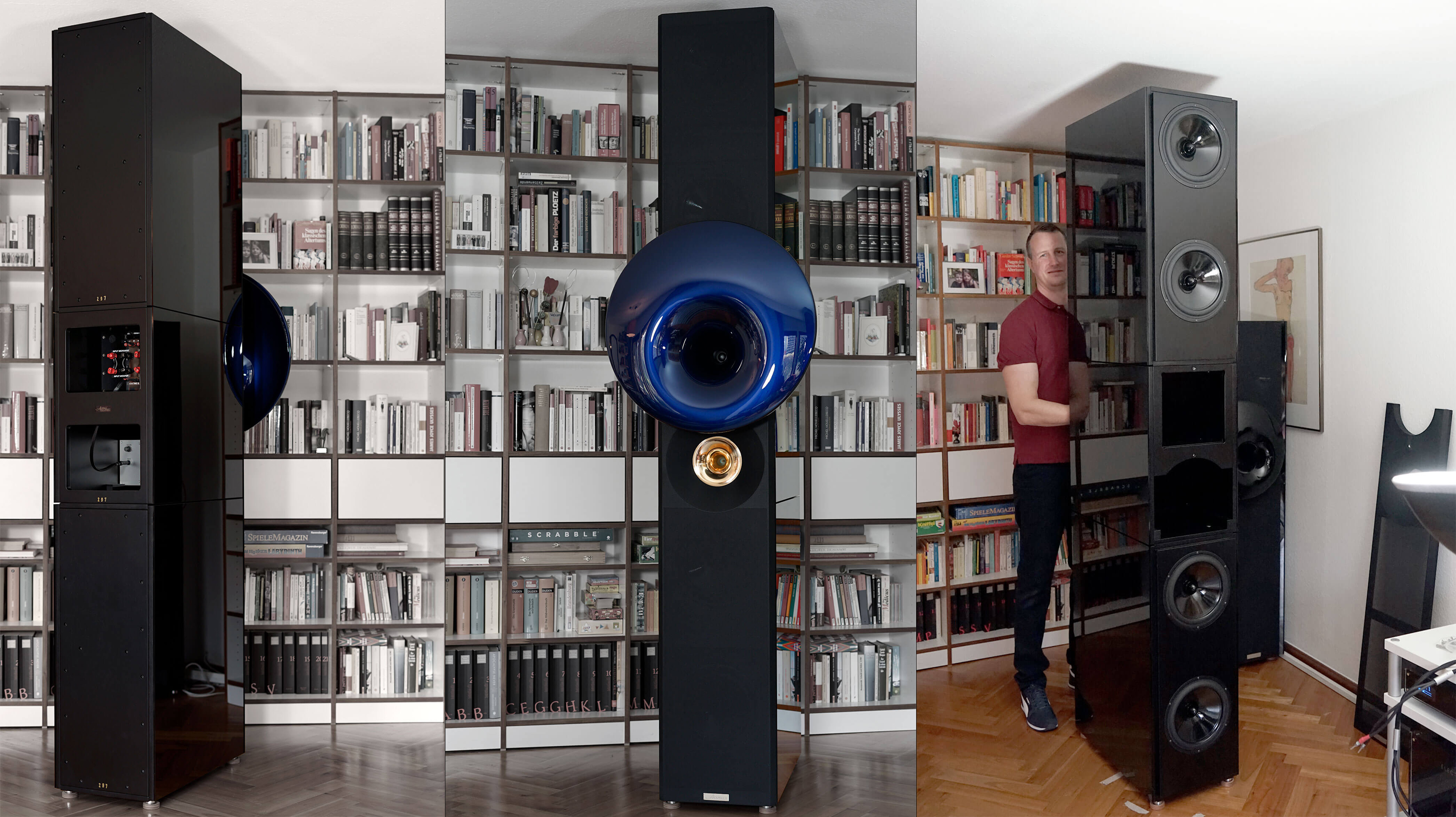
The end of similarities begins at the very latest at 7000 Hertz where the ion tweeter reserved for Acapella's larger speakers begins its mysterious work. The latest evolutionary iteration goes by ION TW 2S. What's new about it? The grounding concept revised and there is now galvanic separation from the tweeter amp thus more comprehensive suppression of potential interference. The tried and tested concept remains the same of course. To activate this super tweeter requires 7'000 volts between two electrodes which ionize the air to create a plasma flame. This needs appropriate drive electronics so High Campanile 2 must connect to the power grid. Using a built-in tube amplifier for amplitude modulation, the arc is then controlled by the music signal. The plasma flame varies its output without a membrane so is freed from all common issues of breakup modes and related resonances. To increase output, the flame plays in a horn turned from solid bronze in a spherical geometry.