Country of Origin

Reviewer: Srajan Ebaen
Financial interests: click here
 Main system: Sources: Retina 5K 27" iMac (i5, 256GB SSD, 40GB RAM, Tahoe 26), 4TB external SSD with Thunderbolt 3, Audirvana Studio, Qobuz Sublime, Gustard U26 USB bridge, LHY Audio SW-8 & SW-6 switch, Sonnet Pasithea; Preamp: Hattor Audio ARP-S; Active filter: spl Audio Crossover MkII; Power amplifiers: Vinshine/Kinki Dazzle & Audiophonics NCx500 on subwoofer; Loudspeakers: Qualio IQ [on loan]; Subwoofer: sound|kaos D15; Cables: Exact Express Flame, Furutech; Power delivery: 2 x Kinki/Vinshine Tai Hang on amps and source stack, Furutech DPS-4.1 between wall and conditioners; Equipment rack: Artesanía Audio Exoteryc double-wide 3-tier with optional glass shelves, Exoteryc amp stands; Sundry accessories: Acoustic System resonators, AudioQuest FogLifters; Room: 6 x 8m with open door behind listening seat; Room treatment: 2 x PSI Audio AVAA C214 active bass traps
1st upstairs speaker system: Source: Shanling EM7 into Soundaware D300Ref SD transport to Cen.Grand DSDAC 1.0 Deluxe with POW; Preamp/filter: Lifesaver Audio iCon 4SE & Gradient Box 2; Amplifier: Kinki Studio EX-B7 monos; Loudspeakers: sound|kaos Vox3awf; Subwoofer: sound|kaos D12 on twin Nord Acoustic NC500 monos; Cable loom: Exact Express Earth; Power delivery: Vibex Granada/Alhambra, Akiko Audio Corelli Corundum & Castello Solo; Equipment rack: Hifistay Mythology Transform X-Frame [on extended loan]; Sundry accessories: Furutech cable lifts, Furutech NFC Clear Lines; Room: ~3.5 x 8m
1st upstairs headfi system: DAC: Cen.Grand DSDAC 1.0 Deluxe with POW; Headamp: Cen.Grand Silver Fox; Headphones: Raal 1995 Magna, HifiMan Susvara
Desktop system: Source: HP Z2 workstation Win11/64; USB isolator: LHY UIP; LAN distributors: LHY AS6 Pro & SW6-SFP; Ethernet reclocker: Stack SmoothLAN; DACs: Gustard R26II & Audalytic DR70; Preamp: Topping A900; Speaker amps: Topping B200 monos; Headphone amp: Enleum AMP-23R; Loudspeakers: Virtual Hifi Viper; Headphones: Final D-8000, aune SR7000, FiiO FT7, HifiMan Susvara Unveiled
2nd upstairs headfi system: Shanling EM5; Headphones: Meze 109 Pro, Fiio FT3, HifiMan HE1000 Unveiled
2nd upstairs speaker system: Source: smsl PL200T CD transport; DAC: Shanling EM7 w. 1TB microSD; Crossover: Lifesaver Audio Gradient Box II; Amplifiers: LAIV Crescendo Chorus monos; Loudspeakers: MonAcoustic SuperMon Mini with Dynaudio S18 subwoofer
2-channel video system: Source: Oppo BDP-105; All-in-One: Gold Note IS-1000 Deluxe; Loudspeakers: ModalAkustik MusikBoxx; Subwoofer: 2 x Zu Mission; Power delivery: Furutech eTP-8, Room: ~6x4m
Review component retail: $3'994
 |
 |
 |
 |
 |
 |
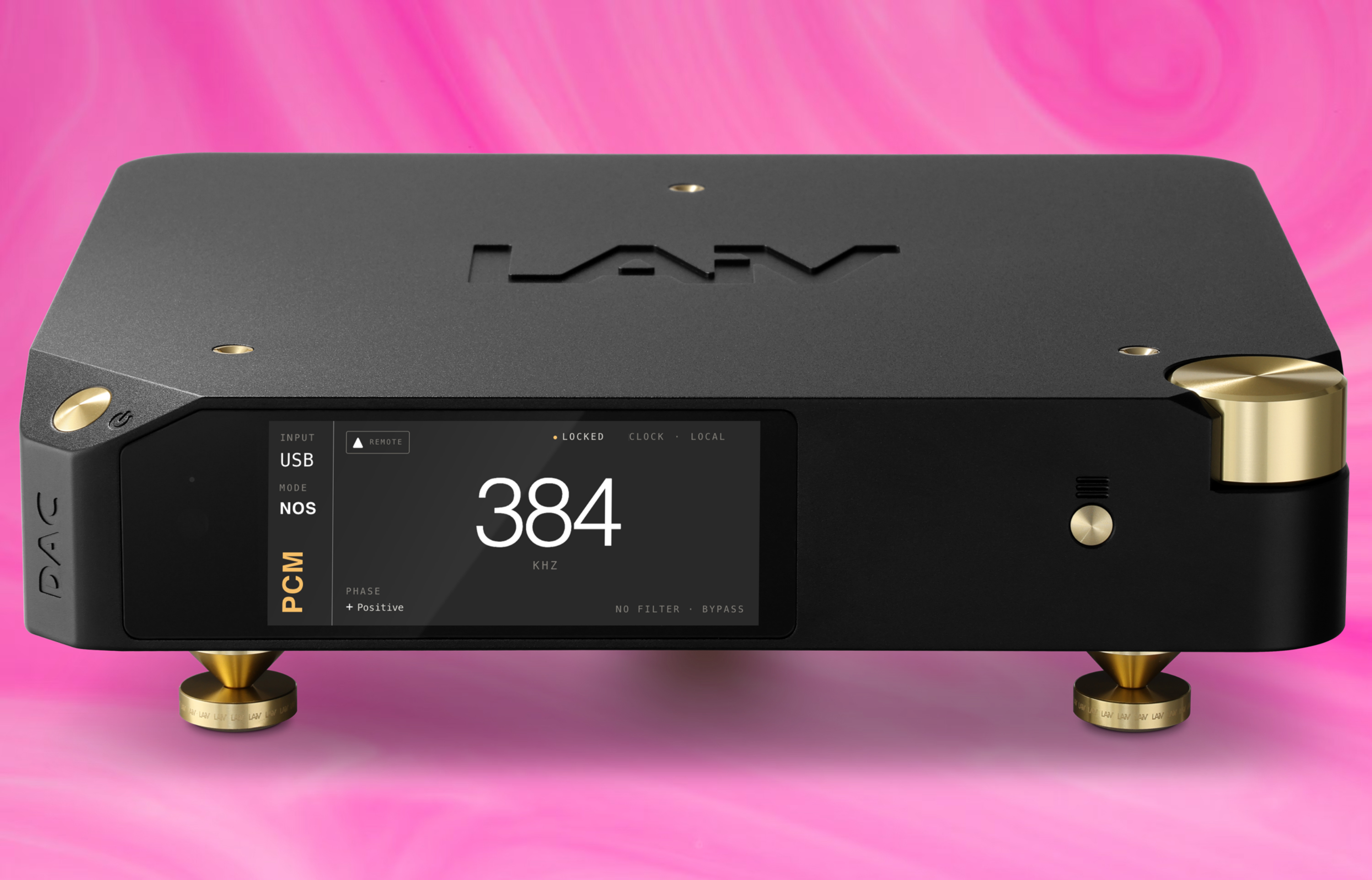 With the display showing 384kHz in NOS mode yet very little native 384 music available, we can assume that upstream player software performed upsampling of a 48/96kHz file.
Re:think. It's the playground of MkII iterations. They leverage new tech, add features, give aging product a new lease on commercial life. Back in April of 2024, I reviewed and awarded LAiV's then $2'700 later $3'249 maiden model called the Harmony DAC. As the oldest member of this Singaporean/Sino catalogue, getting its first makeover now fits even if two years look like a very short victory lap. But as even Germany's pride of the once mighty Volkswagen Group had to acknowledge with massive layoffs, presently China's speed and productivity seem unstoppable. Explained LAiV's Weng Fai Ho, "our Harmony DAC2 is the successor to the original Harmony DAC built on the same fully balanced discrete 0.05% tolerance R2R ladder architecture but refined in the areas that matter most:
♦ full galvanic isolation between digital and analogue sections
♦ a discrete class A output buffer with low output impedance
♦ three PCM playback paths: NOS, our own oversampling or a new dedicated hardware SRC for sample rate conversion
♦ an external 10MHz master clock input
♦ a new colour display, USB-C firmware updates and 12V trigger for system integration."
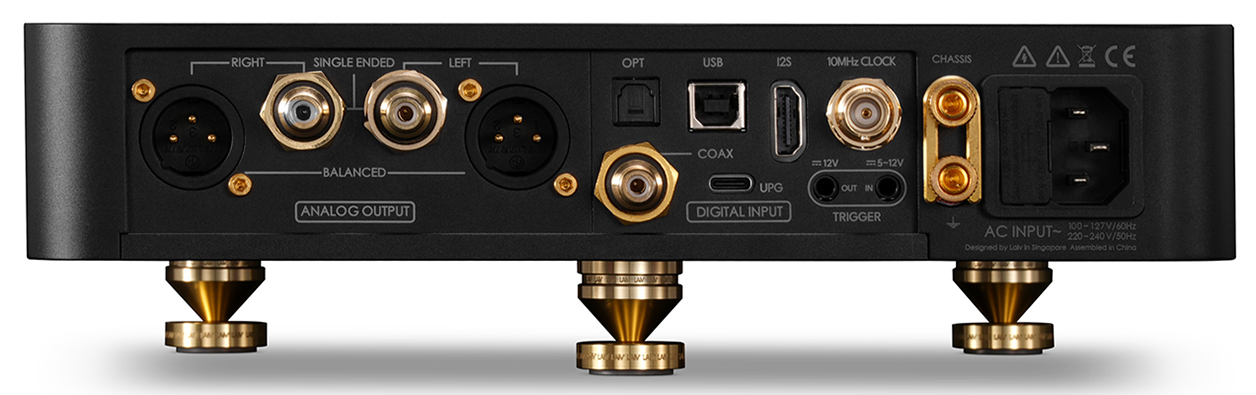
Like original TotalDAC and Denafrips R2R converters, the first Harmony DAC's ladders pulled purist privilege by connecting directly to the outputs. This high-impedance 1'200/600Ω design choice on XLR/RCA disavowed concurrent use to prevent loading the signal down. At <50/25Ω respectively, the new buffer creates far lower output impedance to better handle long cables and happily drive both outputs simultaneously. It might read less pure but is far more real-world practical. DSD still gets converted straight to PCM without extra oversampling. With currently no external master clock in this portfolio, the new 10MHz/50Ω BNC port would seem to announce one down the pike; perhaps in the smaller Crescendo range with its pre-existing 5/15V twin-port linear power supply? Until then, that feature winks at competitors. To momentarily impersonate a crotchety crank of a critic, he could call oversight on lack of volume control. Not only does LAiV's far cheaper $849 Crescendo Verse have it. Both Cees Ruijtenberg of Metrum/Sonnet and Leonid Burcev of Etalon showed countless very full moons ago how to implement lossless non-digital volume via variable reference voltage on R2R ladders. In an age where integration, multi-functionality and doing more with less are clear consumer trends, not getting with any variable program strikes our criticizing curmugdeon as a missed op; messed up in his dim view. Ditto for no native DSD when already a €399 Audalytic DR70 with 25-bit discrete R2R ladders has it. As to have or not to have—an upgrade kit for current DAC1 owners is coming which will bolt on most but not all of these MkII changes. Before I can shed the cantankerous alter ego and return to my usual happy self, might some readers wonder whether LAiV gave their revamp enough of a think? In lockstep with general inflation, retaliatory Trumpian tariffs, AI-related parts shortages and other global events, this new version is rather dearer than the precursor. $3'994 = $2'700 x 1.48. That's a not inconsiderable multiplier. With an original on hand, I felt certain that I could form a properly informed opinion; on that and more.









What remains unchanged are the software-configurable I²S over HDMI; resistor ladders encased in vertical aluminium jackets; a toroid-based linear power supply; a milled uni-body aluminium chassis with strategic dividers; Crystek 45/49MHz crystal oscillators; FPGA ladder control; Audio Note Kaisei and Rubycon ZLH capacitors; a matching metal remote; and the by now trademark industrial design which looks sleek, modern and upscale. The original Harmony DAC put LAiV on the map in a big 'n' quick way. In a surprisingly short period, it was followed by eight models. China speed indeed. Instead of staying in the easy digital lane of DACs and DDC/bridges, LAiV authored two proprietary GaNFet class D amplifier platforms, an ambitious pre/headamp and an external linear PSU. Neighbouring categories thus far avoided are a LAN switch, an external clock and a dedicated streamer/server. The latter had figured on an early roadmap since unpublished. With Eversolo arguably owning that space and having contributed to shutting down Auralic, perhaps LAiV's current category focus is really their winningest play. At popular Singaporean e-tailer Vinshine Audio, they successfully displaced Denafrips who, in an apparent bid to grow new parallel distribution channels, seem presently involved in Musician, Garlubidor and Ladder Audio though non-disclosure agreements make confirming direct connections impossible. Regardless, LAiV have certainly been on an ascendant with widespread uniformly laudatory press coverage. They don't seem intent on slowing down anytime soon. Also, it's no longer the case that Sino brands only nip hot and heavy on EU/US heels. They pursue their own countrymen as well. If we thought Western capitalism was brutal, Communist capitalism seems every bit as. "In the early years of the People's Republic of China so ~1949, Mao Zedong advanced the theory of 'New Democracy', suggesting that China's backward economy required a prolonged stage where private capitalist enterprise and national bourgeoisie collaboration were permitted to build up productive forces. Mao saw this private enterprise as a temporary 'rattail of capitalism' or subordinate tool not a permanent hybrid model. The ultimate objective remained the total elimination of private capital in favour of a classless, collectivized communist society." But as Confucius knew, "order is just a rumour. All scheduled plans are under permanent construction".
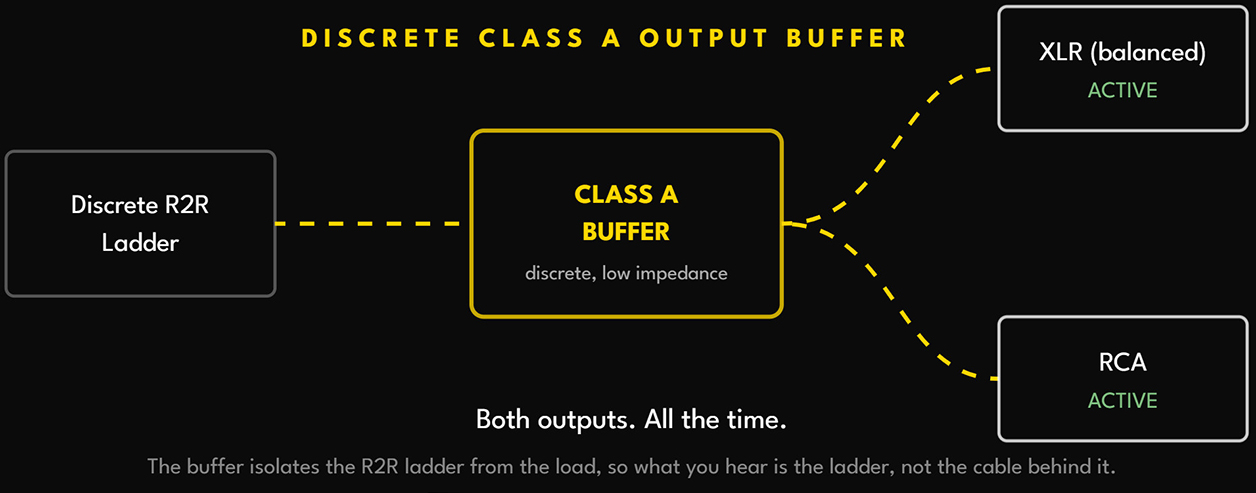 Cynics will ask that if this is the better way, why wasn't it done the first time 'round?¹
That doesn't discount real efforts at order processing. "Shipping is complimentary on all LAiV products wherever you live. You can typically expect your order to deliver within 7-10 days, even quicker for US destinations thanks to our local warehouses. If you're from Austria, Bulgaria, Croatia, Finland, Germany, Iceland, Ireland, Luxembourg, Malta, Norway, Singapore, Slovenia, Switzerland or the US, we incorporate all import duties, taxes and associated fees into the total price displayed at checkout." In short, now there won't be hidden VAT ransom to free a shipment from customs purgatory. If you know those hassles, that's convenient and appreciated. By now it should go without saying that like all other LAiV gear, the DAC2 comes in black or silver; gold accents either way; and a metal wand to match. One item on Weng's list of changes I was uncertain on? The desirability even need² for an extra hardware-based sample-rate converter next to their existing code-based variant. Many streaming users run Roon, Audirvana, JPlay, HQPlayer and similar software players. Those embed their own advanced sample-rate algorithms. How many such options do we really need? I've always favoured Audirvana's r8brain or SoX engine set to the highest PCM or DSD rate which the downstream DAC supports. This runs the converter in NOS mode, unloads its conversion process and shifts the heavier math onto the far stronger processors of my RAM-maxed Win11/64 workstation and 27" fully-loaded iMac. Would the DAC2 rewrite my rule book on that score? For sensible comparators I not only had LAiV's first DAC. I also had Gustard's €1'650 discrete R2R R26II with native DSD512, basic network streaming and defeatable analog volume. For less than half the coin but usefully greater functionality, would it eat LAiV's lunch? How about adding Gustard's €999 U26 bridge to its DAC mate whilst still coming in for less? The only way to know was accepting Weng's review request. So I did.
________________________
¹ I once was asked to review another brand's external buffer stage. Reading through its promo materials explaining its rationale, I asked why their designer didn't fix his apparent drive issue of direct-coupled R2R ladders inside his converter rather than propose an external add-on of separate chassis, power cord and interconnect. He took offence at my insolence. Needless to say, LAiV's solution is rather more intuitive and convenient: build the buffer into the circuit you mean to buffer.
² The hardware SRC offers 2, 4, 8 and 16 x target rates plus slow/fast filter selection. LAiV's original software OS lands on one fixed target rate as that which their engineers deem best.