On lunches—free or eating someone else's—just looking at my LAiV and Gustard specimens ticked off first score points. On industrial design, LAiV very obviously took it. Ditto for their stylish FMJ remote where Gustard deal us declassé plastique. Already LAiV's original display crushed Gustard's. The new one ups that ante. Three undeniable points for Singapore. On features meanwhile, the PRC took three points for volume control, native DSD and basic RJ45 support with UPnP. Having inspected both guts, I call out equals on quality execution. Prior to laying on ears, my friendly game had it at 4:4 though minimalists would accord LAiV another point for narrower case work hence a smaller footprint. When we need to shoehorn kit into tight spaces, dimensions can become make or break. Incidentally, all competitors should look at Gustard's execution of volume bypass. Their scheme advances 'full blast' by one click to become 'fixed'; or inverts direction to depart 'fixed' and enter numerical attenuation, all without entering menu navigation. That's how to do it intuitively and most conveniently. Chapeau not of the tin-foil kind. An equal shoutout goes to both brands for I²S pin-out configs. Unlike the secret handshakes of Denafrips involving non-intuitive button combinations and counting reappropriated LEDs; unlike my earlier Singxers' belly-mounted dip switches one can't get to installed—the DAC2 and R26II do it in their menus. What's more, both have an auto feature for their own stablemates. LAiV's HDMI port recognizes siblings and auto-sets itself to the correct pin-outs. Gustard run two HDMI ports, one called G which is fixed for their own kit; the other menu malleable. Either approach aces the user experience. Ideally though, both brands would still list correct settings for other I²S/HDMI kit. After all, mismatches needn't cause outright lock failure for dead silence. They can mean static when misrouted clock or data pins feed meaningless HF transitions into decoding chips. They can reverse channels if the word clock's positive/negative or line assignments are swapped. They can invert phase when differential serial data are swapped. They can cause dropouts, intermittent crackling or complete sample corruption because data desynchronizes so the digital receiver reads bits at wrong intervals. Also, a misrouted DSD flag often on pin 14 or 15 can trick a DAC into misinterpreting bitstreams. That may produce piercing possibly damaging digital static. Rather than shuttling through available pin options by ear, knowing which one to select is—cough, hint, wink—obviously better.
The DAC2's output voltages on XLR and RCA remain virtually standard: 4.15/2.07Vrms respectively. That's not guilty of gain poisoning which has some DACs output up to 12V to not only enforce far higher attenuation but often overload the input stage of the next component. No such strife with LAiV. If you're no fan of pointy cones even with protector discs, unscrew the footers. I did with my original Harmony DAC. It also reduced its profile and fit into a lower space. And yes, those three top indents are for stacking pointy-coned LAiV kit one atop the next. Whilst DAC2 still awaited Guangzhou departure, I asked Weng to sell me on their new hardware-based SRC to properly appreciate its value; and why Verse's analogue chip-based attenuator didn't migrate over nor the native DSD ability of R2R competition at Audio_gd, Denafrips, Gustard and Holo. "On the hardware SRC, yes, our in-house OS engine runs in FPGA. We chose to keep our in-house coding to just OS rather than building out our own SRC engine in FPGA as we wanted to keep things simple for the users, giving them what we believe delivers the best of our house sound by default. The dedicated hardware SRC stage was added to improve on some of the D/A conversion processes we learnt by developing Verse. That wasn't a case of being unable to update the FPGA code. It's simply that once we had that chip in circuit, it made sense to expose its SRC function as a user option. People always enjoy more choices. Our own preference remains the in-house OS mode. The real focus of the DAC2 was fine-tuning the original Harmony DAC into a better R2R DAC. On volume control, a genuinely good one comes at a very high cost. Most of our customers considering our DAC already have solid preamplification in their chain. They look for a pure single-role R2R DAC rather than paying extra for a volume stage they don't need, even one that's easy to bypass. On DSD, processing it natively isn't hard. As you wrote, already a €399 DAC can do that. The real challenge is converting DSD while still delivering output performance through discrete circuitry equivalent to native R2R or a purpose-built 1-bit DAC chip.
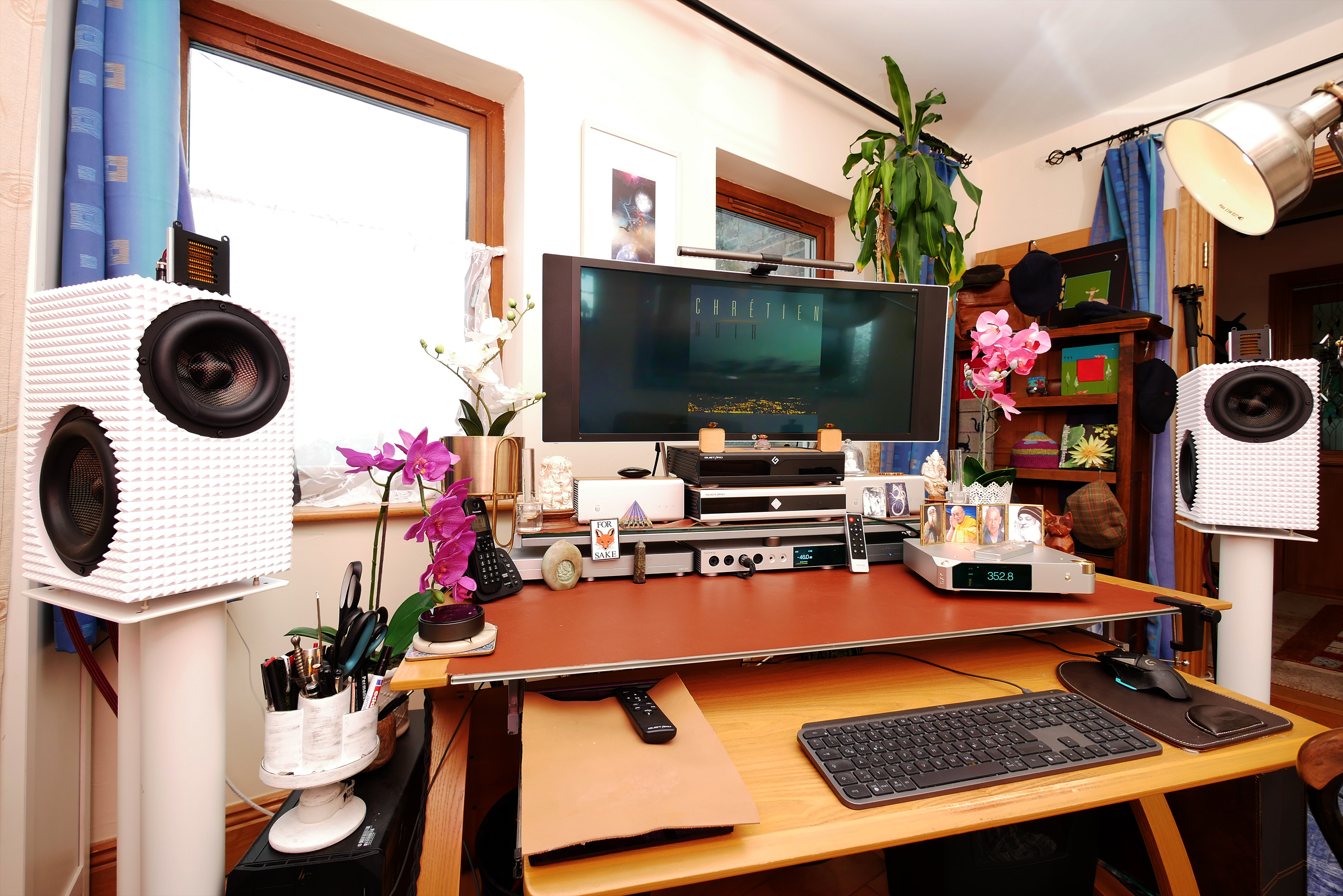
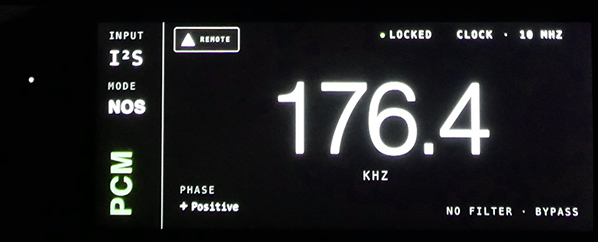 "Our core competence is R2R and for now we remain committed to deepening that knowledge rather than chasing native DSD for its own sake. On a master clock, yes we have plans in that direction and will most likely start with a very good one in the Harmony line to complement our flagship." So the SRC chip's primary rationale wasn't its SRC function? "Correct, that chip essentially makes the unit more robust in how it handles and locks onto a wider range of digital input signals at varying jitter levels. Once it was in circuit for that purpose, it made sense to also turn on its SRC function." This reminded me of DACs during the era of the iPod and early streamers. Some converters then had settings like low, medium and high. Low was tolerant of high-jitter sources like an iPod whilst for best 'high' performance of tightest tolerance, the source needed to present the DAC with a signal far better clocked. The DAC2's new SRC chip seems to address the same scenario without requiring any user intervention. Et voilà, a more source-agnostic DAC is a better more universal DAC already. As the display shows, on my desktop the DAC2 was set to I²S (off the Gustard U26 bridge just then), NOS mode for filter bypass, with the incoming Spotify Premium signal upsampled to 176.4kHz in Audirvana and both internal and I²S clock bypassed in favour of an external LHY Audio 10MHz master clock.










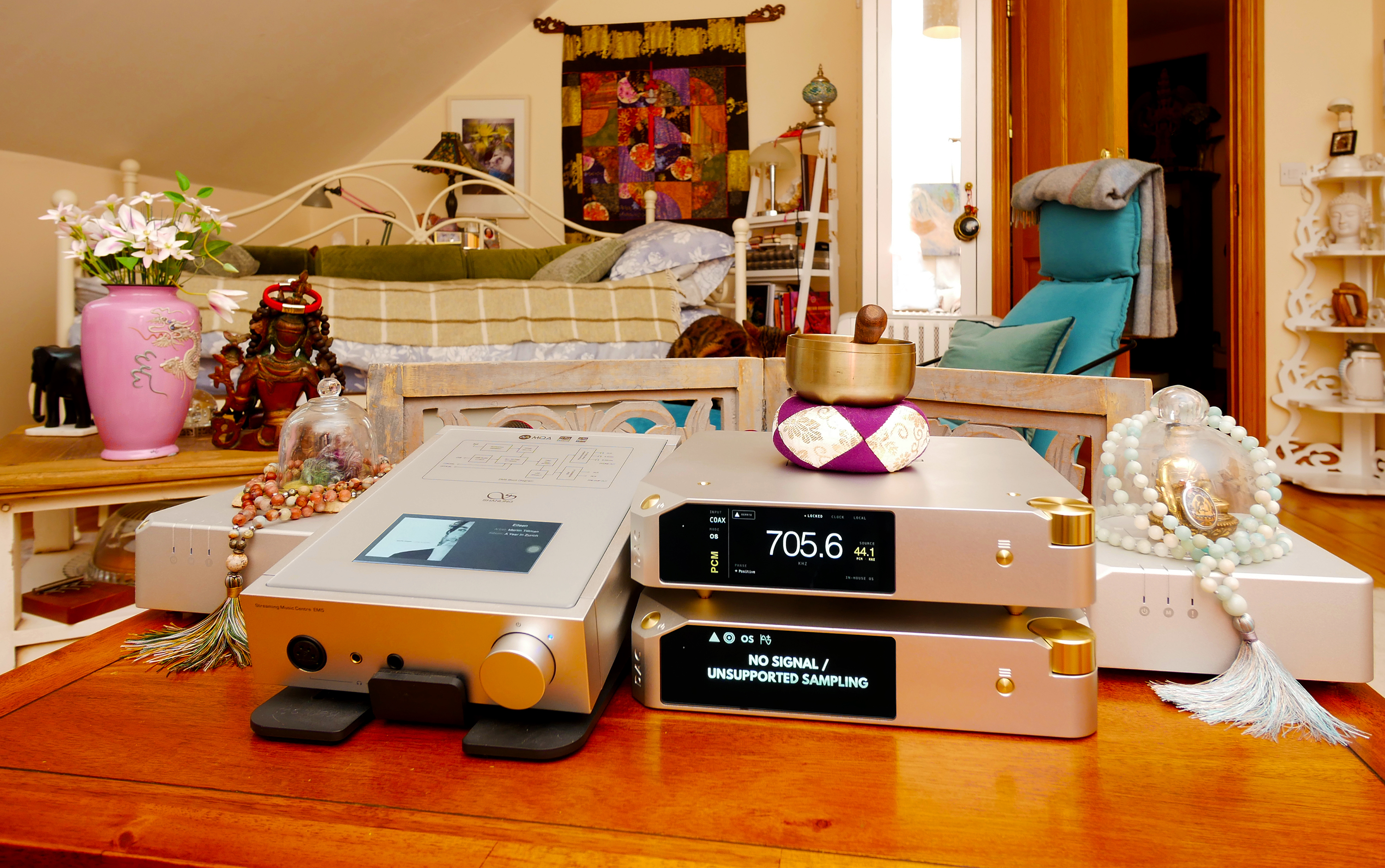
In the smaller of my two upstairs systems, DAC2 and DAC1 beneath it received, alternately via coax, native 44.1kHz data off a Shanling EM5 as 1TB microSD transport. With LAiV's own OS code active, RedBook upsampled to 705.6kHz prior to discrete R2R conversion.
This rig continues with an Audalytic DR70 discrete balanced preamp run off an external LHY 15VDC linear power supply on the lower shelf; then a Lifesaver Audio Gradient Box II active analogue crossover set to 120Hz/4th-order high/low-pass signal splitting next to it. Then it's back onto top deck and a pair of Crescendo Chorus monos driving the MonAcoustic SuperMon Mini rear-ported isobaric widebanders with 15kHz auxiliary AMT via the high pass. The low pass feeds a dual 9½" force-cancelling sealed Dynaudio sub on the inside of the right monitor. Because of its wide spacing and nearfield proximity, this bonsai system creates an out-of-skull headfi experience for immediacy and resolution. Meanwhile its capacious staging is semi immersive—like pressing your nose against a well-lit shop window and feeling nearly inside.