By January 6th, Dragan Solaja wrote in from Belgrade. "I read about Woo Audio and wanted to inform you that in the meantime I offer my Master 300b SET amplifier with direct drive for the Raal ribbons. I developed new output transformers that can do it now." This very niche sector was heating up. Being seriously math-challenged, I asked Dragan about some transformer basics re: ribbon drive. "If you know what you're doing, it's actually not difficult to develop ribbon direct-drive output transformers. Say your transformer primary impedance is 4'000Ω, the secondary for the ribbon headphones 0.4Ω. So 4'000Ω divided by 0.4Ω is 10'000 whose square root is 100, hence your transformation ratio will be 100:1. If we had 100 windings on the primary, we'd need 1 on the secondary. I have 3'000 windings on my primary and 30 on the secondary. I use gapped amorphous C-core. All four, five or more secondaries connect in parallel so their resistance is very low." Now we know all there is to build our own ribbon-direct valve amp. Not.
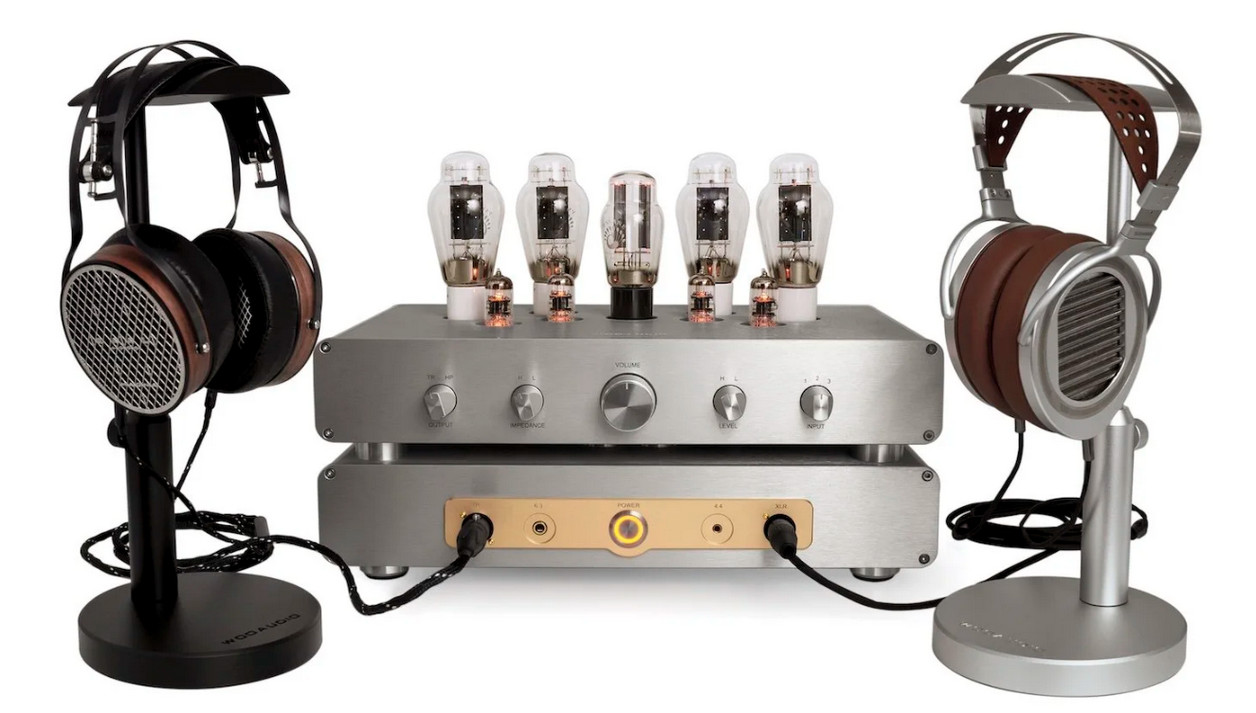 With the standard and ribbon outputs switched, both loads can remain plugged in. They'll never get simultaneous signal.
FiiO CEO James Chung agrees whilst explaining why their first tube product was a DAC with just ±24V on its 6922, not a power amp: "Far more complex, with high build demands. Right now most tube rigs are power amps driving speakers or headphones which ramps up costs, tech hurdles and manufacturing headaches. Compare a full tube power amp to our Warmer DAC where tubes handle just voltage gain in the 'pre' stage. Bigger power needs higher voltage and pricier tubes. More power means more money, beefier PSU plus massive chokes as those transformer-looking coils to tame noise. It's like upgrading from a scooter to a tank. Top tube amps swear by their custom output transformers. These bad boys are expensive, finicky to wind and full of secrets. Different wire gauges, materials and winding tricks can make or break the sound. No wonder there are so many hybrid amps with tubes in the front, transistors in the back. It's for big cost savings. So weighing costs, complexity and more, we decided to kick things off with a tube-output R2R DAC."










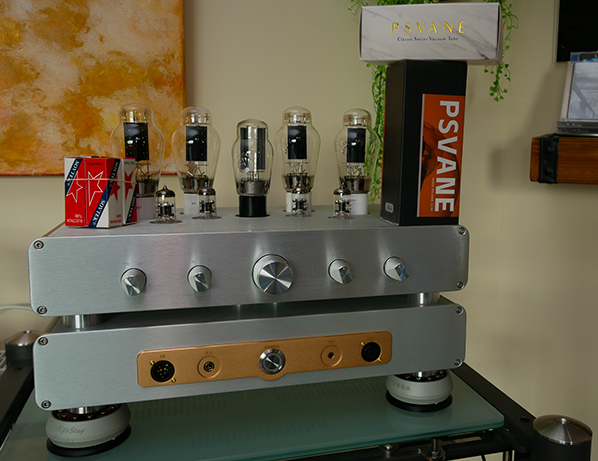 Contrast that with what for headphones is a high-power tube amp executed with microphonic 250V direct-heated glass fitted with very special output transformers capable of handling 0.038Ω to 600Ω headphones without any noise. How "full of secrets" do we imagine that to be? Once we contrast Jack Wu's small NYC boutique with FiiO's PRC factory set up to produce 2'000'000 total units per year—they introduced 40 new models in 2025 alone—we get the WA33 2nd-gen's loftiness of ambition, design difficulty and sell price.
Two weeks after shaking remote hands over this gig, "your demo amp is completed. We will break it in and it'll be ready to ship in four days." When my tracker dropped, it showed two packages of a combined 30kg. Their FedEx route left Long Island for Newark then headed farther West to Indianapolis then south to Memphis before finally departing the colonies and hitting Paris then Dublin. The tube carton arrived two days ahead of schedule, spilling out a quad of Russian Sovtek 6C45PI, a quartet of Psvane 2A3C and a single Psvane 5U4G.
EU-based tube fanciers wanting supply options will know of Germany's BTB-Elektronik who could outfit today's amp with bulbs from electro-harmonix, Emission Labs, Fullmusic/TJ, JJ, Kron, Linlai, Shuguang, Psvane, Sovtek and Svetlana. Linlai and Psvane offer WE replica and various quality ranges for their 2A3, Emission Labs do 5U4G and 2A3 in mesh variants. GZ34 are direct equivalents for Woo's rectifier. Only with the 6C45PI seem our options limited to issue from the Russian Reflektor plant traded via New Sensor Corp.
When the bell rang with the main single but double-thick carton looking none the worse for its long journey, the innards quickly went under the blade of my trusty screwdriver set.
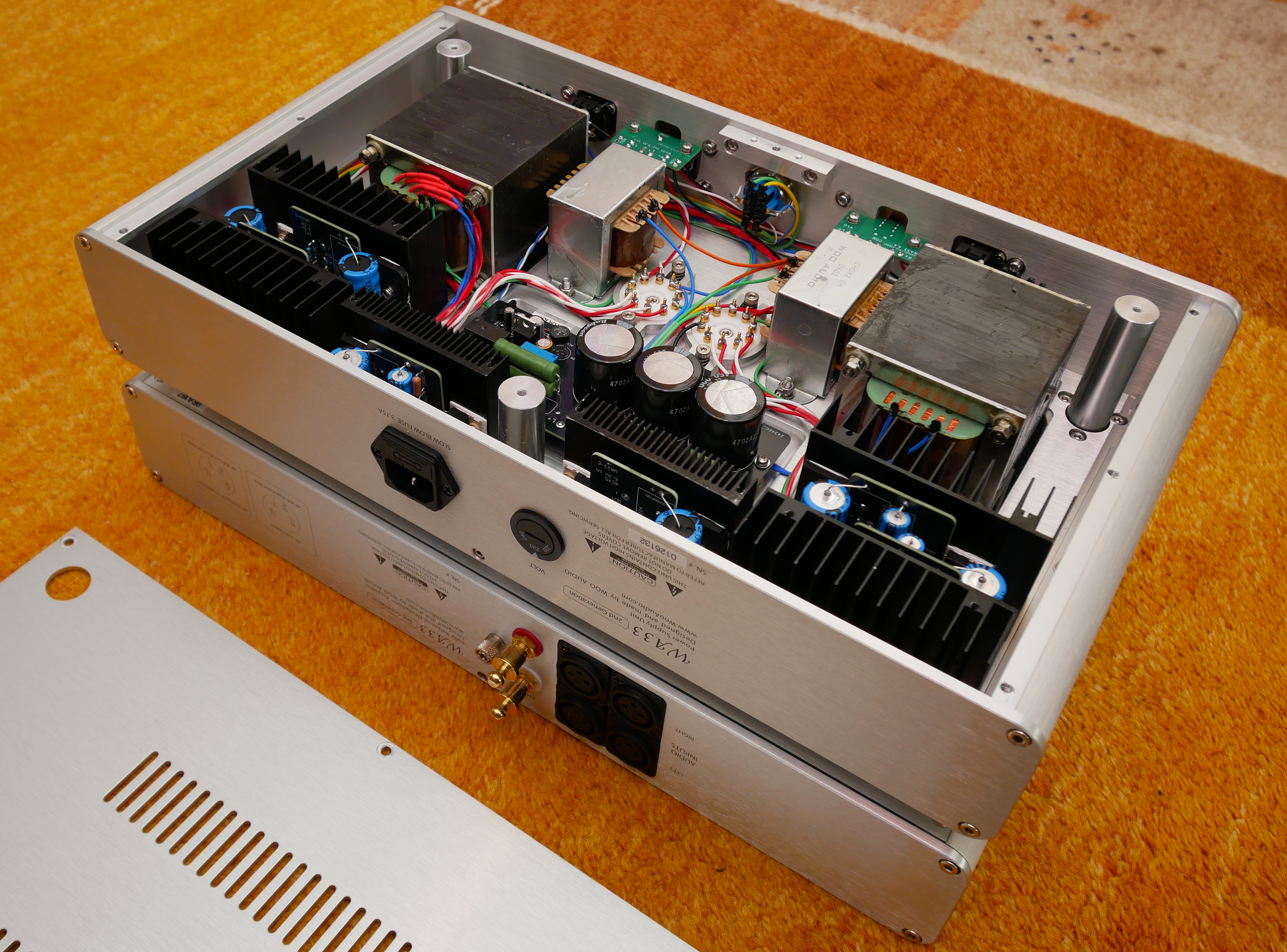
Being permanently twinned, only the lower deck was privy to spying eyes.
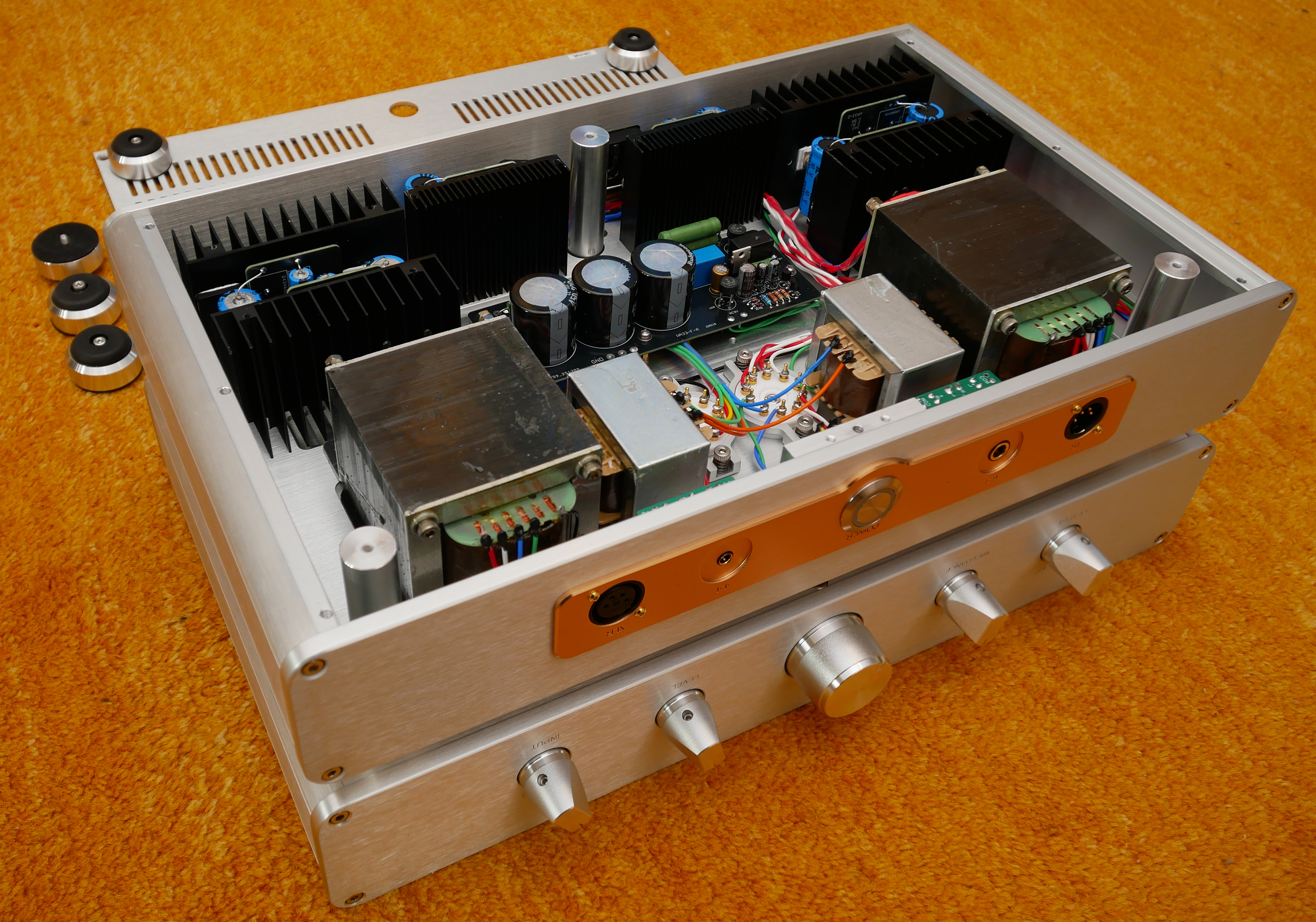
Just so, shoppers clearly spot their pound of flesh – er, iron with plenty of heat-sinked power supply hardware. Deed done, on the bottom lid and three securing footers went. It was time to unpack the glass, mount it then find a proper place on my rack to get toasty and on-ear intimate.