 Ω transformation. "Negative feedback lowers output impedance by creating a self-correcting loop whereby any tendency for the output voltage to rise due to load changes or internal variations is sensed, inverted and fed back to the input to counteract that rise, effectively making the amplifier stiffer and less sensitive to load changes, behaving as if it had much lower internal resistance. It essentially adds an 'anti-voltage source' in series with the output that pushes back against changes, dramatically reducing the overall impedance seen by the load." That was Wikipedia on one popular way to reduce an amplifier's output Ω. My Gold Note IS-1000 Deluxe and PA-10 SE sport adjustable damping factor by adding resistors to their outputs. Those don't lower but raise the output impedance to produce less damping which hi-eff speakers can prefer. Unlike dynamic and planarmagnetic drivers with voice coils, thin aluminium ribbons are 100% conductive across their entire material makeup. It means virtually zero resistance so extreme responsiveness to micro input signal and dynamic demands; yet close to a dead short.
Aleksandar Radisavljevic's first solution to combat the short circuit was a load-resistor bank. That box presented to speaker amplifiers as the 4-8Ω they were designed for. Alex's current solution runs a small transformer whose winding ratio raises 0.038Ω to 32Ω into which copasetic headphone amplifiers should deliver ~3wpc. Already a bijou €399 aune N7 does twice that; in pure discrete class A. The transformer notion came from how ribbon tweeters terminate in small transformers. Though Woo offer an output-transformer-less tube amplifier, all others use classic output transformers – like ribbon tweeters though optimized for the full bandwidth not mere treble. Presumably Jack's direct-drive input activated by the left-most rotary switches in a stack of extra secondary windings to step down 20-600Ω support to 0.038Ω where far more current flows.
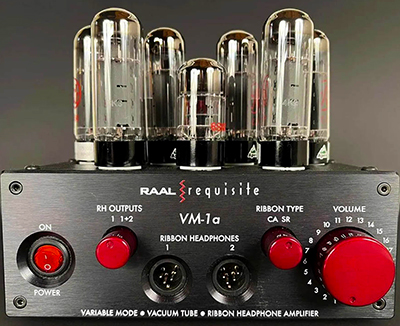
 "The WA33 2nd gen is the first of its kind to introduce direct-drive current output for true ribbon headphones, a technology that bypasses traditional interface limitations… and enables it to operate at ultra-low impedance upholding the superior sound quality of true ribbon headphones… The result is pure unaltered signal transmission delivering feather-light transients, massive dynamic range and breathtaking realism." The first sentence from Woo's website contains a factual error. Dragan Solaja has offered variations on his VM-1a direct-drive tube amp for years and now has the Vortex successor. Then it makes a potentially contestable claim with "interface limitations". If Raal's interface is claimed to be limited by dint of using a transformer—opponents could cite limited bandwidth, phase shift and parasitics—shouldn't Jack's far bigger output transformers with extra current-drive windings fall under the very same jurisdiction? This is just for argument's sake. The only direct-drive ribbon amplifier without coupling iron in Schiit's solid-state Jotunheim R no longer exists. Our current options are the Raal transformer interface into a transistor/tube amp; or a rare direct-drive tube amp. Either way, coupling magnetics remain an intrinsic mechanism of this technology whose inventor favours them over resistors. Unless Jack wants to sell the farm by divulging his special transformer IP, these generalities will have to suffice.







What we still can say is that if you want direct-heated triodes in current-mode direct drive, Jack Wu's are probably the only game in town. Dragan Solaja's variants use EL34 pentodes whilst his Master 300b foregoes the direct input in favour of preceding his single-ended output transformers with Raal's interface transformer. No matter what, until a transistor mensch decides to issue a Jotunheim R replacement for a very limited audience, iron would seem to be part of our on-ear ribbon diet. Hence I for one wouldn't call it a limiting factor but the enabler even liberator. Big words but honestly, I don't see how you could call them spin; only a bit enthusiastic. In which case, pick a drier word like facilitator. "I'd love to work something out with you for a WA33 2nd-gen review. I see that you are a regular podcast guest on Darko. It'd be very fun to talk about a direct-drive tube amp for true ribbon technology." Given the subject's fringe nature and cost, John wouldn't find it suitable for his target audience though merely talking about the concept would be easier on Jack than shipping an expensive sample to be formally reviewed. Was my review a bust then? Not at all. Jack simply wanted to know my colour preference to build a sample. Not being able to double down as preamp which would want remote control and some volume display is a bit of shade when the direct-heated triode guild isn't exactly overrun with preamp members. I know of Allnic, Coincident, LampizatOr, Line Magnetic, Manley, Supratek and Thomas Mayer. There will be more but not many. No matter, this gig will be headphones exclusively.
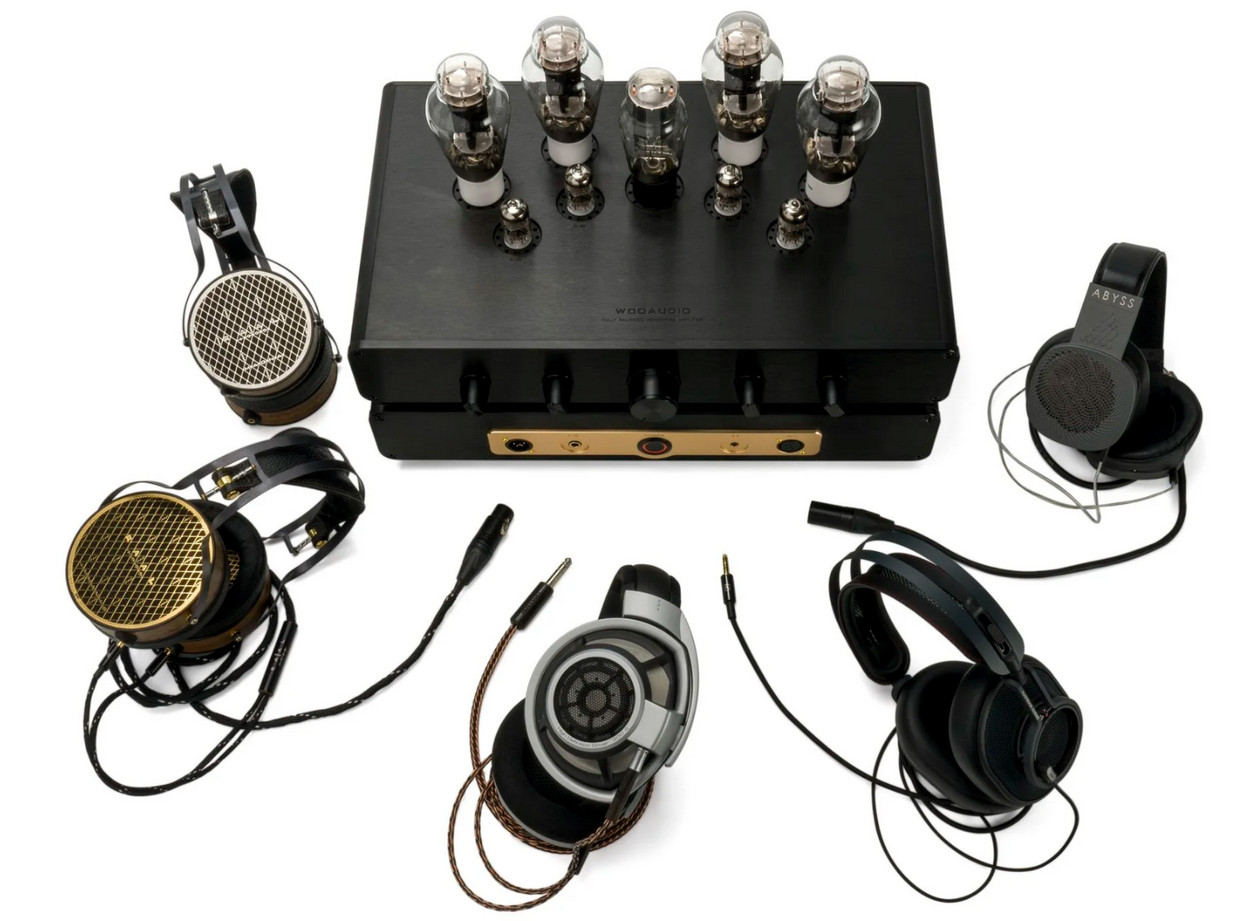
"The WA33 2nd gen employs a pair of output transformers to handle standard and ribbon headphones from two different taps. When flipping the output switch, you select the tap you need. This OPT design was a huge challenge because these ribbons require high current. We had to make many OPT before solving this challenge. We don't use a load resistor which wouldn't be the best approach. Some people have opined that my amp uses an RCD or similar sort of device between a conventional OPT and the ribbon port. That is plain wrong. We designed our OPT to direct-drive ribbons without any additional interface."