First (not necessarily in order of importance) are clock stability and jitter. Digital audio conversion relies on timing accuracy. Every sample must convert at the precise instant defined by the sample rate. Any deviation in timing is known as jitter. Even tiny fluctuations—measured in picoseconds—can introduce subtle distortion or noise during the D/A conversion process. This is why high-end streamers emphasize ultra-low phase-noise oscillators, temperature-stable clock modules and signal reclocking stages. The Rivo+ addresses this with upgraded MEMS clocks and a dedicated output ASIC to stabilize digital timing for reduced jitter. Better clock stability often manifests subjectively as sharper imaging, clearer transients and more stable soundstaging. The second critical factor is electrical noise. In modern digital sources, the biggest threat to sound quality is not bit errors but electrical noise. Computing components like CPUs, displays, switching power supplies and network interfaces generate UHF interference. That noise can propagate into the DAC through USB's ground line and power rails, even electromagnetic coupling depending on how specific components are arranged on the circuit board. USB in particular provides a direct electrical connection between devices so noise can travel along the ground and power lines into the DAC's signal path. Once there, that noise can disrupt reference voltages and clock circuits, theoretically even find its way into the analog output stage. When electrical noise is not obsessively kept out of sensitive circuitry, you'll often hear reduced micro detail, fewer tonal textures, harsher treble and flatter soundstaging. Keep that in mind as we discuss the differences between the Rivo+ and thrice-priced Lumin U2. This is also the main reason linear power supplies still exist in audiophile streaming and why I'll comment on the Rivo's sound with/out optional Lineo5 power supply.
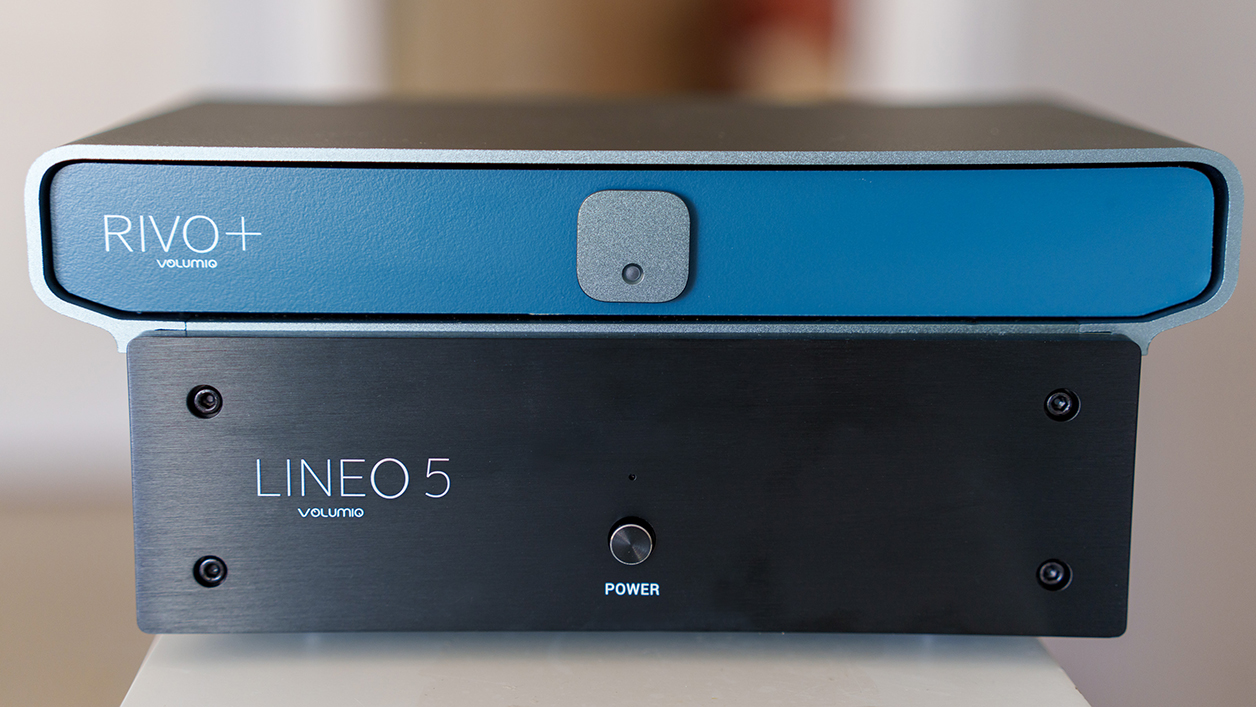
Which takes us to our third critical variable, power quality. A standard switch-mode supply like the one bundled with many streamers prioritizes efficiency and cost. Unfortunately, switching supplies generate high-frequency noise that can leak into audio circuits. It doesn't mean that high-speed switching power supplies cannot perform well. Axxess, Aavik and Mola-Mola would all beg to differ but very special care must be taken to keep noise out of the rest of the circuitry, resulting in components that are usually no cheaper than those equipped with linear power supplies in the first place. Volumio's Lineo5 addresses this by replacing the switching adapter with a transformer-based linear design delivering 5V/5A of low-noise power. Well-designed linear power supplies typically deliver lower ripple, reduced RF noise and more stable voltage rails. In return, theory promises us blacker backgrounds, richer tones and better 3D layering. Practice on the other hand shows that the outcome is far more linked to implementation than type of power supply. In the case of the Rivo+, there is a difference favouring the Lineo5 so theory and practice seem to align.









The fourth impactful choice for streamers is the design of the digital interface. By nature, USB, AES/EBU and I²S have profound technical differences which can be exacerbated or mitigated by implementation. Natively USB has very low noise isolation and can suffer from fairly high jitter. It's why in the early days of computer audio, it was seen as a poor connection but nowadays various levels of filtration in place both at the source and in the DAC couple with asynchronous clocks and buffers to limit the woes of USB. But even then, external filters built into the USB cable or between streamer and DAC still have audible and beneficial effects. AES/EBU fares much better when it comes to noise since it's balanced and transformer isolated. It's in principle a very good connection but the highest bandwidths of high-resolution PCM and DSD may require a dual AES/EBU connection with proprietary protocols. That said, for 99.9% of the music recorded today, the bandwidth of single AES/EBU is more than enough. On the negative side, AES/EBU connections embed the clock signal directly into the digital audio data stream using biphase-mark encoding, allowing receiving devices to lock onto the source's timing without a dedicated clock cable. This self-clocking mechanism enables synchronization but is susceptible to jitter.
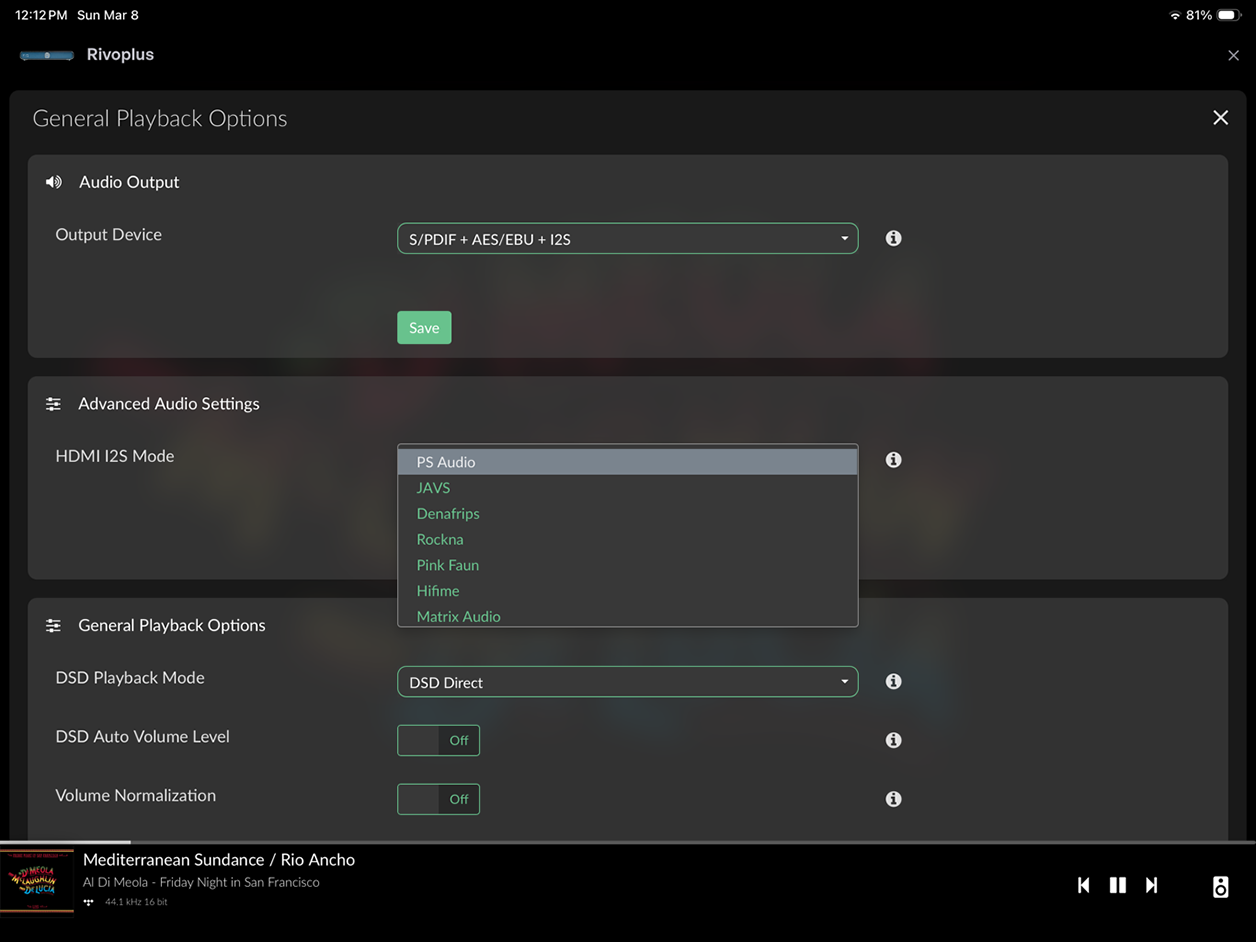
The same limitation applies to S/PDIF. Since the clock information is recovered from the music data, its accuracy is highly dependent on the absence of fluctuations in the data stream. S/PDIF also suffers from more limited bandwidth and poorer noise isolation, making it in theory the least desirable connection although brands like Nagra have demonstrated that simplicity can be beneficial when designing digital circuits. The S/PDIF inputs on their early DACs was often preferred over any other type of connection. Which brings us to the newer kid in town which should address all the limitations of its predecessors. I²S, now increasingly common via HDMI, offers the highest bandwidth on paper as well as separate paths for music data and clock information. That eliminates any processing to recover the clock signal hence seriously reduces jitter; if implemented correctly. Unlike the other connection types, I²S doesn't obey an international standard and therefore can be implemented differently between brands, potentially causing issues if at least one of the components isn't able to change its pin configuration to accommodate the other. Here the Rivo+ shines, offering a drop-down menu to pick your DAC brand and match its configuration automatically. Alternatively, you can customize the Rivo+'s HDMI output manually but Volumio already list over a dozen options and seem to still add more. This is by far the most convenient solution I have seen anywhere and makes guesswork irrelevant.