Country of Origin

Reviewer: Frederic Beudot
Digital Source: Aurender A10 streamer, Denafrips Pontus DAC, LHY SW6 ethernet switch, Jay's Audio CDT2 Mk2, Holo Audio Cyan 2 [on loan], Mola Mola Tambaqui [on loan]
Analog Source: VPI Scout 1.1, Zu-DL103 MkII, Genesis Phono Gold, Kitsune KTE LCR-1 Mk5 phono [on loan]
Amplifier: Triode Labs 2A3i, Enleum Amp 23R
Speakers: Ocellia Calliope .21 Twin Signature, Rogers LS 3/5a, Zu Essence
Cables: Zu Varial, Ocellia RCA cables, Zu Event mkII speaker cables, Absolute Fidelity custom XLR to RCA interconnects, Furutech USB and interconnects
Power Cords: Zu Mother, Ocellia power cables, Absolute Fidelity power cable
Powerline conditioning: Isotek Nova, Furutech
Sundry accessories: Isolpads under electronics, GIK Audio room treatment
Music Playlist: Tidal only.
Room size: 18'x14'x10'
Review component retail: $1'499, add $499 for Lineo5 [not available in the US at time of writing]
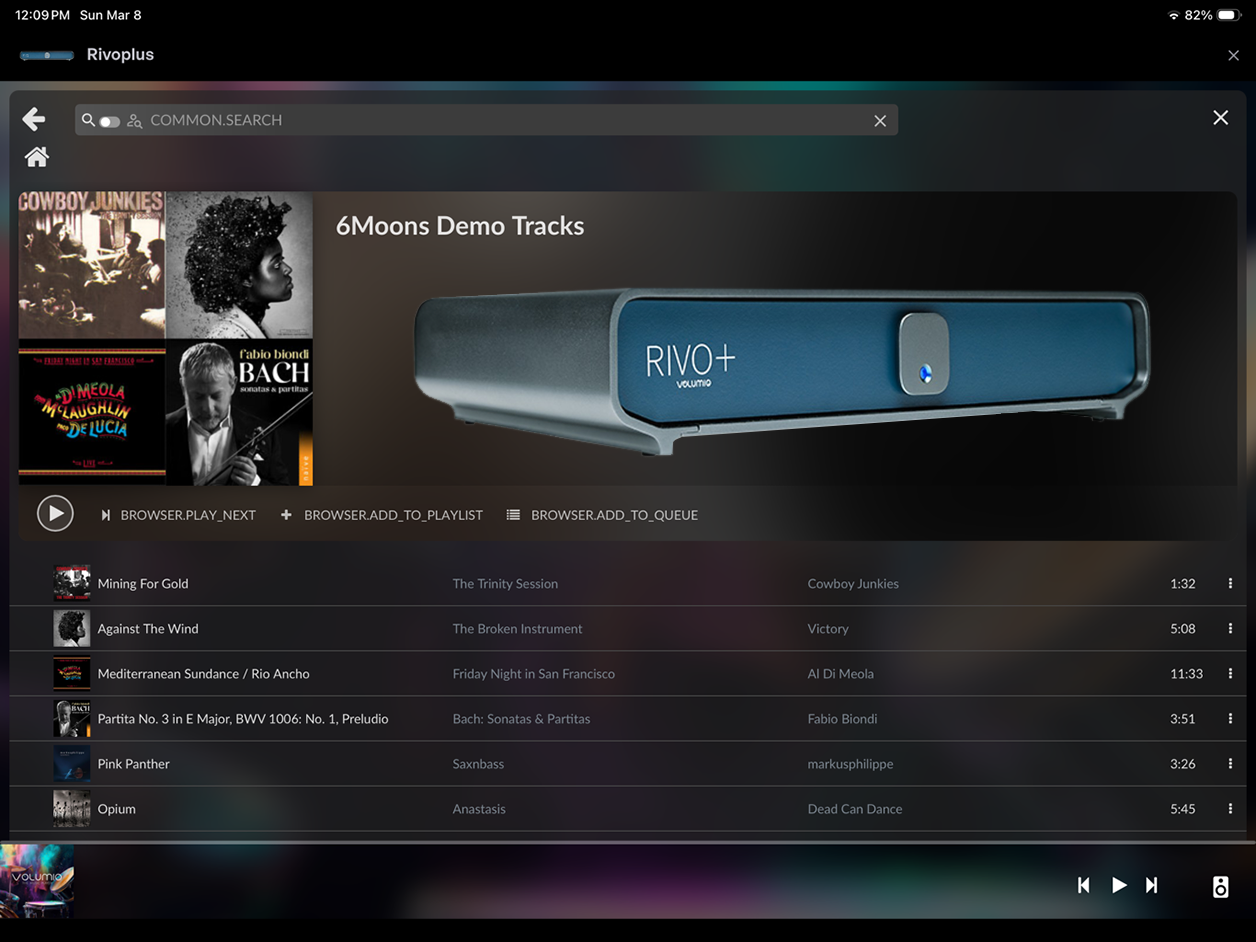
The story of Volumio reads like many good audio stories do: it began as a hobby. In 2013, Italian engineer Michelangelo Guarise starts developing a lightweight Linux-based music player for small computers like the Raspberry Pi. The project—originally called RaspyFi—quickly evolves into Volumio OS, an open-source audio distribution platform optimized for low-noise playback and simple network streaming. By 2015 the software has grown a passionate community and Volumio becomes a company in Florence. In 2018 hardware follows with the first dedicated streamer, the Primo. Recognition arrives quickly: the Primo later receives an EISA Best Digital Source award, validating the company's software-first approach. The modern Volumio lineup—Rivo, Integro, Primo V2, Motivo and now the Rivo+—represents the maturation of that experiment but their priorities remain clear: software ecosystem first, digital purity second, design minimalism third. In other words, Volumio is the rare hifi firm whose core competence is software over hardware but as their Rivo+ now demonstrates, their hardware chops no longer lag far behind. The Rivo+ is not a DAC, amplifier or all-in-one. It is purely a streaming transport: a device that extracts digital audio from networks and hands it over to a DAC as cleanly as possible. That approach already hints at its intended audience: owners of serious external DACs.
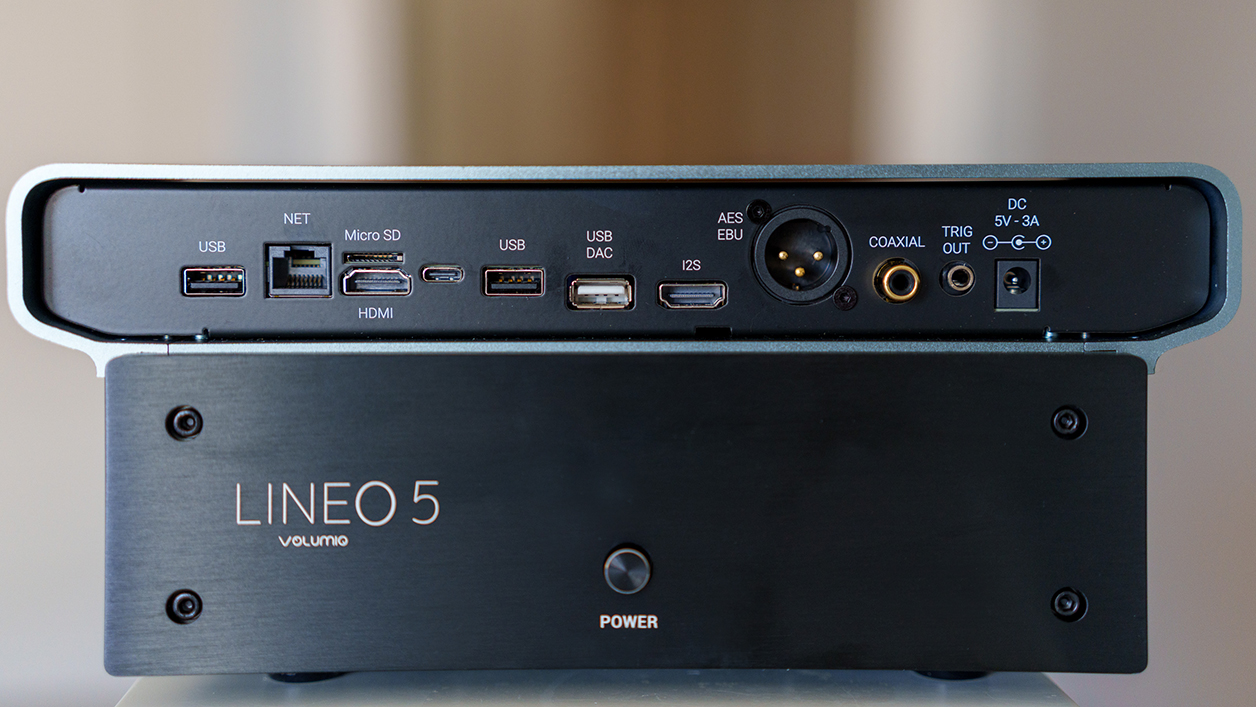
To achieve their goal of digital purity, Volumio didn't skimp on components and the Rivo+ wouldn't feel out of place against the best home-brew music servers but with a good dose of sober charm added over the usual black box. A quick glance at the specs reveals an Amlogic S905D3 quad-core 1.9 GHz CPU, 2GB DDR4 RAM, 16GB eMMC storage for the Volumio OS, Gigabit Ethernet, 802.11ac WiFi, Bluetooth 5.0 and a complete set of outputs comprising USB and I²S up to PCM768DSD256, AES/EBU and coaxial S/PDIF. The only oddity resides in the fact that selecting USB disconnects all other outputs and vice versa. In other words, selecting USB limits you to connecting a single DAC but using any other connection allows us to feed up to three DACs simultaneously. The built-in Volumio OS comes with all the plugins and streaming client interfaces that you'd otherwise need to purchase separately if using Volumio OS on a home-built server. The Plus revision introduced a dedicated ASIC for S/PDIF and AES/EBU plus upgraded MEMS clocks to reduce jitter and stabilize digital timing. Physically the unit is compact and understated: a slim aluminium chassis with almost nothing on front shy of a status LED changing colour. To my eyes it is a streamlined and elegant design, a welcome change from many luxury hifi components favouring ostentatious bling.










When discussing the Rivo+, one must talk software. With Volumio the operating system should arguably be the star of the show and there is no debating that this OS is feature-rich with native support for Tidal, Qobuz and Spotify Connect, DLNA/UPnP, Roon Bridge, multi-room playback and AI-assisted search and music discovery. On that latter point, Volumio OS does provide reasonably rich content about artists and tracks played, maybe not at Roon level but significantly enhanced over for example the apps from Lumin or Aurender. The interface runs in a browser or mobile app. Navigation feels lightweight and responsive but in my house was somewhat buggy, not as problematic as Aurender's but certainly not as worry-free as Lumin's. Getting the Rivo+ connected to my network through a wired LAN connection as would-be best-case scenario took a few attempts and reboots of app and streamer. Once connected though, it remained rock solid. In actual use, whether user error or glitches in the matrix, I often found tracks I didn't select pop up in my playlist and at times a full album would queue up to play when I had only selected a single track. Those were minor annoyances. Once on line, the Rivo+ offered a very smooth and slick interface overall, with many features not always found on pricier models. That said, the Rivo+ can't convert DSD to PCM, something I have enabled by default in my Lumin U2 since my Mola Mola Tambaqui sounds consistently better when fed PCM not DSD.
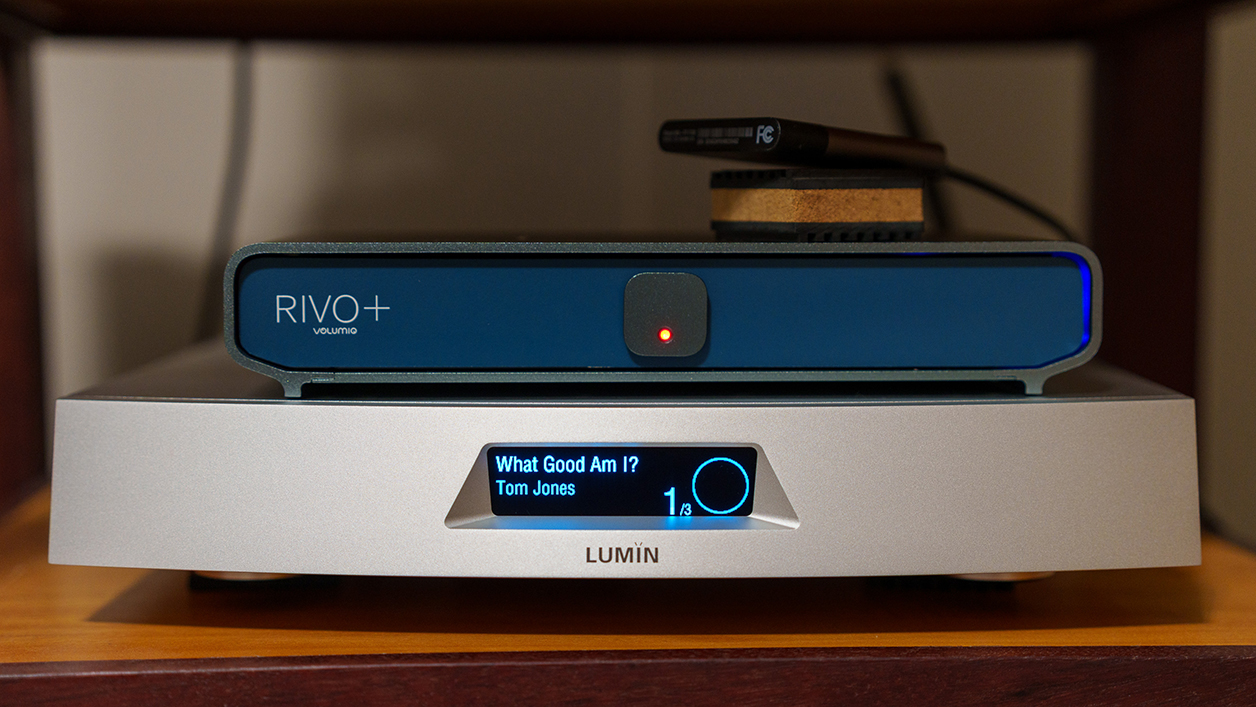
Before jumping to listening commentary, allow me a short but relevant technical digression. Among rational engineers, the idea that digital transports sound different can provoke skepticism. After all, digital audio is just data packets. If the bits arrive intact, every streamer should sound identical, shouldn't it? In theory—yes. In practice, things become a lot more nuanced. The job of a streamer like Volumio's Rivo+ is not merely to deliver bits. It must deliver them with extremely precise timing, minimal electrical noise and stable clock references so the DAC can reconstruct the analog waveform most accurately. That's where differences arise and five technical variables dominate the outcome.