Hence the 3D-printed newcomers would have to make the rounds against my entire arsenal. But why stop there? From the very start it was clear that these Polish footers were conceived as wallet-friendly solutions for listeners who just enter the resonance-control arena for the first time so perhaps are still somewhat sceptical about the entire exercise. So it made sense to first confront Vibron with the kind of isolators most users start with. My initial comparisons thus weren't against elaborate isolation solutions but standard-issue feet supplied with the gear itself. Under the Vox monitors those were spikes. The Trilogy preamplifier stood on its original Krion washers, the LampizatOr DAC relied on its stock machined aluminium barrels. All represented the sort of baseline many audio systems begin with. Only after establishing that reference point did Vibron move on to more demanding sparring partners. Let's first explain what to expect from purpose-designed decouplers. Early on their kind often suggests that the system's volume was dialled back a touch because structural gain is cut. Then follow easily traceable changes in the bass which digs deeper and feels more agile, substantial, anchored, defined, controlled, elastic, composed, powerful and dynamically keen. Room talk previously injecting hollowness and boom lowers. The overall picture gets cleaner and more specific, vocals and instruments liberate from grunge and mud to develop authentic density, colour, smoothness and articulation. The backdrop turns inkier and cleaner so fine detail against it becomes easier to track. The soundscape expands and gains complexity, images appear more focused, expressive and contrasting. Many top-shelf anti-vibration accessories deliver these qualities without introducing major downsides or trade-offs. The essential difference between them usually narrows to degrees of effectiveness. The higher it is, the easier our ears register and appreciate the changes they bring about.
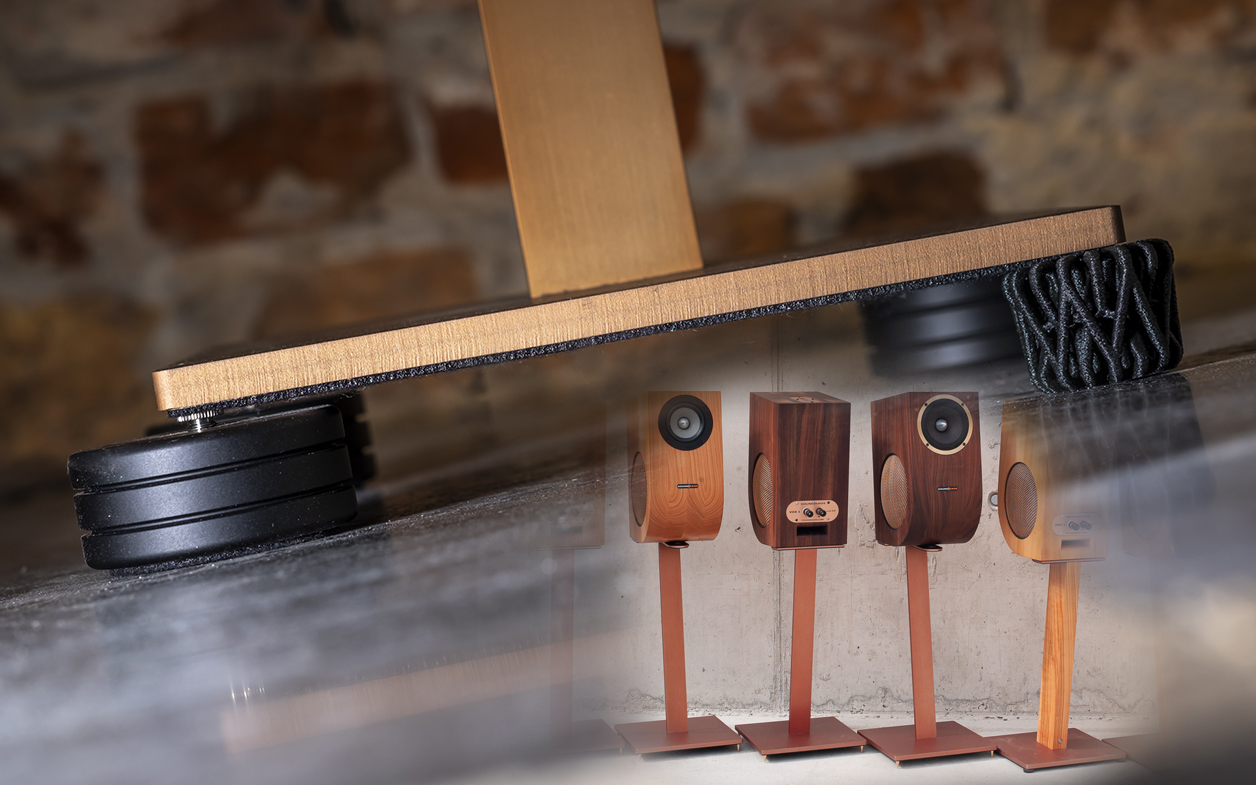
All of the above described how Vibron went about its business under the Vox monitors in lieu of their stock spikes. If one phrase had to sum up their contribution, "profoundly effective" would be it. The delta of change with/out was enormous. To be clear, that outcome was hardly unexpected. As nuanced and investigative as they are, the Swiss speakers on their skinny legs atop brass plinths respond remarkably nuanced to all manner of accessories. Decoupling footers in particular benefit the most because they dramatically improve bass response on reach, control and overall firmness. With Vibron in play, the Vox suddenly seemed endowed with larger woofers in a more voluminous cab. Considering that this happened with just three M-sized footers per speaker, the return on investment was no less than splendid. A soundscape growing in all directions filled with more saturated explicit images were extra and highly desirable upshots. At that point the smallest Vibron had already made its victory laps, a bit shocking for the most affordable version in the range.









My preamp and DAC too enjoy proper resonance control for two straightforward reasons. First, both devices sit early in the signal chain. Whatever they generate, downstream hardware cannot undo. Second, both use tubes which by nature appreciate a mechanically calmer environment. Each LampizatOr DAC I've had the pleasure of owning has responded clearly and consistently to decent power delivery and upgraded footers. As accomplished as it is on its own, the Horizon360 without superior support leaves a lot off the table. One quick swap between its stock squared legs and three L-sized Vibron made that point. The latter effectively reinforced the machine's muscle, spatial reach and sense of momentum to sound even more energetic, lively and open. I'd suspected as much beforehand. What I didn't was how little it took to get there. Just to clarify, the gains described followed a mere €99 expense. For the sake of argument, let's round it to €130 for VAT and shipping – roughly 0.18% of my LampizatOr's ask! That math is merciless. I struggle to think of any other accessory capable of delivering a comparable uplift anywhere near Vibron's price. Nothing comes even close. This price-to-performance ratio might be the most outrageous aspect about them, period.
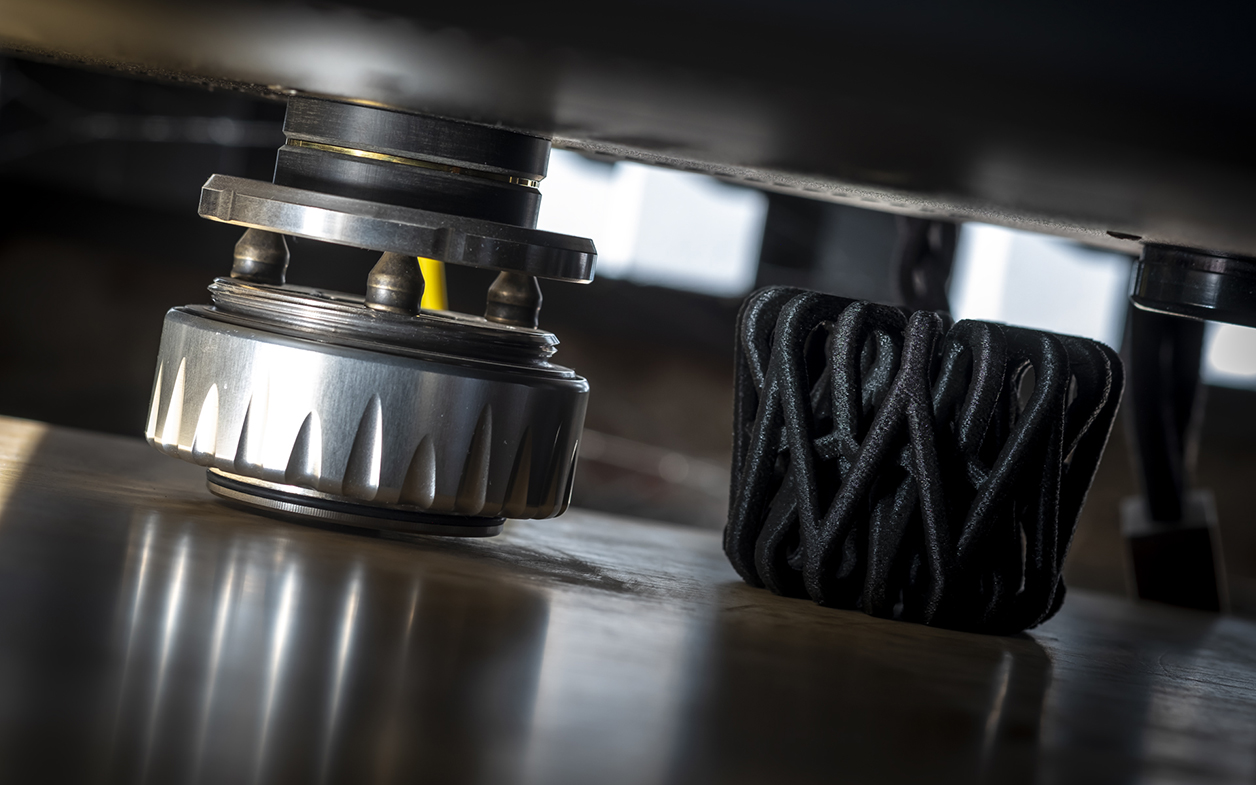
To not over-sweeten this tale, next Vibron had to compete against Auva 70 footers under the Vox stands. Auva primarily distinguish themselves with extra tone density, bass authority and a more tactile presentation. Compared to the stock spikes, the Stack Audio isolators make instruments more physically present and fleshed out whilst sharpening my insight into fine musical detail. Bass digs deeper and carries noticeably greater weight yet remains controlled, energetic and dynamically capable rather than slow or overly warm. At the same time the soundstage expands and grows more immersive, images appear more three-dimensional, texturally rich and lifelike. In short, the Auva 70 footers give the Vox monitors a denser, more grounded and tactile sonic perspective while preserving excellent resolution and clarity.