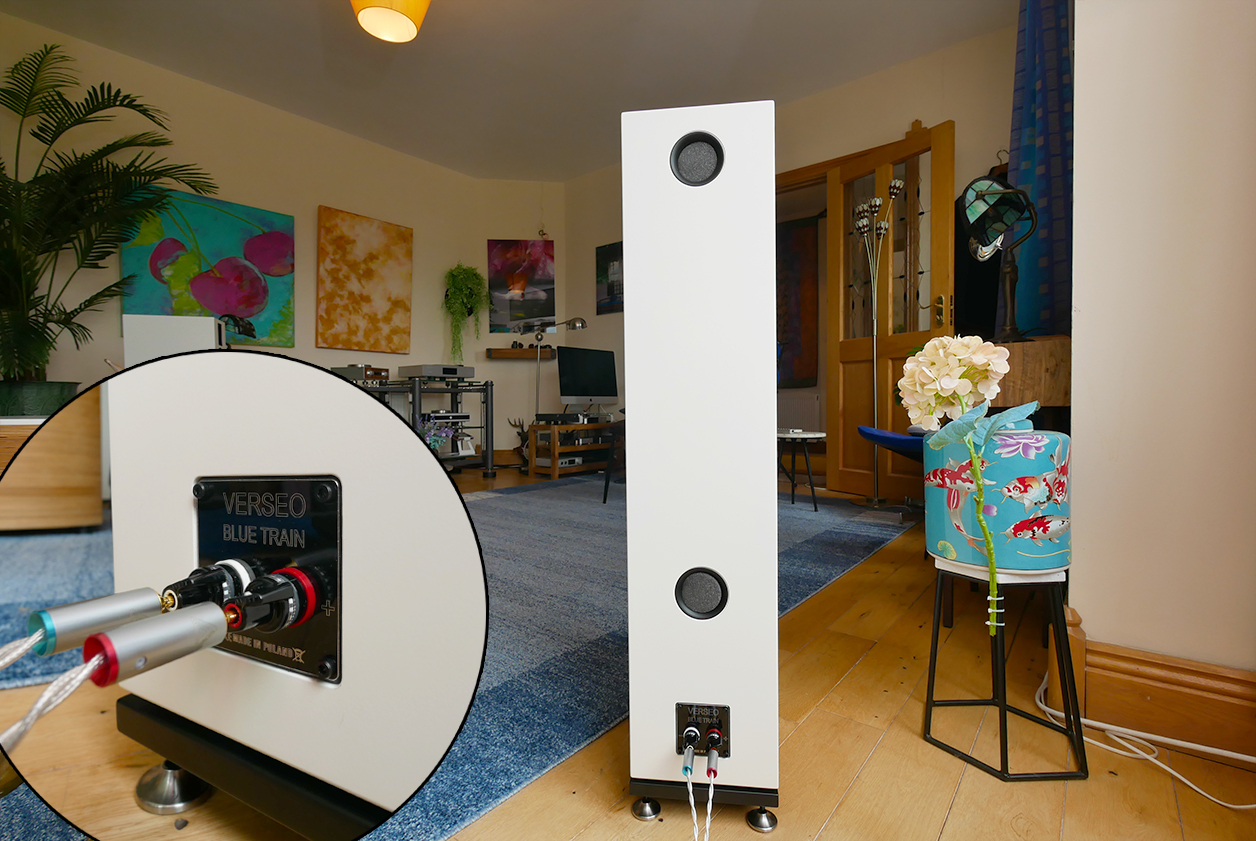
My first full-range session didn't last half a track. Blue Train's standard dispersion rode my 70Hz mode like a rodeo hopeful clings to a bucking bronc. That wasn't the speaker's fault but my room's. Just so, in true rodeo fashion this spectacle couldn't last. Used to a far smoother side, I reverted back to my usual 2.1 split whilst waiting on the port bungs' arrival. That happened just a day later. Below we see all ports plugged; plus another look at the new winged WBT posts launched at Vienna HighEnd 2026 here hosting banana-terminated Exact Express Fire. Converting to a quasi sealed alignment obviously couldn't change the <100Hz radiation pattern. What did it affect? Surprisingly little amplitude loss; definite improvements in the time domain. That tightened up enough inner ringing aka textural looseness to proceed in solo mode as the vast majority of buyers would who expect and welcome the remaining bloom. My circumstance clearly called this easy set of bungs here to stay. It's a literally cheap trick that can be surprisingly effective. Your setup may not need or want it but having the option can be a nice difference maker.
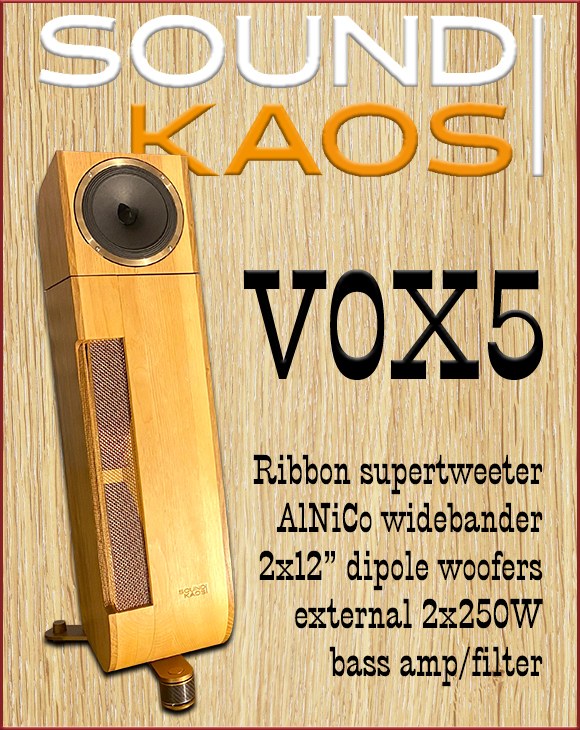
Now my general take was indeed of quite a lot of family resemblance to my IQ. Starting on top, whilst my ears called the smaller dipole AMT airier overall, the twice-sized monopole operating down lower actually flashed superior rise times for still higher treble dynamics and more fastidious tracking of short-lived metallic oscillations. It felt like a trade-off between a dipole's spatial benefits; and leading-edge gains from a part more advanced. I've spun like a broken record on declaring Mundorf's open-backed air-motion transformers my favourite tweeters in many prior reviews. Blue Train's box-loaded version made the same list. Once you fall in lust with these pleated planars, conventional 1" silk domes bore. Perhaps a diamond sort could counter such an opinion? I've not heard one at home to know. From Qualio IQ to Virtual Viper and ModalAkustik MusikBoxx, I've bought deep into dipole AMT. Even my SuperMon Mini from MonAcoustic runs a small AMT of the monopole sort, the sound|kaos Vox3a a Raal ribbon. In short, zero dome tweeters. Descending into the vocal range with the overtone firmament of upper harmonics above it, IQ's extra dipole spaciousness and treble sheen once again asserted themselves; plus greater dynamics from a rear wave free to energize the room. Whilst Blue Train's textures weren't as glossy so more satin, its tonality was very familar. It also imaged and staged ~90% as well. Given how IQ trumps that discipline, it still puts Blue Train into its top third. Most surprising perhaps was convincing fortitude and power in the lower registers. Refresh your memory with the earlier photo of Qualio/Verseo side by side. Visually IQ suggested clear LF dominance. In practice, Blue Train's sleeker profile does obviously romance the domestic eye but the bass-hungry ear need brook no heavy-hearted compromise in trade. As we've seen with Børresen's hi-tech 5¼" composite cones, Raidho's versions and the Seas variants of Storgaard & Vestskov, today's premium dynamic drivers can dish out unexpectedly for their diameters. The top drivers from SB Acoustics belong to the same elite class. Endowed with 8½" compound surface where this 2½-way parallels its woofers below 300Hz, Blue Train is just an inch off my upstairs 2×9½" force-cancelling sealed Dynaudio 18S sub. The latter's active high-power class D drive nets it 25Hz reach. So much for first impressions. Just like the compact narrow €21K 2×6" Raidho X2.6 had in that prior review, for sonic completeness aka bandwidth, Blue Train needed no sub assist even on loaded material. Today's premium smaller drivers and clever tuning no longer rely on copious cubic volumes to do justice to modern music's bass demands. Whilst burlier classic profiles à la JLB or Klipsch—of broad stocky cabs on short frame stands—are a parallel path of regrowing popularity, folks with medium-sized rooms who prefer slim have classy alternatives.






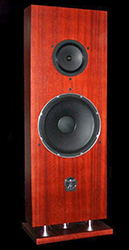 Mini interlude for a psych eval. Having now heard a number of speakers authored by Marek and Grzegorz respectively, not as a team but separate individuals, I have one basic observation. Marek strikes me as the more conservative of the two and an intrinsic smoothie who favours an uncomplicated easy sound. Greg's creativity is more unconventional. He is an adrenaline junkie ever more off the leash of usual design constraints. Though in the seat possibly less than this reads on the page, theirs are clearly divergent paths. With Virtual Hifi's Viper and Cobra, presently Supernova and eventually Basilisk, Grzegorz pursues ever greater extremes. With his later Cube Monet, Qualio Quanteen and now Verseo Blue Train, Marek stays far closer to the middle. Each path has its own merit and appeal. And here ends our brief visit to the hifi shrink. "How did that make you feel?"
Marek derived a good chuckle from it. "That made me laugh." That's far better than recalling a traumatic episode. It also inspired him to give us a preview of upcoming Verseo attractions. "Among other things, Verseo will offer dipoles based, if not exclusively, on the next-gen widebanders developed at Verseo. These won't be 'classic' mainstream designs. I'm also considering widebander designs as a platform for developing high-end midrange drivers for multi-way designs. Future Verseo models will exploit 6" and 8" OEM drivers already in my collection. Verseo doesn't aspire to become the Don Quixote of hifi. We create systems for people without crazy prices, ideologies or unicorn legends. We take people seriously, offer reasonable distribution terms and prioritize accessibility and ease of listening in as many places around the world as possible. We understand how differently the same system can perform under different conditions. I found a photo of the first dipole I designed with my friend Jacek 17-18 years ago under the Sensus brand. It combined a Visaton B200 widebander with phase plug and 15" woofer. When I began to collaborate with Pylon, I put the Sensus and Cube projects on hold for a few years." Unlike the hybrid dipoles at Qualio, doesn't this suggest pure Verseo dipoles with Cube-inherited widebander DNA around the bend? Now let's hop back onto today's Blue Train.
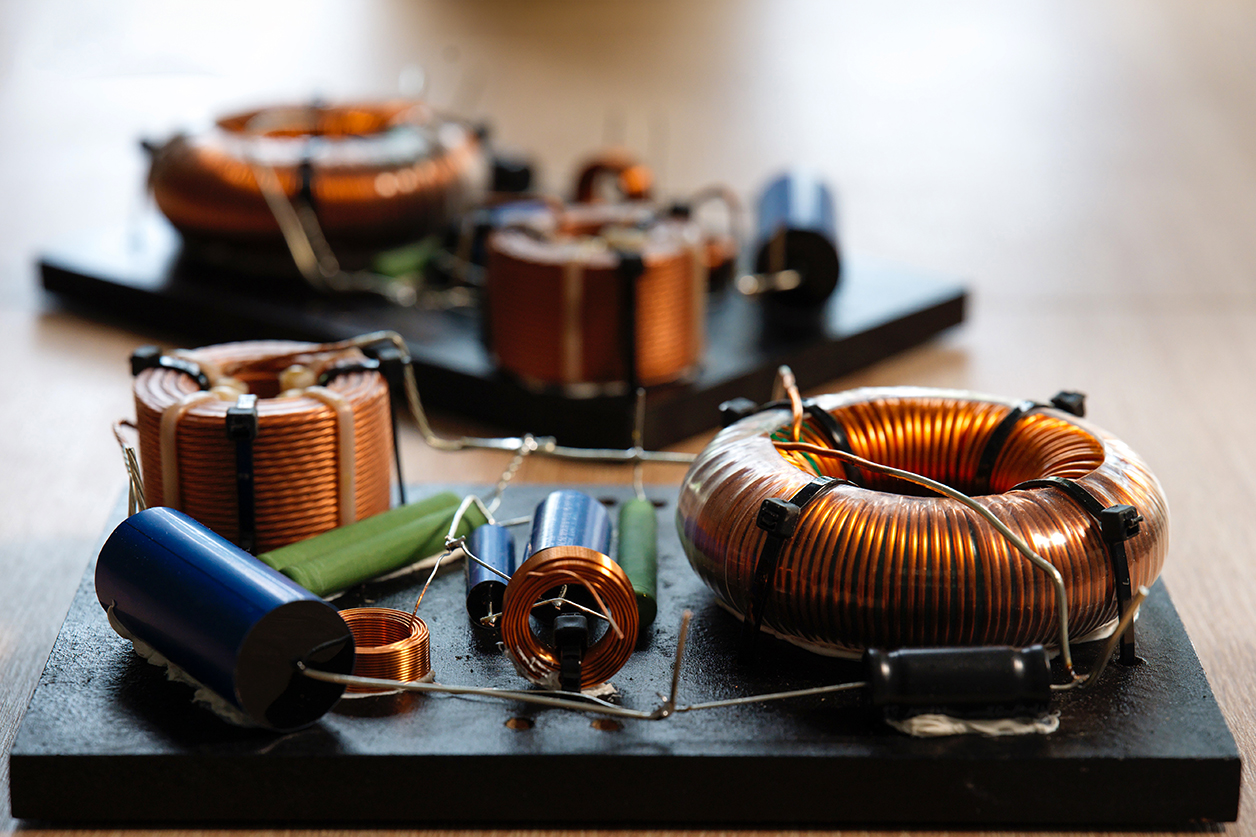
Having ascertained how for most music this speaker's lower bandwidth is complete, I reverted to my usual 2.1 labour split for the most linear least room-reactive bass my hardware is capable of. Reading how Blue Train contrasts to Qualio's IQ which itself reframes single-driver wideband performance from Cube's earlier Nenuphar, we saw how two strands of design DNA—each widely reviewed to furnish useful markers—inform Blue Train despite looking very conventional. Again, let's call our Verseo a variation on a theme Cube launched. There single-driver LF limitations enforced a TQWT aka tapered quarter-wave tube cabinet of substantial cubic volume. That played Siamese twin to the folded rear horn as the other signature solution of purist single-driver designs which Voxativ's original Ampeggio and Rethm's Saadhana pursued. At Verseo, Marek achieves equivalent LF bandwidth with superior treble resolution in a far smaller albeit ported cab whilst aiming at standard amplification not exotic SET. That's Blue Train on a postcard.