The heroics of zero. Traversing familiar piano and violin terrain, the B200 proved a bit smaller but more controlled in the lowest left-hand registers, a bit gentler but fully extended in the far right-hand keys. Perceived data density—how much stuff populates the shop of our soundstage to feel stocked to the rafters or betray empty shelves—was enormous. If we visualize the area between my speakers as a 3D grid of tiny space cubes either empty or occupied, the B200 had apparently filled up more of the previously empty ones. Primary images always register. It's the space around and between them which contains its own sounds. The smallest of those usually absorb in our system's noise floor. Their cubes sit empty. This typically is true for those in the far rows and outer quadrants of the stage. When the noise floor lowers even a bit, more of those cubes fill up with micro data. Apparent emptiness reveals more contextual subtleties. I call it more audible recorded space. If sounds are something and the space in which they arise is silence i.e. nothing, we suddenly here faint somethings where previously there was nothing. Suddenly our primary images embed in finery of reflective halos, of their emissions radiating and mixing with neighbouring emissions. All of it is far too complex and nanosecond elusive to parse other than say that to the ear/brain, it flatly registers as more presence and fullness. It's not a stripped-down denuded presentation. It's fully dressed then carefully accessorized. That's obviously directly contingent on recorded quality. The more real or artificed decorations of venue data a production accounts for, the more our high-resolution gear can retrieve. The intense retrieval of the B200 were the very heroics of zero; the fruits of super-low self noise and absence of personality overlay. By implication, the gap between dynamically redlined wall-of-sound productions and those of high recorded dynamic range widened. It's not that the former suddenly sound worse but the latter so much better. By contrast it makes the compressed crap feel crappier. It's obviously not. We're simply more conscious of the gap and what could be but isn't. This can annoy extra hard when a favourite artist usually diligent about their mastering suddenly breaks bad. Their music still thrills but now its sound ills. Will that make us abstain? If so, our sonic sensibilities have refined such that they no longer tolerate empty calories. Do you call that progress or decline? I only know what I think.
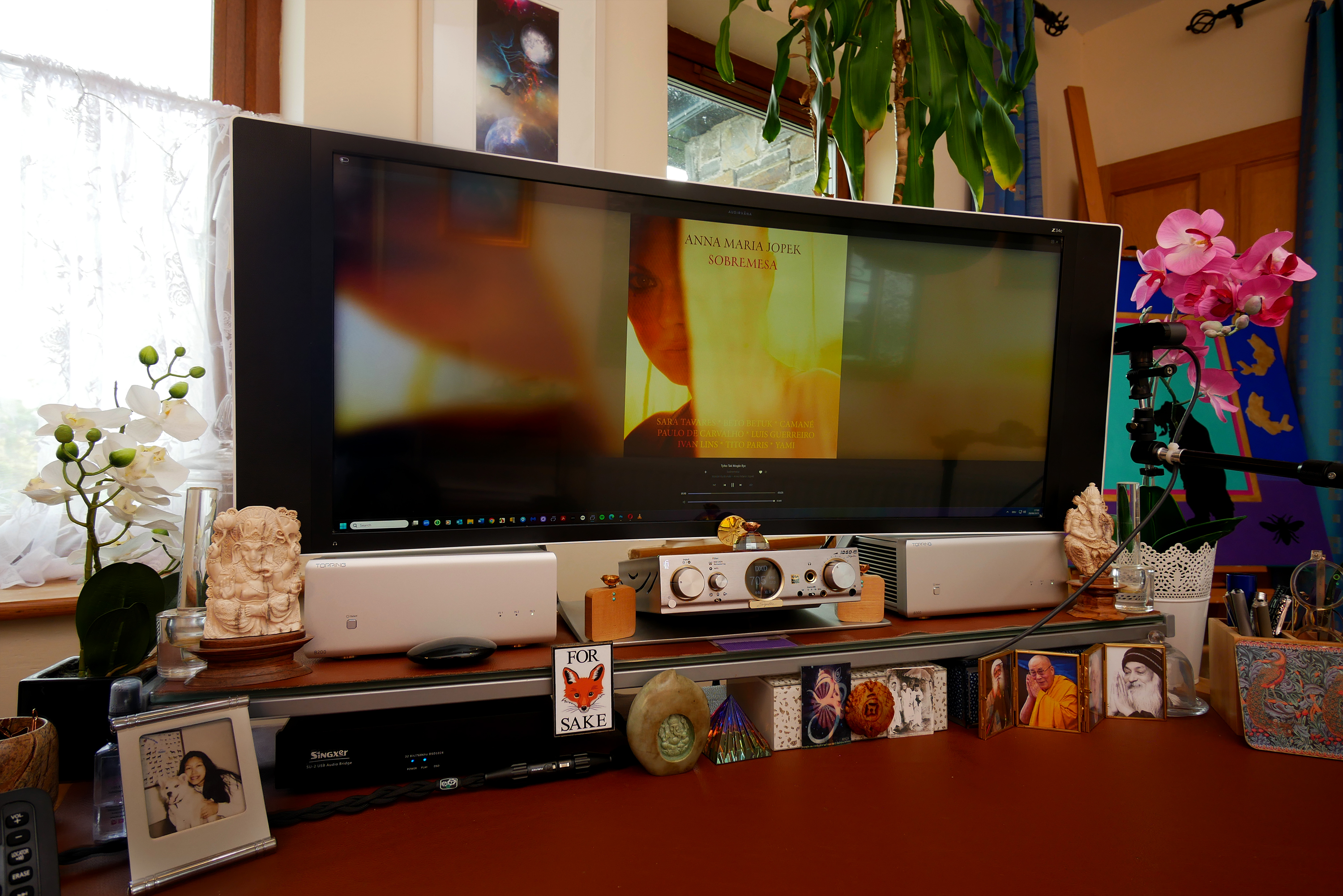
Zero heroics? System tuning/voicing is effects driven. We're searching for a response in our nervous system. We want an 'aha' reaction. It's irrational so beyond the mind. Something in us either moves or doesn't. It matters naught that we have no practical means to determine how much steering individual components perform to get us there. We're interested only in how they add up. If we already have a fully functioning system, swapping just one component clearly shows whether it steers us closer to the desired ear/brain meld; or inserts more distance. Telling that difference is virtually instantaneous and we know what did it. What typically takes time is getting intimate to recognize various layers. Instinctual enjoyment simply doesn't need said recognition. Enjoyment has already happened. By that metric, combining the B200 with the Luxsin X9 was less of a setback than it is with the Ncore amps but still dried up my enjoyment over instead using the iFi. Though I bypass its tube option, lengthy experience tells me that the iFi steers harder than the Luxsin which steers harder than the B200. I also think that the first gain stage (here the DAC) dominates over subsequent gain (the amps). The first leads the dance. The upshot for my office is that the iFi+Topping combo into the Virtual Hifi monitors multiplied not diluted my enjoyment. I don't mind the laptop-style power bricks and can't file any complaints about the results. Yet my inner snob would prefer if they housed in chassis equivalent to the actual amps not generic Computer Emporium casings. I love the tiny white not blue, red or green status LED. I love that in my use, operational temps are very mild. I love that these circuits seems to come on song with a double espresso so right away. No need to pre-heat them. In my use the lack of low-Ω muscle is immaterial but renders ideal speaker matching contingent on how they behave well below 4Ω particularly in typical midfield locations in a larger room which runs higher SPL.













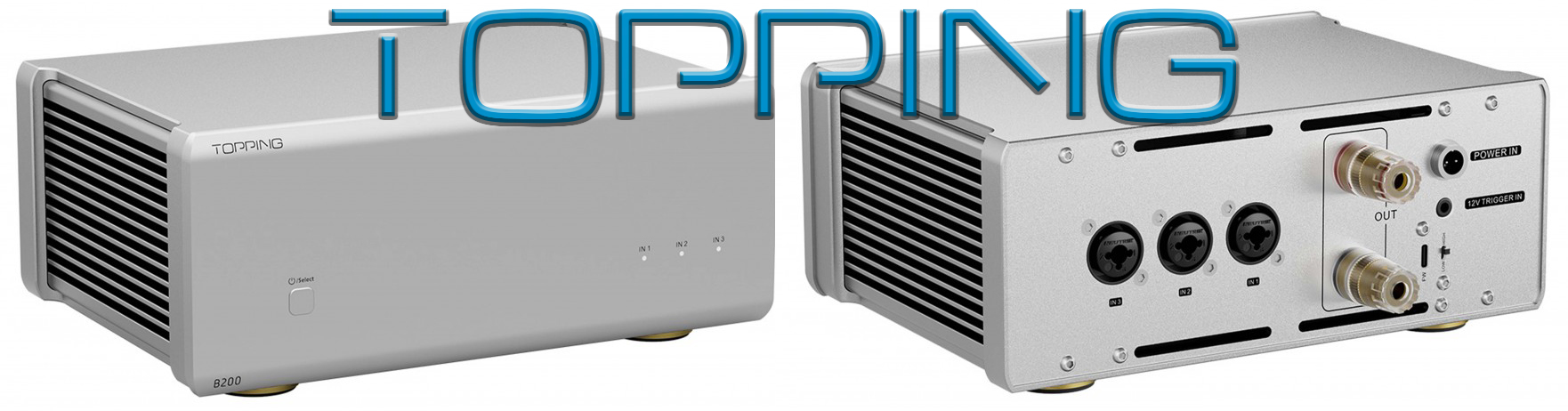
To wrap, my first Topping date came off hot and heavy. I won't call the B200 organic when my Luxsin swap pointed at the iFi iDSD Signature Pro as owning said textures. Also, the Vipers inject some warmth at the very end of the signal path. But I shall certainly call the B200 endowed with very benign ultra resolution. What I think of as musical gait had elegance and fluidity not metronomic desiccated subtext. Whilst power for a desktop was very high, nothing about the sonic gestalt felt muscle-bound or poncy. Rather, the flavour was quick, deftly articulate and light-filled. Excellent driver control was very clearly at work but subservient to wakeful playfulness not heavy chain-gang labour. That such advanced quality can house in small very substantial chassis and demand not much more than a grand is yet more reason to call our present era of hifi golden even where budgets are more iron than platinum. To finish up with a practical wrinkle, even at Topping's low 11.6dB voltage gain into 83dB speakers, my high-voltage DAC's attenuator didn't get past high noon and mostly sat rather lower whilst I imbibed happy-hour nearfield SPL. That probably makes the B200 unconditional desktop champs. In my office, I shall certainly love my latest loot not list it. Its extremely low operational noise not only netted sneaky sexy specs over at ASR. Bracketed by copacetic kit, it also netted absolutely brilliant sonics here on the moons. Measured objectivity and ear-based subjectivity colluding, colliding or cuddling? You tell me.
I'm reminded of an interview with Mark Levinson. In it he explains his proprietary C-Wave algorithm baked into Daniel Hertz electronics. Its sound-shaping math compensates what he considers PCM failings. He follows C-Wave with Ncore power modules. My new desktop setup walks a similar path. The sound shaping—voicing, tuning, calibrating—focuses on the source. Daniel Hertz exploit the digital domain, my DAC's 'magic' happens in the analogue domain. Either way, in this approach the power stage should be as neutral or non-shaping as possible. For me, replacing early Ncore with NFCA upgraded my system resolution. This approach just isn't the only one. All stations in a hifi shape sound to varying degrees. Which we deem most advantageous or currently focus on is very personal. SET/horn fans for example want a very different amplifier profile than my desktop. The B200 would be all wrong. Fans of tube preamps focus their sound-shaping attention there. They might love the B200. Speaker choice impacts what type of amplifier is most suitable. Classic 98dB widebanders won't get on with the B200. As always, the roads to Rome are many.