Sonic steering. Before we work the nuts 'n' bolts, one more context declaration. When I replace my desktop's iFi DAC/pre/headfi deck with Luxsin's functionally equivalent X9, the sound dries up, leans out and loses relief and depth. Instead of enjoying full 3D sound, I get 2.5D. The iFi+Nord combo acts like an ideal hybrid where a valve voltage gain stage fixes the sonic steering wheel in the desired direction whilst an ultra-transparent transistor current buffer bolts on low-Ω drive to step on the gas without touching the steering. The trio of Luxsin+Nord sounds like high-feedback op-amps: technically correct but boring. To my ears, exploiting Ncore's technical correctness for pleasure mandates preceding it with a cleverly voiced class A steering circuit. With the iFi locking in the aural aesthetic, my ideal amplifier behind it adds naught but ultra-quiet torque. It keeps its fingers off the steering wheel. This division of labour produces a fine balance between raw resolution and control on one hand; and temporal elegance and tone density on the other. To my ears, switching in iFi's tubes and/or DSD1'024 resampling of PCM already upsets this balance with too much ballast particularly when the voicing of Virtual Hifi's Viper monitors emulates its own class A aroma. You now appreciate why this context resurrected my Nord monos. My source and speakers already contribute the full desired flavour profile. Any amp/s connecting them shouldn't dilute, enhance or shift it. It's why I thought that Topping's measured excellence of ultra-low distortion and noise might contribute exactly such invisibility – at still higher resolution. If so, all I'd trade in would be Ncore's far higher power. Given my normal 9-9:30 setting on iFi's volume, most of that I've never tapped. My ears would tap out well before.

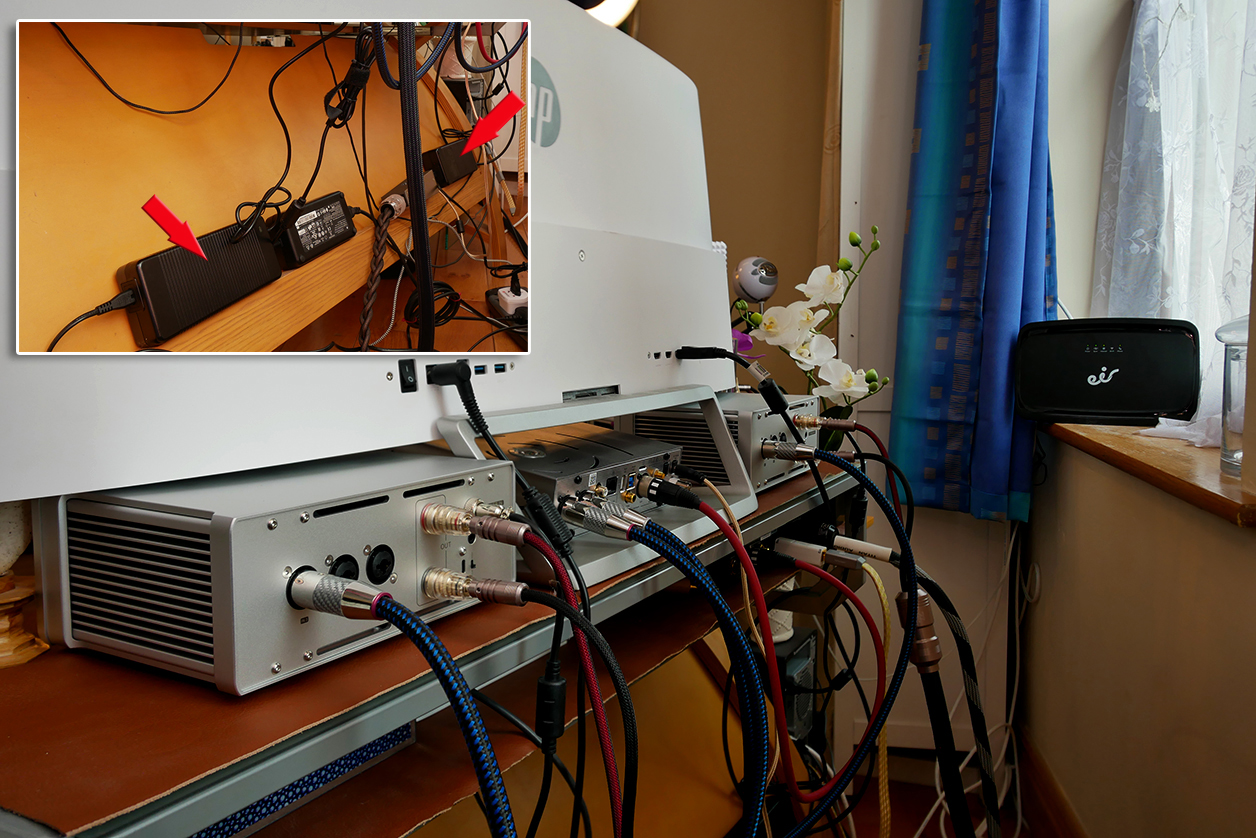
With the B200's low gain, I could occasionally hit 11-12:00 for cool recordings. I had ungodly gobs of gas reserves. If I wanted to wilt my ears, there was still high gain. Unexpected too were the power bricks' figure-8 entries and included 2-prong skimpy MediaMart cords. They'll really rub the snob brigade the wrong way. My trusty tape measure avoided getting binned by just a few millimetres. Everything fit as intended but close call. Phew. Power cycling was utterly noise-free. Zero operational hum or hiss were as the pianissimo propaganda had promised. Unless we use switched AC outlets and power them down afterwards, Topping's external power bricks remain 'live' 24/365. The frontal power button merely off-lines the signal path circuity of the main chassis. Right out of the gate the sonic panorama with the Topping taking over for the Nord was intensely detailed, its gestalt relaxed and easeful, not even subliminally prickly, needly or sharp. I was off to a very civilized start which combined obvious very high resolution with easy listening virtues.








Negativity matters. Keener negative space keens contrast. An amplifier's zero persona passes more recorded personality than a hero persona. The zero leaves no greasy grubby fingerprints. Now sundry productions—even tracks from one album recorded in divergent venues—parlay more otherness. Hello greater distinctiveness. By itself this doesn't guarantee good sound. It just means more variance from album to album to confirm greater transparency. A system's tuning could be deliberately pleasing and pretty yet obviously homogenize recorded differences like strong aftershave applied to excess dominates. How we voice a system depends not only on our taste. It depends on the production values of our majority musical diet. Unless we know no better because we're junk-food freaks, fare that's cooked to death needs help. Ketchup. Sweet chili sauce. The B200 quickly settled whether their noise-slaying focus would register over my old Ncore. It did. Negative space was more intense so contrast ratio higher. The difference delta between recordings widened. Soundstage depth layered out more specific. I could exploit lower SPL and still be fully involved. What surprised and impressed in equal measure was its obviousness; and how benign this 'zero' action was. Invoking zero is figurative of course. Everything leaves traces. Animals with smell far superior to ours perceive memory puddles many days old whilst we sense nada. So I simply call the B200 closer to zero voicing than my D-class monos because album-to-album distinction and contrast ratio were higher, whisper levels more compelling. In generic terms, I now had even higher resolution.
Had I worried that the means to achieve it would levy their own toxic tariffs, I needn't have. With the Topping, music's moment-to-moment motion was more in a flow state. Beefier Hypex muscle was more uptight. Despite being able to crack, slap and punch just fine, the Topping presentation preserved more elements of dance, Ncore more attributes of parade. Whilst the class D monos ultimately slammed harder to give robotic break beats greater violence, my class AB team felt more fleet of foot so still quicker. I could bin Topping's shipping carton. No need to invoke an Audiophonics return authorization.