
Country of Origin

Reviewer: Simone Ragionieri
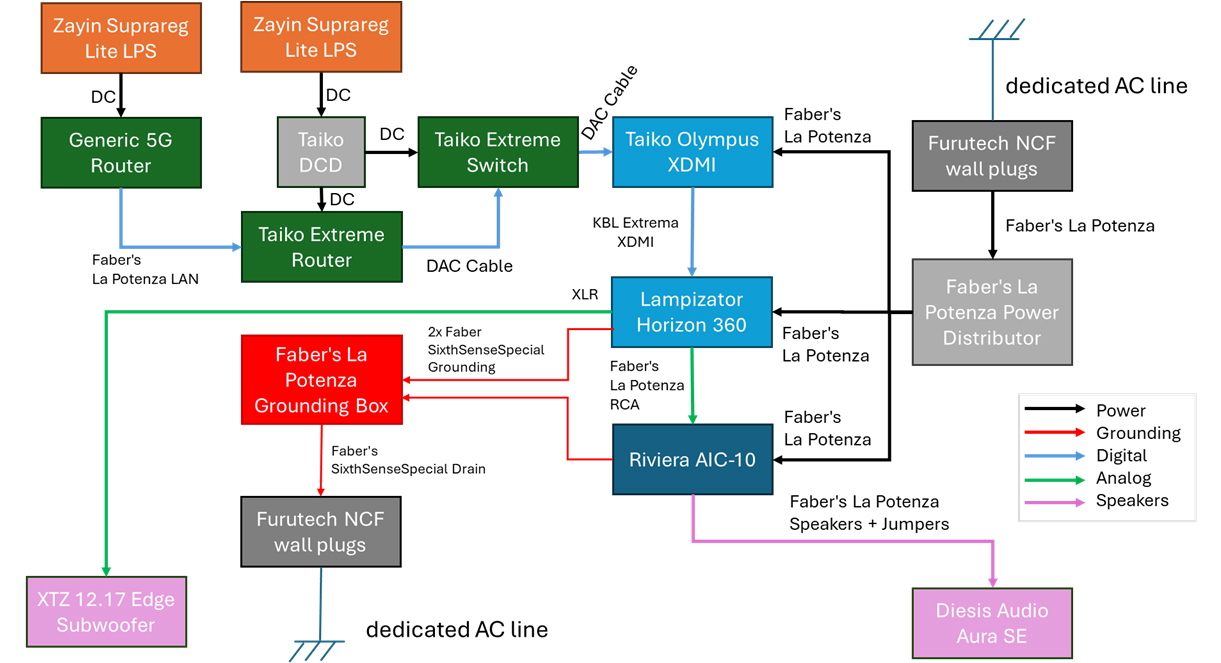
Source: Generic 5G router into Taiko Audio network switch both powered by a Zayin Audio Suprareg; Taiko Olympus XDMI Server; LampizatOr Horizon 360 DAC
Headphone amplifier: Riviera Audio Labs AIC-10
Headphones: Spirit Torino Valkyria, Raal 1995 Immanis
Loudspeakers: Diesis Audio Aura SE
Cables: complete Faber's Cables La Potenza loom
Power delivery: Faber's Cables La Potenza power distributor and ground box, Furutech NCF AC wall plugs on a dedicated spur
Room size: 5 x 4.5 x 2.7m
Room treatments: Eight ceiling diffusers, floor-to-ceiling acoustic curtains on sidewalls, Vicoustic VicTotem Ultra VMT in front corners
Review component retail: ¥7'200'000 global export price, ~€39K at publication day's exchange rate
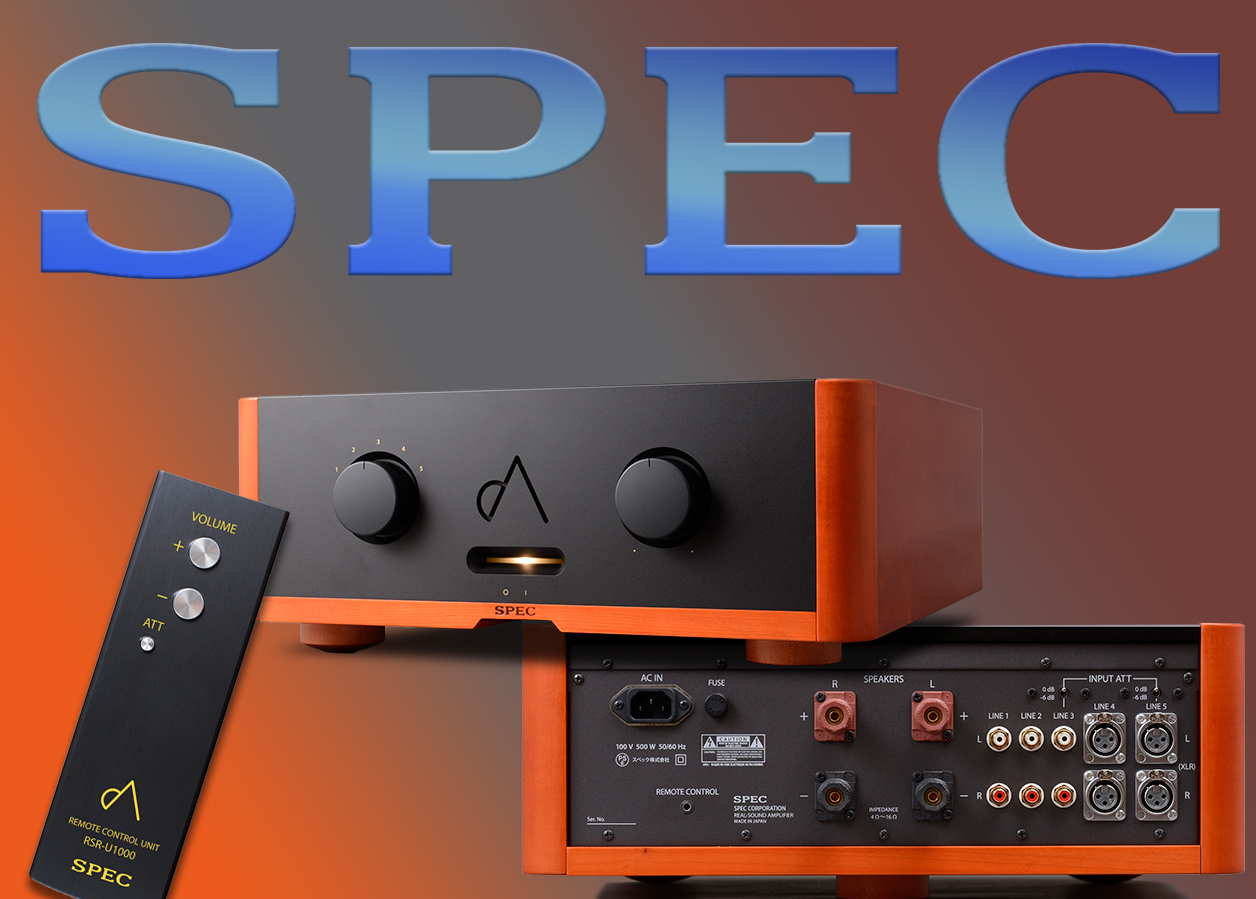
"Hello Simone-san, I understand about your interest to review our MG3000 but there's actually a newer model I'd most like for you to cover. It's the RSA-EX1000, currently our most highly rated and best-selling model. The MG3000 was released six years ago while the even smaller EX1000 is just one year old. Best regards, Shuzo Ishimi." And so it came to pass that our man in Florence/Italy was directed at today's 200wpc class D amplifier with remote control over its volume, a classic linear power supply and real-wood dress code. Or as Simone put it to me, "I have always been curious about SPEC class D designs, having heard them multiple times within nice-sounding systems at shows. It will be another step in my learning curve about the dilemma between high/low power and tubes/transistors in my own room/system." Long-time readers may remember how Marja & Henk, proud owners of Audio Note's big Meishu 300B amp on their 109dB Avantgarde Duo hornspeakers, loved SPEC because their class D really does model itself on tube sonics. Simone's current amplifier is a 10wpc class A tube-hybrid Riviera Audio Labs AI-10. Now you appreciate his comment to me. Might a high-power transistor amp of low output Ω and high current voiced for valve sound romance his open-baffle Diesis speakers beyond what two handfuls of watts can do? Or would 20 times his usual power corrupt anything? – Ed
It's January 2010 when the SPEC Corporation launches. Its founder are Shuzo Ishimi and Shirokazu Yazaki. The former comes with 35 years at Pioneer Corporation under his belt, the latter is a Teac and Pioneer engineer with vast experience in analogue devices like open reel and tape decks of CT-95 pedigree, still considered as one of very few capable competing with even surpassing the legendary Nakamichi Dragon. Proposing class D for high-end audio electronics is then an almost visionary endeavour although Jeff Rowland has already championed ICEpower with input transformers for a few years. Tsutomu Banno, SPEC's current Director of Technology, at the time designed ultra-efficient high-speed switching power Mosfets for International Rectifier. He joins the new firm with the aim of leveraging these new parts. At the time Class D suffers—and to a shrinking extent still does—a rep for high power in a small package whilst sounding mechanical, grainy and flat when compared to class A, be that executed with transistors or tubes. However, SPEC's engineers view the situation almost in reverse. When properly implemented, they posit that class D is instrumental in achieving the SET sonics they love by transcending their practical limitations of power, heat, reliability, inconsistent performance over time whilst further enhancing their resolution via noise and distortion reduction by orders of magnitude. SPEC even formulate the concept of Class D being the 3rd evolutionary generation of audio electronics after tubes and class A or A/B transistors. [Bel Canto's John Stronczer followed a similar path. His first product was an 845 SET integrated. His very next model jumped to class D with first Tripath then ICEpower and currently Ncore – Ed.]. Today the work of SPEC and many others has helped push the boundaries of class D. It has even welcomed GaNFets and catapulted the reputation of fast-switching amplification far beyond its earlier sightings. Just so, a class D integrated commanding ~€39K like today's remains a bold statement even to non-sceptics like yours truly.
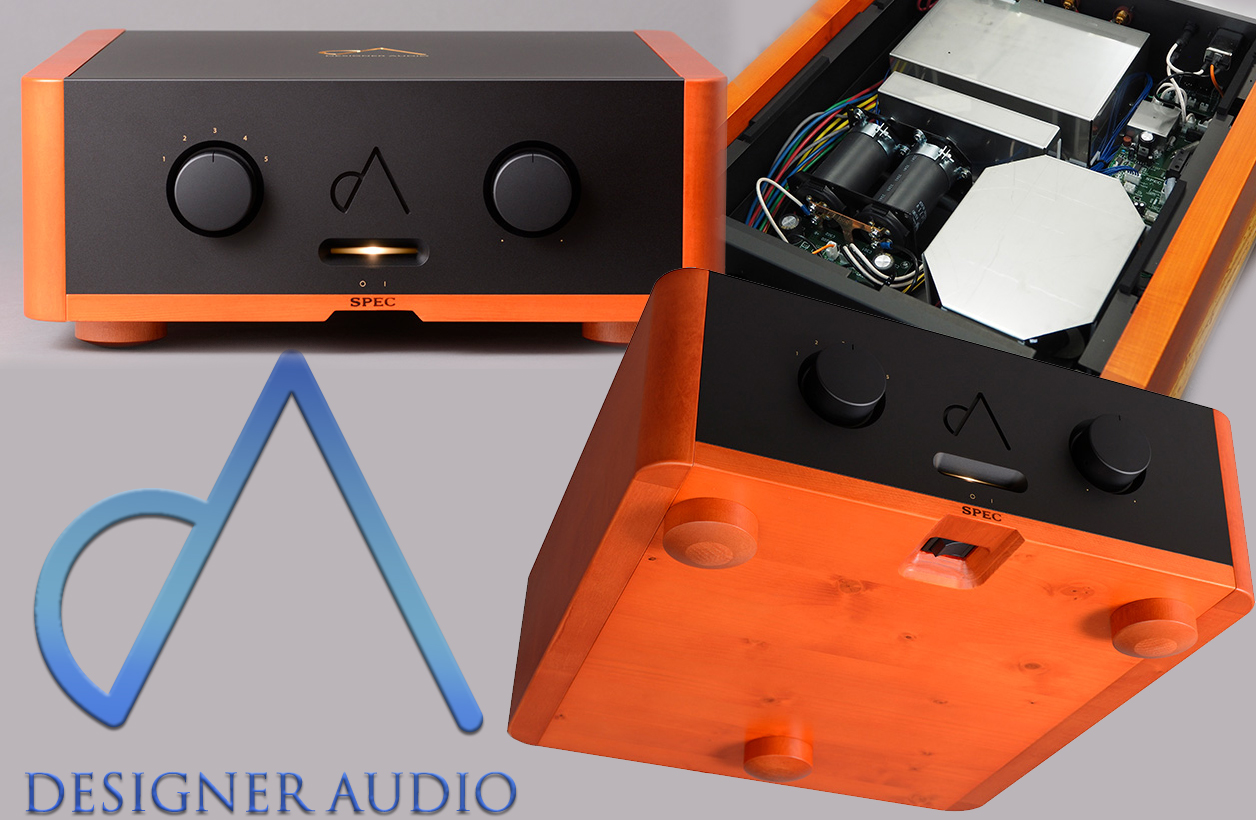
What fascinated me about SPEC was not so much their daring to promote class D in the ultra High End but rather, why they do it and how. SPEC insist that the ultimate objective of their electronics and specifically their flagship line to which the RSA-EX1000 belongs, is to convey the true tone of acoustic instruments. After all, the RSA prefix in the model name means Real-Sound Amplifier. This is pursued with correct timing, harmonics and bandwidth. Even a slight delay or shift of phase in transient response or noise-related masking of minute overtones can degrade the 'delicate tones' to an extent that they lose realism. Tsutomu Banno explains: "The most basic and important element to achieving realistic sound is the PWM-based class D method. When operating ideally, class D amplifiers offer unparalleled silence and delicate signal amplification. Conceptually, the essence of this system lies in using FET switches to divide DC power into short pulses which supply power to the speakers and achieve powerful instantaneous drive. For realistic music reproduction, even minute signals require a steep rise where a sophisticated class D amplifier can approach realism. Class D amplifiers switch their FETs based on a clock so have a 'sample rate'. However, the PWM method we adopt keeps magnitude as analog to result in delicate expressiveness. Due to the above-mentioned drive with delicate expressiveness, the amplified signal waveform gets closer to the input signal. This approximation is what allows us to transmit the musicality of the source to the speaker cone."








In this context, SPEC's 'why' of class D rests on two main pillars: circuit minimalism and the control of electromagnetic counter forces. With class D, a few active components suffice to deliver the power required to drive most speakers. With the RSA EX-1000 specifically, Tsutomu-san expended significant effort to shorten the signal path between passive volume control and final low-pass filter. This resulted in a very compact PCB whose noise generation associated with wiring or copper-trace inductance is extremely low. "One of our concepts is 'simple is best'. We only include truly necessary circuits and route the signal through the shortest paths. In this simple circuit we use very carefully selected components. We research various components and create realistic tone by placing them in the correct junctions. We call this process 'capacitor blending'." More about that anon. As to EMF control, SPEC remind us that while in class A or A/B the current which a speaker injects back into a circuit re-enters via the feedback loop to undermine phase integrity and linearity, class D welcomes the same return current in a power supply associated with extremely low impedance in its output devices which act as rapid on/off switches. This mechanism is claimed to enhance speaker control at low levels to preserve minute nuances and at high SPL and/or bass frequencies where the start and stop of the driver gets more firm.
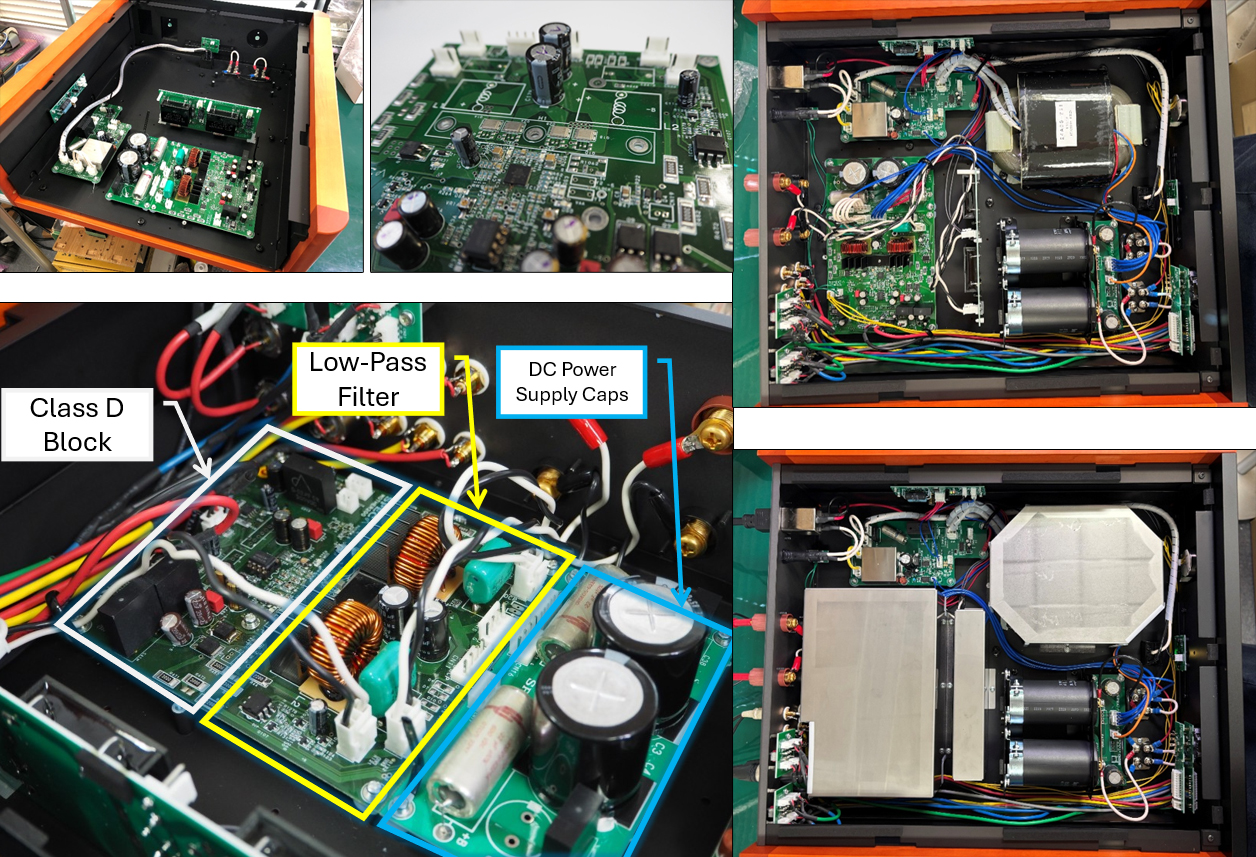
Tsutomu-san provided this on the RSA-EX1000 topology. "The signal routed by the input selector enters the electronic volume control, a semiconductor device which sets the voltage level by the dividing ratio of resistors arranged in a ladder so that the sound quality does not alter at different settings. This is an analogue process which maintains delicate resolution even at low SPL. The volume control itself only renders a code which indicates the desired volume level but does not pass actual audio signal. Although no signal transmits through it, we use an audio-grade variable resistor to generate a satisfying knob feel. The voltage-trimmed audio signal then connects directly to the class D block of controller and FET. Then the PWM signal extracts from the FET as a full-swing square wave. This passes through a low-pass filter before it hits the speaker terminals. The low-pass filter consists of a coil and capacitor and is crucial for sound quality. The coil is a custom part optimized for class D operation. The capacitor is of Japanese origin and selected for its information density and LF reproduction. Class D modulation uses relatively high clock speed to switch its FET on/off but the edges are very sharp and include high frequencies. Thus making this PCB small is essential for ideal operation. The PCB is designed in house and we spent a lot of time on its design. When class D operates ideally, it does not generate heat. That allows for very compact packaging. The EX-1000's final stage has small onboard heatsinks although some of our other models don't use them."