Astraeus means of the stars or starry and refers to the Greek god Titan of the dusk and stars. As the god of twilight when stars become visible, he is associated with celestial bodies and the beginning of night. He was the father of the Anemoi winds and the planets with Eos, goddess of dawn. Inspired by such evocative naming, I started to listen to Astraeus expecting no less than an uplifting time. I fed it with the best umbilicals at hand, Faber's La Potenza power cords and interconnects where I slightly preferred RCA over XLR. I connected the Raal 1995 Immanis, one of if not the main reference Dragan used during his R&D and sat down with high hopes. I was rewarded from the very first notes. A recording I always use for a quick grasp of a new piece of gear is Muddy Waters' Folk Singer. It is a raw minimalistic take with a tactile presence of every instrument with his vocals in primis. Ambient cues play a major role and explosive dynamics of guitar and singer can easily humble a system especially if played louder. Astraeus responded to this baptism by fire very convincingly. It made Immanis sing in stentorian fashion, the brutal loudness swings managed with aplomb, incarnate vocals fully fleshed out, the speed of attack and release accompanied by natural decay that revealed the room acoustics of Ter Mar Studios with almost theatrical effect. The expressive slightly raucous Waters vocals presented with rustiness, a feeling similar to raw wool itching skin with coarse fibres in an almost comforting way. Through a gentler partner like the Nur Harmonia, that presentation took the form of a mild scolding from grandma, wrapping loud spanking thuds in affection. In all cases, the human emotional side of the music illuminated as it should. Moving to more honed-in material from contemporary state-of-the-art recordings like the Café Zimmermann Vivaldi's Second Book of the Estro Armonico, Astraeus could deploy its arsenal of technical capabilities in full force. The depiction of the soundstage was fully plastic and corporeal, the fabric of the string section compact and organic, instrumental timbre well brushed with no apparent traces of unnatural sheen. "Limit to Your Love" from James Blake's eponymous album is a challenging track for bass extension and control. Astraeus handled all transducers I connected with aristocratic grip. The reach and composure of the sub-bass line was unflinching without impacting the breath and detail localization of the rest. The vocals placed crunchy and looming in the mix with utmost clarity.
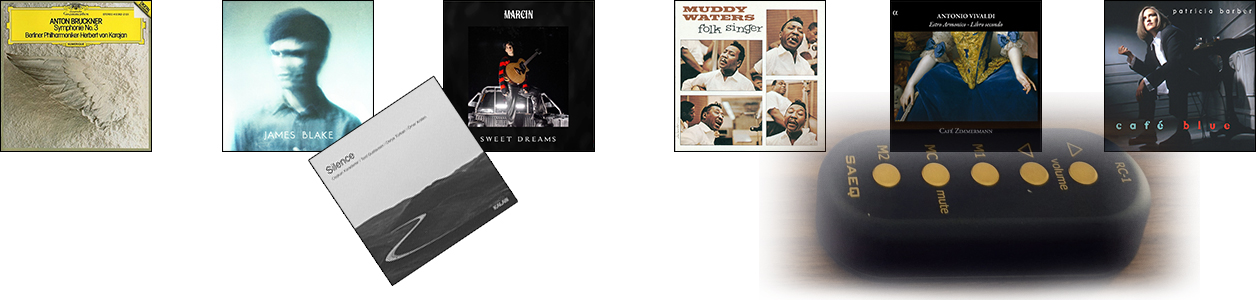
Clarity is an attribute that applies to the core of Astraeus. Luckily its clarity doesn't steam from spoiling harmonic filament or by ironing out low-level details to make more obvious the poor remains of a musical carcass which sadly, I have seen/heard before. On the contrary, it came from raising the building of music on a foundation of seemingly absolute silence onto which all construction material can be identified and appreciated, be it a big pillar, a single brick, the mortar that binds all together, a delicate decoration, even the transparency of a window to reinforce the wholeness of the realization. As admirable as it may be, clarity in my book is merely a prerequisite. It allows a system to express itself in a well-articulated way, using crystalline syntax. But, are these sounds a vessel for beauty and emotion? This is where the form leaves centre stage and meaning comes to the fore. Playing "Gondol", the first track of Silence, an album where Scandinavian jazz pianist Tord Gustavsen collaborates with a trio of Turkish master instrumentalists, was an easy answer to my own rhetoric question. It is based on a melody composed by an Ottoman Sultan of the 18th century. Its rendition with Astraeus was so loaded by emotional charge that I was close to tears. The enveloping physicality of the bass drone and percussion, the poignant inflections of the kopuz and baglama came at me as if their sonic matter was already deciphered as sheer feeling. A bit shaken, I wanted to step into a lighter mood and choose Sweet Dreams, a single by Polish percussive finger-guitarist Marcin. This is fun stuff with an energetic pumping lower end dancing with a shimmering cascade of detail in the treble region. My mood change was 100% successful as just one example of the versatility of Astraeus to cope with the most different material at full mastery. The inevitable female vocal test passed with flying colours. Patricia Barber albums are usually produced outstandingly well although her 's' and 't' here and there may exceed my admittedly modest tolerance for sibilance. The organic delivery of Astraeus helped bring out all the detail, nuance and echoed reverberations of Patricia's performance by leaving abrasiveness out of the picture entirely.









Upping the game to full-blown late romantic orchestral required Astraeus to flex its muscles for good. Coping with Bruckner's 3rd symphony is no joke, with one wall of sound in the brasses violently projecting into another wall of sound of the string section plus the substantial bass sub-section. It easily ends in a chaotic, sometimes collapsing convulsion of amorphous noise. Not here. The electrical power of the amplifier directly translated into musical power, no distraction or lack of purpose, full commitment to catastrophic climax after catastrophic climax. Exhilarating. For fun I wanted to challenge Dragan's bragging about Astraeus being able to drive multiple headphones at once. So I connected the relatively power-hungry Immanis and less voracious Spirit Torino Valkyria and Nur Harmonia to see whether I'd notice any form of hesitation. Nope. Barbaric violence all the way, full control in any condition, at any volume. Colour me impressed.
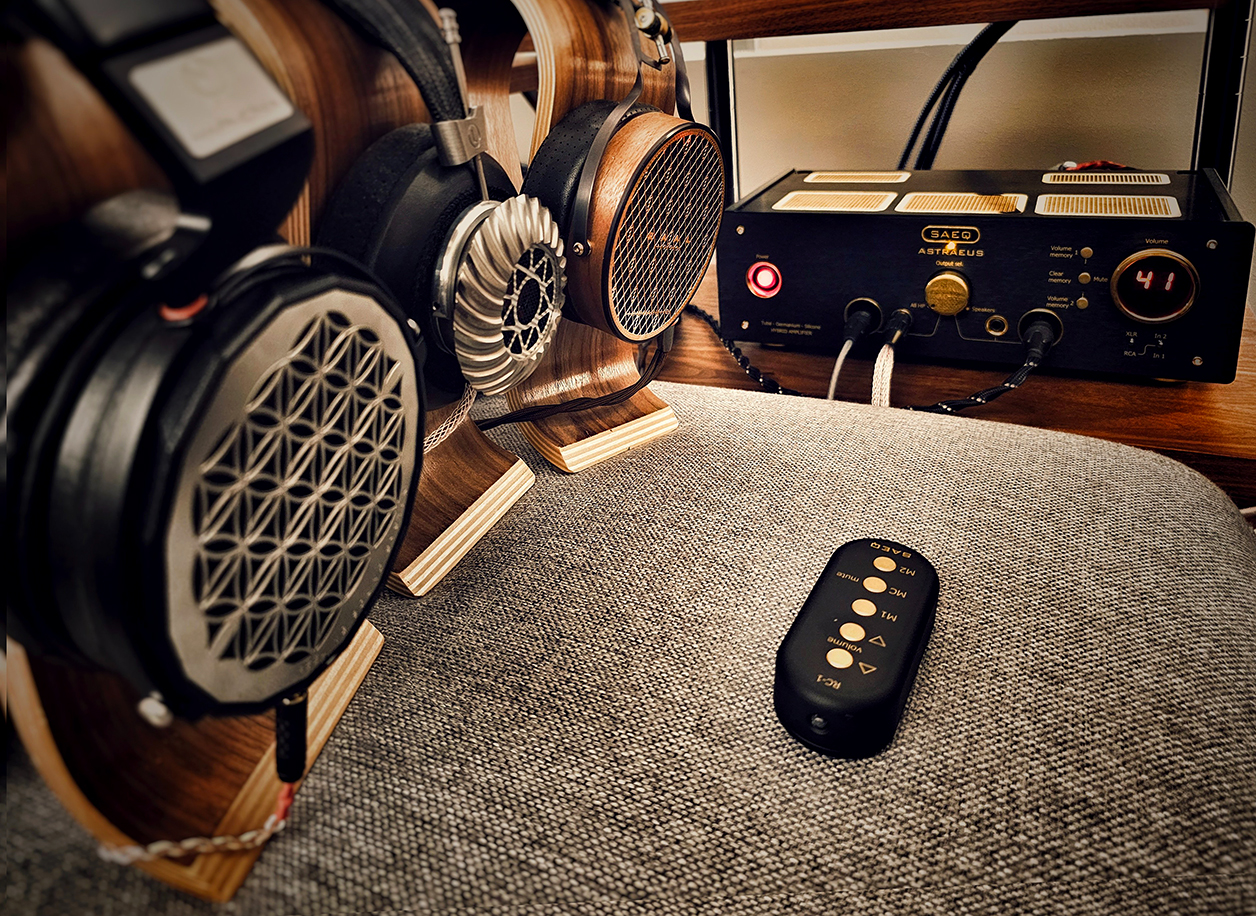
Using Astraeus with headphones across a wide sensitivity range and my Diesis speakers also confirmed how quiet this amplifier is. With the 107dB/48Ω Harmonia for example, there was no trace of noise even at zero attention. The sound signature of Astraeus is of a noble neutral centre of gravity with a human yet pudic penchant of warmth. This allowed the character of each partner to blossom. That was especially apparent given how different the three headphones I used were. The Immanis is an F1 racer for top performance if you can handle it. Valkyria is a vintage Lamborghini Miura so the beauty of imperfection, the Harmonia a Range Rover – luxuriant, maternal and multi-purpose. The Valkyria trademark of visceral impact and midrange density rendered with rigor. She dislikes sloppiness and prefers firm authority with sober elegance, even better if combined with some supporting top-end openness to lighten the atmosphere. The Harmonia with which I just got acquainted for an upcoming review seemed to like the midrange clarity and liquidity of Astraeus, its bass reach, articulation and capability to arrange musical objects in space with topographical mastery. As for Immanis, this relentless dominatrix found a client who let her savage flair express with no inhibition but also helped bring to the surface her mature more compliant side. Paired with my Diesis speakers, Astraeus felt comfortably up to the task. I was curious about the choice of silver in the internal wiring for the speakers terminals where the headphones get pure copper. "All headphone connectors solder directly to the PCB which is made of copper. The speaker output does not. Between the green speaker connector on the board and the output connectors on the back is a silver-plated cable that adds a little silver sharpness in the upper midrange and treble which gets catalyzed by space as the physical distance from the listener for an additional perception of space; a little extra flavour." In my system and room, I actually felt a slight steering towards warmer denser tone on Aura, combined with a comforting sense of compactness and control. Imaging was not the widest but in trade presence and ease of localization were very satisfactory. Even when handling large-scale compositions or big choral works—a horrific challenge for any hifi—Astraeus had no hesitation in keeping imaging in focus within a speaker-to-speaker wall of sound.