 You developed a very fine volume control with 99 steps. Apart from very precise adjustments, are there any other features that make it worthwhile?
There is not a lot of choice in that domain because existing providers offer only a few quality solutions. It is necessary to go for the highest quality, the most expensive integrated circuits then limit the level of attenuation resolution to a practical size. We came to the conclusion that regulation beyond 100 steps is pointless so limited the potential 256 steps. There is simply no point in finer regulation. The basic intention when designing volume control is not to spoil the musical flavor you want to present and preserve.
Is there something about the topology of Astraeus or the component selection that you would like to remark on as a special achievement?
The component selection process never ends. The only things I don't deviate from are the basic schematics of amplifiers from the late 1960s to the late 1970s. Simple and musical. Specifically, the Astraeus output stage has five transistors, one of which is germanium. It means construction at the axiomatic level. The transistors I use are those on which some of the best amplifier designs were based. I mainly use the knowledge of well-known designers and personal experience which I accumulated over the years. Not using other people's experiences is dumb. The only problem there is that you must confirm everything for yourself. It is only valid for me when I hear it. I do not accept anything in advance or without personal verification. I choose capacitors and resistors as additional fine-tuning means according to my personal taste. That enters the domain of personal creativity and sensibility. Over the last few years, for me the company TE Conductivity has been a pleasant discovery for their resistors. It's an old and well-known company, a true gem.
The option of using Astraeus for both speakers and headphones is very attractive. If you had to design an amp for speakers only, with the same output power, is there anything you would do different?
Astraeus is a proper amp for driving speakers. There's enough power and refinement for critical listeners. I find that without real speaker drive, there is no serious headphone sound. Speakers are a much finer instrument provided they are of serious construction. Astraeus is simply insensitive to load. It doesn't matter what you connect. You don't have to worry about whether you use 8, 16 or 32Ω with ribbon headphones. The sound with each is different because the Raal transformers determine it but Astraeus is much less sensitive to these changes than other amplifiers. A normal reduction in output resistance makes the sound more dynamic and certainly different. Furthermore, Astraeus drives low-sensitivity headphones like old/new Susvara, Abyss AB-1266 and the like with ease. A very powerful output stage with potential dissipation of 200wpc is indifferent to loads. It behaves very confidently because it is designed to do that. The ECC88 input is its conductor and the circuit follows it very quickly and obediently, offering a pleasant physiology of sound that tube fans love. There are germanium transistors as intermediaries that enable a fine acoustic coupling of the tube and output transistors.
When dealing with low-power designs, what are the peculiar challenges of designing speaker amplifiers vs. headphones amplifiers?
If you really want to seriously test your headphone amp, hook it up to quality speakers. You will be surprised by the many sonic caricatures this reveals. Speakers clearly show that. The output for the speaker always testifies to proper construction that won't be be disturbed or must be augmented by additional investments, special plugs or other accessories. Many amplifiers need help to reach that level of the expected result. Not Astraeus. I tried to pack inside a realistic chassis a really powerful amp of serious possibilities that won't need additional large investments to feel the expected satisfaction. On Astraeus, the speaker output is a supplementary way to hear its potential properly if you own serious speakers. The speakers need to deliver far more energy and that's why the task is more serious because you're dealing with the reactive power of bigger drivers, higher SPL and crossovers.










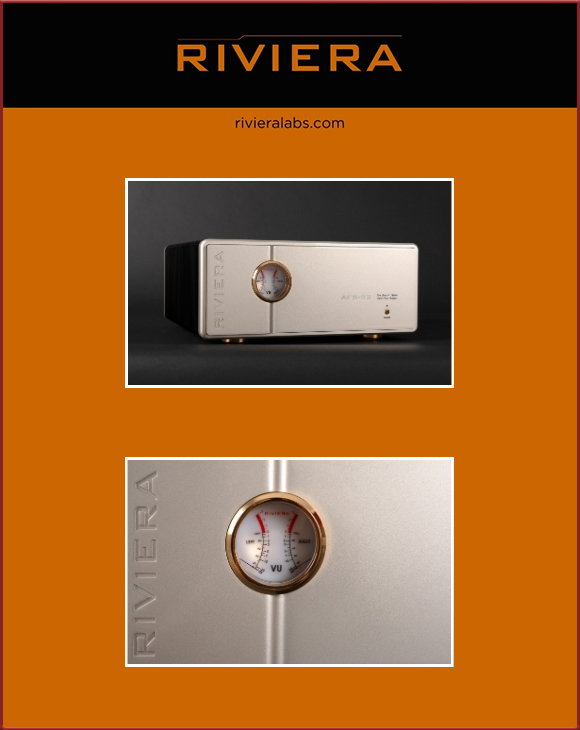
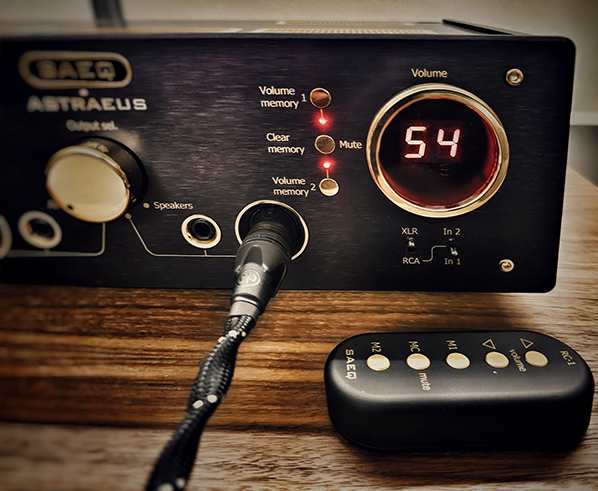
As you already know, Astraeus is a hybrid head/speaker integrated whose ECC88 double triode at the very beginning of the signal path even prior to the volume control acts like a unity-gain input buffer to maximize the tube's imprint on the rest of the circuit. Having the tube work with the full not attenuated input signal imparts its full flavour but in turn asks that this signal voltage sit below its saturation point. Hence SAEQ recommends to not exceed 2-3Vrms. With my hot LampizatOr Horizon 360's 6V RCA output, I had to engage its own volume control to trim the signal. The volume control is an Astraeus highlight custom designed to provide high attenuation and very low noise and distortion. The next stage is the Ge driver. Germanium transistors are known for their benign distortion pattern—dominance of even-order harmonics, very low high-order distortion—which translates into a smoother more organic sound than their silicon counterparts which do the heavy lifting. This architecture is supported by a generously sized power supply to let the output stage work at a higher bias current for 5wpc in pure class A and up to 20wpc in class AB before clipping in relatively soft fashion. 4Ω generates up to 30wpc. All this lives inside 385 x 250 x 130mm WxDxH and weighs 9.5kg. The power figures are not far removed from my resident Riviera Labs AIC-10 to make Astraeus a good candidate to likewise drive my Diesis Audio Aura Special Edition speakers.
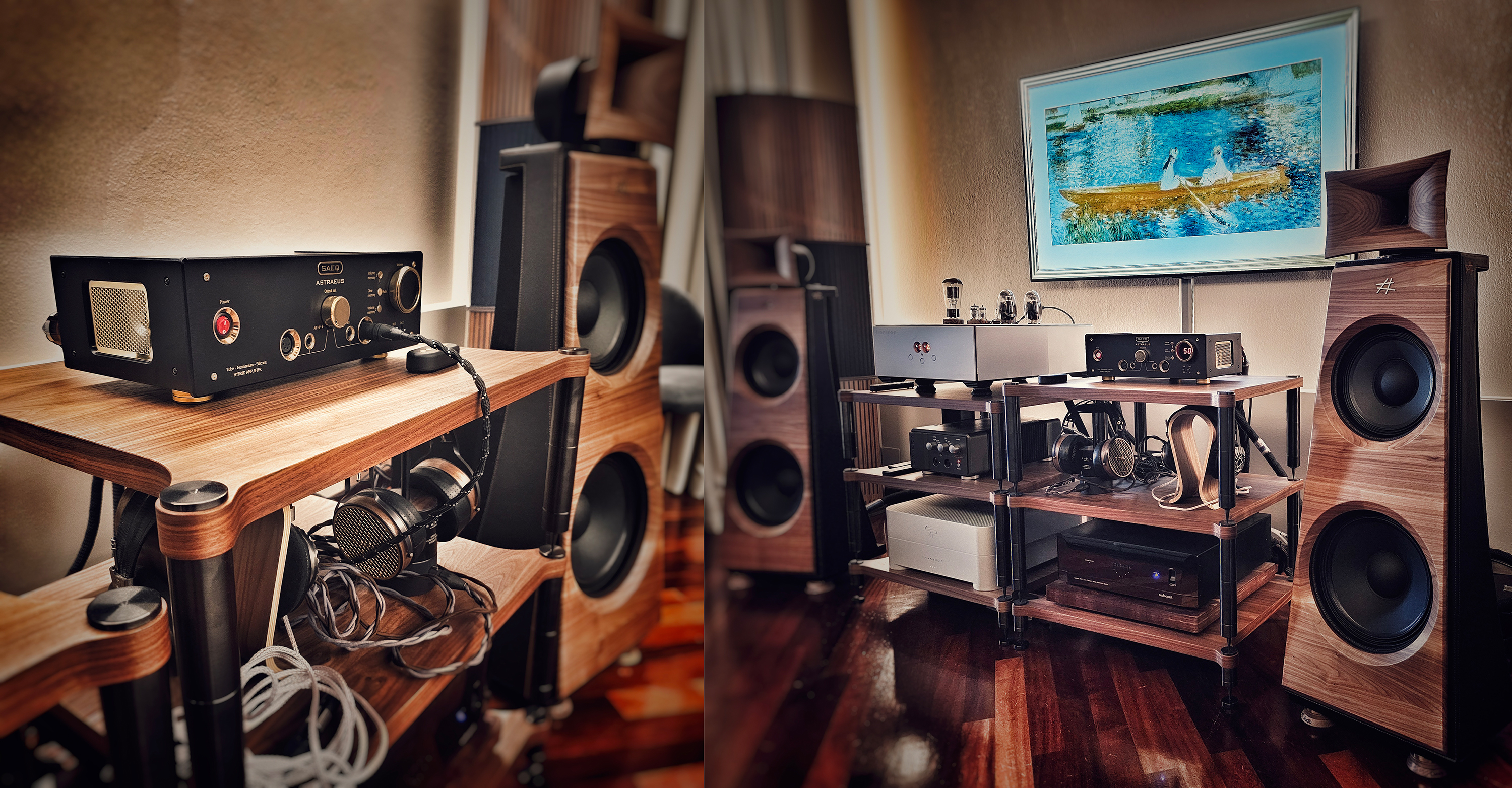
Aesthetically, Astraeus won't leave you indifferent. Its vaguely steampunk language where industrial and decorative elements juxtapose boldly left me a bit perplexed when I first saw its pictures but after having spent some time with it in the flesh, I am now almost fascinated by it. The combination of deep-black brushed plates, golden knobs and grilles and red streaks of the display, indicators and power button gradually grew on me. Although I would not call it beautiful in a classical sense I now love and appreciate its strong personality. In action, the machine is a joy to use. The tactile feeling of the volume knob is so rewarding with its gentle communicative clicks that sometimes I left the couch reaching for the sheer pleasure of it even though I had the remote at hand. That is a small yet substantial machined aluminum affair with rounded edges all over, making it easy and nice in the hands. The front panel is very well organized, with input selection between 1:2 XLR:RCA by toggle and a big central output selector. We can set speaker drive, either headphone group or all four headfi ports simultaneous. Dragan then added something unique which turned out to be very practical when comparing Immanis and Nur's Harmonia headphones. If we want to quickly alternate between two headphones of very different sensitivity, we can memorize two different attenuation settings and then quickly switch between them. Aside from the usual i/o, the rear sports an additional switch to attenuate the input by 10dB for hot sources of fixed output. Lastly, a design feature I especially appreciated during my tube rolling is how easily we get our hands on the internals. We just partially undo two 2mm Allen screws on the side panels et voilà, the lid frees to slide back until the tube is accessible. Genius!