SAEQ stands for Serbian Audio Equipment and my first encounter with this brand was when I was looking for my ultimate amplifier for Raal Requisite's SR1a headphones I owned at the time. It was around 2021 when I first heard the HSA-1b amplifier, the second iteration of an amp that Dragan Domanovič, company founder and mastermind, developed to direct-drive the revolutionary ribbon headphones his compatriot Aleksandar Radisavljevic had released a couple of years prior. Direct means that the HSA-1b could drive the near short circuit the SR1a presents with no need for the external impedance adapter Raal provided – a rather challenging task only Solaja and Schiit have tackled since. Already then I was fascinated by the sound, the clever engineering and versatility, even the pro/industrial looks. Borrowing a word I later discovered is close to Dragan's heart, this was serious stuff. Fast forward to May 2024 when I had the chance to meet Domanovič at the Munich Hifideluxe show and extend my fascination with the gear to a similar sentiment for the man behind it. A sense of self-assured authoritativeness exuded from this tall white-bearded chap humanly blended with irony, genuine curiosity and immense passion for music and how it links up people emotionally. The two amplifiers on display were his Morpheus Ge which I already knew and loved; and Armageddon introduced for the first time as the new flagship. I briefly tried it and discussed early impressions with Dragan, leaving with the intention of going deeper into its sonics and features in a future review. At the time I did not know that SAEQ had another amp in the works. With Dragan having sensed my hedonistic approach to playback, he proposed that I wait until this new design was in production as he thought that I'd enjoy it even more. That amp was Astraeus and yes, Dragan was right. I couldn't miss the opportunity to hear straight from his mouth about the epic +50-year journey preceding this amp and here is what he had to say about it:
Can you talk about your background as audio designer and how you arrived at creating SAEQ?
I entered the world of music and audio equipment at 17. In early 1971, many of us in Serbia started doing it because domestic FM stereo broadcasts started to develop. Stereo meant expansion. For a long time we had listened to mono. This went on almost into the sixties. Suddenly, boom, stereo. That was a long time ago, the Ice Age with 60-70cm snow in one day. Stereo became such an inspiring cultural phenomenon bursting with adrenaline that today I can't identify a single audio thing that would be such a serious step forward. Now came the time of receivers, cassette recorders, open reel, then the demise of tube amplifiers and the dominance of transistors. Those were the years when expensive germanium transistors ceded to silicon. There was an explosion of new knowledge, hunger for audio magazines and equipment expensive, rare and initially unattainable. All of this led to the development of a very high level of education in Serbia's DIY audio underground. I have lived in that world ever since. That core of enthusiasm still carries me. All of this influenced and shaped me as an audio designer. Some may find it interesting that in 1974 I built my first 15wpc tube amplifier with EL84 and in 1978 built a complete turntable made of amber-coloured transparent acrylic with the famous Grace 707 arm and Supex 1000 cartridge. SAEQ is the sublimation of everything I have experienced and learned in the audio world over the last 52 years.
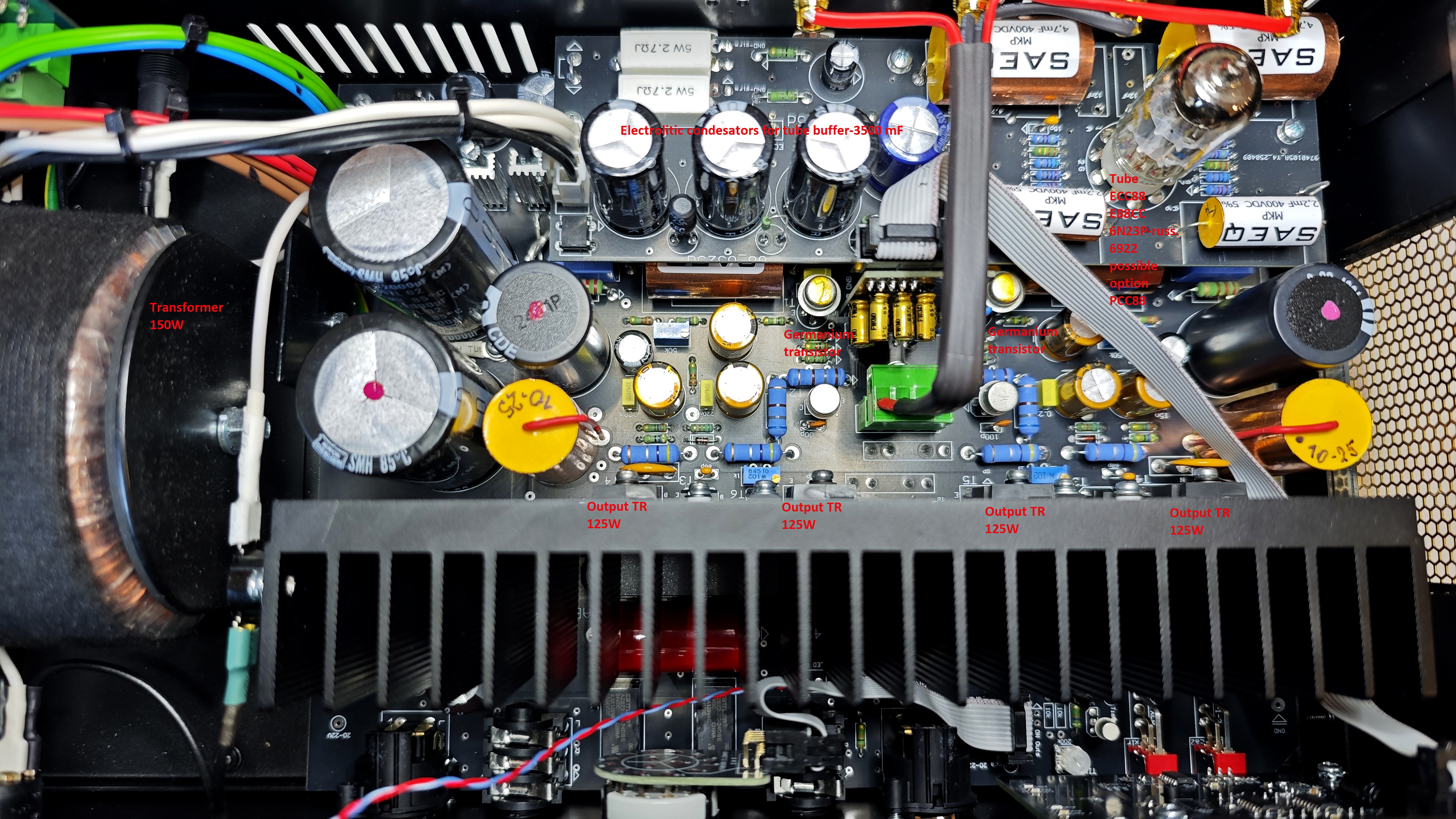
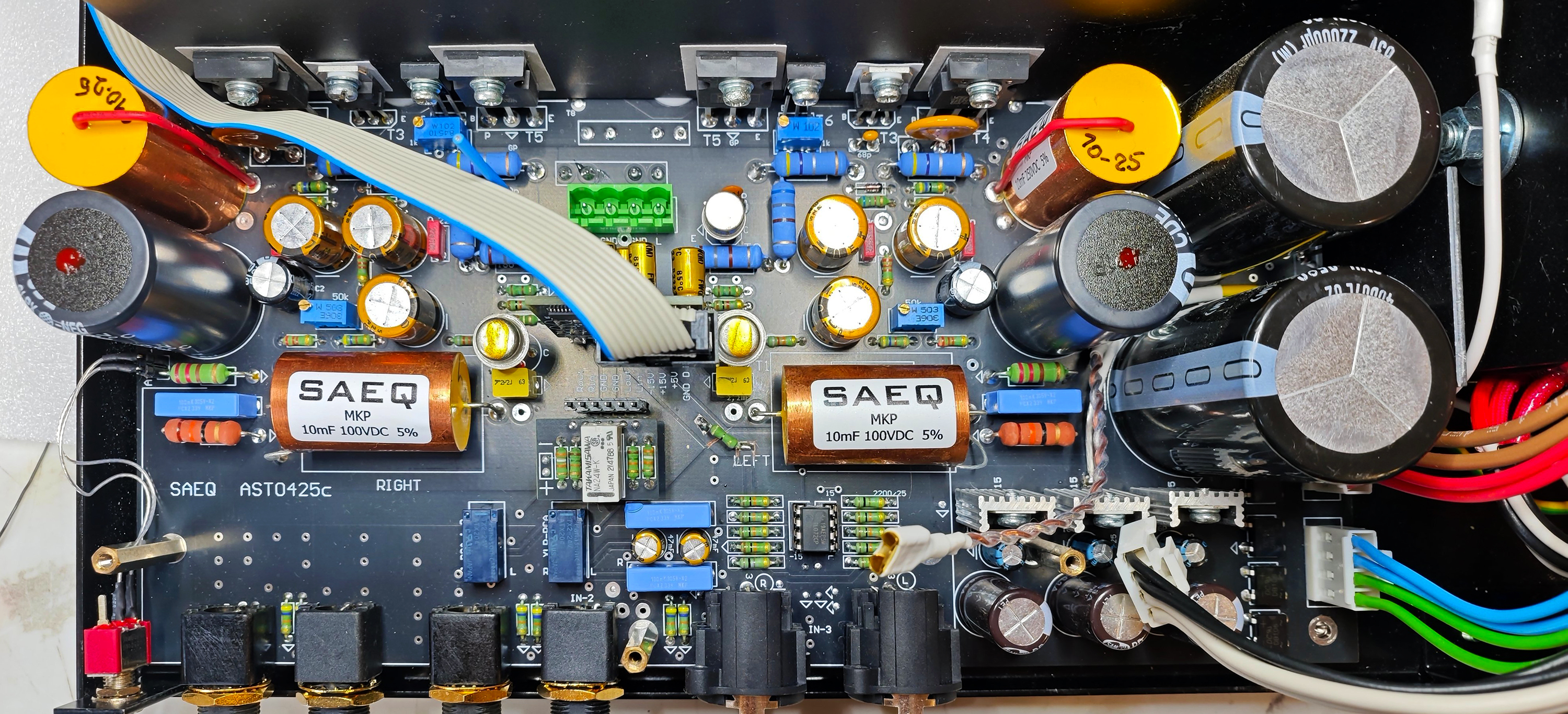 Output stage "with a potential dissipation of the output transistors of about 200wpc so Astraeus can drive 4 Susvara or 2 Immanis + 2 Susvara without aggression or strain."
What is your relationship with music more in general and what kind of music suits you the most?
I have always preferred high-quality music productions and don't accept mediocre projects for testing gear. I simply love serious efforts and beautiful music tracks without restricting myself on genres except for Techno and Bebop Jazz. Only serious productions reveal the quality of audio components and in that sense I haven't changed. Today I am aware of how incomplete some sources were sonically back then yet some have remained dominant to this day. Gramophones became dominant but the sound of open-reel tape surpassed them. The time of dominance of large tape recorders and cassette decks will never be forgotten. They offered us the fullest sound then which remains a reference for the wholeness of the musical material and pleasantness of playback. Open-reel tape set a very high bar that can hardly be exceeded even today in terms of physiological enjoyment. Today even the best DSD format, once you record it on tape, gives you something above and beyond the original.












Are there designers or audio brands that have inspired you in your career?
My inspiration was the American constructor Marshall Leach, professor of Electrical and Audio Engineering at the Georgia Institute of Technology. I was initiated by his late 1970's project, the Low TIM+ preamp project. My standards in musicality were the projects of English designer and audiophile John Linsley Hood. The abbreviation JLH stands for refinement in the domain of audio projects. I still feel emotionally attached to him because he offered simple projects with high performance like the famous JLH project of 1969 which became a standard of superior sound. There is a whole galaxy of serious constructors like Nelson Pass who gifted DIYers with extremely simple circuits that play very well. Now 50 years separate me from that beginning.
What are your priorities when designing a new piece of electronics?
When I start new projects, I always base myself on the experience of my predecessors. It is stupid to waste time on reinventing the wheel. The beauty and detail of music presentation is in the refinement of existing topologies, in a careful selection through the mass of projects. Combine individual segments of different topologies. Couple different tubes, germanium transistors and modern silicon transistors. Those are the challenges. Astraeus is the embodiment of that challenge and it is certain that I will continue in that direction. Constructing an all-tube amplifier carries the certainty of a tube sound but if you mix topologies, it takes much effort to get a sound that carries the physiology of tubes, the layering of germanium and the power and brutality of an output stage with classic transistors while avoiding harshness. People love the sound of tubes. It's simple but the threshold of that airy presentation moves towards inconsistency at the level of amorphousness. A large number of 300B amplifiers have breached the zone of unacceptable coloration. Everything is very similar and erases the fundamental postulates of reality. Where to set the limits of acceptability? Industrial design and mass are increasingly dominant. Soon prices will be determined by weight and size. That's just a joke.
What makes your designs different from the rest?
Almost every model we've made has won some award from reputable reviewers as the best in its class. Listeners found something beautiful in our sound. I don't know how different we are from others but we are obviously interesting enough to the buyers and offer something other brands don't have. Our intentions are sincere. That is the desire to bring a smile of satisfaction to the listener. Maybe this desire is the key to success? We touch people's souls. That's the bottom line. The rest happens as a consequence. There are many beautiful sounds but I have the impression that we manage to evoke emotions in people while listening to our creations.
How do you combine measurements and listening during the development of a new product?
My favorite instrument is the oscilloscope. It is my extended sense organ. I learned to turn those oscilloscope images into useful information for creating sound. I use it to draw basic conclusions at the beginning and throughout the project. The rest must be heard. When you've listened to music for a long time and are constant in that process over decades and compare devices with passion, your brain develops that perception. That is the path to progress. It is the creation of the listener's sensibility. We are all in that process, some for longer, some shorter. Sensibility creates sound. It gives the personal touch. With me that sound evolves. I am satisfied because the sound is getting better. If increasing age brings such effects, I would like to grow old as soon as possible and meet my creative maximum. It is important to develop the integrity of the listener and that the shape of the device is never more important than the sound. Measurements are important but I am always ready to choose good sound over perfect figures. Every day I progress in that domain. Consequently, the quality of SAEQ projects moves in the right direction. We still climb.