Country of Origin

Reviewer: Srajan Ebaen
Financial interests: click here
 Main system: Sources: Retina 5K 27" iMac (i5, 256GB SSD, 40GB RAM, Sonoma 14), 4TB external SSD with Thunderbolt 3, Audirvana Studio, Qobuz Sublime, Gustard U26 USB bridge, LHY Audio SW-8 & SW-6 switch, Sonnet Pasithea; Preamp: Hattor Audio ARP-S; Active filter: spl Audio Crossover MkII; Power amplifiers: Vinshine/Kinki Dazzle & mono NC500 Nord Acoustic amps on subwoofer; Loudspeakers: Qualio IQ [on loan]; Subwoofer: sound|kaos D15; Cables: Exact Express Flame, Furutech; Power delivery: 2 x Kinki/Vinshine Tai Hang on amps and source stack, Furutech DPS-4.1 between wall and conditioners; Equipment rack: Artesanía Audio Exoteryc double-wide 3-tier with optional glass shelves, Exoteryc amp stands; Sundry accessories: Acoustic System resonators, AudioQuest FogLifters; Room: 6 x 8m with open door behind listening seat; Room treatment: 2 x PSI Audio AVAA C214 active bass traps
1st upstairs speaker system: Source: FiiO R7 into Soundaware D300Ref SD transport to Cen.Grand DSDAC 1.0 Deluxe with POW; Preamp/filter: Lifesaver Audio Gradient Box 2; Amplifier: Kinki Studio EX-B7 monos; Loudspeakers: sound|kaos Vox3awf; Subwoofer: Zu Method; Cable loom: Exact Express Earth; Power delivery: Vibex Granada/Alhambra, Akiko Audio Corelli Corundum & Castello Solo; Equipment rack: Hifistay Mythology Transform X-Frame [on extended loan]; Sundry accessories: Furutech cable lifts, Furutech NFC Clear Lines; Room: ~3.5 x 8m
1st upstairs headfi system: DAC: Cen.Grand DSDAC 1.0 Deluxe with POW; Headamp: Cen.Grand Silver Fox; Headphones: Raal 1995 Magna, HifiMan Susvara
Desktop system: Source: HP Z2 workstation Win11/64; USB isolator: LHY UIP; LAN distributors: LHY AS6 Pro & SW6-SFP; Ethernet reclocker: Stack SmoothLAN; DACs: Gustard R26II & Audalytic DR70; Preamp: Topping A900; Speaker amps: Topping B200 monos; Headphone amp: Enleum AMP-23R; Loudspeakers: Virtual Hifi Viper; Headphones: Final D-8000, aune SR7000, FiiO FT7, HifiMan Susvara Unveiled
2nd upstairs headfi system: Shanling EM7; Headphones: Meze 109 Pro, Fiio FT3, HifiMan HE1000 Unveiled
2nd upstairs speaker system: Source: smsl PL200T CD transport, 1TB microSD; DAC: Shanling EM7; Crossover: Lifesaver Audio Gradient Box II; Amplifiers: LAIV Crescendo Chorus monos; Loudspeakers: MonAcoustic SuperMon Mini with Dynaudio S18 subwoofer
2-channel video system: Source: Oppo BDP-105; All-in-One: Gold Note IS-1000 Deluxe; Loudspeakers: ModalAkustik MusikBoxx; Subwoofer: Zu Mission; Power delivery: Furutech eTP-8, Room: ~6x4m
Review component retail: €10K in white or black, add €500 for stand in white or black
 |
 |
 |
 |
 |
 |
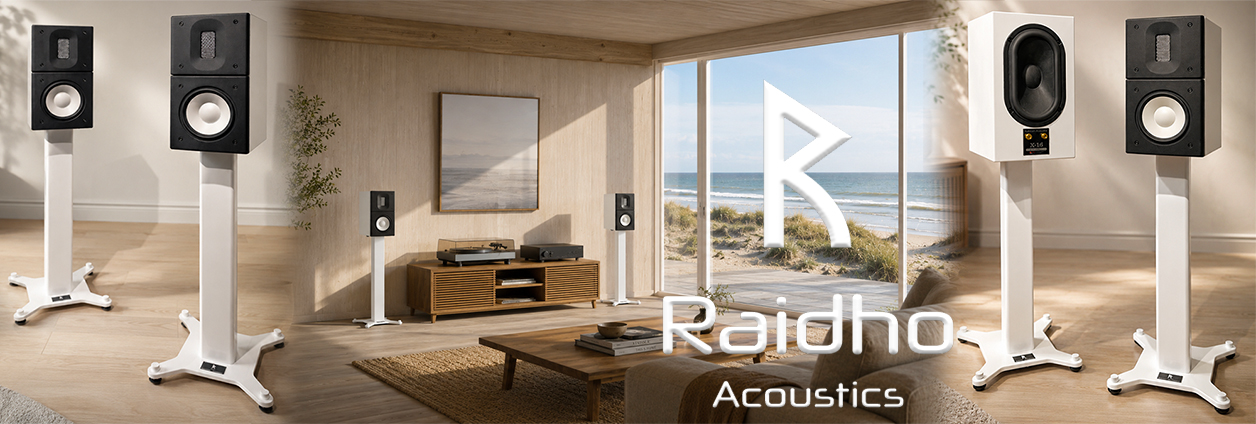
Passive aggro? Affirmative; if aggrandizement be the word, not aggression. It's Raidho nicking a notion from their own sub brand Scansonic. It replaces the existing X1.6's rear port with a passive radiator shaped like a racetrack. Then it levels up with Mundorf/Nordost Valhalla filter/cable parts to gain the Reference suffix. That parks it midway between Raidho's entry-level X and no-prisoners TD series. As a premium marque, the EU tariff is a flat €10K/pr. It buys a super-light so 20mg planarmagnetic tweeter with 1st breakup at 82kHz; and an advanced 6½" Ceramix mid/woofer direct-mounted from behind to the 20mm cast aluminium baffle. The latter's aluminium core sports skins which a liquid-plasma process of extreme voltage has turned into AI²O³ aka alumina aka aluminium oxide, "an ionic compound of two aluminium ions with a +3 charge and three oxygen ions with a -2 charge." As Gemini AI tells us, "aluminium oxide is exploited for its hardness, strength and low heat retention. Its naturally occurring form of corundum is 9 on the Mohs scale of mineral hardness just below diamond." Raidho's trade name Ceramix thus describes a softer aluminium core between nano layers of synthetic corundum to "create a stiffer structure of excellent self damping whose 1st breakup occurs at an incredible 12.5kHz". When the pre-Vienna 2026 press release hit, I instantly replied with a review request. Morten Nielsen was perfectly amenable though advised a ~2-month lead time for full production to ramp up. With my foot in the door, I didn't mind. My steel-toe boots would hold firm without squashing. Or so I hoped.









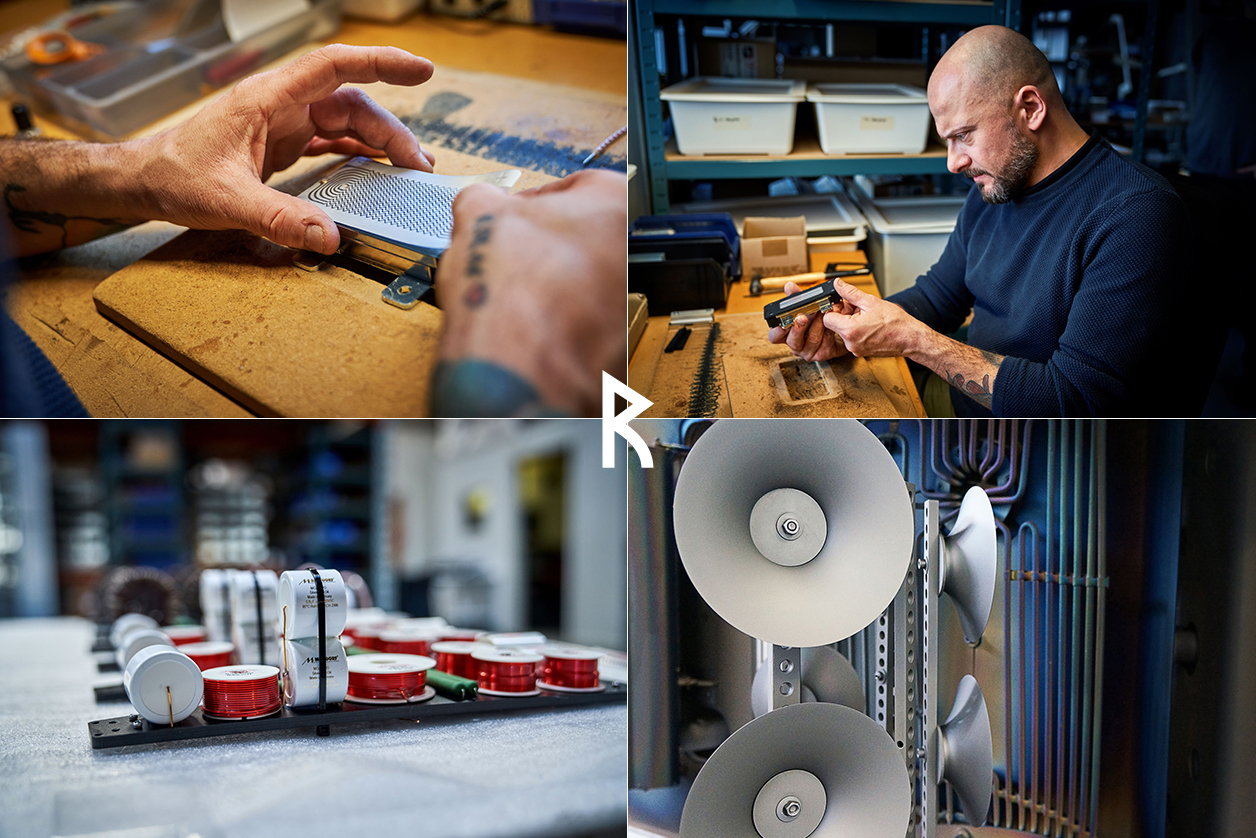
If you didn't know, Raidho make their own drivers. Above we see a micro foil with its trademark wavy conductive traces become a planarmagnetic monopole tweeter. The 2nd row shows a bigger model's xover, then nude TD-series cones in the particle bombardment chamber of Aarhus University to achieve their hardening nano coatings of laboratory diamond. The assembled 6½" X-range mid/woofers are a sight to behold. A monstrous flower-power motor system with multiple magnet slugs and extreme venting bolts to a basket which becomes the massive baffle segment without the usual rim interface so glues the surround directly to the baffle. Talk about one enormous vibrational sink without lost-in-translation intermediary. Meanwhile the big vent bore and very open support structure keep the voice coil chill to minimize dynamic compression which comes from rising coil temps causing higher resistance that now opposes the signal. As we learnt, even the Ceramix cones resist heat retention to stay cooler. Had you wondered where your coins go with this compact 2-way monitor, that's where—elite high-performance drive units and associated filter parts and hookup wiring.
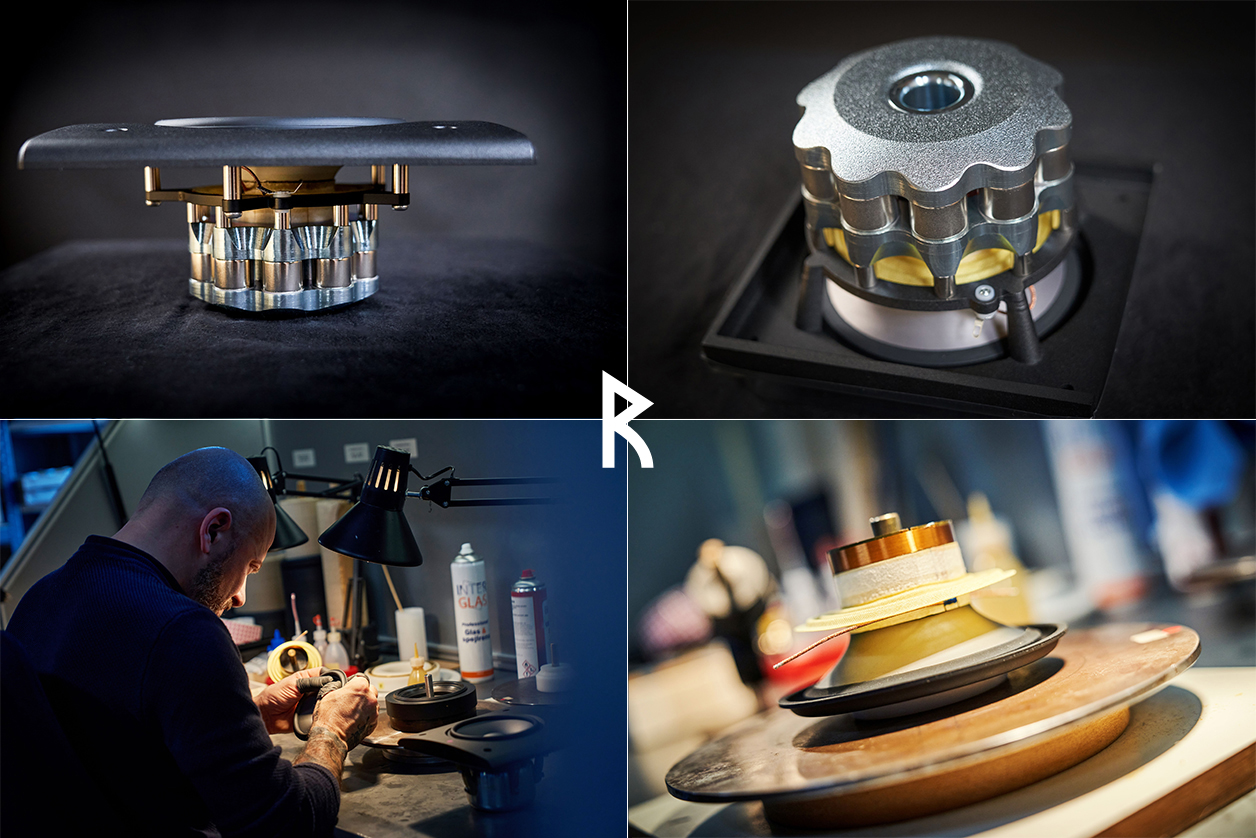 The ratio of voice coil to cone diameter is unusually high.
That's all we knew about the X1.6 Reference days before the first Vienna HighEnd show opened its doors across four locations. I was keen to know more. That's because Raidho and I have form; excellent form. After Mundorf's dipole AMT, Raidho's is my favourite tweeter. I looked forward to an eventual assignation once Raidho's team had departed Austria and were back in Denmark.