

Country of Origin

Reviewer: Frederic Beudot
Digital Source: Aurender A10 streamer, Denafrips Pontus DAC, LHY SW6 Ethernet switch, Jay's Audio CDT2 Mk2, Holo Audio Cyan 2 [on loan], Mola Mola Tambaqui [on loan], Volumio Rivo+ [on loan], Lumin X2 [on loan]
Analog Source: VPI Scout 1.1, Zu-DL103 MkII, Genesis Phono Gold, Kitsune KTE LCR-1 Mk5 phono [on loan]
Amplifier: Triode Labs 2A3i, Enleum Amp 23R
Speakers: Ocellia Calliope .21 Twin Signature, Rogers LS 3/5a, Zu Essence
Cables: Zu Varial, Ocellia RCA cables, Zu Event MkII speaker cables, Absolute Fidelity custom XLR to RCA interconnects, Furutech USB and interconnects, AIM NAX and UA3 [on loan]
Power Cords: Zu Mother, Ocellia power cables, Absolute Fidelity power cable
Powerline conditioning: Isotek Nova, Furutech
Sundry accessories: Isolpads under electronics, GIK Audio room treatment
Music Playlist: Tidal
Room size: 18'x14'x10'
Review component retail in the US: $16'800
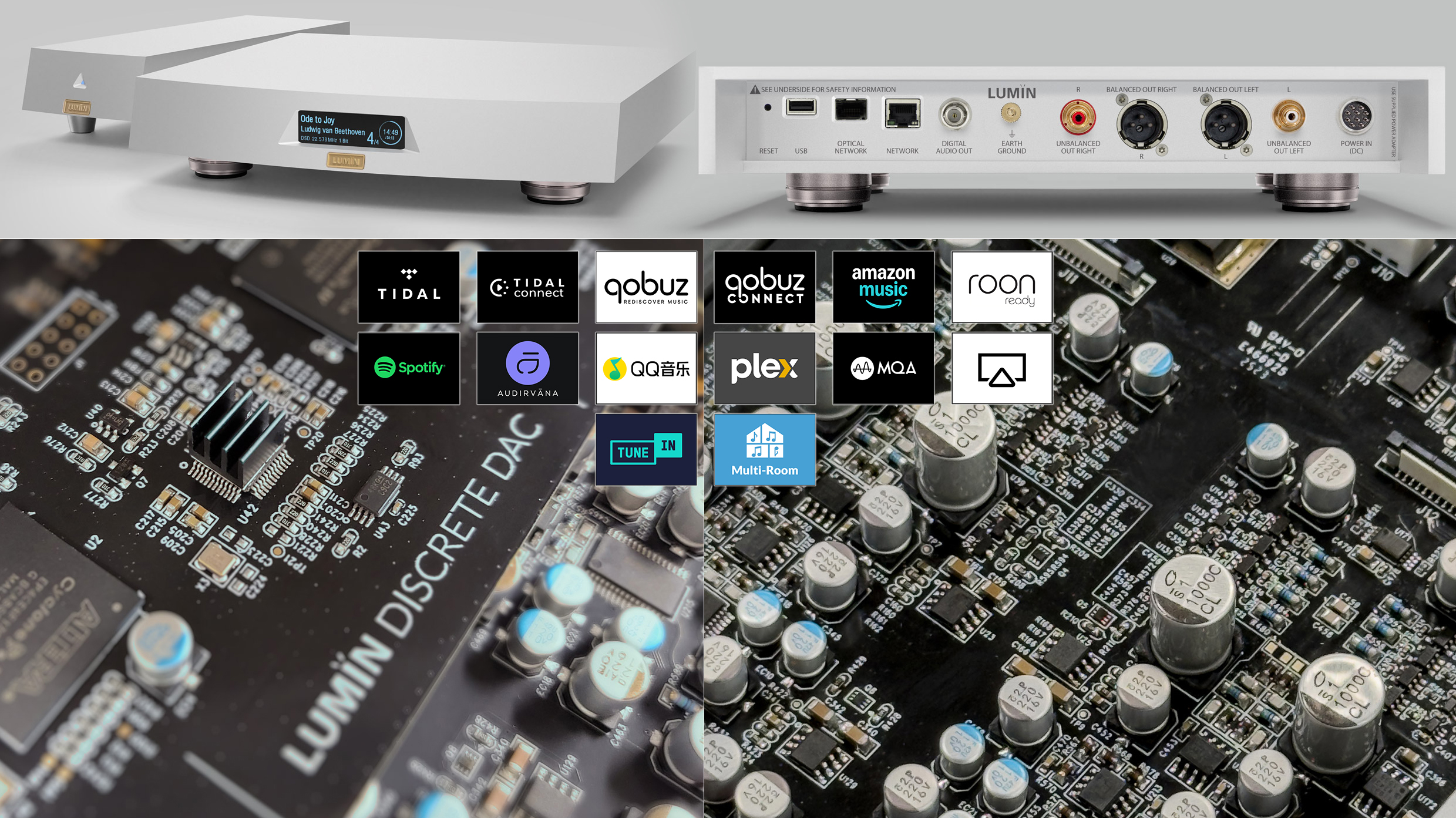
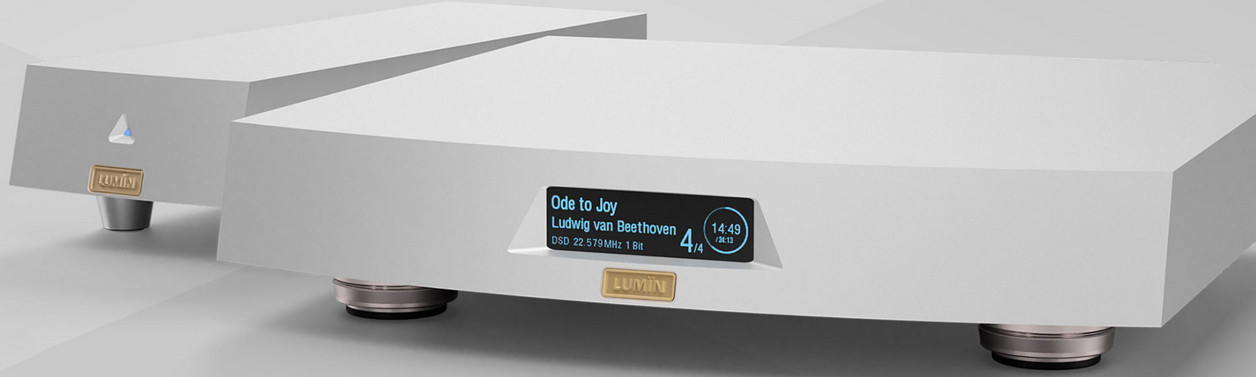
There are machines that want to be heard. Some arrive wearing their engineering on the sleeve with massive trafos, acres of heatsinks, displays bright enough to guide aircrafts home, chassis machined to tolerances that would make a Swiss watchmaker nod approvingly. Others whisper their credentials through the familiar liturgy of numbers and specs: 32 bits, 768kHz, DSD512, Femto clocks, FPGA, discrete, balanced, galvanically isolated. They don't merely reproduce music. They seem determined that we should know just how very hard they worked to do so. Then there are machines that develop a more dangerous ambition. They want to become immaterial. Lumin's X2 comes surprisingly close. For a flagship network player, that is an awkward proposition. One spends this sort of dosh expecting firework posh. Surely something should happen. Surely the soundstage ought to inflate like a theatrical set, cymbals acquire the crystalline precision of newly minted currency, bass descend another geological layer into the Earth's crust. Surely one's audiophile friends should arrive, sit down for seventeen seconds and mutter something suitably expensive while lazily sipping a 1989 Chateau Margaux. Instead X2's first great achievement is restraint – restraint of design, of a small screen serving as barely more than an indicator that power is flowing through; restraint in features as X2 won't accept any input other than LAN and one external USB drive loaded with files. But it's certainly not the restraint of a component holding back. Quite the opposite. X2 is remarkably revealing, dynamically alive and startlingly precise. It simply doesn't seem especially interested in rattling off those virtues one at a time. Audiophile language is full of traps. Smooth can mean refined; or rolled-off. Relaxed can mean natural; or dynamically constipated. Musical can mean emotionally persuasive; or that someone quietly sanded the recording down until all inconvenient edges disappeared. X2 avoids those particular pitfalls. Instead its character is one of continuity and authenticity.
A piano's tone doesn't arrive as attack, body and decay assembled of three separate pieces. The hammer strikes, the soundboard responds, the harmonic structure blooms, the note recedes as one continuous physical event. A singer doesn't occupy a sharply cut-out space in front of a halo of studio ambience. Voice, microphone, room and reverberation become a single acoustic proposition. A cymbal remains a cymbal rather than becoming 'treble detail'. This is not a warmer presentation. It is not a softer one, either. If anything, X2's ability to preserve transient information while retaining the body behind those transients is one of its most impressive qualities. And that is precisely why my reference combo of Lumin U2 and Mola Mola Tambaqui made such a fascinating opponent. U2 is an exceptionally clean transport already.
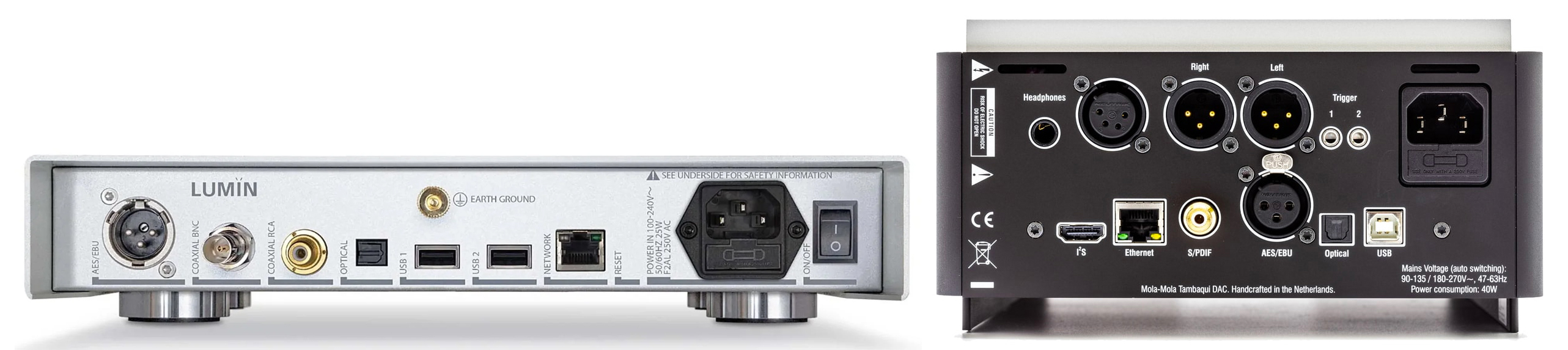
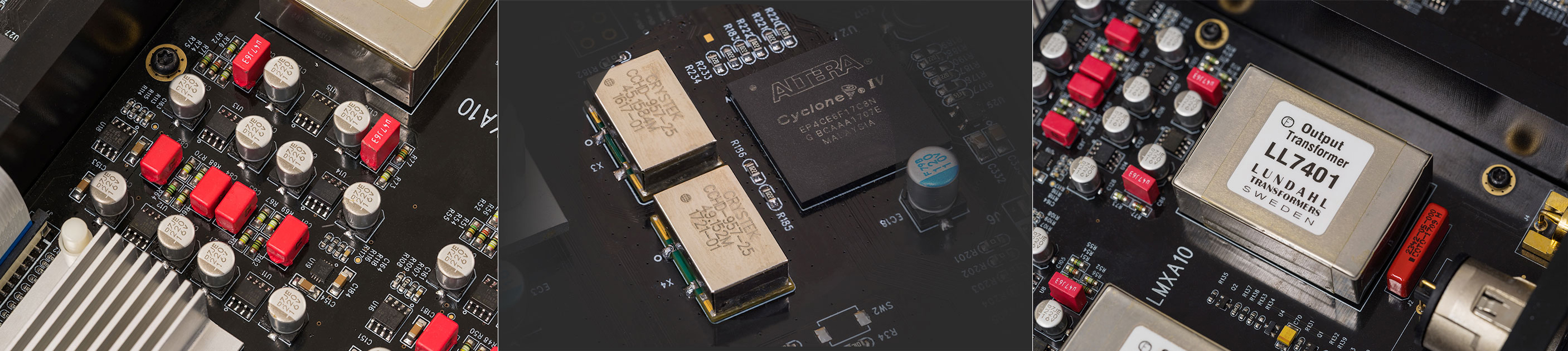
Tambaqui adds its own peculiar mixture of resolution, speed, spatial openness and tonal neutrality. It is no DAC that needs rescuing. It's the mètre étalon all others get measured against. So X2 didn't walk into an empty room. That made the comparison more interesting than the usual flagship-vs-predecessor exercise. That said, I am a believer in reuse and recycle so point you at my recent reviews of the Lumin U2X and U2 that contain everything I want to write about Lumin's superb app and all built-in capabilities for PCM384/DSD256 upsampling, format conversion and volume attenuation. With X2 Lumin are kicking off a new generation of components and have rebuilt the new flagship around now their very own converter. X2 uses a fully discrete Lumin DAC not off-the-shelf chips as did X1. Separate conversion paths for PCM/DSD are controlled by dual high-speed FPGA. Twin Femto oscillators and FPGA clock distribution oversee timing, the analogue output stage is fully balanced and Lundahl LL7401 transformer-coupled, a trademark of Lumin's most ambitious designs. An external dual-toroidal linear supply powers the digital and analogue sections independently. That is enough engineering to populate a brochure where engineering goes to become adjectives—or worse, marketing slop.






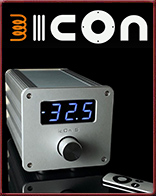






The interesting question is this. What remains after all the adjectives have paled? A remarkably integrated rendering is my answer. Lumin have successfully taken control over the entire journey from network data to analogue voltage rather than treating the DAC as one module, the output stage as another. FPGA code, clocking, discrete conversion, analogue buffer and transformer outputs aren't isolated attractions. They appear to have been voiced—or perhaps more accurately, engineered—to deliver exactly the musical experience Lumin want us to enjoy. Nothing less, nothing more. It was never so apparent as when I asked Lumin why they chose a ΔΣ architecture on FPGA when they could have gone discrete R2R or pure DSD. The answer was typical Lumin: "We know ΔΣ, we like how it sounds, so do our customers." Refine, don't reinvent. I simply suspect there being more to it than basic ΔΣ when their native DSD conversion was significantly more detailed and dynamic than Tambaqui's. Yet Lumin remain tight-lipped on any secret sauce in their recipe. They did hint though that a multi-input DAC using the same tech is under consideration. Something might release in the future. Hence I suspect that this isn't the last we'll hear of this new FPGA-powered ΔΣ circuit. With a just-released upgraded network filter, their U2X getting unanimously praised and possibly a standalone DAC in the wings, one gets a sense for what Lumin's mountain top could look like going forward. I'd not be surprised if an external clock eventually joined in as more and more Lumin components include a clock input. In some quarters such a holistic approach goes by 'complete digital infrastructure'. In fact, a regular reader and fervent Lumin user recently proposed that on this count their catalogue is nearing the reach of dCS albeit at far lower pricing. He also spoke of suggestive evidence that Lumin are firmware/app partners for Esoteric and Luxman. In the below YouTube video, Lumin's Angus Leung confirms it.
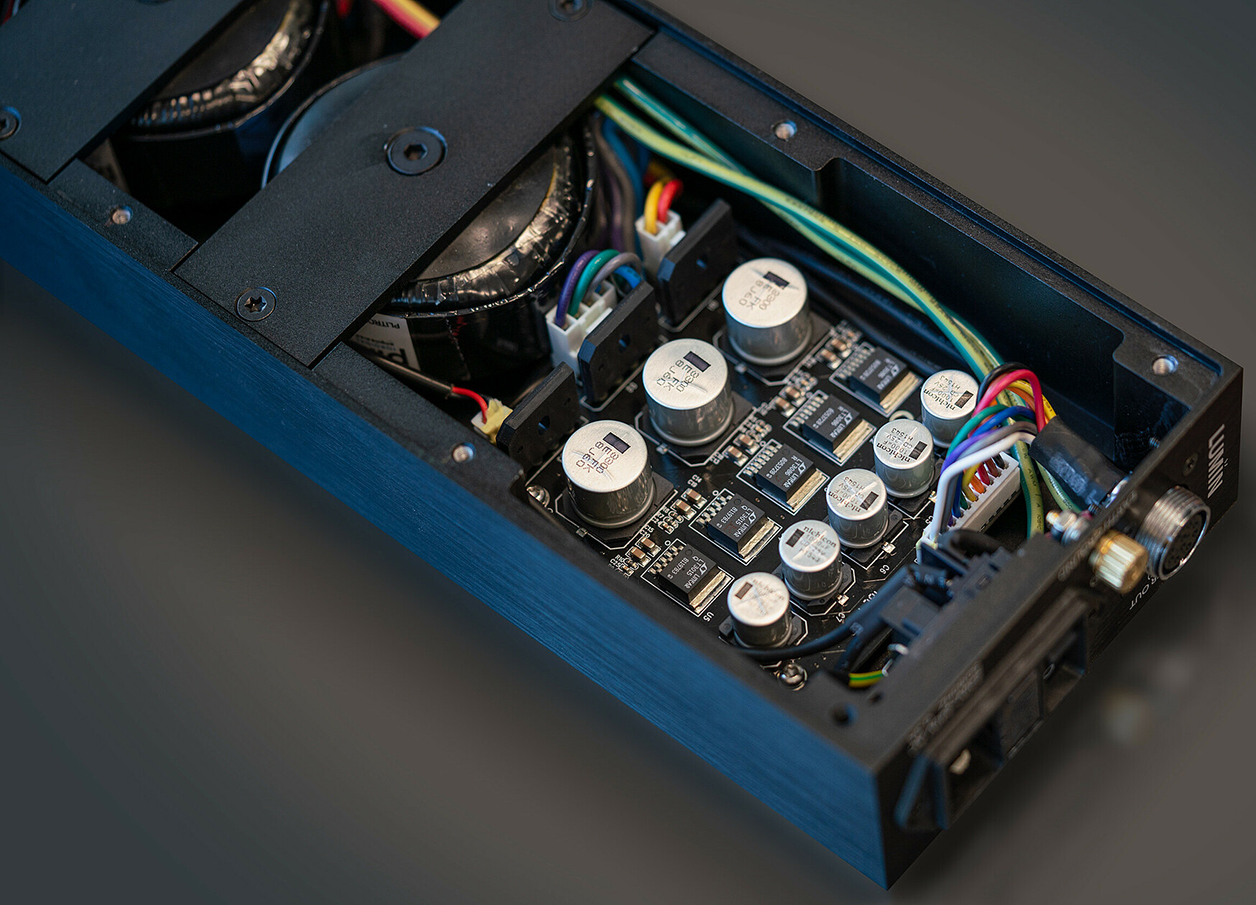
I can confirm that Lumin's in-house ΔΣ creation jumps ahead of their older off-the-shelf designs not as a particular chip sound or obvious FPGA signature, whatever that might even be. Instead instruments seem to maintain their harmonic identities while moving through time with unusually little friction. That became apparent almost immediately with any acoustic instrument that mixed impacts with harmonics. So let's head down to the mancave and start getting serious with some well-curated tracks.
 A visit to Pixel Magic Systems & Lumin in Hongkong's Science Park by Lee388 of Hifi Circle. Turn on the English cc subtitles/close captions.