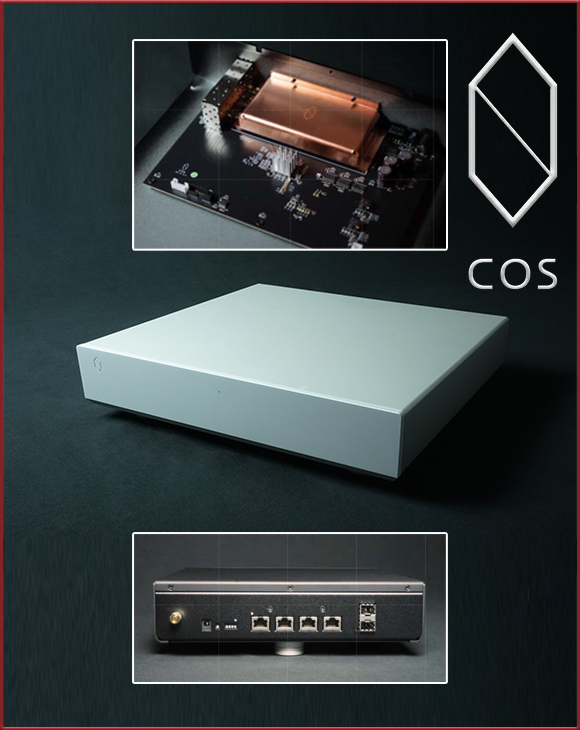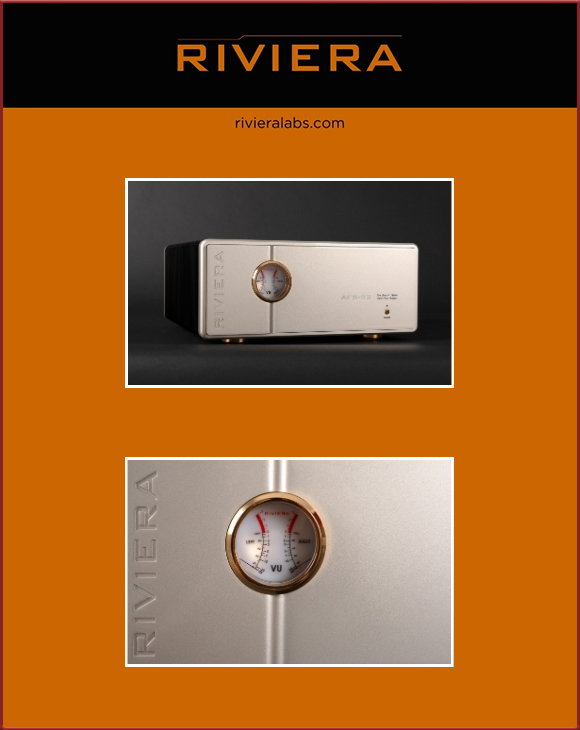
Bill Evans Trio: "Waltz for Debby". Here the audience is everything. A mediocre system turns the Village Vanguard into a generic ambience track. A great system gives you the strange sensation that people sit around the musicians. X2 is excellent, the room gains shape without becoming exaggerated. Applause has distance, piano body, bass wood. Cymbals have air. But as with every track that thrives on ambience, U2/Tambaqui reveals more of the recording's fine-grain architecture. I can almost follow the outline of the walls whereas X2 artfully fades to dark before I get a chance to see them.
Nils Lofgren:"Keith Don't Go". The acoustic guitar is an object with soul. On the live recording, you can hear fingers, strings, wood, pressure, resonance and the room. The linked video isn't as informative. X2 does something beautiful with the relationship between attack and decay. The pluck is not one sound followed by another called resonance. It is one physical event unfolding through time. X2 just gives us more wood to hear through that event.
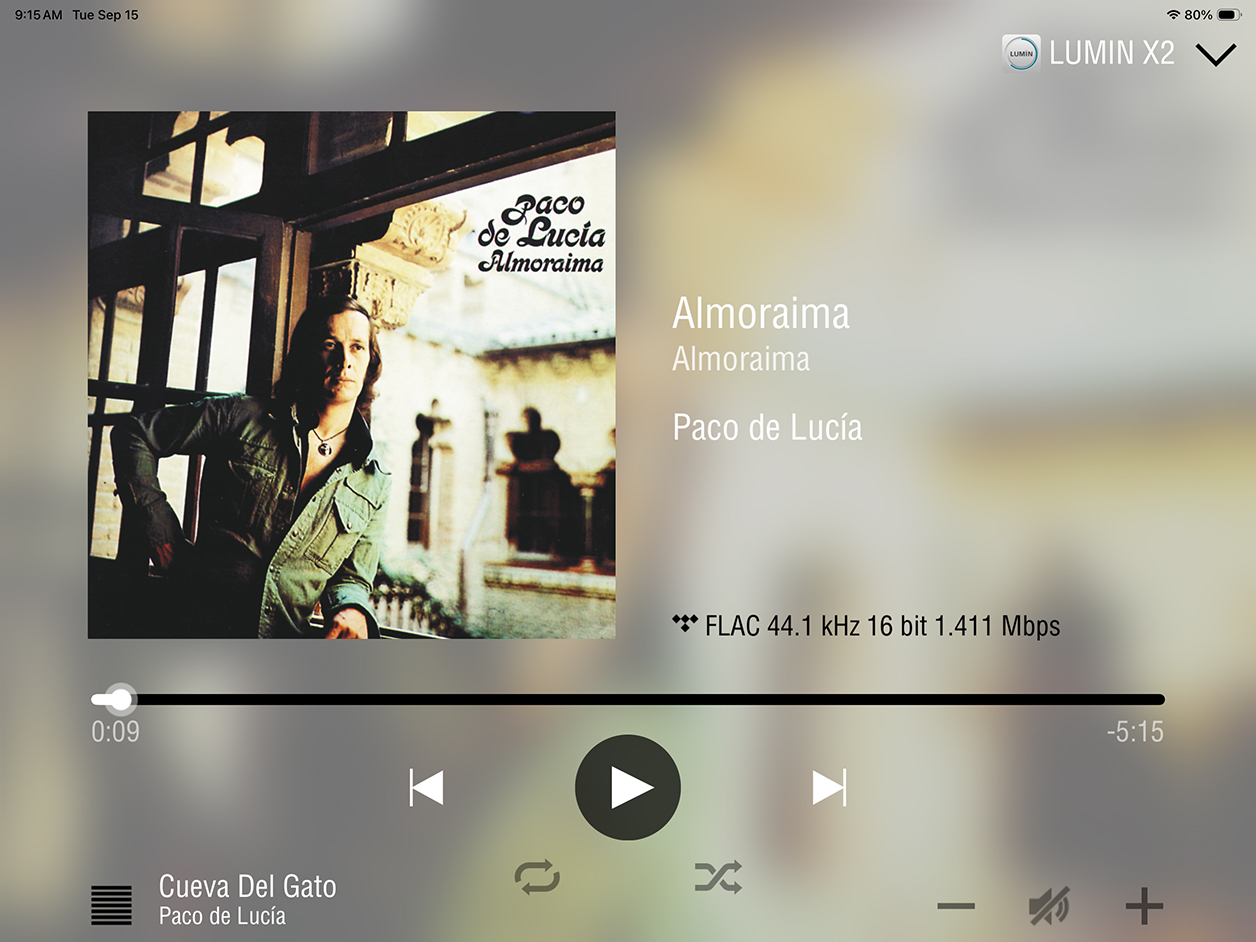
Paco de Lucía: "Almoraima". Flamenco is dangerous territory for digital sources because the guitar attacks are fast enough to expose any tendency for glare. X2 doesn't dull them, the fingers remain percussive. Strings snap. The guitar's upper register has bite. As expected, U2/Tambaqui is spectacular here. Its ability to separate rapid-fire guitar work is breathtaking but X2 gives the guitar greater physical weight. It sounds more like a resonant wooden box being attacked by somebody with frighteningly fast fingers. Which is what it is. Tambaqui gives you a better sense of Paco's virtuosity. X2 lets you feel the pain the guitar goes through as a result. No review of mine would be complete without some large symphonica stressing a DAC's ability to unravel extremely complex signals and details often lost in the background noise of original tape hiss.
Beethoven: Symphony No. 6, Fritz Reiner / Chicago Symphony. X2 creates excellent lateral spread but more importantly, preserves front-to-back hierarchy. Strings and winds remain embedded within the orchestral fabric while the hall exists around them. Tambaqui offers slightly more explicit layering. With it I can follow individual instrumental sections with greater ease but the differences are minute at best. As the score grows denser, U2/Tambaqui retain their ability to structure the soundscape more precisely while the musical event becomes more complicated. Even with X2 nothing collapses on itself nor is there any opacity but there does come a point where Tambaqui shows you it can take more while X2 has reached its limit.










Musica Antiqua Köln: Pachelbel, Canon in D. Not the syrupy wedding version but a fast period-ensemble performance. The instruments are lively, slightly raw and full of individual tonal character. X2 lets that rawness thrive. This matters because one of the easiest mistakes for expensive digital is to make everything too beautiful. That's why I eventually sold my otherwise superb LampizatOr Golden Atlantic; why I couldn't fully embrace LTA's Aero. Both missed out on that last bit of rawness I crave. X2 doesn't. Violins retain bite, harpsichords remain percussive, the ensemble has physical energy. As expected, Tambaqui again offers slightly more explicit separation but X2 has the more convincing sense of an ensemble playing together. X2 is not smooth, warm or midrange-centric. It just is. Music. Naturally.
Hugh Masekela: "Stimela". This is where I expected X2's refinement to betray it. It does, somewhat—when things get loud—but not to any offensive level. Your soufflé doesn't suddenly plop when things go hot. At some point it just stops rising as much as Tambaqui is capable of. The crowd still rises, percussions still gather, the trumpet still cuts through, Masekela's voice still acquires increasing physical authority and at no point does X2 harden. But here U2/Tambaqui is more magnificent when confronted with an explosion of sounds. Tambaqui's ability to preserve dynamic hierarchy under pressure remains one of its defining strengths. X2 has an almost unsettling composure, the music simply gets bigger but not quite as free to explode in all directions.
Led Zeppelin: "Kashmir". The original "Kashmir" is not a recording I use to evaluate treble smoothness; or any kind of smoothness for that matter. It is a test of authority. X2 makes the bass line physically substantial without allowing it to swamp the orchestration. Page's guitar has texture rather than simply distortion. Bonham's drums have mass. Tambaqui gives me more internal detail within the production but the X2 makes the entire thing feel heavier; not more bass-heavy, just heavier, period. Weight is not about frequency response but a psychological consequence of timing, harmonic density and dynamic scale arriving together. X2 has it, Tambaqui not quite as much. Let's wrap up my listening notes with some deliberately ugly recordings. This is where serious equipment either earns my respect—or not. Anyone can make a beautiful recording sound beautiful. Many make ugly sound merely meek. Give me something compressed, harsh, dynamically compromised or tonally awkward but let me understand what the musician intended. Then we'll talk.
Oasis: Wonderwall. There is no shortage of audiophile-approved recordings but Oasis isn't one of them. X2 doesn't turn Wonderwall into a demonstration disc. Good. The recording remains compressed and somewhat congested. But guitar texture remains coherent and the vocals don't acquire the additional digital irritation that some DACs seem to manufacture around already compromised material. Tambaqui is more brutally honest and exposes more of the recorded limitations. X2 exposes them too but doesn't seem to underline them in red. As a reviewer, Tambaqui tells me more but to take me back to my early twenties, X2 gets me in the mood. If only I could remember where I put my stash.