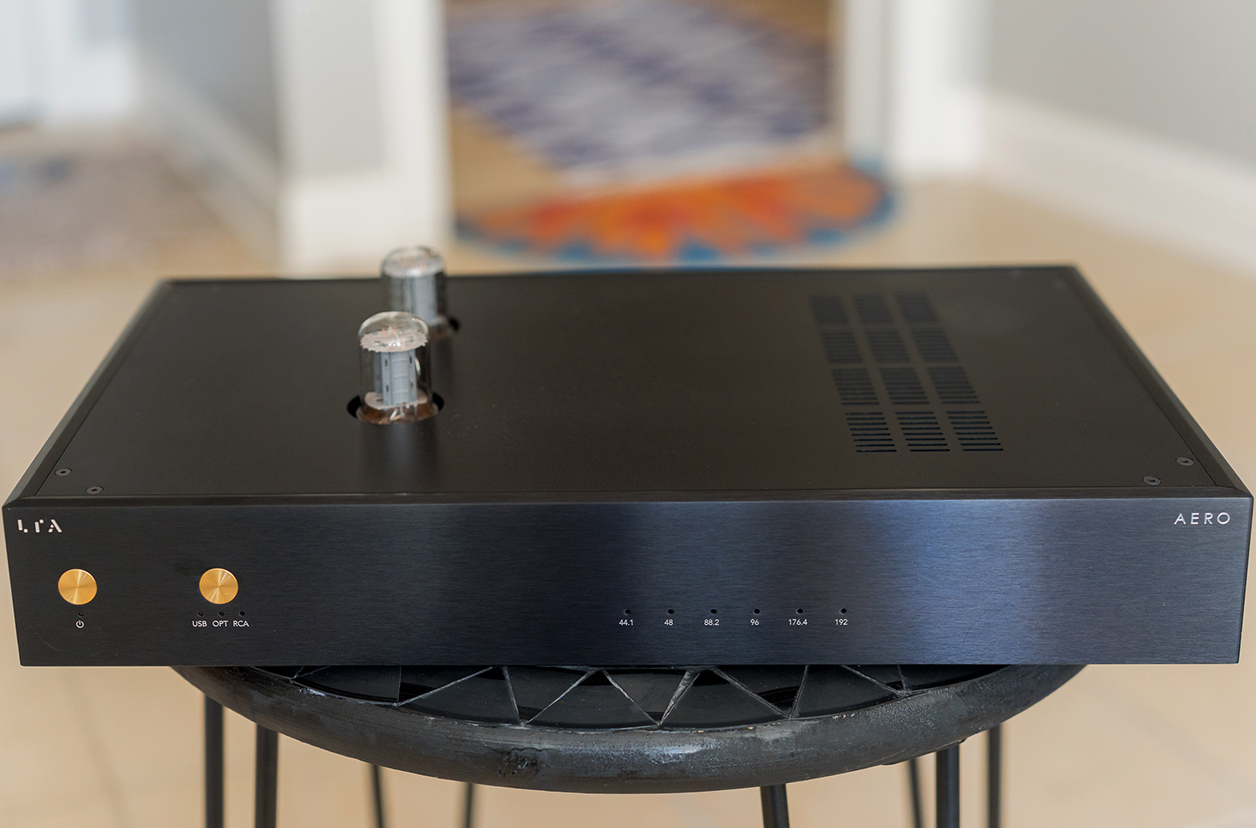
With Srajan having handled the tech intro, I could dive ears first into listening and take notes. And I did just that over the past few months – with great joy. Nonetheless, I still had a few questions in the back of my mind so fired off an email to LTA's Nicholas who provided some additional insights that I felt could be useful to our readers.
Frederic: Can you clarify the ZOTL moniker? I understand that it refers to an output stage without output transformer but your website mentions the still necessary impedance-matching circuit which includes transformers. Could you help reconcile those two statements?
Nicholas: The ZOTL circuit utilizes high-frequency operation to use an entirely different type of transformer than the iron-core kind traditionally found in tube amplifiers. Our transformers are so drastically different in operation that it is more accurate to say that ZOTL is 'transformerless' since it doesn't use classic tube output transformers nor operates electrically like an amplifier with them. For a more technical explanation, here is David Berning in his own words: "These amplifiers use radio frequency to change the voltage/current transfer characteristics of the output tube from its normal impedance plane to one suitable for driving a dynamic loudspeaker. The radio-frequency remapping is implemented using special high-frequency power-conversion techniques. The high-voltage low-current tube impedance plane is remapped to the high-current speaker impedance plane through special transformers operating at a constant RF carrier frequency of 250kHz. Because the audio signal rides on a carrier, it is not subject to parasitic elements of the transformer that would distort the audio signal. Unlike the conventional audio-output transformer, this impedance transformation operates on both the AC and DC components of the signal.
"In the transformer-coupled amplifier, the turns ratio of the output transformer determines the impedance matching between the output tube/s and speaker. There are practical limits to how large this ratio can be made because of the parasitic elements of the windings. Hence it is difficult to make an output transformer with a ratio greater than 25:1. With ZH technology, the impedance matching is determined by the effective turns ratio of the RF converter transformers. Without parasitics to affect the audio, these RF transformers can have much higher effective ratios, opening the door to various tubes under unusual operating conditions that cannot be implemented with classic output transformers." You can also watch this video of David Berning himself explaining the origin of the term ZOTL.









Frederic: With the Aero you consciously skip a lot of features that are becoming ubiquitous in many of the hot DACs of the moment like DSD decoding, I²S or even AES/EBU which show up with Auralic, Aurender, Hifi Rose, iFi, Lumin as well as most CD transports typically paired with a €4K converter. What led to those design choices?
Nicholas; AES/EBU is a standard developed for transmitting digital audio over balanced or unbalanced coaxial cables in pro-audio environments. It was well-regarded for its ability to minimize signal degradation, making it ideal for transmitting digital signals over long distances. In home audio this is usually no issue because source and DAC are often within a meter or less of each other. While some companies do include AES/EBU outputs, their "ubiquity" can be debated as many very popular streamer manufacturers like EverSolo, Innuos and Cambridge Audio do not offer them. Innuos offer it in one of their entry-level units but not in any others, including their high-end models.
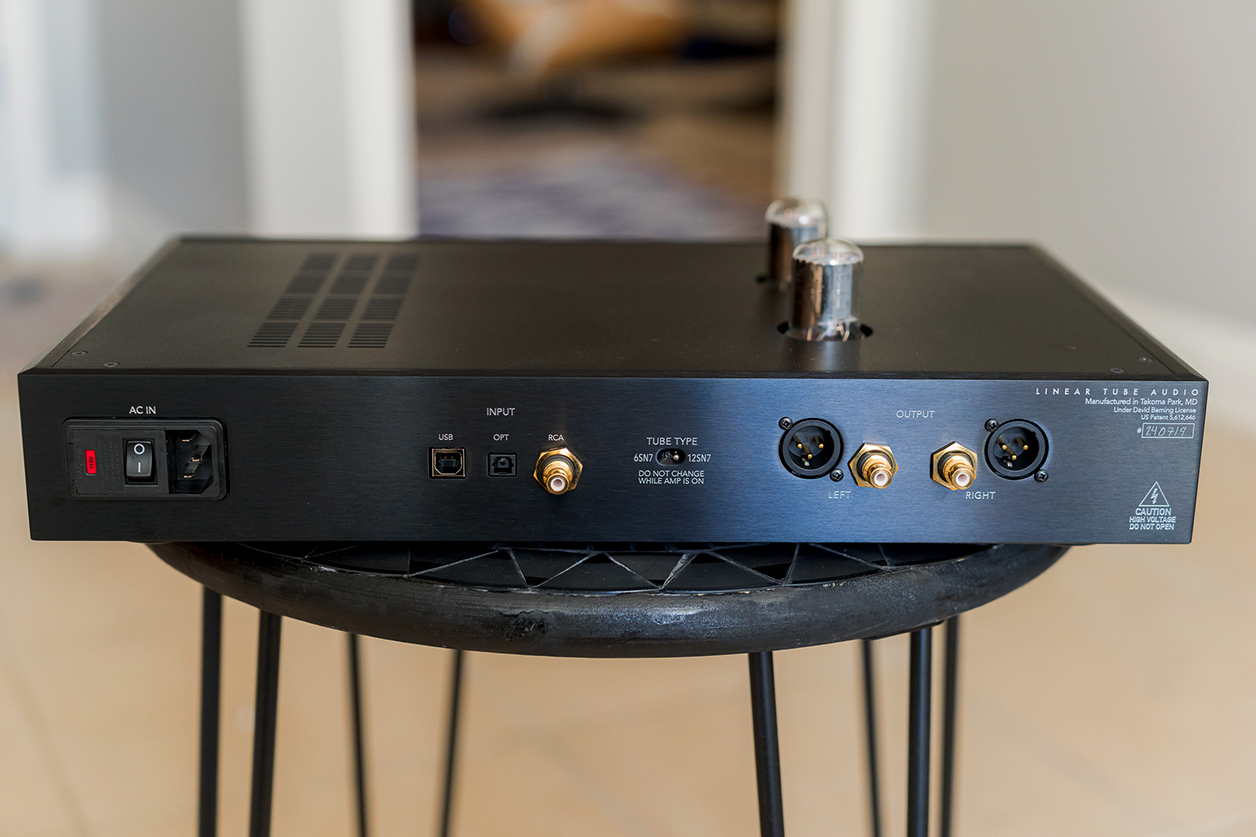
I²S was designed to move data between two chips within electronic devices where signal lengths are exceedingly short. With no standardized implementation amongst source manufacturers and high signal fragility, this translates to a lot of technical support which we elected to avoid with our first DAC. All of this for a connection type that while it has vocal supporters, is still limited in its use in source components. It's a similar story for DSD. The Aero doesn't include a discrete R2R array. Ours embeds on the DAC chip so adding DSD would not be trivial. No matter how 'easy' something may or may not have been to include, every addition increases development time as well as production, testing, troubleshooting and support costs. This applies to the inputs as well. We may include AES/EBU and/or I²S and/or DSD in a future product but through conversations with our customers, feel that we developed a product that is relevant to a large swath of the hifi market. For our first DAC we wanted to keep things simple and focus on making its performance meet our goals.