The illusion of completeness. Do we buy into it? Do we not? With bandwidth-limited speakers, that's the fundamental question. If they tip up; have too much white intrude; get hollow in the midrange; if transients overshadow follow-on sustain; if lean just goes mean… illusion of completeness betrays itself as jarringly incomplete. But when it hangs together without disrupting our suspension of disbelief? Then it adds new effrontery to published specs and automatically triggered expectations. On paper, Mini's lack of the bottom 1½ octaves virtually predicts a mass sighting of illusion disruptors unless we were hyper selective about the music we cue up. In actual desktop practice, Mini was the consummate stage magician. So compelling was the illusion that my internal cynic became the inner child. That child wasn't the least bit curious to catch out the illusionist. It was simply entertained by magic. The words trickery and illusion were irrelevant. Just how in the frozen hell did Norbert manage with such modest driver weaponry? With 30+ years of experience. Experience and skill override parts pedigree any day of the week!
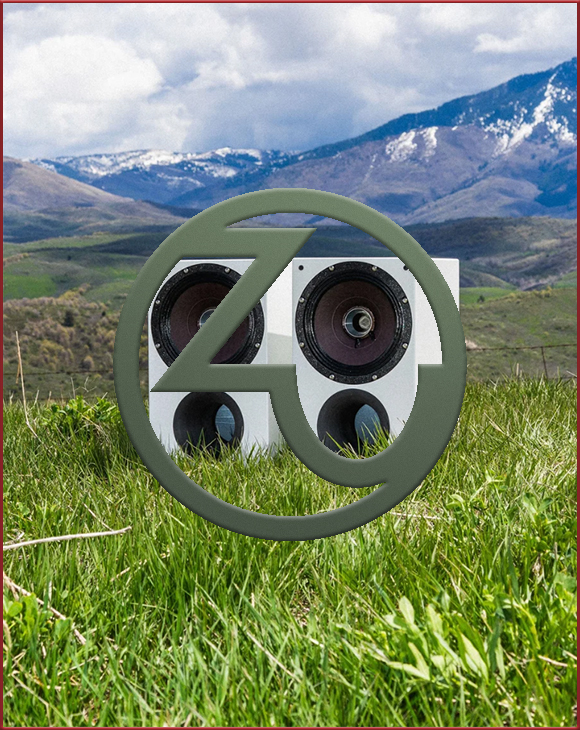
 Included speaker cable and remote next to the fox. Use mouse-over loupe to enlarge.
Mahsa Vadhat's dynamically emphatic Persian vocals on Kari Bremnes' record label walk the edge. There's occasional recorded brightness and minor stridency not as a demerit but element of expressive personality; like an oboe allowing itself peaky reediness. Mini walked that gnarly line without a misstep. Rather unexpectedly, the tonal counterpoint of upright bass was so well visible, the lower midrange so fleshy, that nothing tipped up or betrayed presence-region raggedness. If no obvious issues trigger our ear/brain, we very quickly accept a sonic performance as is. That's what happened to me. Once I accepted that against all proper reason both piano and bass had sufficient weight, I stopped demanding explanations. I also quickly noticed that Mini aced the widebander credo's unplugged immediacy; what my intro called HeadFi sound projected out of the skull across a 2-metre wide seamless expanse of shocking focus. Demonstrably, 1½-way Mini outclassed the classic far bigger 2-way Mythology 1 monitors that had occupied the same stands just minutes earlier. What the elf? Reaching for Mercan Dede's organic club fare with acoustic Turkish instruments over powerful beats and synth ambience caused more elves; from a guy whose big rig runs a 2×15" sub. I obviously knew the difference of scale when I bothered checking in. Just so, the li'l Lindemänner didn't break my illusion of completeness at one metre from the ears. They caused no add-on desires to refuse any need to check in. Au contraire. I was clearly facing a perfected nearfield transducer whilst decidedly not playing emo boy 'n' banjo fluff at faint volumes. With that bag of misdirection spilled, let's dig deeper.







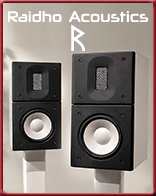


 If their precise diction and separation rely on evaporating connective tissue, ultra-direct transducers can get too dry. If they add tipped-up HF and presence-region peakiness, we arrive at the single-driver caricature of a bad Lowther. Driven by DSD'd class D seasoned with a class A input buffer, Mini was the antithesis of dry. No matter which Flamenco guitar, baglama or bouzouki hero I cued up from Juan Carmona and José del Tomate to Vicente Amigo, Panagiotis Stergiou to Manolis Karantinis and Ismail Tunçbilek, blitzing arpeggios, glassy trills and rapid strumming maintained brilliant tonal wetness. The same held for the Manouche guitars of Pascal de Loutchek and Pierre Bluteau on Valse; for Joscho Stephan's virtuoso Gipsy Jazz. No artificed dryness in sight.
Meanwhile percussive sounds like those on Sultan Orhan by Burhan Ökhal and Pete Namlook were so well timed that they created that slightly displaced sense of transient realism which knows real glass shattering, a key drop, cutlery clatter, a door slam. When leading-edge suchness peppers what we know to be playback, our ear/brain can still react occasionally as though it weren't make-believe. That this could coexist with such fleshy tone was a bit of a shock. Try Toufic Farroukh's title track to Villes Invisibles for an example of gorgeous tone colours spanning oud to saxes and upright bass.
As I wrote in a recent love letter to Sonnet's Pasithea DAC, "for sheer resolution as not just the ability to hear deeper into the planktonic realm but maximize thus track the action of small accessory helpers, Pasithea tops my domestic converter harem to a degree that's surprisingly significant. It's particularly noticeable in the HF. That's the realm of spiderwebby decay trails and the difference between harmonic sheen and sizzle. The latter shows off tone modulations where peaks from higher string pressure or faster airflow create more odd-order hues. It's the difference between a smooch, a nibble and a bite. It's what gifted performers do with tone. If it never alters, they short us an entire dimension of musical expressiveness.
"It's not just about phrasing, dynamics and fast-note proficiency. It's about tonal fluidity that spans the wispy, breathy and coquettish; the smooth, silky and sonorous; the husky and hoarse; the glassy and shrill; the bright and glossy. It's all about overtones and how their distribution and intensity varies. For a crash course in what harmonics can do for tone, Google YouTube videos of Mongolian throat singers. Yet it applies to all vocals and instruments. The more masterful a performer, the broader s/he will modulate tone. To maximize that wants superlative tweeters and matching micro resolution to track homeopathic overtone shifts." Mini too excelled at unveiling tone modulations. Its upper midrange to treble range was astonishingly lucid and keen. Norbert's combo of small widebander mechanically rolled off with a tiny cork sticker to blend ideally with the high-passed small AMT is a rather unconventional compound tweeter. Yet it works a real treat. And that elevates subjective resolution by illuminating recorded space.