As a reviewer who double-tasks as regular Joe Consumer, I've solved numerous personal interface issues with LHY kit. I'm thinking of their below master clock upgrading a compact smsl CD transport. I'm thinking of multiple outboard linear power supplies including a dual 12V job improving two Audalytic minis. I'm thinking of three network switches—two slaved in the main system, one on my desktop—plus one USB isolator also in the office to get cloud files on par with physical media. I've regularly fished these waters and never yet came up empty-handed or bloodied. It's why for the 3rd episode of my 7th Moon podcast with Dawid Grzyb, I highlight LHY. It's why I asked Jay for a bit of background brand intel. It nicely double-tasked as today's intro. It's why I was delighted that he himself calls his brand a merry band of problem solvers like needing to generate a USB output from a network signal; fibre-optic isolation without external fibre run [see below]; upgrading built-in SMPS with superior ultra low-noise linear power; syncing two or more digital components to a shared master clock.
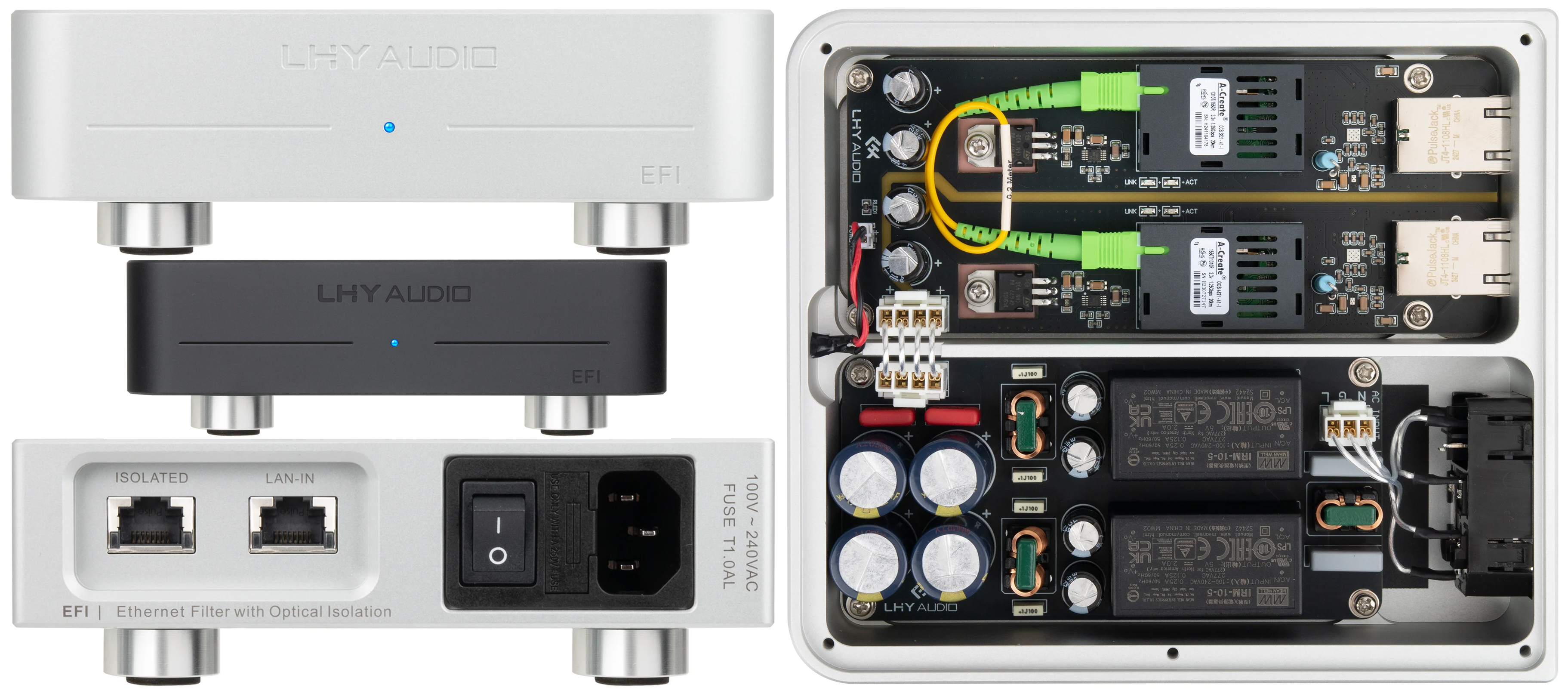 Fibre-optic isolation benefits from using standard i/o copper cables. One of these works in my main system.
With exceptional non-bling build quality of CNC-machined sub-chambered chassis filled with premium parts sold direct, LHY has become my go-to source in this niche. Vinshine Audio's Alvin Chee agrees. He's championed the brand well before their own webstore opened and collaborated with Jay on his Vinshine-branded SW-10Pro switch like he did with Ivan Liu of Kinki Studio for the Dazzle integrated and Tai Hang power conditioner. As a very satisfied customer and ongoing user, it's natural to return to the well. Today I do with the LHY AS6 Pro network switch aka LAN distributor. Like a generic AC distributor, a single input creates multiple parallel outputs. One becomes many. That's purely functional. An Electric Avenue discount special could do the job. But like a premium AC distributor with built-in AC/DC filtration and out-of-band noise attenuation like my two Tai Hang in the main system, pure functionality may coexist with audible gains. How far such gains reach depends on the inherent issues of our scenario plus the overall resolution of it and our ears. Considering kit like today's comes after our primary streaming slash decoding and subsequent playback hardware are locked in. If we now want to polish things to a mirror finish, optimizing noise-prone interfaces like power delivery, a generic router feed, a PC's USB stream, even our rig's ground plane—it all starts making sense. Of course WiFi bypasses many hardwired networking intermediaries. You can now call them redundant just like streaming active speakers retire classic separates. Fair play; just not my sandbox.
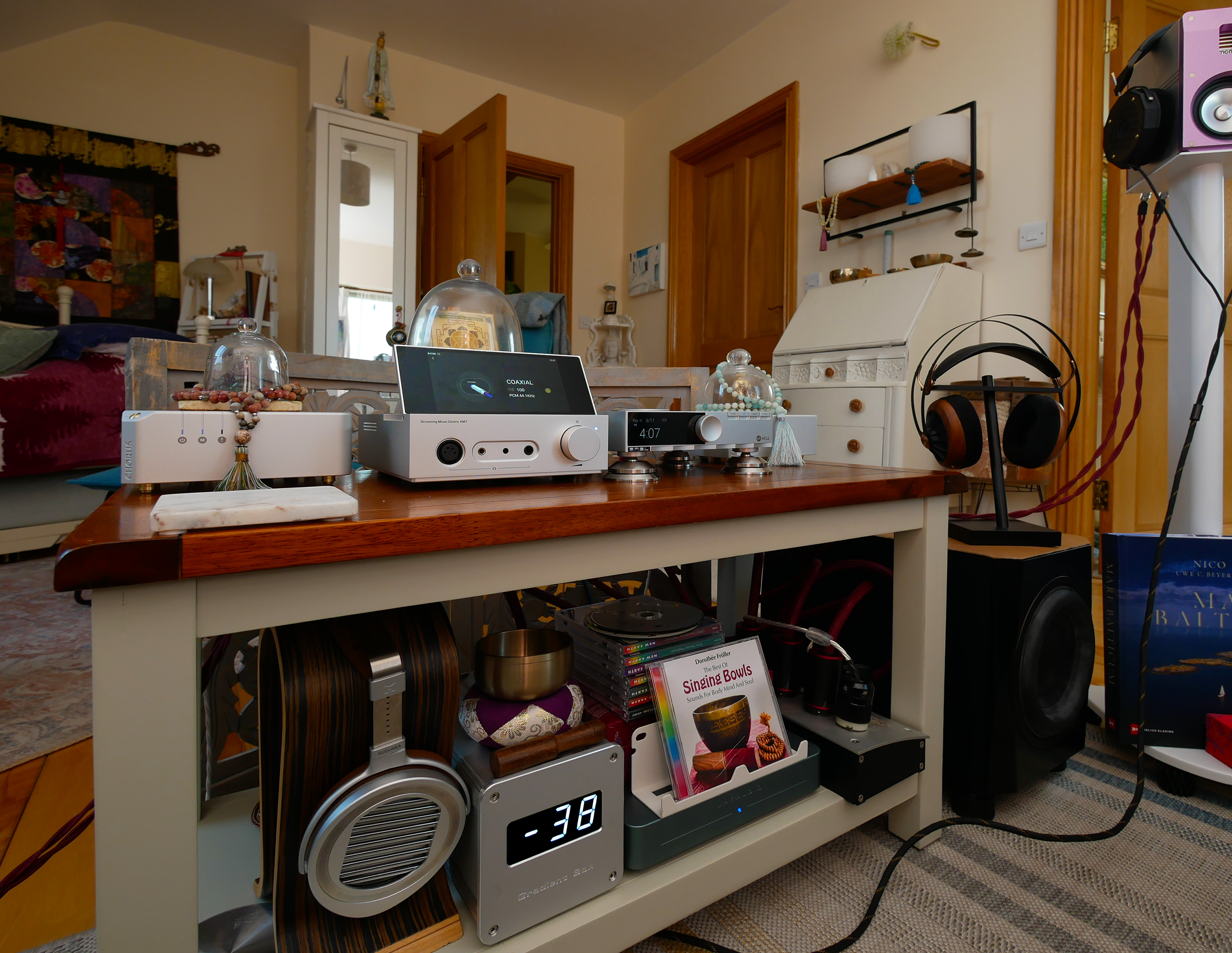 LHY clock on bottom shelf next to active analog crossover slash remote-controlled master volume.







Back in my sandbox, the true purpose of an 'audiophile' network switch isn't outlet multiplication. Most generic routers pack more RJ45 ports than we need. With six outlets, mine certainly does. It's not error correction either when the Ethernet protocol already offers bit-perfect transmission. The true purpose of an audio-optimized switch over a generic is UHF noise filtration which unloads our downstream D/A conversion. With numerous approaches to out-of-band attenuation, it's often the case that more makes merrier. It's why SOtM long recommended to daisy-chain three of their network switches for best results. It's why Sven Boenicke's AIO integrated packs six series-slaved switches when we order his platform's LAN option. It's why I followed such anecdotal evidence with two daisy-chained LHY switches in my main system whilst a Denafrips Avatar top-loading CD transport served as parity referee for cloud streaming. If we seek consensus amongst DAC designers, we can probably find it in the conversion process being susceptible to EMI/RF noise. It's what most of them agree on. It now becomes sensible to task what precedes said D/A conversion—in hardwired streaming scenarios that's our router and possibly server—with more than just raw data transmission. It's sensible to have those transmission stations add effective noise filtering to their job description. That's my take on the subject.
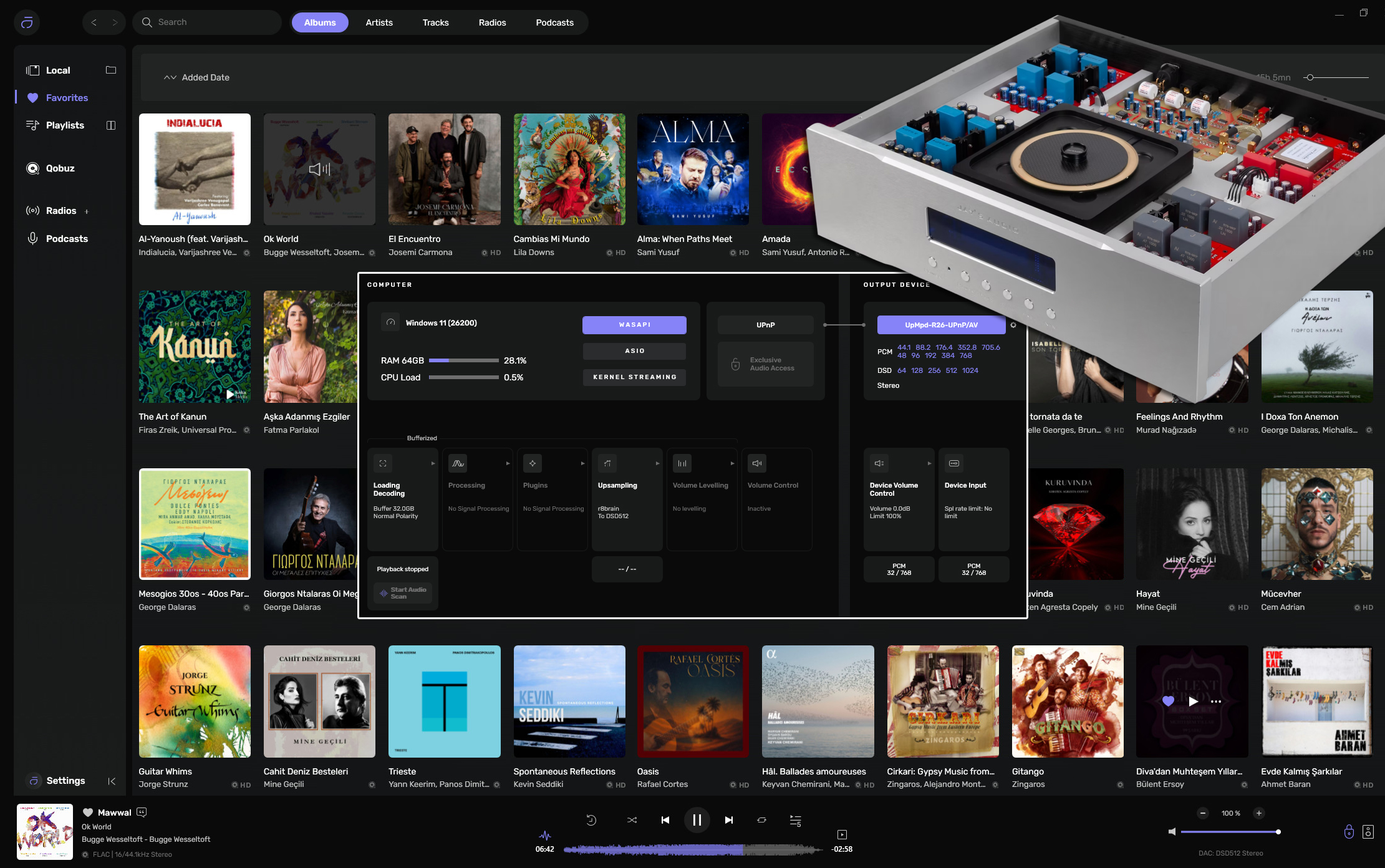 Use mouse-over loupe to enlarge; or open at full size in a new window. Jay Ho's CDT3 MkIII in overlay.
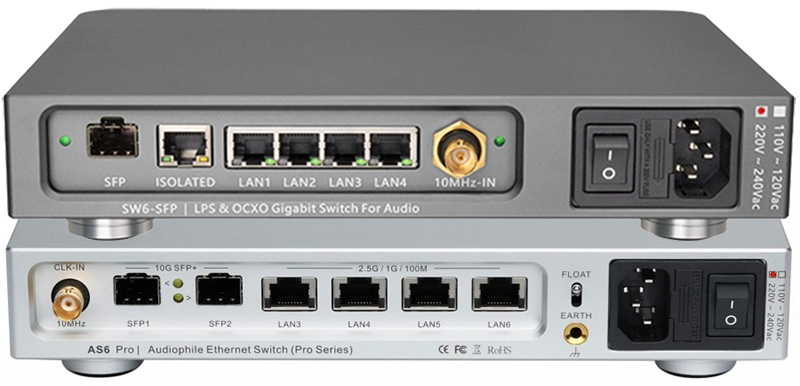 Actual experiments with such hardware have borne out its utility in my PCfi systems. There a personal WiFi allergy decommissioned tablet remotes to instead demand pure hardwiring with navigation via the screens of a 27" iMac and 34" curved computer monitor plus their keyboards and mice. People immune to microwave radiation tend to run tablet or smartphone remotes with headless streamers. Their purpose-designed network cards should already perform their own noise isolation. If effective, a direct router connection might be sufficient. My PCfi installs simply needed more polish on the RJ45/USB jacks. Hence my happy use of LAN filters and USB isolators or bridges.
I regard these product categories as moats around my computers. They guard their entries and exits against noise. This pre/post isolation has proven so successful that in 20 years of PCfi, I've heard no compelling reason to adopt a far costlier audiophile streamer. Audirvana bypasses my Windows/Mac audio programs then sets its embedded r8brain sample-rate engine to DSD512 or high-rate PCM to further unload my converters. Voilà, the hardware context which the AS6 Pro dropped into on my desktop.
Again, with an expensive streamer of Innous pedigree, the noise-attenuating potential of this LHY could already be built into the streamer's network module. If so, you may need no add-on box to connect direct to your router. Just so, the additive math of daisy-chained filters could still factor to give the edge to a LAN distributor that's been carefully engineered for audio not IT. On my desktop, the discrete 25-bit R2R ladders of Gustard's R26II DAC were the presumed beneficiaries of whatever extra RF/EMI reduction the AS6 Pro might apply in lieu of its domestic precursor; then of any double-trouble math when slaved in series with it. In the 2nd scenario there was even a fibre option via the SFP ports in both decks for more broadband attenuation than copper Ethernet's own micro transformers. Is this a more complex way of doing hifi? Absolutely! My excuse is a very real WiFi aversion; and headaches when disregarded. Like a peanut, shellfish or other allergy, its sufferers practice diligent avoidance—or in my case, come up with a fully wired workaround which non-sufferers may not relate to. I'm not aiming to convert them. I salute their enjoyment of WiFi's very many conveniences. Lucky yous. Today's review probably aims more at those who—possibly because of early PCfi adoption at the dawn of file playback—never migrated to wireless cloud streaming and remain perfectly content to double-task a home-office computer for playback; or to run a computer-based front end in their dedicated listening lounge. If that's you, there are ways to neatly level up a PC or iMac to the performance of a €10K+ audiophile streamer. A proper LAN distributor, USB bridge and Audirvana-type software player are my three go-to tweaks to make it so. It's why my big-rig source remains a fully optioned-out iMac; why my office co-opts a Win11/64 workstation for ambitious audio. Having reviewed costly server/streamers, I've heard naught to join their ranks—not that my allergy would let me.
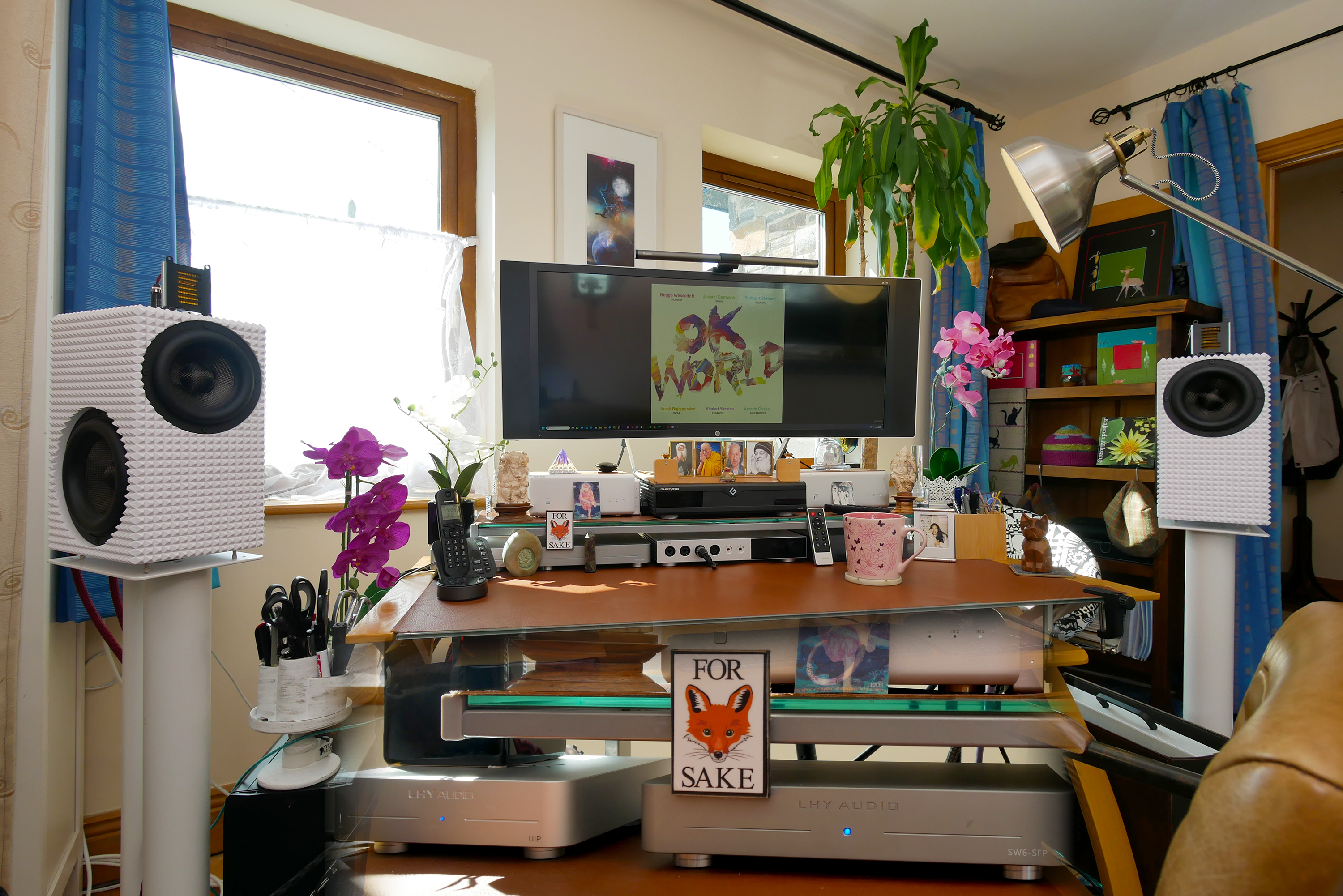 LHY's older SW6-SFP switch and very much current UIP USB isolator doing moat duty in my office.