Once minorly rearranged to piggypack Micro atop its stablemate for a better photo op, I revisited the clock option. The LHY Ock-2 clock from the desktop now sync'd both the second LAN distributor and Micro. That I heard as higher contrast ratio and image focus, what we might dub cleaner separation. Unlike a dash of salt which we notice right after adding but which quickly resets our taste buds, I could remove my acoustic salt by toggling back to re-examine the contrast. Once I stopped toggling and had my opinion, the initial salt difference dissolved quickly. It's a subtle thing on the millimetre not inches scale. My suspicion? Reclocking at this level rather than perhaps with Mutec's best or a costly dCS only matters when we sync multiple inline devices, not merely replace one internal clock with an external clock of equivalent quality plus extra cable. Moving on, let's contrast a USB-direct feed into the Harmony DAC with inserting the Micro buffer/isolator. That replaced my usual Singxer SU-6 in building a galvanic moat between music computer with Audirvana signal routing and DAC. With Micro's lone output, this obviously didn't compare coax, AES/EBU or Toslink. It didn't call out I²S as class leader. This simply duplicated my preferred scheme of post-PC signal massage which avoids connecting a computer directly to a DAC.
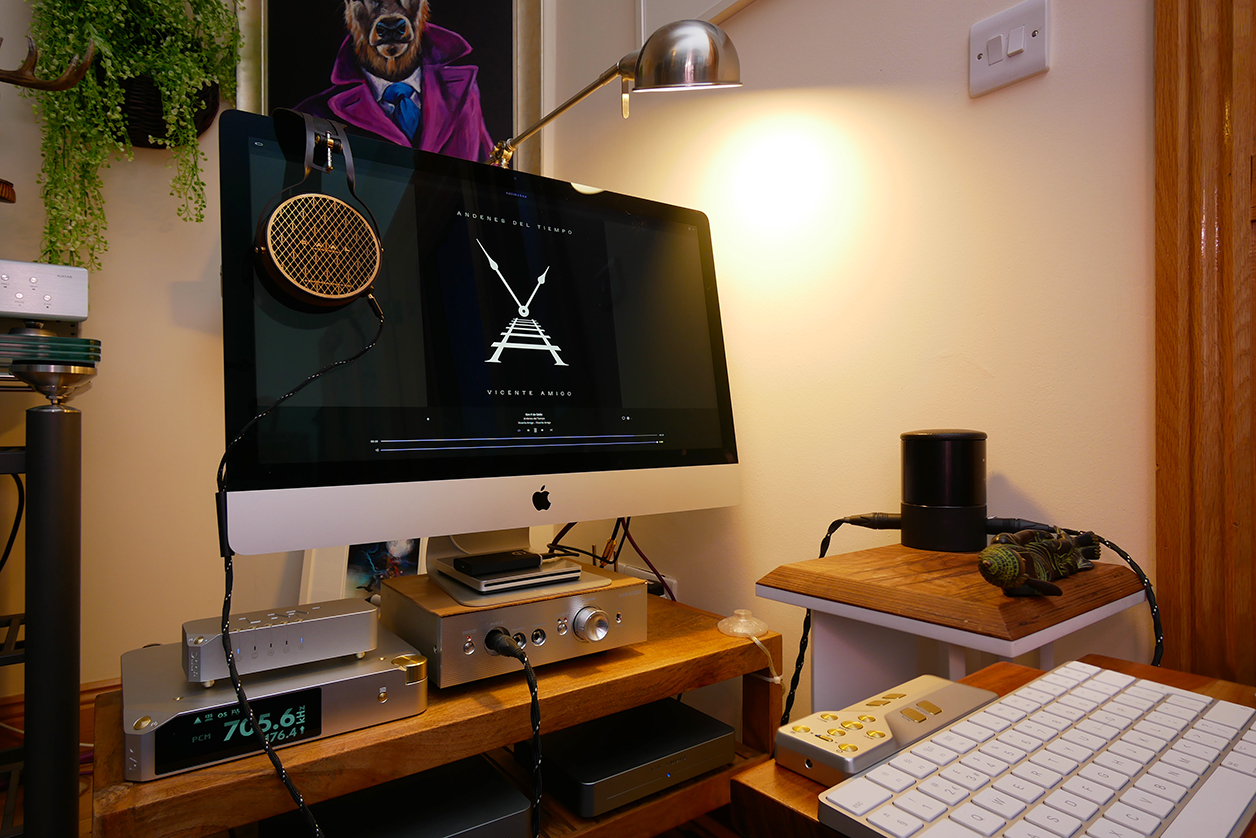
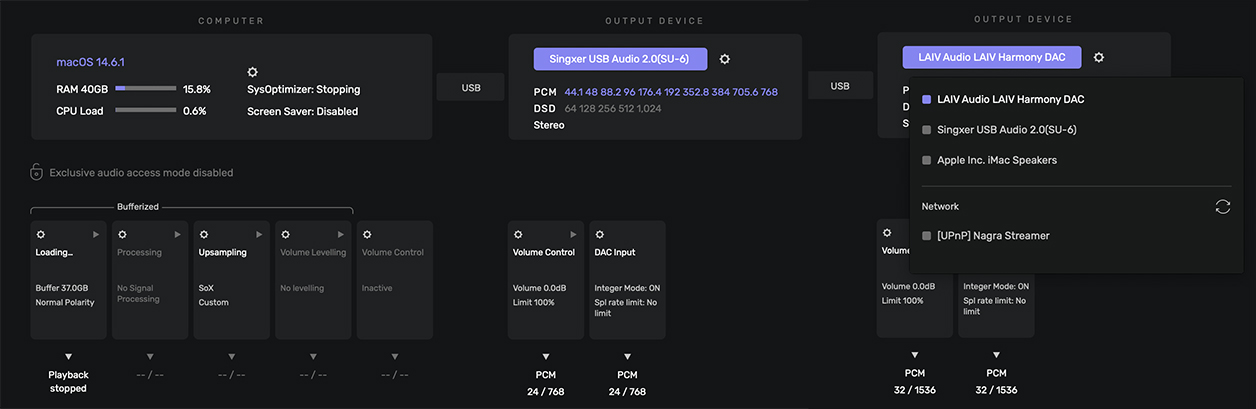
In this A/B, Micro confirmed my standing conclusion. An extra layer of noise protection from isolating a music computer can create clear sonic gains. A fully loaded server/streamer from Antipodes to Grimm and Innuos might beg to differ. That'd be due to building in the same functionality with network/USB-isolating cards and circuits on dedicated clean-power spurs. A generic computer even of fully loaded iMac calibre doesn't offer an audio-isolated USB output. Instead its paralleled USB ports shake hands with a mouse, keyboard, external SSD, disc drive or whatever other peripheral we connect. Dedicating one of these ports to mission-critical audio loves an external reclocker. That Micro outputs I²S exclusively should be secondary, isolation primary. Benefits mirror what noise reduction typically does. A certain grit or inter-note rust particularly with massed strings disappears. Because 12-or-more violins playing in unison in just the first section exhibit minor intonation fluctuations, playback artifice becomes far more critical than with a solo violin. Without losing precision, leading edges mellow their cold metallic flavour. They get less zingy. It's fair to call that smoother as long as we distinguish it clearly from even minor congeal so often hiding behind 'warmth'; and how a soft treble can tone down forwardness. Having our tunes feel mellower without paying for it in lazier energy or softened jump factor is the difference. It makes the generic notion of 'hi rez' more organic. Embedded in this quality is harder image pop when contrast is stronger. Images appear in better relief and separation. But rather than wipe out what spatially binds them, we're more aware of the connective tissue of decay halos. Those live in the planktonic realm of recorded space so real/synthetic reverb which performs its own softening. The more of it we hear, the less stark our tunes feel. With Micro and unlike its clock option, this difference no longer lived on the millimetre but inches scale. This made the extra spend worthwhile because the difference was meaningful. But did it equal my usual reclocking/buffering solution by Singxer on potency or flavour?









Not quite and no. But like most four-letter words, my four words need specifics. Lighter/brighter so often seems synonymous with 'more detail' that it auto relegates anything even slightly darker or softer to 2nd place in the race for radical res. Whilst the ultra-cap powered Singxer via coax was lighter and more energetic than Micro over I²S off its switching wall wart, crediting the SU-6 with a clear 1st place should really be down to taste. Salt vs sugar is a sideways move contingent on which direction ancillaries lean toward; whether our taste wants to push farther or counter steer. I found it interesting how these DDC could impact flavour in this manner when my digital bits remained untouched. Following the prior paragraph, I'll call Micro's tuning mellower or more organic, the SU-6's crisper and livelier. On general potency they were probably equals until the Singxer hogged the HDMI cable previously on the Laiv. That gained it a small magnitude lead. Now I had to look up its review to find a sticker from two years ago: €699. That's not exact parity but possibly close enough to where functionality and sonic taste aside, cosmetics and branding become important co-deciders. There Micro and its two finish options win on cosmetics; and for present Harmony DAC owners, on brand continuity.
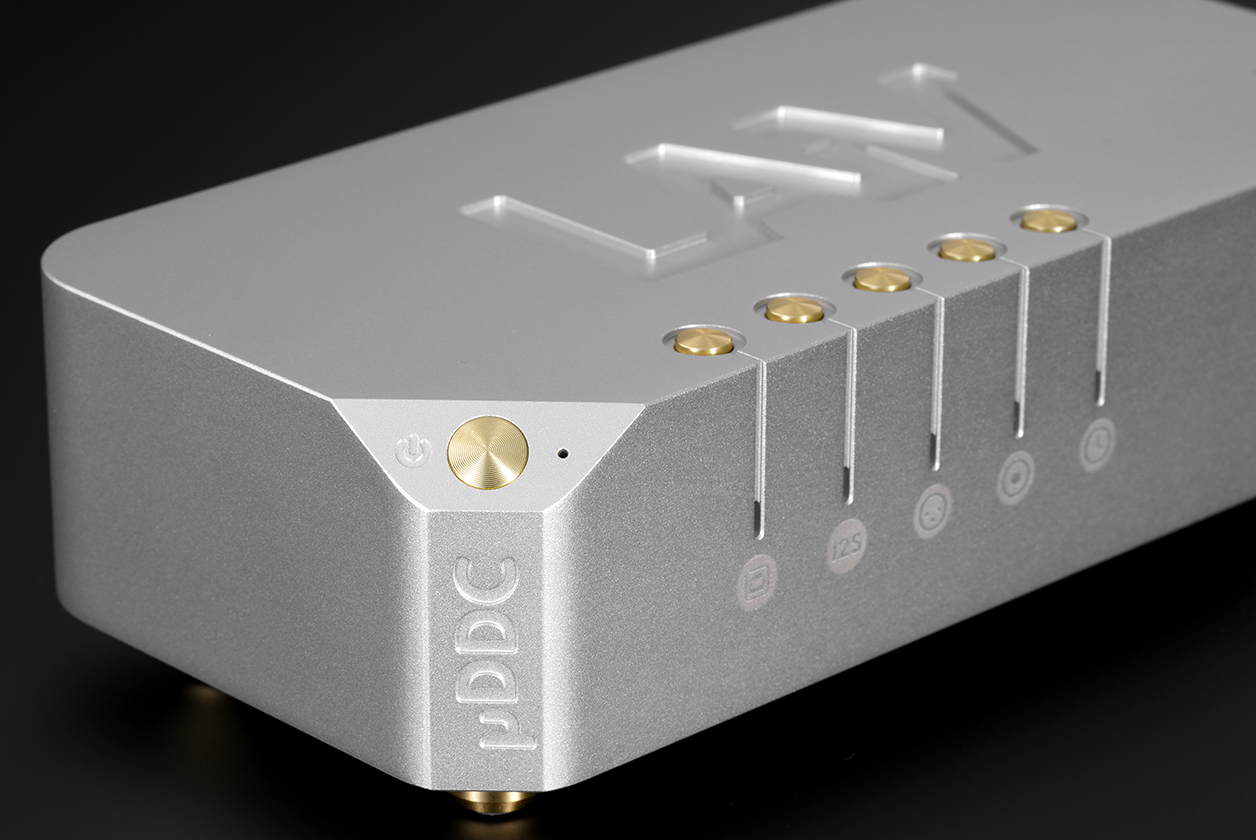
Who'd blame them? Even in this closeup, the µDDC's fine finish and sculpted good looks speak louder than words. White or blue mini LED only add to it. Wearing my critic's cap freshly starched, the only gripe I can grind is the single output. It breaks the spell if we mean to feed two DACs as I do in the main system with a speaker DAC and HeadFi DAC. Without needing to switch in software between them, both get simultaneous signal. I can also compare four digital cables between Singxer and DAC by switching the latter's available inputs. They'd all be under signal. Micro is a lone wolf. But we knew that going in. Bitching about it after the fact would be bad form. It only merits another mention to again define its intended use. It's for one-DAC owners. That should be most shoppers. Only reviewers and other extremists let their hardware mushroom into multiples.
In closing, the µDDC in Laiv's emerging Micro line—current fellow members are the LExt IN2 and Phono input extenders for the HP²A head/preamp—is another piece of audio jewellery which also delivers the sonic goods. In my book its primary function is as galvanic isolator, buffer and reclocker particularly for USB. It's only secondarily about outputting the audiophile catnip of I²S. Whilst that opinion can't be generated with this device itself, it can be triangulated with others that perform the same galvanic+ function plus add output comparisons between I²S and all the usual suspects. With those and for me, the gains of I²S over AES/EBU, BNC and coax have always been secondary to adding that extra layer of UHF noise protection afforded by reclocking/dejittering and isolating USB's 5V line. Laiv probably agree but simply bundle the two and decide on our behalf which the best output format is for our DAC. That simply needs an I²S-over-HDMI input compatible with one of Laiv's eight pin configs. For those who really want to shine up their audiophile cred, there's still the 10MHz clock input; and 5V/2A power input to replace the stock wall wart with a linear power supply. Catnip aplenty.
Levels. Layers. Leagues. They're real enough. Just not everyone interesting in playback needs to go through all of them. You decide where to opt out. I stopped well short of daisy-chaining the Singxer's I²S output into Laiv's I²S input to then exit on I²S reclocked a second time. It might have been catnip³ but I already felt all tweaked out. Just how many lives can one audiophile cat burn through before it's the end? The End!