In our industry, silver conductors are often associated with traits reminiscent of classic autoformer behaviour. Copper tends to align more closely with the general sonic protocol of my 915R preamp. Hence one might expect the ARP Silver to sound more lean, shiny, pale, perhaps even nervous or overly radiant than its copper sibling. It didn't. Silver autoformer windings behave very different from silver cables. Two qualities set the Silver version apart from the original. It was stronger on dynamic range and colour intensity. Although these traits may not read dramatic on their own, in practice they made a very noticeable difference. With the Silver being the more energetic of the two Hattors, my system sounded quicker and more powerful as though Arek's new iron exercised even firmer control over the fiercest most brutal bass jabs on my playlist. The Army Now by Brit band Art of Noise was a perfect example, a stark minimalist electronic piece of martial drum patterns, sampled voices and icy synth textures charged with tension and authority. How the Silver rendered each drum strike—starting instantly, releasing its full energy then stopping dead in its tracks—was beyond impressive. The same visceral effect followed on Depeche Mode's Angel where dark slow-burning brutally weighted bass hits rose and landed with crushing subsonic force I felt less as impact and more as sustained pressure bearing down. While excellent in its own right, the previous ARP hadn't reached the same level of intensity, control, effortlessness, spatial might or dynamic span; let alone my 915R. The ARP Silver also injected more colour into images as though everything were tonally riper, sweeter and just a touch more substantial. This was especially apparent on calm minimalist fare such as Nocturne by Arun Gosh whose sparse arrangement leaves nowhere to hide. Subtle harmonic shadings, gentle decays and microdynamic inflections emerged with greater saturation and density, lending the music a more lifelike presence without tipping into excess or artificial warmth while rendering it softer and more delicate – entirely appropriate given the nature of the piece. In visual terms, the standard ARP came across like a finely executed sketch lightly washed with watercolour whereas the Silver rendered the same lines with deeper tones and more assured brushwork. The difference wasn't night and day but a trained eye or ear would immediately recognize the more accomplished hand. That combined with the additional sense of energy and scale essentially defined the ARP Silver.
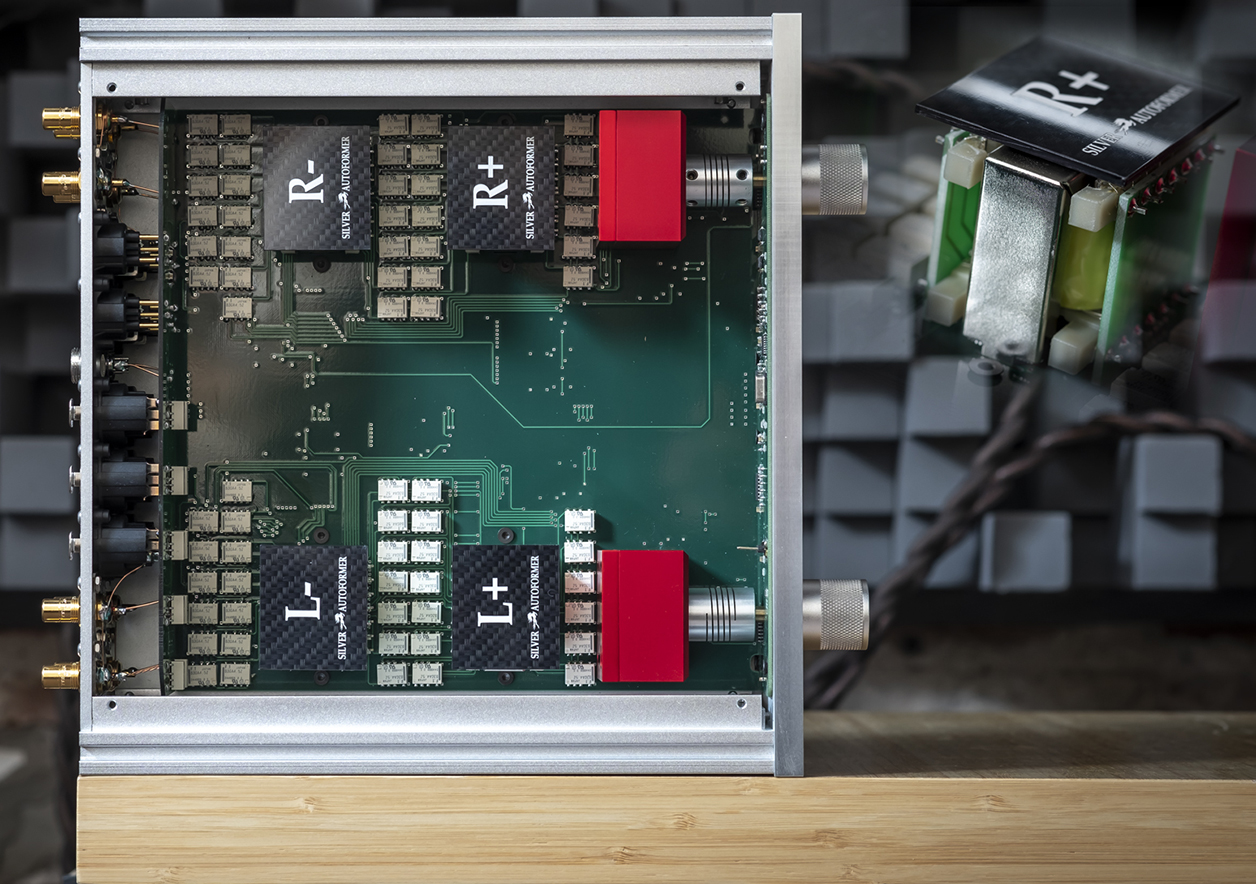 Exceptionally tidy execution with absolutely minimal flying leads.
In mid 2025 I applauded the original ARP for punching obscenely above its price whilst looking charmingly compact and purposeful. Hattor's ARP Silver asks for more but also gives more; and not by a hairline margin. The upgrade is obvious, repeatable and stubbornly convincing. It remains just as handsome and intuitive to operate to make its sticker feel less provocation and more sensible handshake. Pay more, get more. No audiophile calisthenics, chanting or faith required. Where I'm concerned, any further improvements Arek Kallas might entertain have naught to do with sound. On that score he already has what it takes to humble most conventional preamps with unsettling ease and square off against cost-no-object aristocracy without ever sounding out of its depth. Quieter switches, a Nixie display, more lavish full-size casework or a lo/hi-pass crossover network could easily see this paraded as a flagship at several times it asking price. But already it quite simply is the finest preamplifier I've encountered to date. The red badge below merely puts this conclusion in writing.






From Srajan. With a copper-wired Pál Nagy AVC in residence, I had a reference, just not Dawid's contrast between stablemates. My magnetics would be of different origins. Just as with tube output transformers, we expect specifics of those parts to be key. Having long sworn off active preamps because not needing to switch sources whilst having copious excess gain had me curate them thus, I was already fully aboard the AVC train. My icOn 4Pro—and a Bent Audio TAP-X before it—both run/ran a microprocessor to switch/combine taps which in the latest icOn 5 amounts to 136 steps across a 83dB range. Bespoke Audio do 46 x 1.5dB increments and wind their own magnetics based on prior experience at MFA working with Jonathan Billington's attenuation transformers. MFA's latest Reference V2 offers 60 x 1dB steps whilst the smaller Baby version halves that to 31 stops. In this component class, attenuation step number/size is one aspect of distinction. Others are switching by relays, transistors or rotary with stepper motor; and whether input switching, balance control and mute are available by remote if at all. Incidentally, magnetic volume control isn't automatically synonymous with no gain. It can easily combine with active gain of the tube or transistor persuasion. Thrax of Bulgaria and Audio Music of China are two brands that use magnetic volume in lieu of resistive pots or ladders in their active preamps. I simply listen at ~30dB below 4Vrms balanced source voltage. Extra gain is anathema, a passive-magnetic volume controller more transparent, energetic, quick and direct than an active equivalent; sometimes even more so than a variable DAC⇒amp connection. It's why I think of magnetic voltage/current conversion as a legit form of signal conditioning.
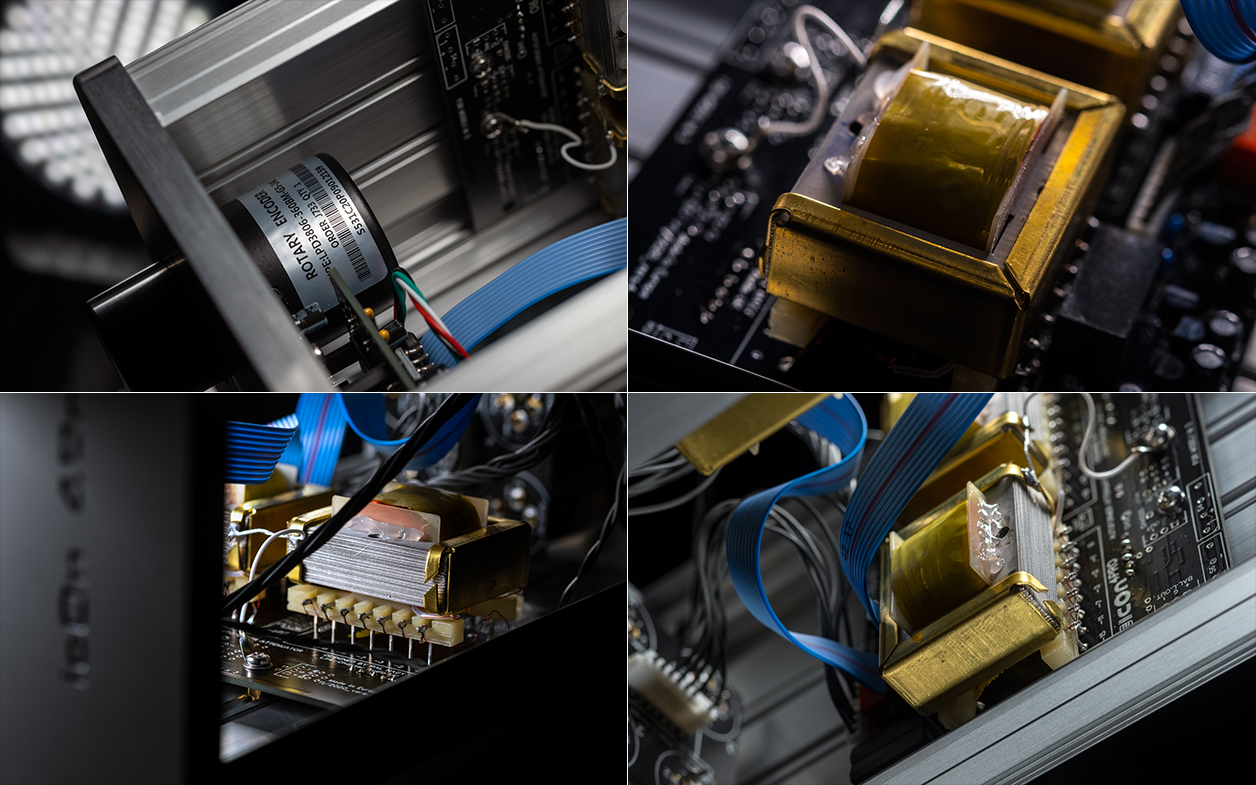 Photos from Dawid's review of the icOn 4Pro.
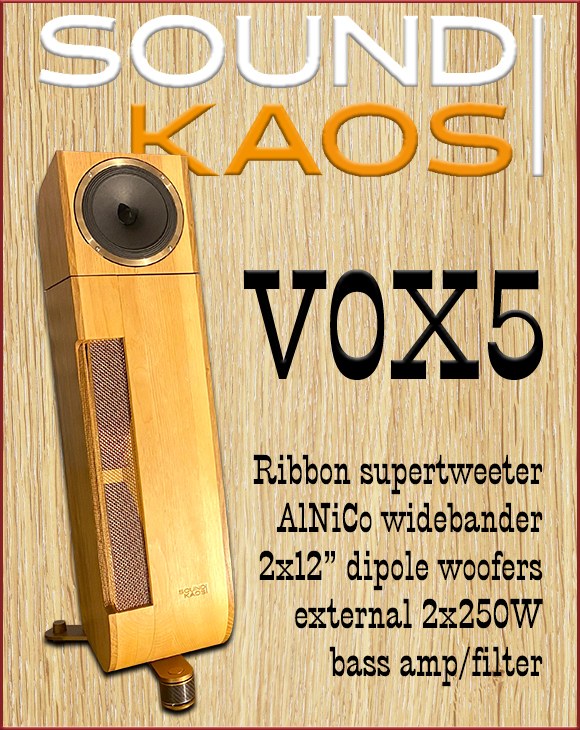
 In my main system, the AVC until recently sat between the XLR outputs of a Sonnet Pasithea R2R DAC set to fixed gain; and the XLR inputs of a Lifesaver Audio Gradient II active analogue crossover across a 6-metre interconnect. For an AVC that's no issue at all. At 100Hz the filter splits the signal 4th-order Linkwitz/Riley into a high-pass to a 300wpc class AB Kinki/Vinshine Dazzle in power-amp mode driving Qualio IQ speakers; and a low-pass to an Ncore 500-based Nord Acoustic mono driving a 2×15" RiPol sub from sound|kaos.
Well in ARP's favour prior to showing up was Arek having decided on silver trim with leather insert. Unlike Dawid who would have preferred his black option with carbon-fibre inlay, I'm not into black components. According to John Darko, the black/silver divide is a real thing. Hattor clearly agree by playing both sides; with a constant ideally low 70Ω output impedance as per the designer. That's far below tube preamps which can present from 200Ω-2kΩ and often come in at ~600Ω.
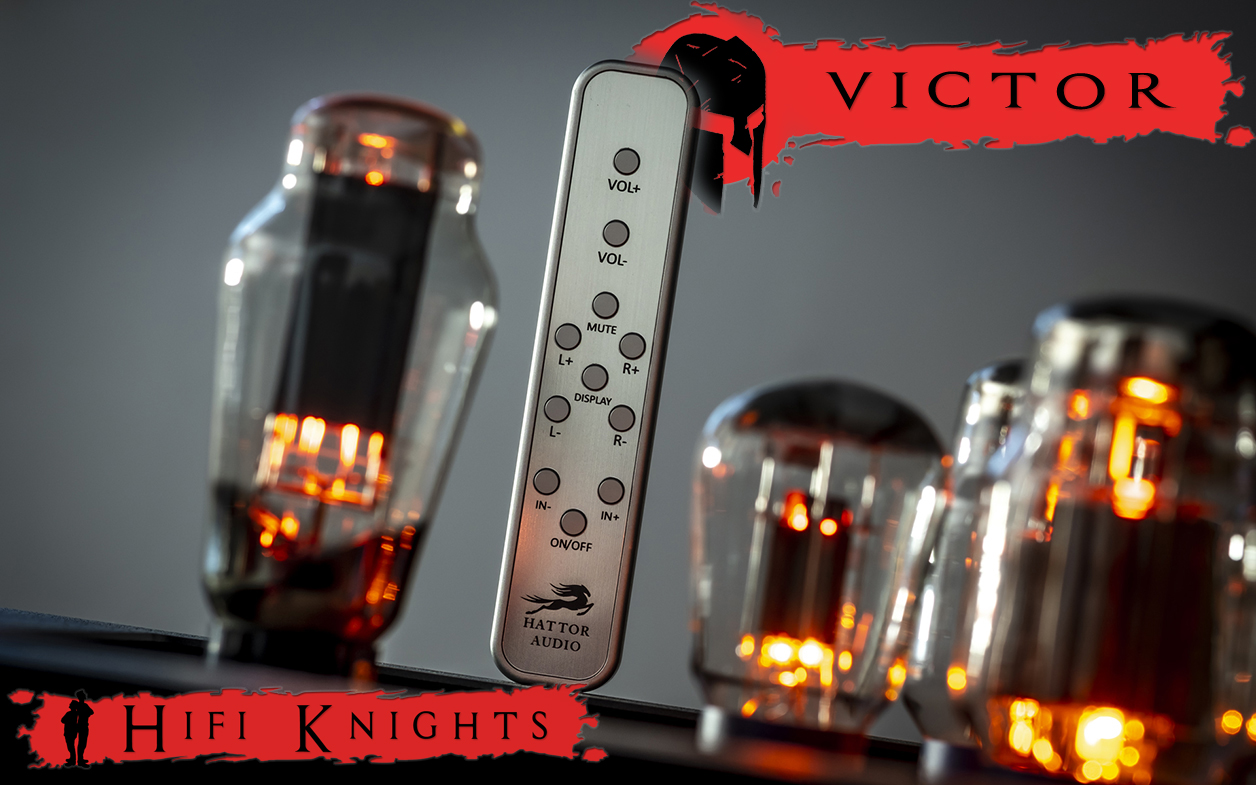
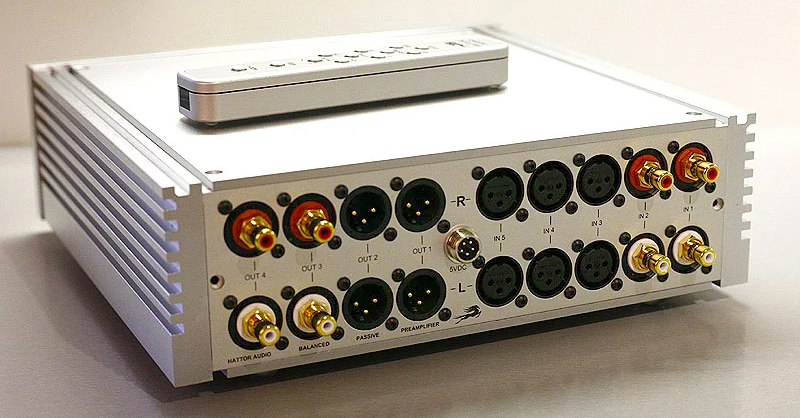
We'd expect input impedance to vary dynamically with attenuation so at -20dB be 100 x higher, at -40dB 10'000 times higher than at zero cut. Yet the website promises constant input impedance. Either way I'm notoriously bad at math but understand that the more voltage we cut to listen at the levels we want, the better an AVC performs. Again, my system usually needs 30dB of signal cut but may hit -40dB if a track is recorded very hot and I don't want to listen very loud. That makes my overall gain structure ideal for this type device. Prior to getting ears on, already a shoutout to a remote which controls all functions and isn't a rebranded generic plastic wand but properly luxurious given today's ask. My icOn 4Pro for example still repurposed the famous Apple wand which, though perfectly chic and affordable, isn't labelled or intuitive for functions that require multiple button presses. I need my small laminated cheat card to remember them. Hattor's wand with eleven clearly labelled buttons brooks no such confusion. That's worth harping on. Likewise for five inputs and four outputs freely configurable between RCA and XLR. That ought to suffice for all but the most complex of systems. For such connector density, the ARP case is surprisingly compact.
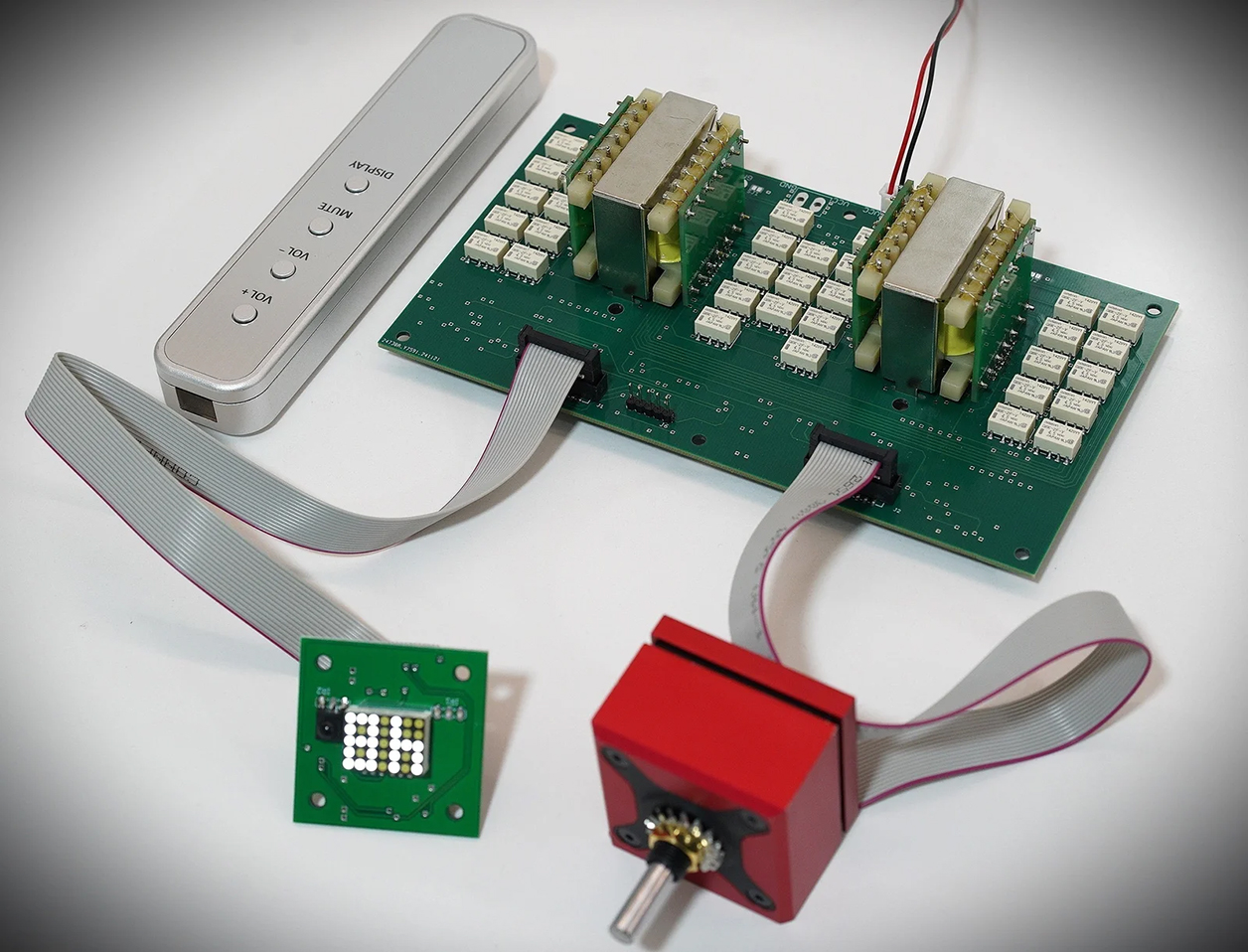 Nude AVC module for OEM/DIY with display and basic remote.