Not so fast. Audirvana can't do DSD2'048. When that option failed to even show, I checked Gemini. AI said that Audirvana tops out at 1'024 though for the U26 capped at DSD512. The R26II's UPnP mode did show 1'024 and stream that out but the DAC's digital receiver saw PCM768 instead to stutter. At 512 aka 22.5MHz all was rosy for RJ45 and USB. I thus compared the exact same data by switching devices in Audirvana whilst toggling the R26II's inputs accordingly. Sonically USB through the U26 came first. It had the even finer more light-filled resolving power as though it stole from hi-rate PCM which on the upper-harmonic score always parlays different than DSD. Sadly it just wasn't immune to glitches when I simultaneously worked in Photoshop, opened a new browser window or did other computing tasks. Over the network my workstation's music signal is rock steady regardless of what parallel jobs I execute. Over USB it occasionally sputters. I've not managed to track down why my USB tree shakes and drops leaves. Until I do, the DAC's RJ45 input remains king of imperturbability. USB over the U26 played the fresher prince but behaved more temperamental. Of course when I just listened, all was fine. But for that I have four dedicated music systems. It's the office where USB must multi-task or I'd get naught done. Then musical hiccups are no fun. In short, for my desktop the U26's legit and very obvious sonic advantages were overshadowed by personal computing gremlins. Time to throw its charms at the main system. That dedicates to exclusive listening where the iMac's USB tree has never yet dropped a single leaf. Here the U26 replaced my Singxer SU-6, a half-width ultra-cap powered deck.
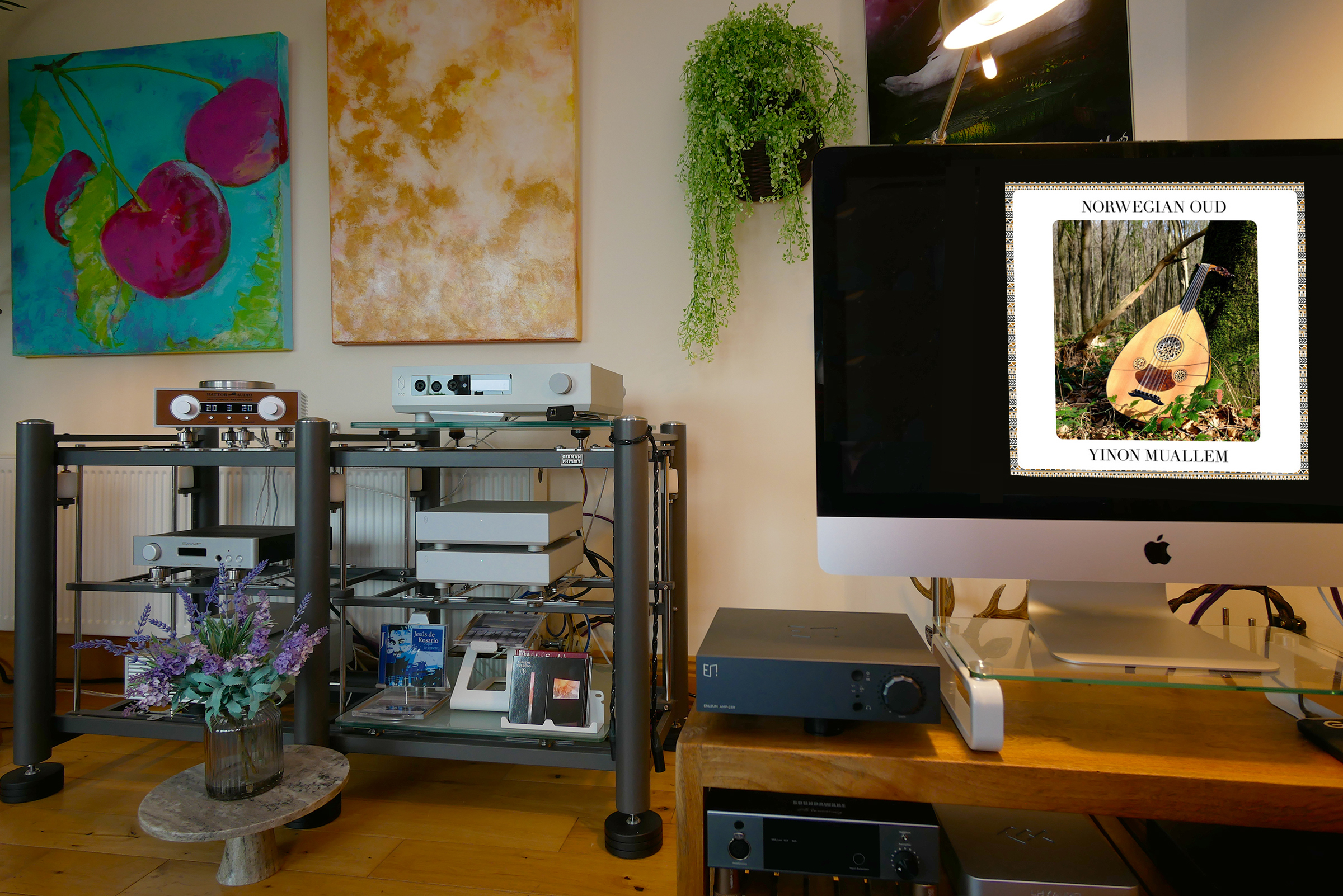
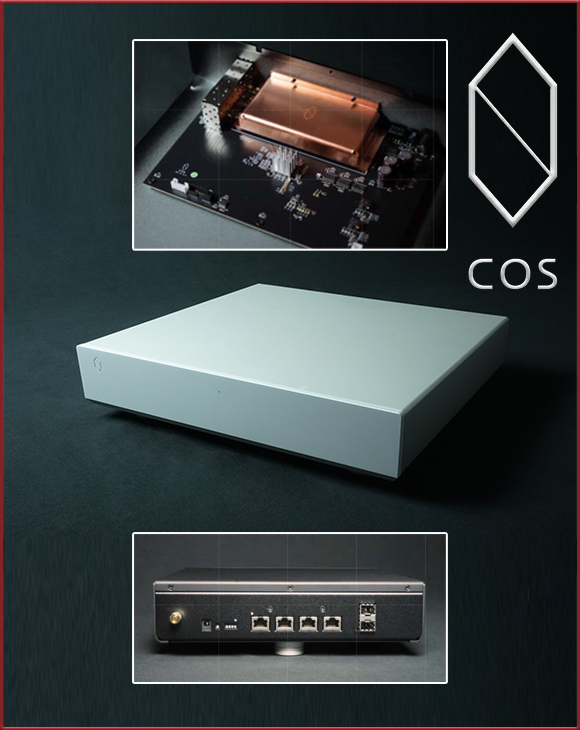
But the U26's first appearance came in another review in fact – that of the COS D10 Mk4 networking DAC with their own Ethernet switch, its outboard power supply and an SFP- based fibre-optic option [above]. The fibre route won over this DAC's USB implementation with more micro resolution. It essentially was a rerun of my desktop R26II's RJ45 edge over USB. However, once the U26 replaced the Taiwanese LAN distributor with its optical connection then output I²S to the same COS DAC, USB had the edge particularly on timbre and tone modulation insight which is about micro cues in the upper harmonics. Once the COS gear packed up for its return to Taiwan, the U26 very clearly trumped my prior Singxer SU-6. On soundstage mapping and the rise of an acoustic other than my own so that of a given recording, this rig was stellar already. Just so, the Gustard bridge mined more tone turf and microdynamics gained more expression. My Sonnet Pasithea DAC's split-level R2R processing means that the least/less-significant bits convert at higher amplitude like the more/most-important bits, then reset to proper lesser amplitude in the analogue domain. This produces astonishing low-level resolution. Perhaps it was that capability which allowed the U26 to create its next-level showing? What next level implies is always a function of the level we occupy presently. Though the Dutch DAC from Cees Ruijtenberg is neither posh, big nor heavy and caps at 192kHz without DSD, its status as my digital main squeeze remains unchallenged. It's why Gustard's R26II and Cen.Grand's best DSD1'024 decks play other rooms. When it comes to its particular lightness of being or translucent luminosity, queen Pasithea hasn't abdicated yet. Preceded now by the U26 outputting AES/EBU put even more distance between her and my domestic would-be usurpers.










No sooner had I penned that last sentence, curiosity was ready to kill my coronation. What might happen if I used Audirvana's 1'024 resampler through the U26 to free the upstairs Cen.Grand DSDAC 1.0 Deluxe from performing its own upsampling? Whilst 1'024 streamed out, the DAC wouldn't recognize it. I got ocean surf instead. However Audirvana generates DSD1'024 doesn't seem to work. For that and 2'048 one would seem to need the far geekier HQPlayer. However, at 512 all was joy again. Whilst the Cen.Grand clearly couldn't match the queen's magnification powers and quicksilvery insight, I could compare iMac-based upsampling to the on-chip SRC of the DAC. Just as its designer had confessed who since emigrated to New Jersey to set up a US-based factory for his forthcoming premium electronics, exploiting a computer's greater processing powers can outperform the sample-rate converters of many DACs.
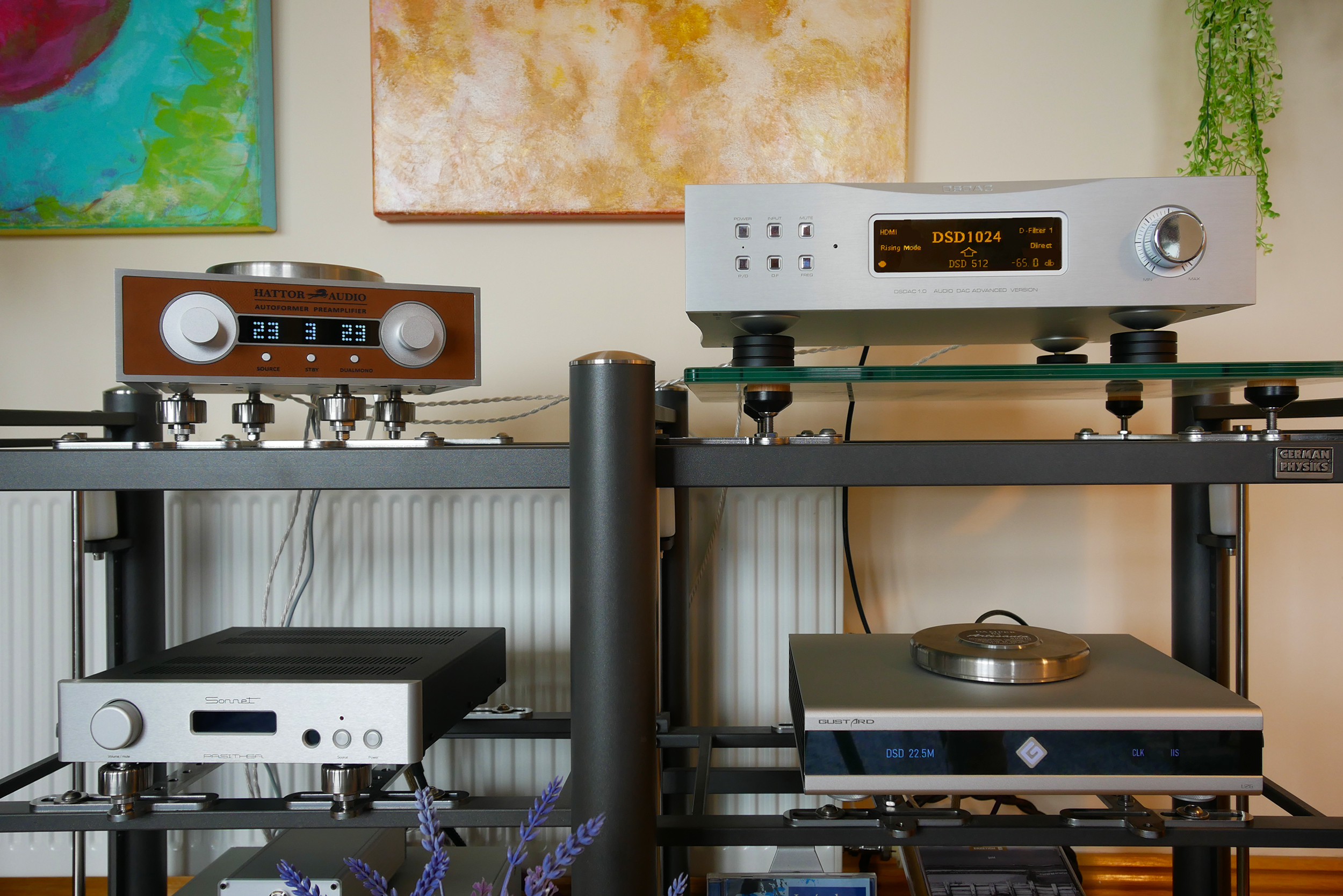
And so it was, giving the U26 a secondary performance feature past its brilliant handling of USB – the ability to route very high-rate DSD and PCM and thereby unload our DAC if it's the kind that can digest such data. As my Sonnet x Cen.Grand comments underscored, it needn't be the DAC with the higher numbers which wins. At 24/192, Pasithea goes farther than the DSDAC does at DSD1'024. Just so, whatever we own can be tickled, teased and tweaked with upstream chicane. As I found out when another 'what if' tapped my shoulder, having Audirvana upsample 44.1kHz PCM to 1.4112MHz then letting the Cen.Grand convert that high-rate PCM to DSD1'024 produced even better results than feeding it DSD512. When it presents itself, I needn't understand the why and wherefore to enjoy better sound.