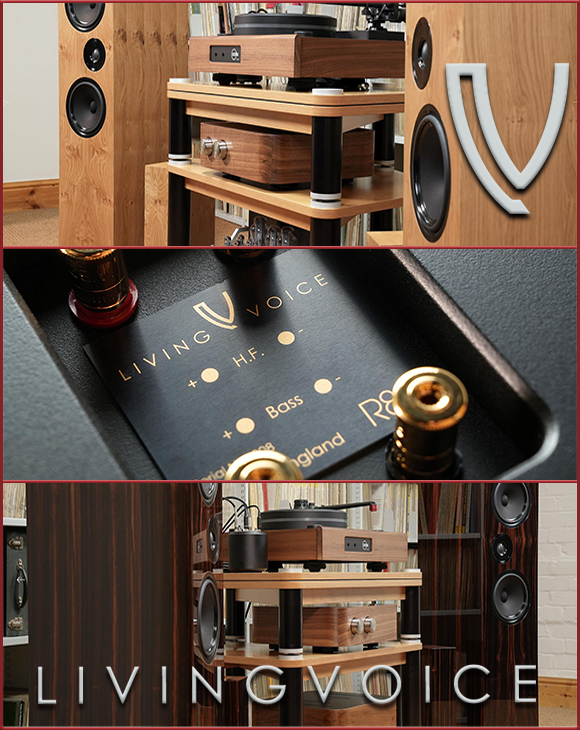
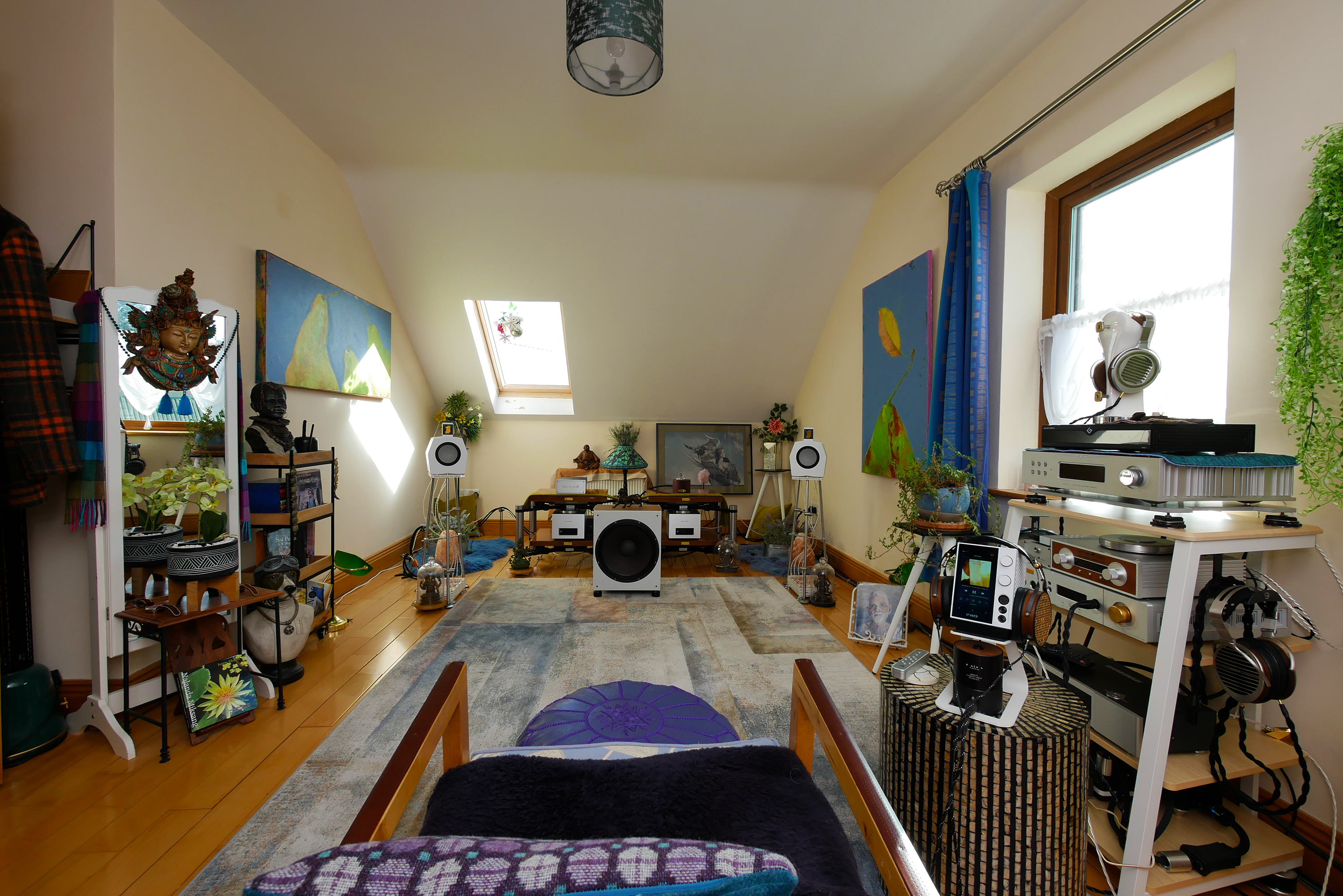
My next repeat climbed stairs into my larger of two 1st-floor systems where a Cen.Grand DSDAC 1.0 Deluxe gets I²S signal from a Soundaware D300Ref USB bridge which itself gets fed USBits off a FiiO R7 SD-card transport. As a WiFi allergic renter, I don't have upstairs Internet. Here the R26II worked as a fixed-gain 5V R2R DAC on pure PCM via I²S/HDMI, feeding balanced analog signal into four silver attenuation autoformers in Hattor Audio's passive-magnetic linestage. For context, the contrast DAC currently lists at €6'290; unfair like flawless skin but we live with what we have. Like downstairs, the main offset was again more intensity from higher contrast and deeper magnification. Whilst loudness can equalize certain audio qualities—pump up the volume and they improve—this intensity wasn't a function of that. Gustard's contrast ratio was lower, period. This created a softer overall milieu as though the virtual performers were farther not relative to my seat but respective to focus and directness. One could get into the weeds and say more but fundamentally, intensity or presence/hereness were the primary decider. At 4 times the outlay, many will question whether spending so much beyond the Gustard just to score higher immediacy or presence from greater resolution isn't pretentious. That is my intended takeaway. Past the R26II, more is to be had, likely even from within the same stable's 30 range. That extra is virtually guaranteed to be less than the imagination of a shopper expects who can't afford said difference. In a recent podcast, John Darko spoke to DAC Mania which has current YouTubers focus on and exaggerate the differences between D/A converters as though room treatments, speakers and subwoofers didn't create vastly bigger differences. By that metric, the R26II could easily end the digital game for even ambitious listeners until they've sorted out the far more significant sonic deciders. Once they have and not before, they'll discover just how far this DAC can really go.











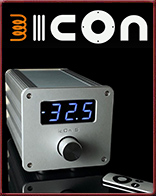
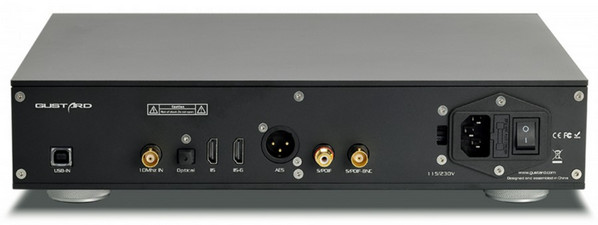 The sum total. The R26II packs I²S with four menu-powered pin configurations; a fully balanced discrete 26-bit R2R decoder for high-rate PCM; a true 1-bit decoder for native DSD; analog volume control with super-easy bypass/fixed mode; a functionally basic but sonically excellent onboard streamer with strangely primitive browser interface; a dual-toroid linear power supply; a plastic remote. By now in its 2nd generation, the 3/4th-width R26II offers a lot of functionality and superb build yet charges no more than its predecessor did. Western capitalism and Trumpian tariffs wouldn't know what to make of it; not that anyone asked them to. In two well-curated mature systems confronting converters three and four times as costly, the Gustard's main deviation from my status quo were lower separation powers and a concomitant minor softness. In my book, these losses were disproportionately small compared to the cost savings. Of personally special appeal was the superb quality of Gustard's native 1-bit path at 22'5792MHz aka DSD512. Whilst it circumvents the resistor ladders at the heart of this machine so arguably its raison d'être, Gustard's execution of native DSD playback is rather above competitors I've experienced. Though its streamer lacks Qobuz/Tidal integration, its UPnP access from inside Audirvana rendered their native absence immaterial because Audirvana already embeds them. Whilst some might contemplate Gustard's own $3'599 R30 as an (only minor?) upgrade, I'd instead pursue this €1K U26 at right. It establishes an auto-matched I²S link between USB bridge and R26II DAC then fully isolates our USB source from the converter. Given my extensive experience with such bridges aka reclockers/isolators, I consider their ROI higher than a slightly fancier converter above and beyond the already ace R26II.
The essence. Given my in-house comparators, I was genuinely taken aback by how far the R26II pushes. That the residents were of still higher resolving power was virtual prediction when the serious price gap places them one or two leagues higher. Far from a given was how strong Gustard lean on price so their deck leans extra hard on the curve of diminishing returns. Here the famous trickle down is closer to 12 inches of rain in one short afternoon. It's no Biblical flood but a lot of free wet from the skies above. With this my only second Gustard gig—officially the first when I purchased the Audalytic kit from a European reseller as a consumer then penned a report without Gustard's knowledge—their score is now 3:0. With me, a few months ago G for Gustard stood for mere guess. Now G feels closer to golden guarantee of an unusually high price/performance ratio. Consider me impressed and surprised by equal degrees.