About the BT 5.1 transmitter, "in all our products including the R26II, the Bluetooth module remains powered off when not in use. It only activates when the input is set to BT. Otherwise the Bluetooth module is off. The same applies to the streaming module. It powers up only when selected." My last-century brain allergic to microwave radiation wouldn't turn to custard. Good on Gustard! By February 11th, "your R26II review sample has shipped. Our office will be closed starting tomorrow and reopen on the 24th. Our New Year's holiday will last for 12 days total." The Year of the Fire Horse. Yee-haw? Hold your horses. Once at the FedEx Galway depot, Irish customs challenged Gustard's paperwork. The package sat in warehouse limbo for a full week. Once Chengshi was back in the office, he had to run interference and explain the loaner's temporary nature. With no purchase involved and the goods returning to China afterwards, there was no commercial transaction we could document with a credit-card or bank-wire payment as customs demanded. With more remote arm wrestling between me and the VAT vultures, the R26II finally escaped warehouse hell and cleared customs.
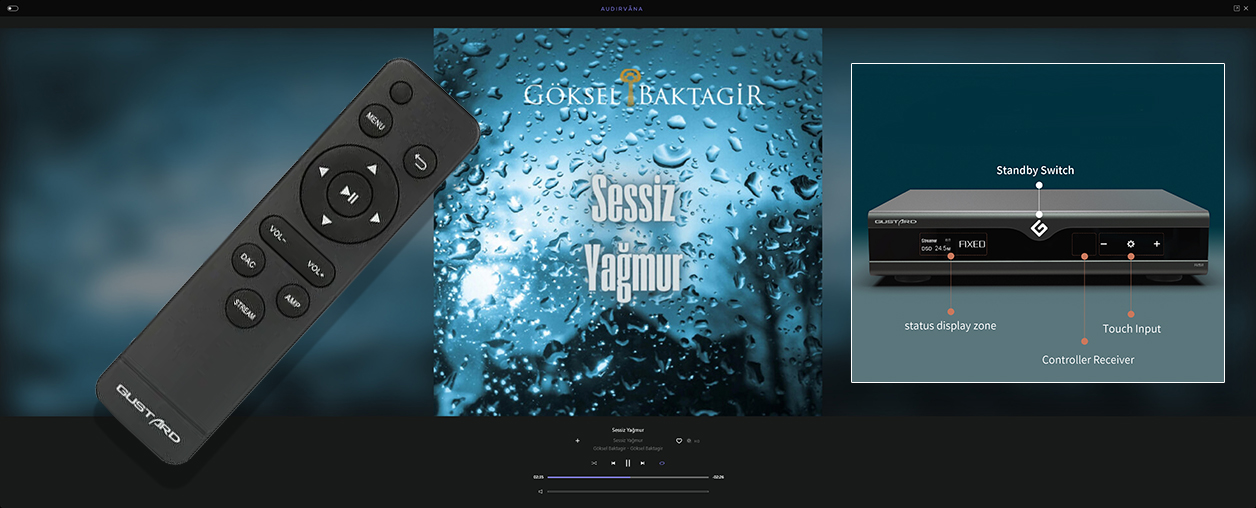
Here we see it embedded in my office desktop…
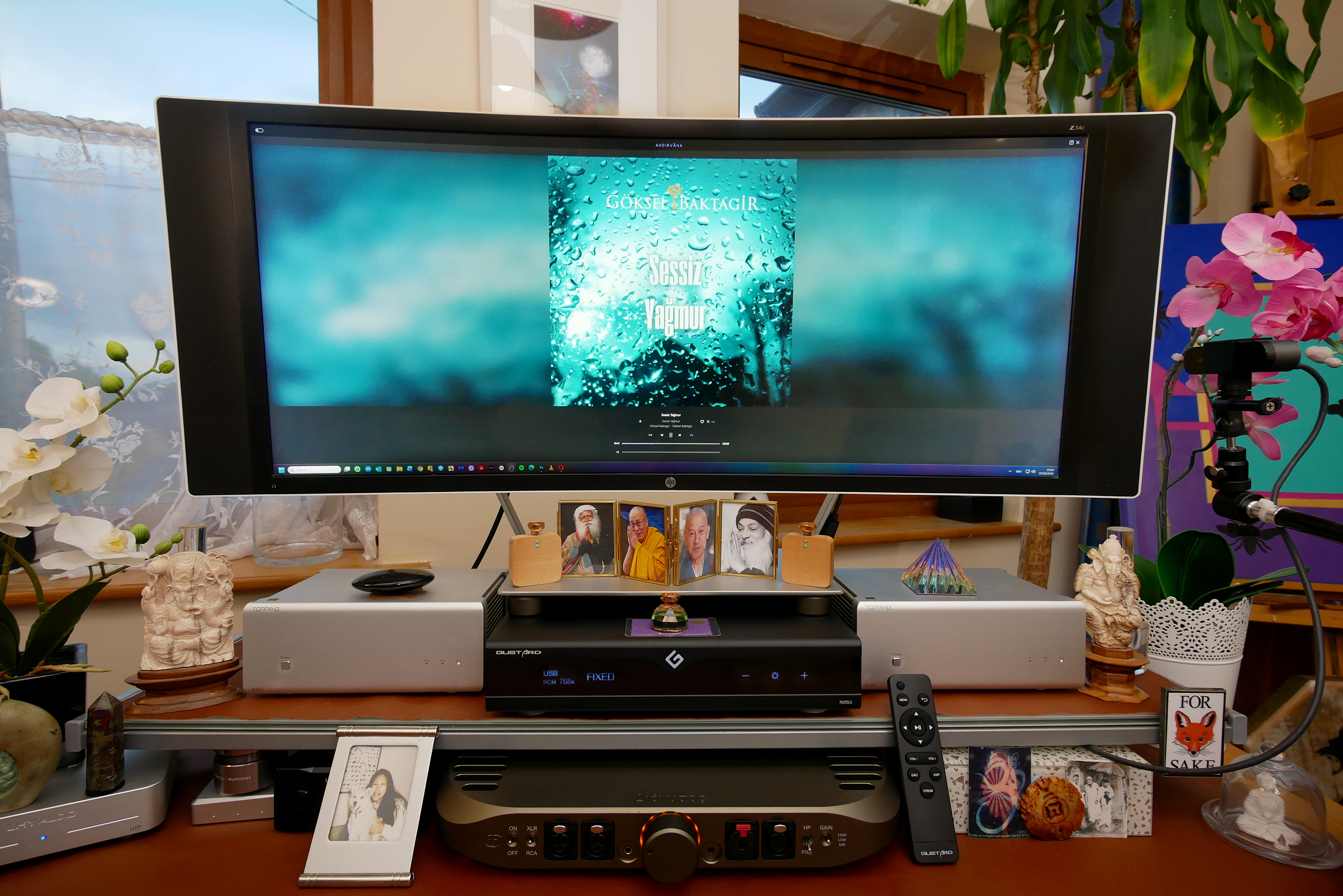
… fronting a fully balanced FangSound Dionysus as preamp driving Topping B200 monos driving Virtual Hifi Viper monitors.









My Win 11/64 workstation required no driver install to get my USB connection to peg the Gustard as PCM768/DSD256 compatible. Setting it to NOS and DSD Direct inside the basic menu, I quickly confirmed that both data rates processed fine by using Audirvana's r8brain engine. And just like that, I was in the G-man biz looking for that mythical spot.
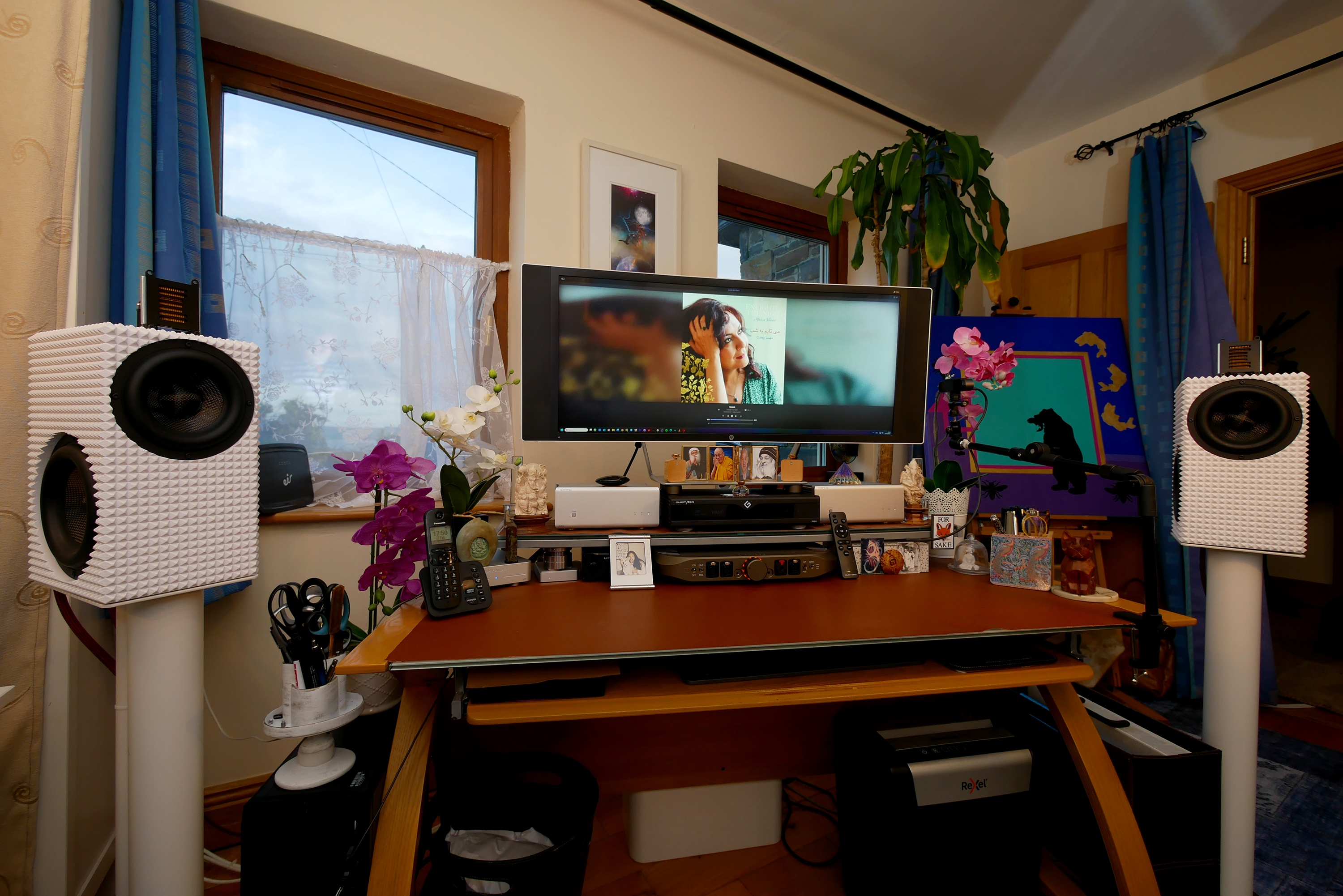 Sitting immediately to the right of the telephone sit a LHY Audio USB purifier then a Stack Audio SmoothLAN Regenerator.
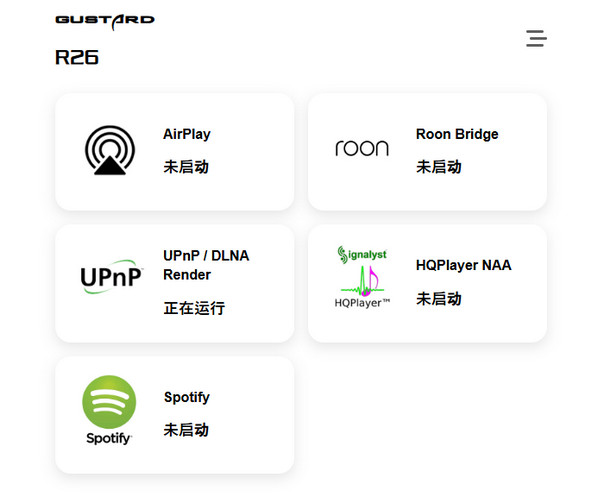 Over Ethernet, I next selected the R26II as a UPnP device from inside Audirvana. This required me to first log onto the machine's kindergarten browser window with then only Chinese commands and activate the UPnP/DLNA render as shown. Whilst there, I turned off all the other features.
Via RJ45, DSD compatibility expanded from USB's 256 cap all the way up to 1'024. Hello?
So I set Audirvana's software up/resampler to that. Alas, the DAC now showed PCM 768k instead and stuttered badly. At DSD512, I had smooth sailing. Then I remembered. My LAN regenerator from Stack Audio limits to 100Mbps. Their crew feel that it gives superior noise rejection over high-speed 1Gbps. However, DSD1'024 aka 45.2MHz requires ~90-95Mbps bandwidth. That leaves little network headroom. Was that my limiting factor? Now we're giga-metres deep into the G.eek zone.
To be honest, I suffer a fat mental block over sending local and cloud files back out through my generic router when a USB connection from the PC runs through a LHY Audio UIP reclocker/isolator into the DAC to avoid it. So I reverted to USB except to appreciate that by contrast, DSD512 streaming mode really delivered its best performance. Mind over pink matter? Not. My ears had a clear preference so got their way.
With a LHY Audio OCK-2 masterclock in inventory, I next tried both its square/sine wave options and compared them to the R26II's internal clock. I heard zero benefits for external clocking so stuck to the wet kiss: keep it simple, stupid. One takeaway could be that the built-in clock is already too good for such chicane. Another might say that the best clock is closest to the D/A converter to travel across short PCB traces, not piped in via hopefully Ω-matched digital cable across two BNC connectors. Yet another thinks that unless we sync multiple digital components to one shared clock as a recording studio must, outfitting a single home-audio component with an external clock just isn't sensible. The R26II is agnostic on the matter.
We get to decide so I did. The internal clock it was.