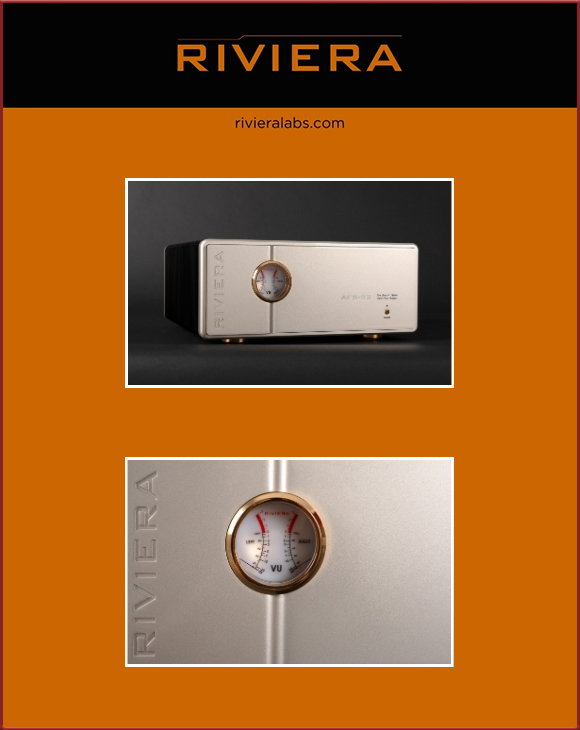
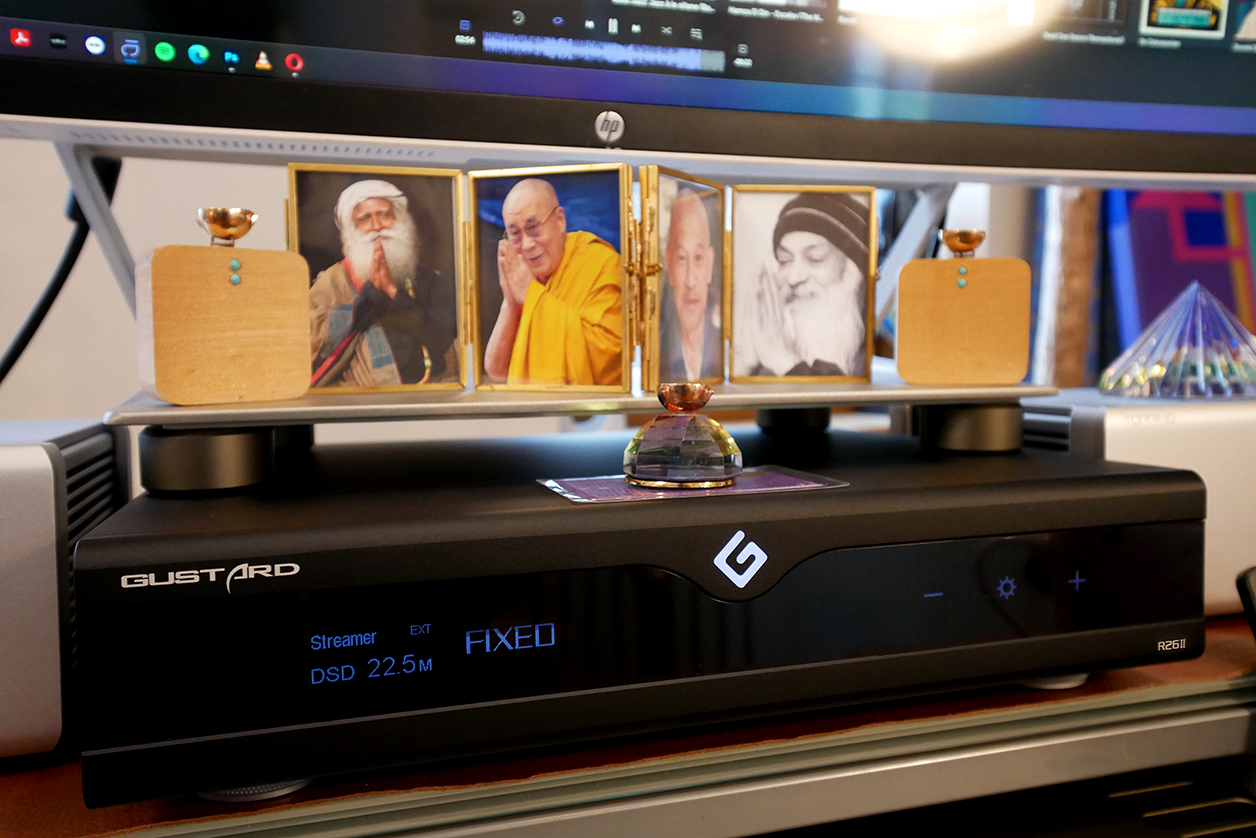
Next I tried the amp-direct connection which had my 83dB speakers sit at ~15-10dB below max when the Topping B200 monos operated in low 11.6dB gain mode rather than at 22dB. A lovely in-use feature that competitors should copy is that the R26II enters fixed mode by simply going one step beyond no attenuation; and exits fixed mode the same way. Other decks force us to enter a menu to make the switch. The R26II's volume control simply goes 'one more' to convert to bypass/fixed. Brilliant!
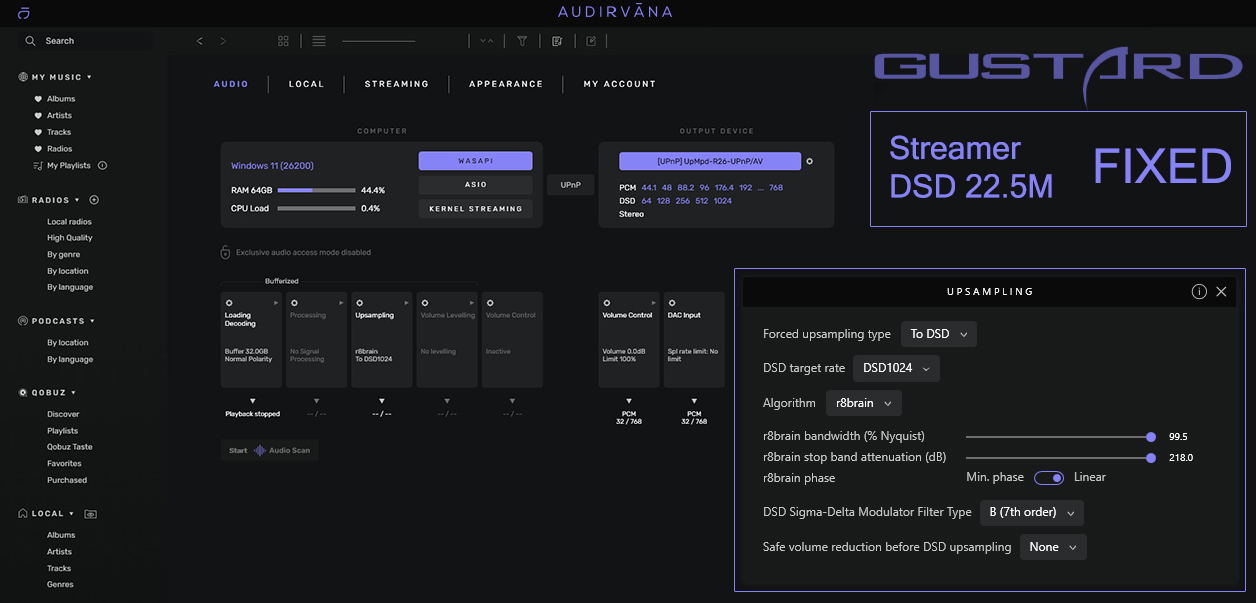
Less so is not fully exploiting the display's available height to render the volume readout bigger in variable mode. Even the data-format/sample-rate intel could show larger to remain better legible across the distance. Are all buyers of €1'600 DACs twenty-somethings with perfect vision these days? Back on a critic's sunny side is the white G logo doubling as an unusual physical switch for mute/short press or standby/long press. To render summary sonic judgment obviously needed more context. Now the R26II hoofed it across the hallway into the main system. Here it replaced my usual Sonnet Pasithea, another R2R DAC, albeit with super-rare variable reference voltage for lossless attenuation. That precedes an spl Crossover MkII which executes a 100Hz/4th-order high pass into a Kinki/Vinshine Dazzle run as 300wpc power amp; and a 100Hz/4th-order low pass into dual Nord Acoustics Ncore 500 monos acting as 700wpc/4Ω subwoofer amps each powering one 15" RiPol woofer. To avoid a preamp which this system neither needs functionally nor sonically, I exploited Gustard's analog volume control. Now the plastic remote shared with their entry-level Audalytic range felt a bit declassé compared to the lovely metal cigarillo wand that aune include already with their €399 N7 headamp. As is typical for this rig's gain structure, the R26II sat at circa -30dB below full source voltage. With the display at 'auto', each remote input triggered instant full brightness before reverting to dim. I was in the big G biz. To explain why I again opted for DSD512 via the LAN so the 'Streamer' input—here that was isolated by two LHY Audio network switches in series preceding my music iMac with Audirvana Studio as the UPnP interface—I'll quote myself from an earlier piece:










"Do you like it dry or wet? I live in Ireland. You might suspect my leanings. But you'd be wrong; sonically. Whenever I've had the option, I preferred drier PCM to DSD. I find it better separated, sorted, less diffuse, vague, soft and dark. On first blush this repeated itself with my desktop Audalytic DR70 with 1-bit DSD path. My penny dropped days later when I realized that unless one selects DSD Direct from its basic menu, DSD converts to PCM through a FIR interpolation filter before processing by the 25-bit R2R ladders even though the display says DSD. Katchinnng! When meeting the proper 1-bit low-pass filter, it's a different result. Now PCM separation and articulation re-enter to mix it up with DSD's fruitier timbres and more billowy soundstaging. Whilst Luxsin's X9 Asahi Kasei combo of AK4499EX converter and AK4191EQ digital filter/modulator too has native DSD512 support; and iFi's iDSD Pro Signature on-chip resampler can do DSD1'024—it never stirred personal lust. That had DSD drop off my to-do list. Whilst I'm unsure why one would pursue a discrete R2R DAC to not use its ladders but 1-bit decoder, that's precisely wet I've been up to."
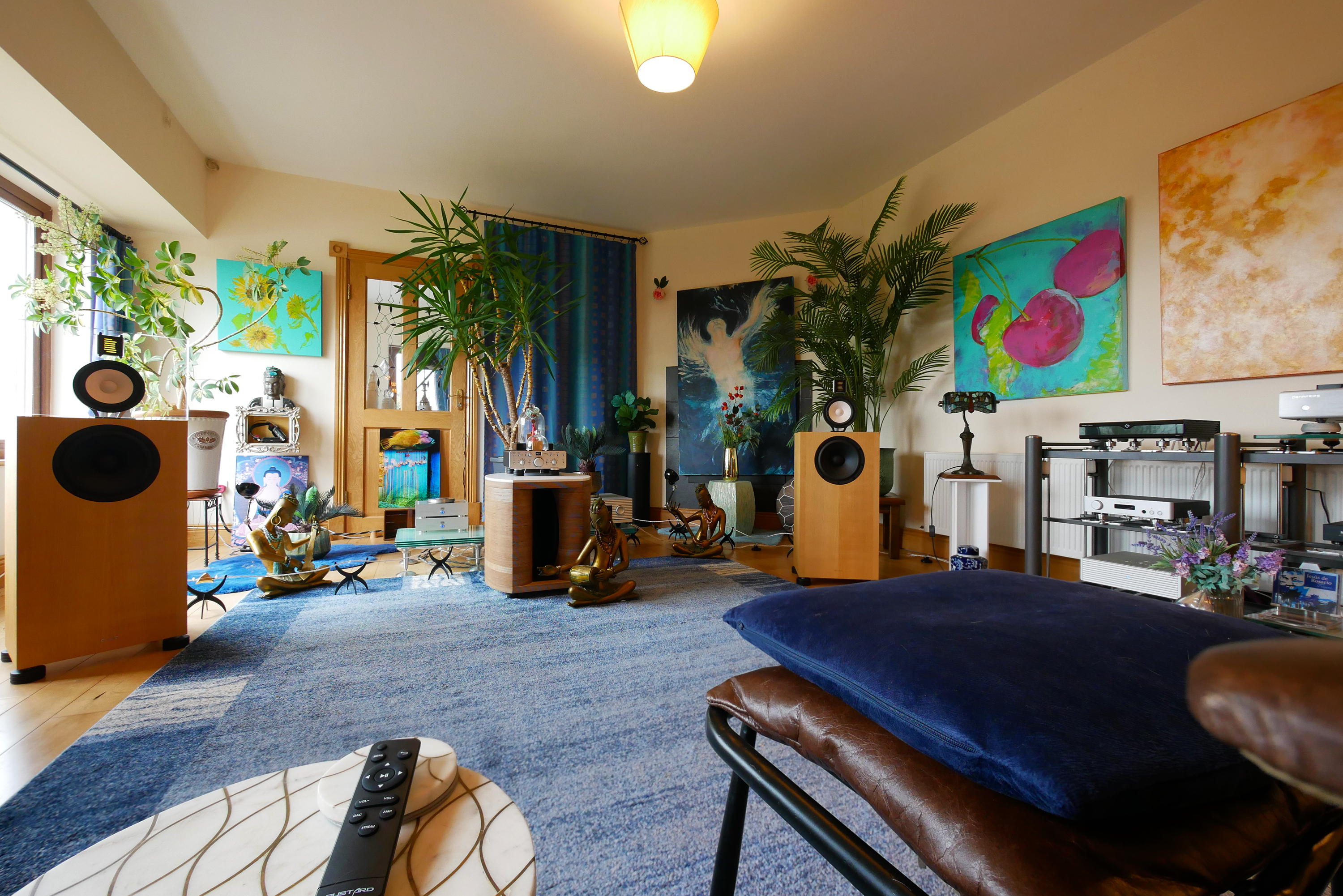
Where the PCM-only Pasithea with split processing of its least/less significant bits separates out harder and sounds more intense, the R26II soundstaged more elastic and pliant. Think firm vs fluffy. Where the Dutch's treble textures are platinum hued, the Sino challenger was mellower though for it, no less extended. That was key. Whilst my resident prioritizes airiness which the newcomer countered with more roundness and a slightly more belly-than-chest tuning that didn't suggest typical warmth at all, for the raw firefly spray of scintillating cymbals or the blitzing flares of triangles, this discrete R2R implementation defied the breed's rep for premature treble roll-off. Exactly as embedded in the above quote, DSD's specific wetness and fluidity co-existed with PCM's superior depth layering and apartheid. Whilst the Sonnet was more micro resolved, the Gustard played it more supple without incurring any top-down darkness. That said, an ESS DAC like Canor's Verto simultaneously on hand treats the HF with more brilliance. From it stems a subjective side effect/benefit of sharper separation. With Pasithea's current ask €4'785 so exactly 3 x pricier than the R26II, team Gustard can sleep easy. Coming close second whilst adding native DSD and basic if sonically superb networking is very happy math. Should you prefer the DSD gestalt of somewhat more languorous fades and willow-in-the-wind textures; and if you can 'remaster' your entire PCM library in player software on the fly—close second overwrites with first. Now your algebra walks off with an 'A+'. I'm keeping these contrast descriptions deliberately casual. Once one plays on Pasithea's plateau, I hear little headroom left except, perhaps, at crazy spends. That four years past Pasithea's premiere the R26II levelled up this far was impressive. That must be the takeaway, not minor divergences or not-quite resolution matches which don't figure in the bigger picture. That bigger picture is simple. If we already adore our system, we simply ask whether continuing on with an alternate component will register any loss a day after we last heard what it replaced. If we can call out the difference in a direct A/B but 24 hours later its significance has already evaporated, for anyone with a life beyond extreme sonic obsession it's nothing to get intense over. That's how I felt about this juxtaposition. For context, my prior discrete R2R Denafrips Terminator+ had moved on to a reader in Galway because my tastes called it too warm and unresolved versus my physically smaller lighter Sonnet. Though not an A/B, it still tells me that Gustard's voicing is clearly quicker and more lucid than the previous best Denafrips was.
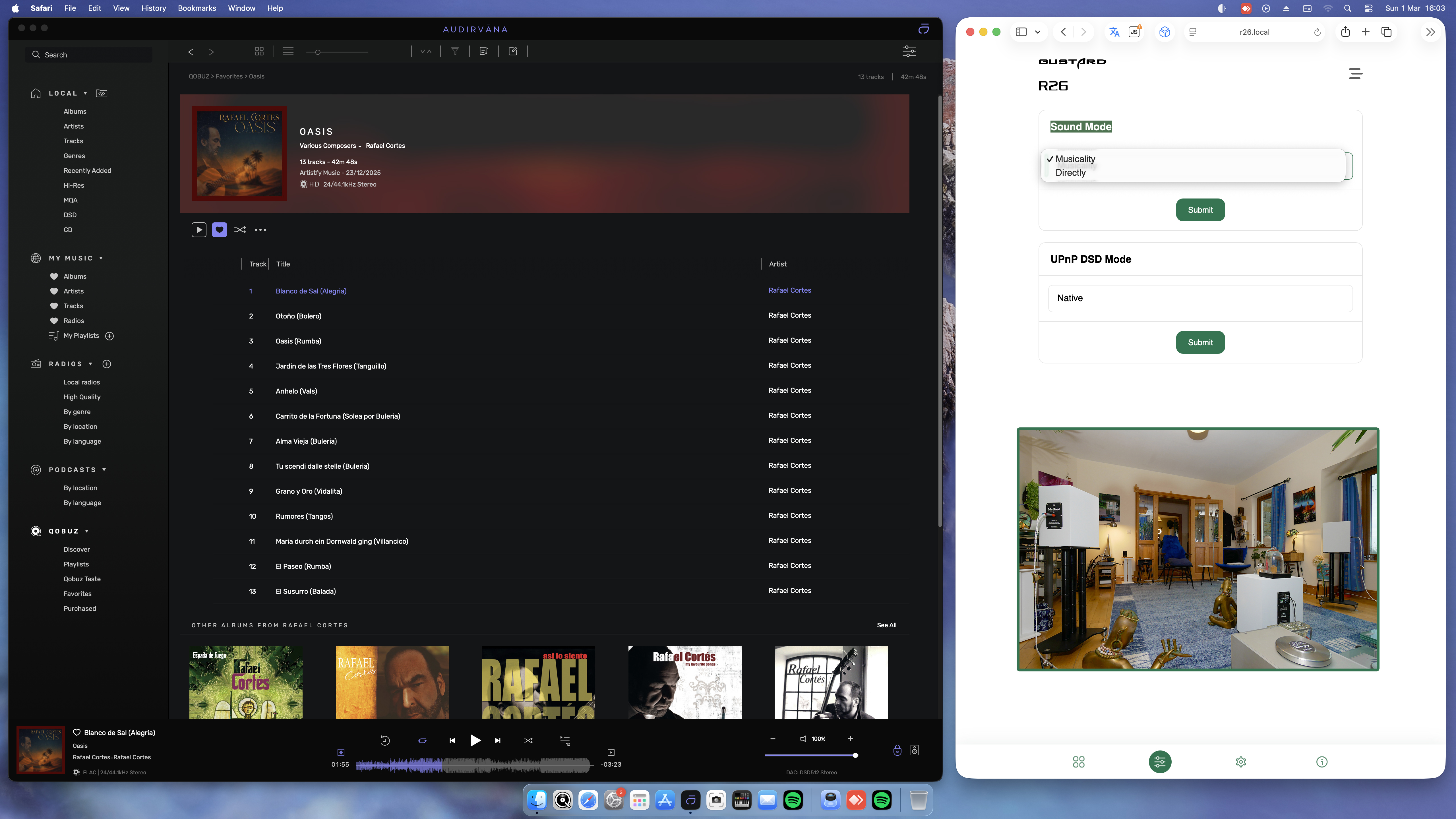
Incidentally, for the mysterious Musicality/Directly sound mode adjustment available in Gustard's browser window—mysterious because neither John Darko nor I got a cogent explanation for what it does from Ayoshida (him) or Gustard (me)—I preferred 'Musicality' for its more DSD-than-PCM flavour. As both of us were assured, this adjustment only affects the 'Streamer' input and changes how data process without involving any DSP. With my desktop's DR70 at DSD256, I couldn't make out a difference. Now at DSD512 and in a bigger system, I could. It's easy enough to explore. Just leave the window open as shown, make your selection, hit 'submit' and wait a few seconds. When the confirmation shows, restart the same tune. Rinse and repeat until you have a preference; or not.