The FT7's tuning. Take 2. My long-term desktop companion before aune's SR7000 usurped my affections was Final's D8000. After a few years I kitted it out with fresh fabric pads and aftermarket lambskin bridge padding from New Zealand. Now that Japanese planar played it more bassy/resonant, thick-tipped, not as direct or immediate so slightly more diffuse or distanced, narrower of stage and less airy of shimmer. It felt mistier as though clothed in remnants of morning fog. Meanwhile the FiiO captured the same landscape hours later when the sun had burned off all mist. The F17 was quicker, more incisive, clean edged and top-down illuminated. The D8000 was more bottom-up romantic. In loudspeaker terms, the Final was a classic cellulose-pulp big-woofer 3-way, the FiiO a nano-layered ceramic/titanium 2½-way with dipole AMT tweeter. It's a different gestalt and aesthetic each with its own audience.
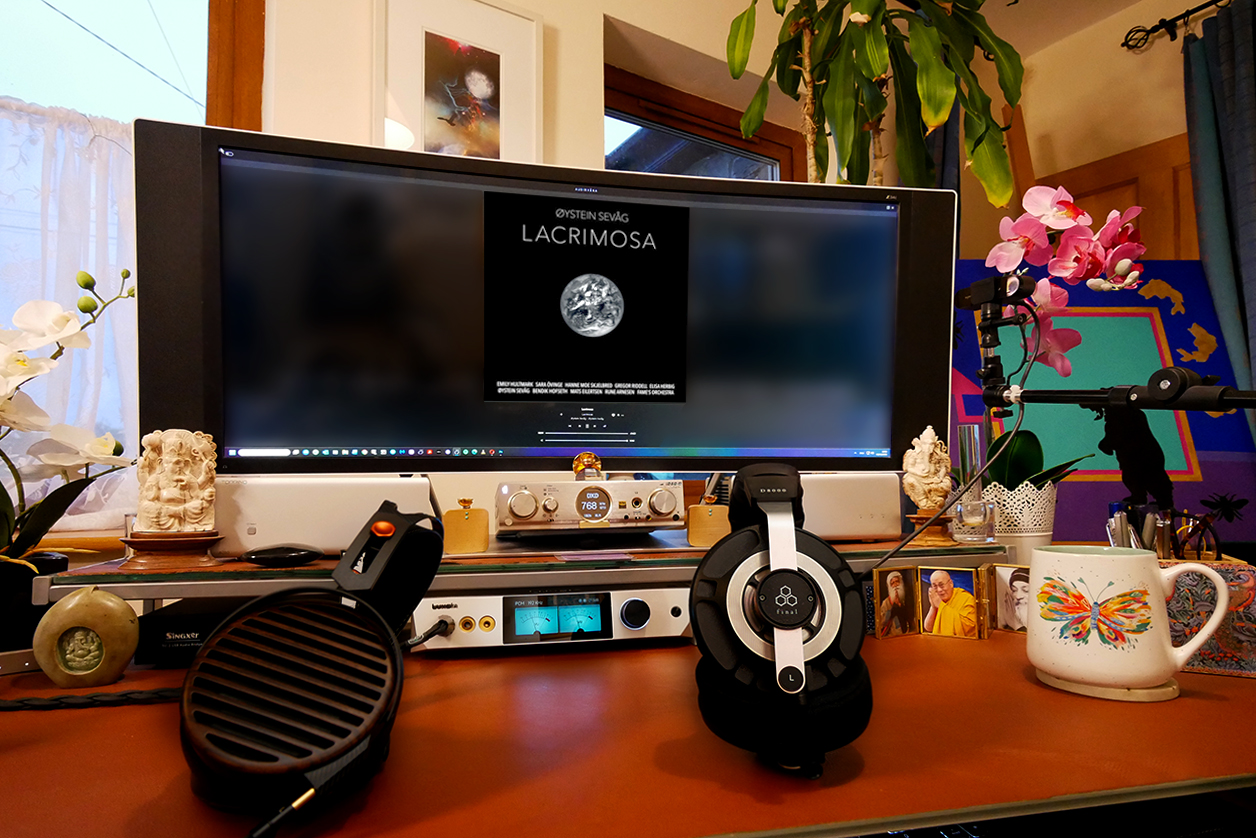 Luxsin's X9 sat at -32dB in 32Ω auto gain fed a 0.5V coaxial S/PDIF signal.
As it had with the HifiMan, the FT7 belonged in this company despite the 75% pay cut. I won't even invoke the law of diminishing returns. That still implies getting more for more; just consecutively less so. Against my comparators, the FT7 established a plateau on which there were equals with their own appeal, some priced far higher. I simply didn't hear hilly elevations never mind peaks. I heard sideways moves on the same plain like a few celebrated dishes from one master chef. We all have a favourite but concede that the others are as finessed to divergent taste buds. That by 2025 'my' over-ear headphone plateau would sit at €749 I hadn't foreseen. Yet in a recent podcast, two specialized headfi reviewers stated their current figure as being €1'000. Against their bigger more up-to-date picture, I'm not far off. We're clearly living in a time of technological abundance. Just think on the tech required to affix conductive gold and silver nano traces to a film 70 times thinner than a human hair. That's some space-age magic!²
___________________________
² From Arthur C. Clarke's Third Law: "Any sufficiently advanced technology is indistinguishable from magic."










The FT7's tuning. Take 3. As mentioned, aune's sealed SR7000 dynamic with 3D-printed internal 'dragon scale' absorber has been my on-head desktop transducer this year. At €639 it's within €100 from the FiiO. As a Chinese competitor, it benefits from the same labour advantage. That makes for fair tit-for-tat. The physical inspection determines that the FT7's material treatment including its cable is the more upscale. The aune uses more plastic though it's very nicely finished and to me never reeked of cost cutting, just weight trimming which makes it lighter than the FT7. It's also rather smaller. Given my opinion that it's easier to make a high-performance dynamic than planar, the aune had a potential tech advantage despite its somewhat smaller bill of materials. One of my test tracks was "Twe Usta Klamia" from Anna Marie Jopek's collab with Cuban piano ace Gonzalo Rubalcaba, Minione. What I heard from the aune were drier textures yet more resonance in the low bass. The FiiO had the more atmospheric DSD textures but—hola!—dug just as deep in the cellar as this sealed dynamic though with still superior diction. The FT7's staging was more aerated or fluffy. This even informed the sizing of lateral objects. The aune rendered them a bit more compact. This also had its stage seem somewhat narrower. On the piano's upper registers the dynamic driver actually sounded a bit more metallic. Over the FiiO the aune also had a slight midrange prominence. Given my esteem of the aune, my takeaway of these sessions was that FiiO had really pulled out all stops to author a planarmagnetic alternative which I gave a small but meaningful lead. That this would include cosmetics and pride-of-ownership aspects was extra but certainly far from extraneous. Now that we have the FT7's general character, which amp/s in my collection brought out its best? The two aune class A amps emphasized its energetic potential whilst the Luxsin particularly in wide stereo plus crossfeed modes mellowed them. Of those three I most fancied the S17 Evo. How about Soundaware's 10th Anniversary class A compact or the AB specimens from Cen.Grand, Enleum and Kinki? Finally, which way would the direct-coupled Western Electric 300B in my Vinnie Rossi L2 Signature preamp lean?

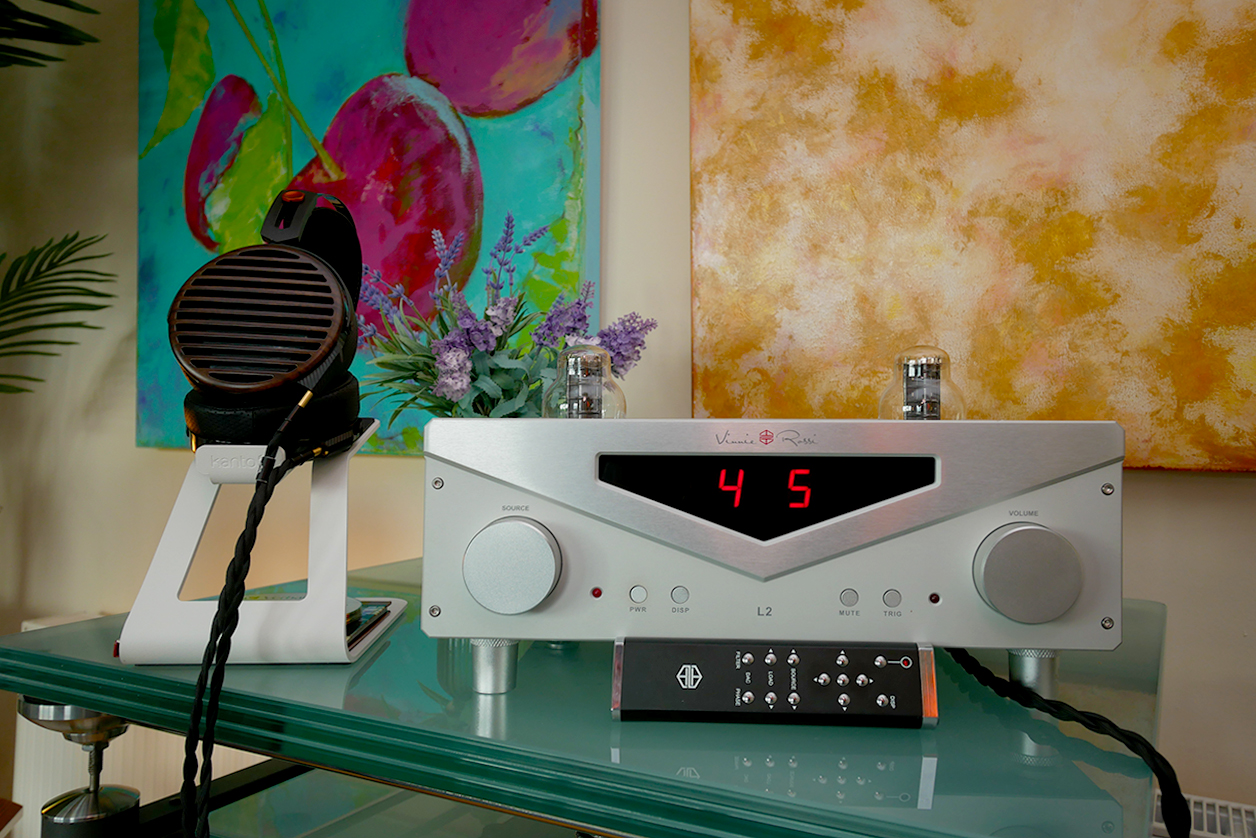
The Western Electrics weren't leaning but rising in the north of my plateau where the mountains are. I had promised myself not to mention the triple-ribbon headphones as my take on HeadFi's Himalayas. When discussing a new Peugeot, don't mention the Bentley in the garage. But when the FT7 on 300B power without output iron or coupling caps scaled up like a kite with its line cut, now I must. That's because all the previous resolution, airiness and sub-bass underpinnings had acquired a golden inside-out luminosity and kitty-paw silkiness without blur or obscuration. It reminded me of the tactile luxury of what my Raal 1995 extremists already get from premium transistors like Enleum's AMP-23R. Whilst not on their peak, the FT7 had vacated the plain and set up shop in a mountainous base camp. I'm keeping these descriptions deliberately casual when no buyer would ever duplicate this combo. Just so, it was eminently useful by suggesting that a price-appropriate valve amp from Feliks or Cayin could be the cat's meow. My 300B didn't remove the lower-treble lift but enfolded it to become more feature than nit. Readers with widebander + valve-amp experience will know exactly what I mean.
Before these airs get too rarefied, let's return to terra firma and add up the evidence.