Fourth, PSRR performance improves as well. The LT3042 is already famous for outstanding power supply rejection ratio rated as high as 79dB/1MHz. Parallel operation allows this extraordinary filtering capability to remain intact even under more demanding current and thermal conditions. Any residual contamination originating from the computer or upstream power supplies is effectively eliminated before it ever reaches the delicate oscillator circuitry. Lastly, the arrangement provides superior heat distribution. Splitting the workload across two integrated circuits means each regulator dissipates only half the thermal energy associated with voltage drops. Linear regulators operate more stably when not thermally stressed and exhibit less thermal drift themselves. The lower operating temperature of the regulator stage positioned close to the oscillator additionally minimizes thermal transfer to the crystal, directly supporting frequency stability. Adam summarized the entire architecture rather elegantly. The dual LT3042 arrangement combined with a 225F supercapacitor bank effectively creates a barrier nearly impervious to noise in both theory and practice. The supercapacitors handle LF clean-up and provide a massive energy reserve while the parallel regulators precisely trim voltage, remove UHF contamination and deliver what he described as laboratory-grade current to the mechanically isolated XO. Considering the above, Adam clearly has a soft spot for fancy oscillators. In truth, his USB card reads like a miniature science project dedicated to eliminating every imaginable source of timing instability with almost surgical precision and intent. Then again, the entire Base project comes across first and foremost as a labour of love executed by someone equally determined and obsessed. I'm perfectly capable of assembling a PC myself and have done so dozens of times over the years. While today's specimen is largely a PC, it also packs the kind of R&D very few audio houses offer, let alone DIYers. Then there's the software side of things. Adam reached out to AudioLinux developer Piero to customize this OS specifically for Everest products. Hid version features a simplified on-screen menu while numerous advanced functions for power users remain hidden behind password access. Asked about AudioLinux itself, Adam explained that it's an incredibly comprehensive platform designed around endless optimization possibilities, ultra-low latency and uplifted sound performance. Its greatest advantage also happens to be its biggest drawback. Most users are unable to fully utilize the system's capabilities because it is too complex and not particularly friendly toward people expecting turnkey convenience. This is why user-friendliness became one of the key priorities behind Everest's implementation. As a result, the user only gets access to essential playback choices like Roon Core, Roon Bridge and MPD instead of getting buried beneath endless Linux-level tinkering possibilities. With that lay of the land we can now move onto sonics.
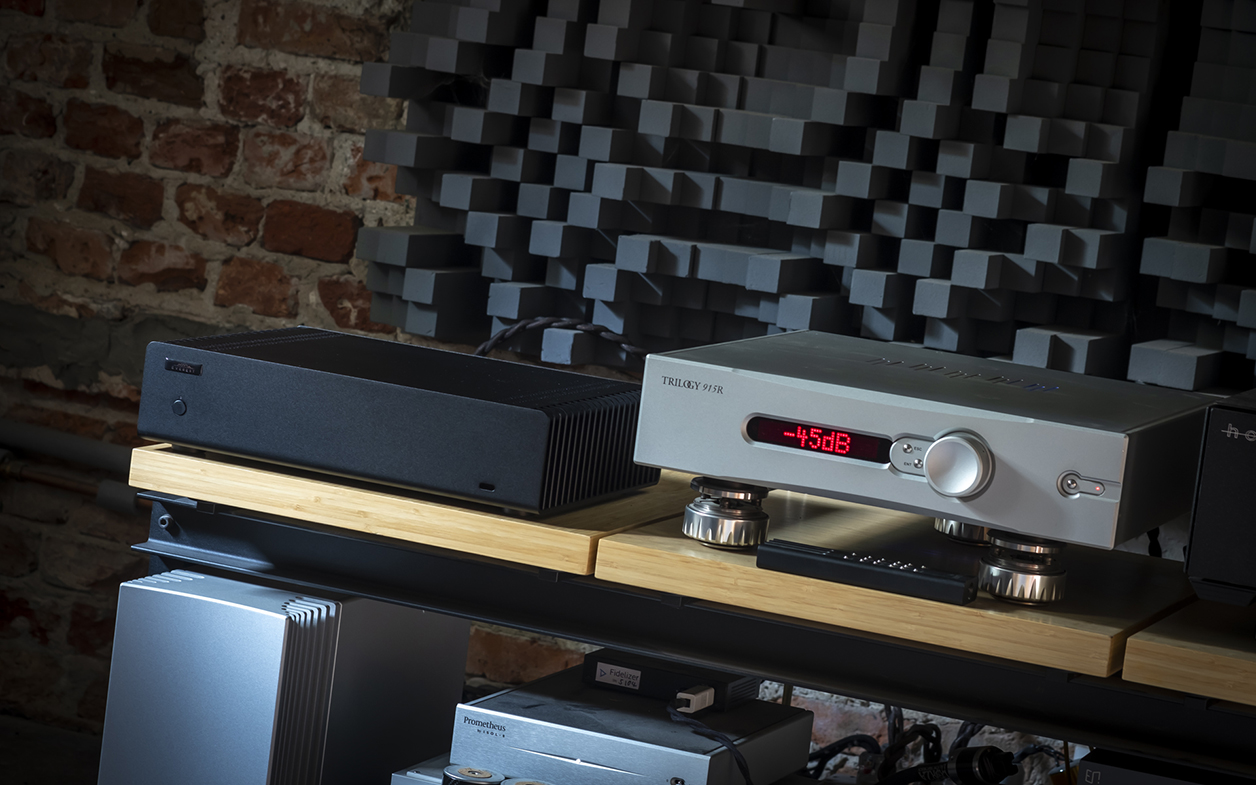
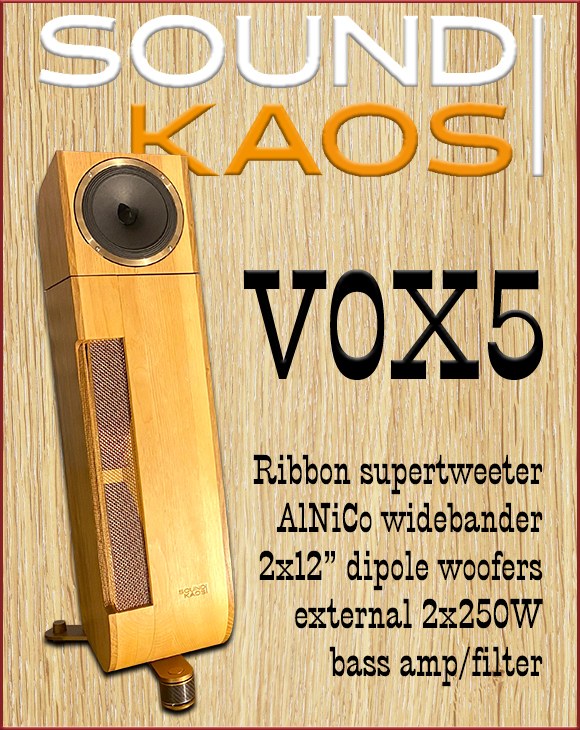
The Everest Base had to spar with my Innuos Statement Next-Gen daily driver. As usual, the downstream system comprised the LampizatOr Horizon360 DAC, Trilogy 915R/995R pre/power combo and sound|kaos Vox monitors. To make this fair, a selection of files from the Innuos landed on Everest's storage. Both machines saw the same power cords and connected to the same network switch via identical LAN cables. Moving a USB cable between streamers was the only physical activity required. Otherwise my smartphone served as remote control for both servers. Naturally the Innuos was managed via the manufacturer's native and brilliant Innuos Sense app. Meanwhile Adam suggested Roon but not being accustomed to it, I politely declined. Instead I downloaded the free Linn Kazoo app which worked perfectly well for my purposes. And so we're clear, both contestants sent data to my DAC via their dedicated USB outputs; the Innuos from its PhoenixUSB out, the Everest from the USB One. Upon arrival I'd asked Adam whether he had aimed at any particular sonic result. He nodded in approval followed by a faint smile. Not that this was a trick question. The man simply wanted me to unpack it on my own. Apparently he trusted that my hearing and descriptive palette were sufficiently capable though he did mention that what the Base does is very clearly pronounced; so much so in fact that during internal tests several of his friends independently agreed on its general profile. Him not revealing that tuning was a smart move. Reviewers generally hate being told what they're supposed to hear because they know perfectly well how strongly such suggestions bias perception. The entire surprise then goes poof before the music even starts. I also couldn't rely on memories of earlier Base prototypes because the finished version had changed substantially. Once we consider how much effort Adam put into his discrete power supplies and USB card to lower noise, a pristine backdrop, generous colour provision and other artful aspects should clearly register in my system with the Base engaged. They did but also so much more. Not only does it have a personality of its own but it is indeed bold.








Before diving into specifics, let me outline how the Innuos Statement Next-Gen sounds. A shy, timid or romantic machine this is not. Quite the opposite. Its general profile revolves around authority, immediacy and broad physicality. What this streamer particularly excels at is bass of unusually convincing reach, grip and shove. It sounds powerful and visceral in a way that tends to register physically as much as sonically, especially on material loaded with energetic LF content. The Next-Gen is also exceptionally quick. Its ability to start and stop bass pulses with great precision injects music with momentum, torque and excitement that routinely translates into involuntary foot tapping. Importantly, all this doesn't come at the expense of refinement or spatial sophistication. The machine additionally paints large vivid soundscapes populated by generously saturated and tactile images outlined with very convincing precision. Voices in particular benefit by sounding tangible, fleshy and alive instead of merely well separated. Overall the Statement Next-Gen combines muscularity and dynamic swagger with colour density and spatial generosity in a way that makes music feel unusually animated, physically present and intense. That's its personality and my system hasn't yet hosted anything better. In that context, getting an aural fix on the Base didn't take long at all. Descriptive measures that best summarize its voicing comprise background blackness, big tone and richness just as forecast but that only tells part of the story. True, my system with the Base prioritized meat on the bones and generally shifted toward a dense, heavy, atmospheric and corporeal presentation. This wasn't about artificial warmth or syrupy beautification but sound carrying greater physical substance and scale. Cue up "Feel Good Hit of the Summer" by Queens of the Stone Age which runs on a tight driving up-tempo beat, with guitars packed so densely with fuzz and compression that the whole track feels overheated and claustrophobic as though my amps redlined the entire time. On such fare the Base was brilliant and very much in its element. It made the track feel gloriously overdriven, filthy and satisfyingly oppressive without blurring its internal pacing or rhythmic discipline. The Everest seemed to lean into this aesthetic with obvious confidence, preserving all the grime and aggression while simultaneously making the whole thing feel three-dimensional and physically anchored. Then I listened to my latest find by hackedepicciotto. "The Silver Threshold" feels massive and ritualistic, built on a pounding tempo where heaviness comes less from distortion and more from sheer weight and tension. The guitars, strings and hurdy-gurdy smear together into a dense cinematic drone hanging in the air like storm clouds. It gives the track crushing hypnotic gravity and that peculiar sense of impending dread. Again, the Base absolutely thrived on this kind of material. It rendered the song with remarkable density and scale but enough composure and spatial order to prevent the intentionally unsettling vibe from collapsing into mush. The whole presentation felt monumentally dark and heavy in a way that had me repeatedly reaching for replay. I could go on with many more not exactly audiophile recordings and portray them as ace for the Base. That however would still undersell this machine.
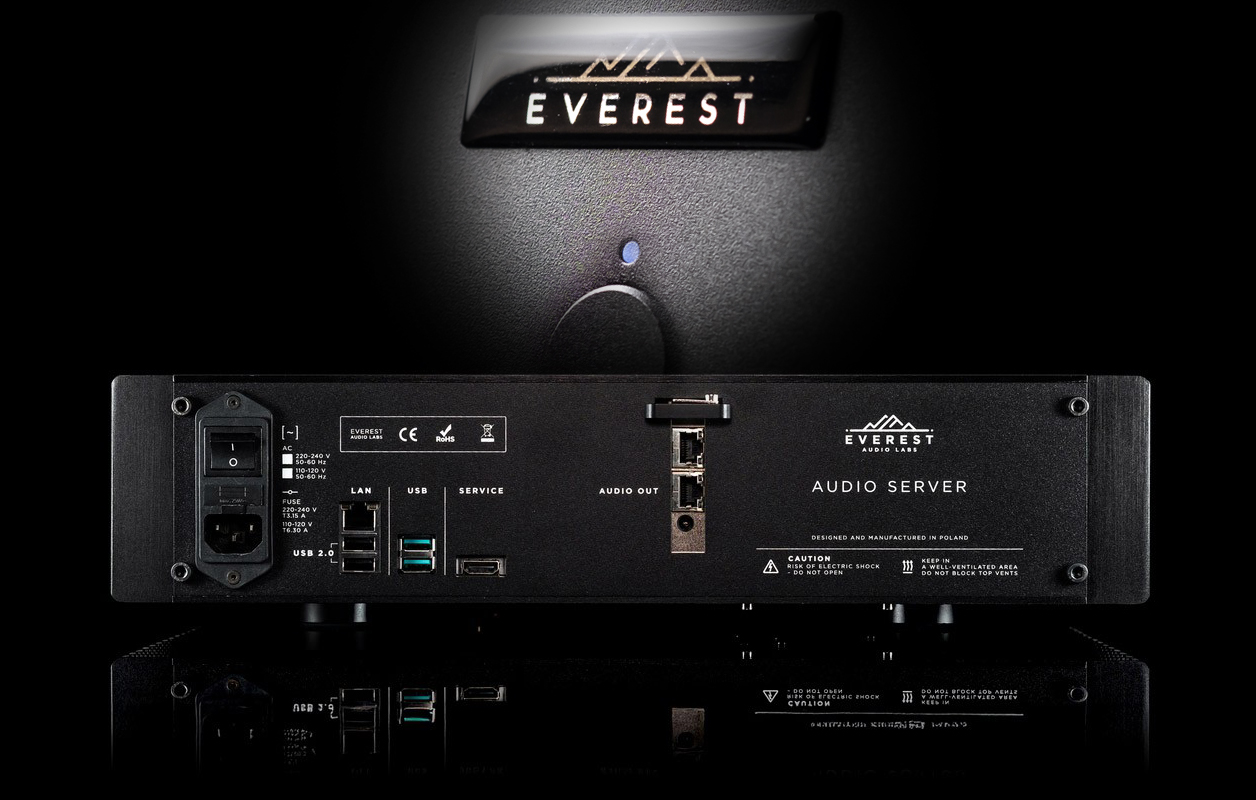 The Everest Ascent gets Jcat XE Evo USB or NET cards, OCXO clocks for them, two separate PSU for the clock and output, 4x450F Ultracaps, 320'000µF filter capacitance and 60VA+250VA power transformers.
For a long while though I deemed the Base's ability to handle heavy atmospheric bits on my playlist as its primary specialty. Now I know that this constitutes one half of where it truly shines. Once I detoured from such repertoire toward more listenable lighter fare, the other half gradually revealed itself. "Niğde Bağları" by Altın Gün pulses with tightly controlled rhythmic energy that fires off in short sharp bursts. Every instrument feels spring-loaded. Quick percussive hits, clipped grooves and sudden psychedelic flares release tension in compact waves that keep the whole thing wonderfully restless and dancy. On this track and also the band's even more upbeat and snappy "Doktor Civanım", Adam's maiden model revealed elasticity to be just as much its thing as tone and heft. The way the Base handled these songs and other like them was, by my standards, excellent. Normally we don't expect products with a strong bias toward weight, saturation and colour density to excel at control, composure and snap. Such tuning usually seduce us with a more relaxed, round and fatty perspective I might describe as charming. The Base wasn't that. At its core this machine sounded fast, controlled and rhythmically alert, just with generously developed muscle tissue wrapped around all that athleticism. My point is fairly simple. When we see a bodybuilder who spends six days a week in the gym, we don't expect him to casually do the splits. Today's hardware belongs to the bodybuilding camp but is far more nimble and flexible than its muscular appearance suggests at first. That precisely defines its personality. The Base's beefy, tuneful and tactile character registered very well also on minimalist acoustic tracks built around female vocals accompanied by unamplified guitars. One acoustic version of "Sanctified" by Nine Inch Nails covered by female duo Lacey & Sara did the trick. I'm not entirely sure which of the ladies handles vocals but the Base rendered the performance with very convincing outline precision, articulation, generous internal fill and spot-on sensuality. The other obvious highlight of the song, a single acoustic guitar, keenly released lots of energy and tension while remaining entirely free of sharpness, excess leanness, heat or hollowness. Similar observations followed on Luca Stricagnoli's famous take on "The Last of the Mohicans". The Base rendered that tune's fingerpicked melody, body percussion and rhythmic accents in the kind of grand expressive manner that vividly demonstrates how a single guitar can sound orchestral and majestic. By my standards, there really was very little to complain about.