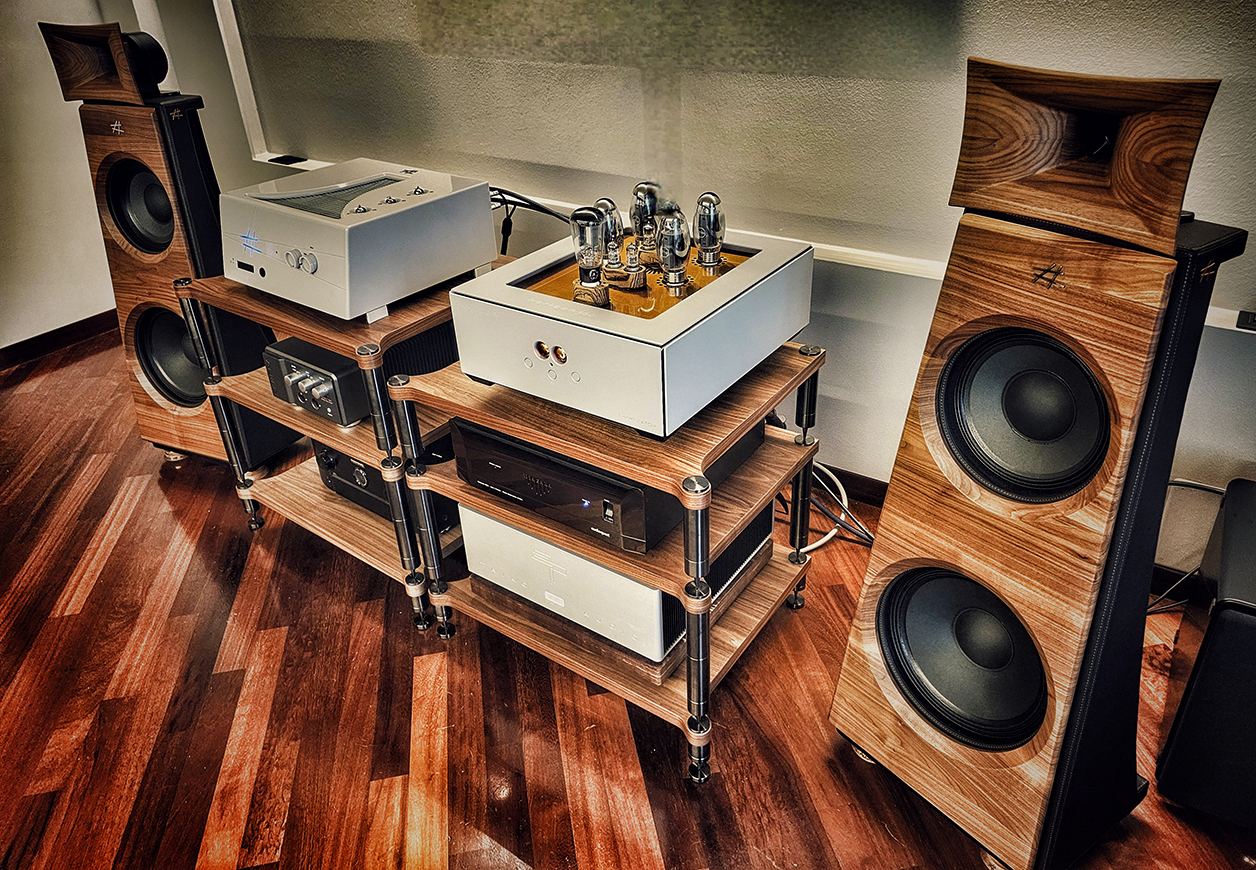
Open baffles famously eliminate box talk by doing away with the box. This benefits speed and dynamic swings whilst leaving off the table bass reach to the full limits of audibility. Giuseppe emphasized how the primary advantage of their design is only realized if the baffle is exceptionally stiff and well damped, a feat achieved with their substantial Clad 58 plinths. Indeed my first impression was of very natural timbres animated by a sense of freshness and clarity across the spectrum. Being that my listening at home and live events mostly spans acoustic genres, I'm extremely sensitive to what I perceive as odd tonal artefacts. So I felt immediately at ease with Aura's response evenness. Its apparent lack of emphasis made each instrument or vocalist materialize in my mind's eye effortlessly. The crisp images projected into the room completely detached from the physical speaker locations to complete the illusion of corporal palpable music performed just for me. Back to tonal balance, Aura brings us a palette of springtime with vivid well-defined colours where high contrast and direct light in thin air fill everything with vital energy. The texture of each instrument exposes with convincing immediacy, be it the resonant rasp of a cello, the soothing whisper of an ancient gut-stringed violin or the bright metallic glare of a trumpet. Here is where timing accuracy and lack of coloration work in tandem to have us easily recognize the natural tonalities of acoustic instruments in their varied combinations of attack, decay and overtone fabric.

 Take piano for instance, notoriously challenging to reproduce due to the instrument's scale and complexity where metal, wood and different mechanical/acoustic principles organize quite miraculously into what to me is the most fascinating sonic language of all. Aura portrayed piano by holistically capturing its most essential traits like percussive incision and the transmission of many colour transformations and interactions, culminating in the explosive projection through the soundboard, lid and rim.
This brings me to Aura's most impressive performance characteristic: how masterfully it fills the room. It's not a thick wall of sound, a room senselessly pressurized at high SPL or a diffuse indeterminate fog. Rather, it is that feel of pervasive presence which can be perceived live where the peculiar configuration of space, performers and audience defines a constellation of reverb, absorption and delays which ultimately result in us feeling the venue bodily..
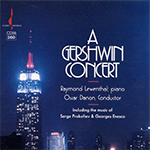
 In Trifonov's The Carnegie Recital, the piano's presence is easily read but Aura added to it the expansive hall's atmospheric support well beyond the physical space occupied by the speakers. In comparison, the late Glen Gould's The Goldberg Variations has the piano exhibit a palpable, forward plasticity that sculpted between the speakers well into the room. In the orchestral setting of Chesky Records‘ A Gershwin Concert with Raymond Lewenthal, the holographic localization of the various elements enveloped by grand space not only expanded beyond the loudspeakers but also seemed to transcend my actual room limits, making the experience nothing short of expansive. Another remarkable aspect is how this room-pervasive display incurs no loss of image focus or proportions, presence or visceral impact.
That's quite an achievement for Diesis and their second-smallest Aura model of five.










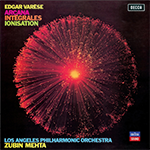
 Talking visceral impact and macrodynamics, Aura is capable of convincing performances while remaining loyal to lithe fast non-pushy ease. Albums like Zubin Mehta's read of Varèse's mercurial Arcana, Integrales, Ionisation where percussion steals the show become ridiculously exciting, a true feast for ears and skin. Percussive sounds of various textures materialize as distinct physical objects in 3D space. Climaxes are shatteringly intense. Vocals portray with stupendous detail. Especially with the default treble tuning there's HF crispness to highlight nuances in breathing, tongue/teeth interplay and lip shape to a visual degree without reaching never mind trespassing the threshold of sibilance. As somebody very sensitive to zing, sibilance and acidity, I really appreciated the resolving detail with no fatigue or unease. This applies not only to vocals but stringed instruments, especially the violin whose organic subdued gestalt in the real world so often translates to abrasive rustiness in especially digital systems.

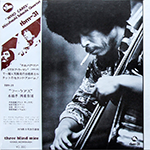 Vocals recorded warm, silky and intimate like Shelby Lynne's tender Just a Little Loving feel inviting to an almost maternal degree. More incisive, stiff, borderline aggressive productions like Nina Simone's mono Jazz as Played in an Exclusive Side Street Club rightfully slap the listener with immediacy and unedulcorated directness. Vocal sizing and height are dramatically important for an illusion of believable in-room presence. I was happy to 'see' performers in my room, be it a soloist, Baroque vocal ensemble or operatic cast, all at realistic scale well above my sight line as though standing in front of me whenever recordings permitted. There was no honk or nasality anywhere, no romanticism or editorialization in the midrange whose varied textures exposed in bare light, fragrant and agile. Athleticism is another distinctive part of Aura's signature sound. It applies across the spectrum to for instance make intricate bass lines excitingly toe-tapping and engaging. "Blow Up", the title track of the Isao Suzuki Quartet's eponymous album, or "Who Cares" from the Mizuhashi Takahashi Quartet—both astounding Three Blind Mice productions—may devolve from muddy to indistinguishably confused with slow transducers yet Aura enthusiastically rode their intricate rhythmic acrobatics.
 If bass speed, punch and fullness are unquestionably Aura strengths, extension into the first octave is not. In my room roll-off began its plunge at ~50Hz, hitting -6dB at ~45Hz so in line with the published specs. For most acoustic music where Aura's presentation is at its absolute best, this is no significant impediment but I really wanted 20Hz-20kHz bandwidth so added a subwoofer. Diesis’s own mighty dipole Bonham would be ideal by sharing high efficiency and speed. Luckily after some fine-tuning even my inexpensive XTZ 12.17 provided a notable improvement. Brass instruments are well within Aura's comfort zone. Trumpets to trombones were full of colour, jump factor and body. Saxophones were monumental or intimate, warm or brisk depending on context and mastering intentions to sound convincing in all situations.
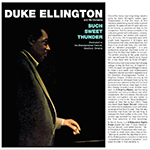
With a big band like Duke Ellington's Such Sweet Thunder, the combination of energetic brasses, cavernous venue then ability to handle multiple instruments playing loud at the same time without sacrificing transparency or separation whilst adding immaculate PRaT in the drums section made for a memorable listen.