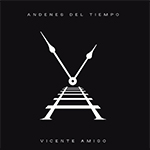
 Evo obviously conforms to generic class A notions for warmth and density. But just as obviously it sidesteps the potential puddle of lush. It hits high marks for brilliance and tonal gloss. It nails transient speed whilst giving leading edges a slight mellowness not of lazy rising but fatter texture. Whilst stage sorting is highly focused, inter-image space is less explicit because it embeds in substantial materialism. As a true muscle amp for this genre, dynamics and bass pop fall right in line with associated hopes. On colour balance, both the black of bass and white of treble sit far to the outsides but black arguably a bit closer to the middle. As such substance dominates over separated-out spaciousness, the macro of scale and chunkiness over micro detail. I believe that many listeners shorten my last sentence to 'organic'. Yet Evo maintains a locomotive sense of forward drive so isn't guilty of undermining musical energy with lax rhythmic gumption often conflated with flow. That quality illustrates superbly in the album cover of Vicente Amigo's Andenes del Tiempo with its two clock hands against a receding train track. Whilst the mastering engineer applied redlined dynamic compression, check out the opening track for a prime example of urgent time keeping despite the sweet chewy title "Nougat and chocolate".
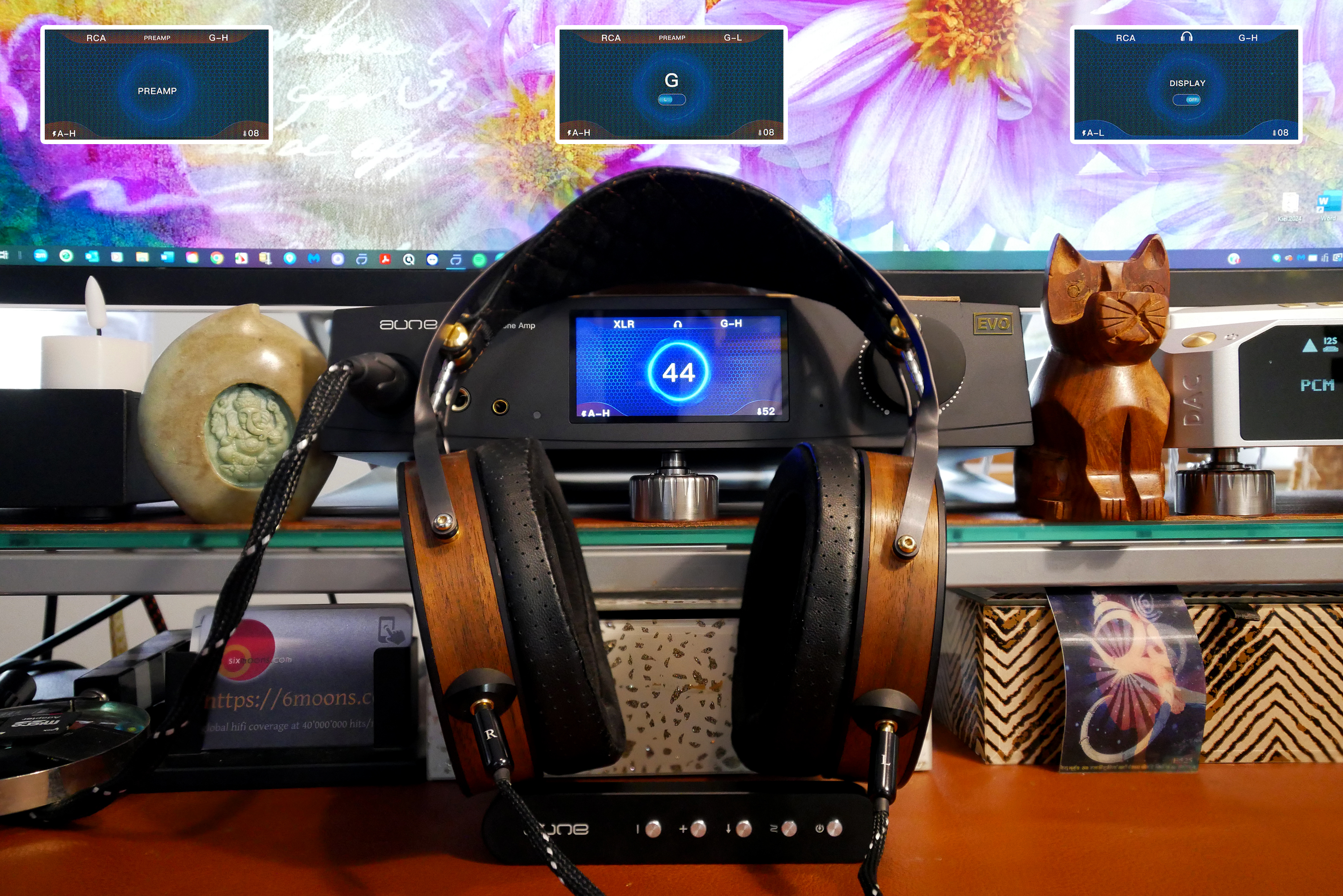 Use mouse-over loupe to magnify the detail of the different display captures.
If you too marvel at the muscular showy swagger of Flamenco's rhythmic incisiveness where Vicente Amigo is boss, you'll appreciate that Evo capturing its underlying 'speed' was a big compliment, its coexistence with tonal richness and colour boldness a lovely surprise. My sonic sense always prioritizes taut snappy timing over tonal effulgence but happily adds the latter as a lovely extra if the former is in place. It's the old speed 'n' curves recipe where overemphasis of one eats into the other. For my proclivities Evo struck an expert balance indeed. With that basic picture painted, let's develop more class A distinctiveness by contrast to Soundaware's $1'950 P1x. For the sake of convenience that connected to the same DAC via RCA for simultaneously live signal which simply reseated an XLR4 plug. Prefacing this must be three likely decisive facts: the smaller P1x costs more than double; has no remote control; and lacks a 4.4mm output. On all of that the aune buries its competitor in a landslide.







Sonically I had a draw and favourite. This was about THD distribution. The P1x was drier and darker, Evo fruitier and more lit up. The latter's odd-order dose was higher. Each tuning will have its devout admirers. I fancied aune's though admit that for subjective separation so image specificity, Soundaware's held a small edge. Even where that overlays buyer taste to the 't', more than doubling the expense should rarely feel justified. Unless one just must have that small voicing difference and can't tweak it with ancillaries, Evo's similarity for so much less looks irresistible. Whilst beauty eyes the beholder, I also thought that Evo's cosmetics style harder. Declaring a clear winner often goes into sideways ambiguity aka endless give 'n' take but in this instance was undeniable. Evo for prez? Quite. To not kick an amp whilst down, let's quickly exit this comparison to rope in my class A/B $1'295 Kinki THR-1 with its lateral Exicon Mosfets.

Its tonal climate had its own way with warmth as matte dryness. This drew with more emptiness between images. Subtle recorded decay action had a blacker chalkboard to write on. Focus shifted from performer substance to surrounding space. In a parallel with the liveliness of loudness fluctuations, the Kinki was keener on microdynamic nuance, the aune clearly more hung on macrodynamic shove and growl. Its colour temps aka saturation sat higher as well. It not only ran far hotter but sounded it. We might say that Evo expressed more operatic drama, the THR-1 more chamber-music airs. For someone crossing over from DC-coupled class AB of high bandwidth, Evo makes an ideal landing place in class A. Our virtual materializer beam moves from 11'00" to 13'00", the colour palette's black value grows but musical energetics and treble illumination stay put. There's clear gain without real attendant losses, just sideways shifts between space vs substance. On raw voltage gain, Evo plainly outdid the less powerful Kinki where devout bangers with Susvara could run out of runway. The aune gets them fully airborne even with heavy cargo aboard. That makes Evo an amp for all seasons and reasons.