Reality had other ideas. Fronted by Enleum's minimalist current-mode class AB circuit with two lateral Exicon Mosfets per side, the bass wasn't quite as hung or grippy as I'd heard it already. Instead harmonic tone sophistication by way of timbre modulations had notched up a few clicks. So had the restitution of recorded ambience. Whilst still nowhere near as airy and shimmery as the HE1000 Unveiled—of the three tenors, Luciano never sounded like Plácido or José no matter the gig—the AMP-23R injected into the AR9000's attractive anchorage a small accelerating agent; a younger less portly Pavarotti of more fire in his top register. Swiss saxman Philippe Chrétien cut his "Champagne" track of the eponymous album at extreme proximity. He wanted to capture all the reed and spittle-in-air noises around his mouthpiece. It gives his tenor sax an exceptionally breathy and husky demeanour; as though our ears were a fly stuck to its beak; as though we were a kid blowing bubbles through a drink's straw and delighting in their sounds. On this amp, the aune captured more of the cut's micro-pixilated coexistence of tone and noise, redolence and hash, bite and buzz. In short, of all my amps in inventory, the South Korean compact with its office in San Jose/CA and far less feedback than my desktop Topping dug deepest into the AR9000's HF and upper-harmonic abilities. It simply didn't scale up all performance aspects via one virtual master slider. Rather, it operated a bit like Quad's original tilt control. Certain attributes gained in relative prominence, others reduced. Throwing the most money my amp collection bakes into one piece at this aune thus didn't just catapult it cleanly up but also moved it a bit sideways for the usual give 'n' take. My next breath adds that in this upscale company, the AR9000 didn't at all act displaced. I heard zero giveaways of a wedding crasher from the wrong part of town. Rather than 'scales up', I'd call that 'hangs with'. Priced at what in today's scene is an entry into the high end—or the upper end of the mid level—the AR9000 hangs with elite kit, no embarrassments or obvious shortcomings implied. Whether it's sensible to allocate our hifi funds like I did for this experiment I'll leave to your discretion.
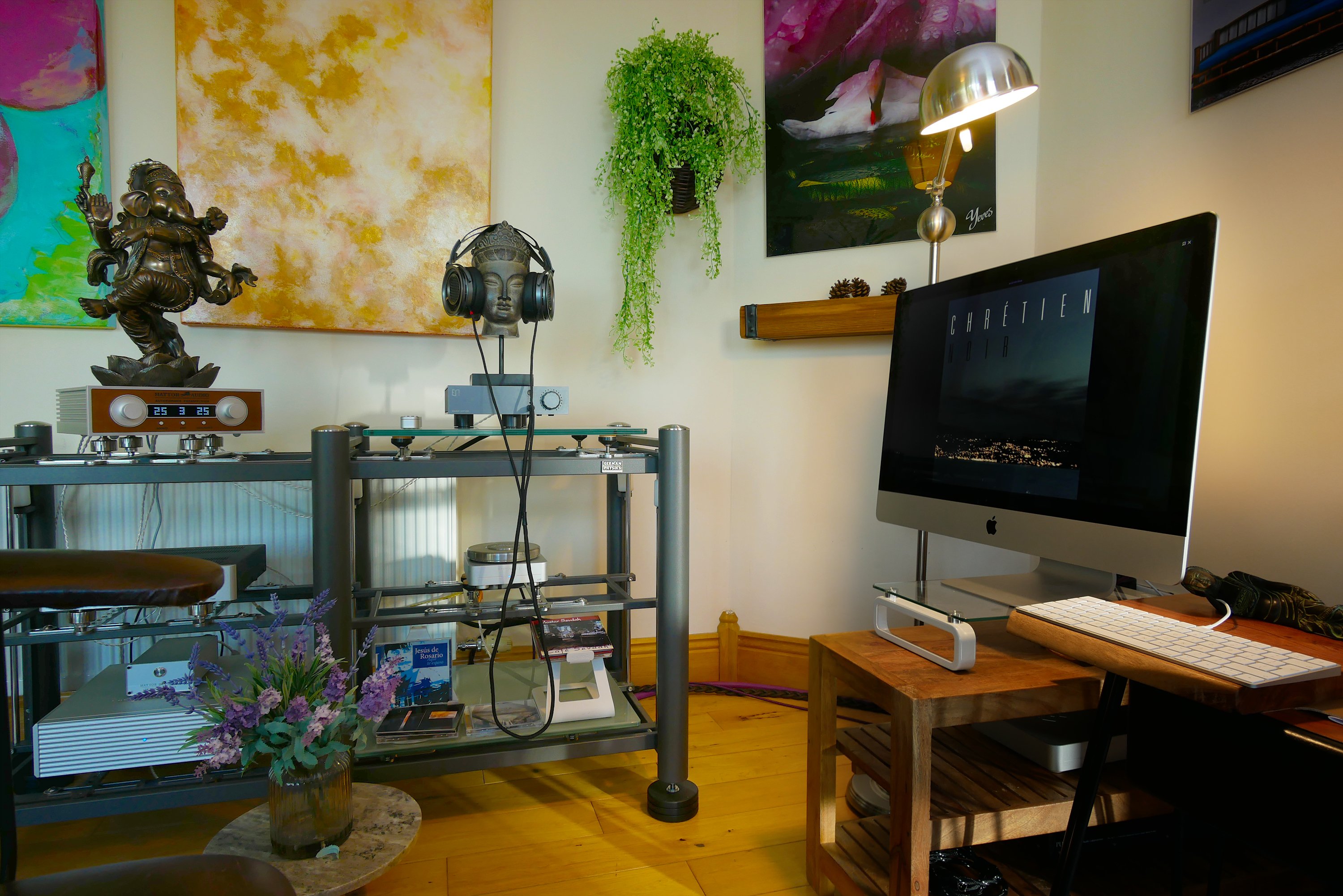 With aune's provided cable.
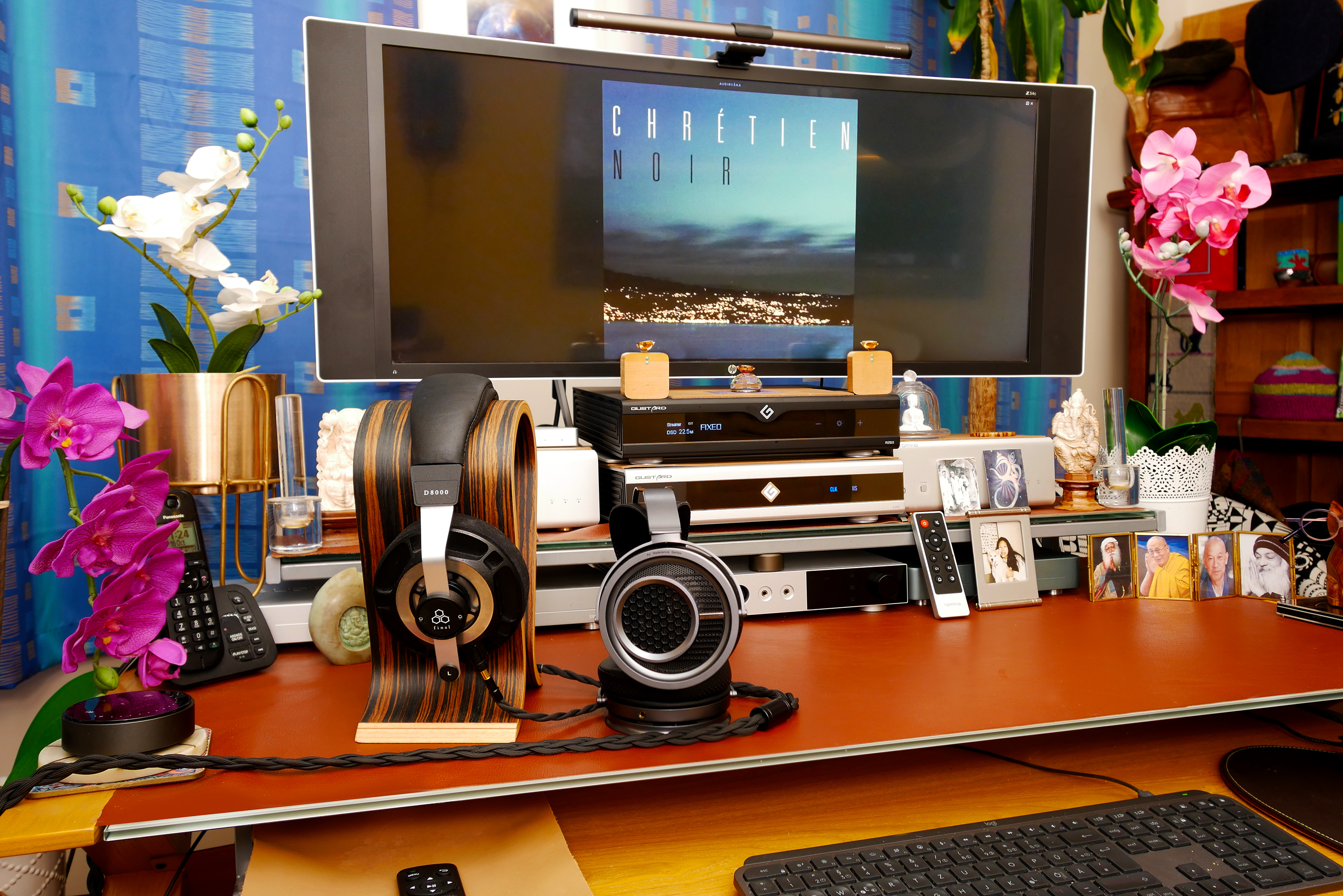
Rephrased, if you want an e-stat, get one. No matter how much bend force you apply, the AR9000 will never go there. That's not its temperament or personality. The right ancillaries can build out its air and brilliance regions if that's an attribute we fancy once tone density, saturation, true bass and dynamic contrast tick off. With the AR9000, air and brilliance will never come first but can be polished with copasetic choices. Since I had one, Final's original D8000 planar was my next comparator for extra data points. This moved back into the office to level down the amp's expenditure.
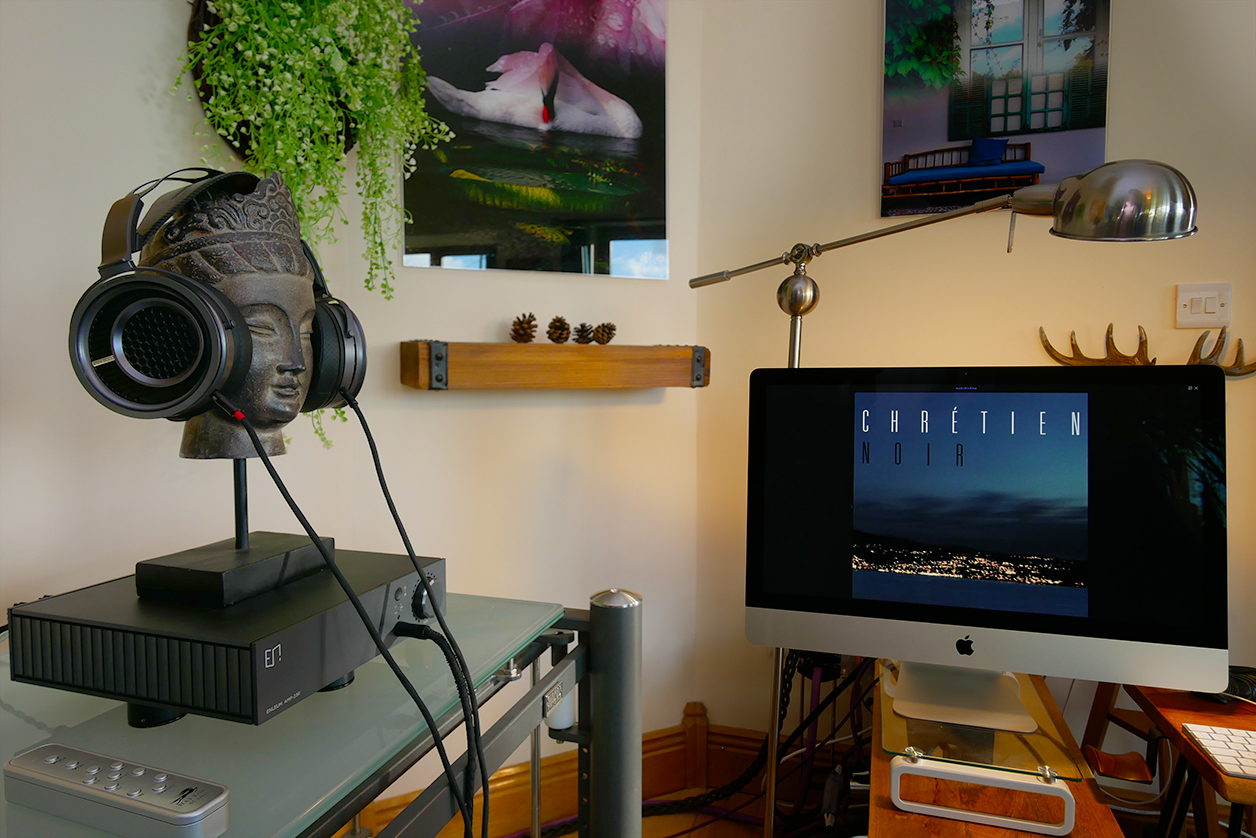









Of the two, the 523g and larger Japanese planar originally launched at £3K so double today's tariff, presented as the overtly more bass-up profile. It exhibited more ringing, bloom and a mid/upper LF prominence which obscured the lowest bottom. Its separation was softer, bordering on micro blur. Images were bigger yet less precisely articulated. The overall climate was clearly warmer, wetter, less focussed and concise—generous of fattiness but by contrast, slightly sloppy or loose of quality. In this context the AR9000 felt like the more linear and true instrument; the lesser skull load; and plainly greater value. At this juncture of my narrative, it's fair to interject that I thought the aune required somewhat higher SPL to step out fully. If you're a whisper freak to protect your hearing; to minimize sound leakage; because your loudness sensitivity is high… this headphone might not be best. If it had a torque curve, think of gaining full traction in 3rd not 1st gear. Versus my €749 FiiO FT7, the planar's lower treble was more splashy, its texturizing glossier, its staging wider, its damping lower. In this A/B—never mind its very own siblings—the AR9000's value proposition diluted. Against Final and HifiMan meanwhile it had been strongly assertive. It thus depends on how you shuffle that deck; and what cards come up.
 Track keepers noted how my comments reflect precious little of the measured topography's peaks and valleys. Thanks for that mention! It just underwrote the relative irrelevance of correlating them to actual on-head experiences. Iterative R&D applying precisely calibrated testing to insure consistent conditions? QC? Those and more factory processes clearly need graphs to track progress and tolerances. Arm-chair engineers who prioritize debates with absolute strangers over minting ears-on experiences? They can fleece graphs for endless amusement. When it comes to buyers, the same graphs can confuse, misalign even scare off. Now what's their published purpose? To serve as official blueprint against measurements from every Johnny-come-lately YouTuber playing at hifi sleuth? Remember aune's earlier examples of three alternate curves for four different headphones. In places those swapped peaks for depressions and vice versa to outright contradict each other. Rather than etched in stone, to me this matter seems written on water—especially since I heard no such gratuitous deviations, just minor personality traits. About those, I already reviewed two aune amps advertised as class A; one subsequently derated to high-bias class AB. The big new flagship amp I've not yet heard claims pure class A into full power. That's a useful pointer where popular conception associates class A with a warmer richer less striated sound. That general gestalt also applies to the AR9000. I've just taken pains not to use the word 'warm'. In my book, warmth is often a function of high 2nd-order THD; or temporal blur. Here I heard neither. I'd thus substitute warmth with a mix of density (more) and darkness (less). Equally relevant is the sense of very low distortion and unobstructed airflow. It's what keeps the 'class A' traits manicured rather than overgrown; the tenebrous tone of Anoushka Shankar's "Sinister Grains" easily penetrable and sorted not murky.