With loudspeakers, the sound from one channel reaches both our ears slightly offset in time due to the HRTF or head-related transfer function. This complex interaction creates the spatial 3D perception in our brain which we call soundstage. In headfi each ear only hears one channel. Therefore the logic of crossfeed (bleeding a part of the left channel into the right and vice versa) may seem obvious but how to do it correctly is another topic altogether.
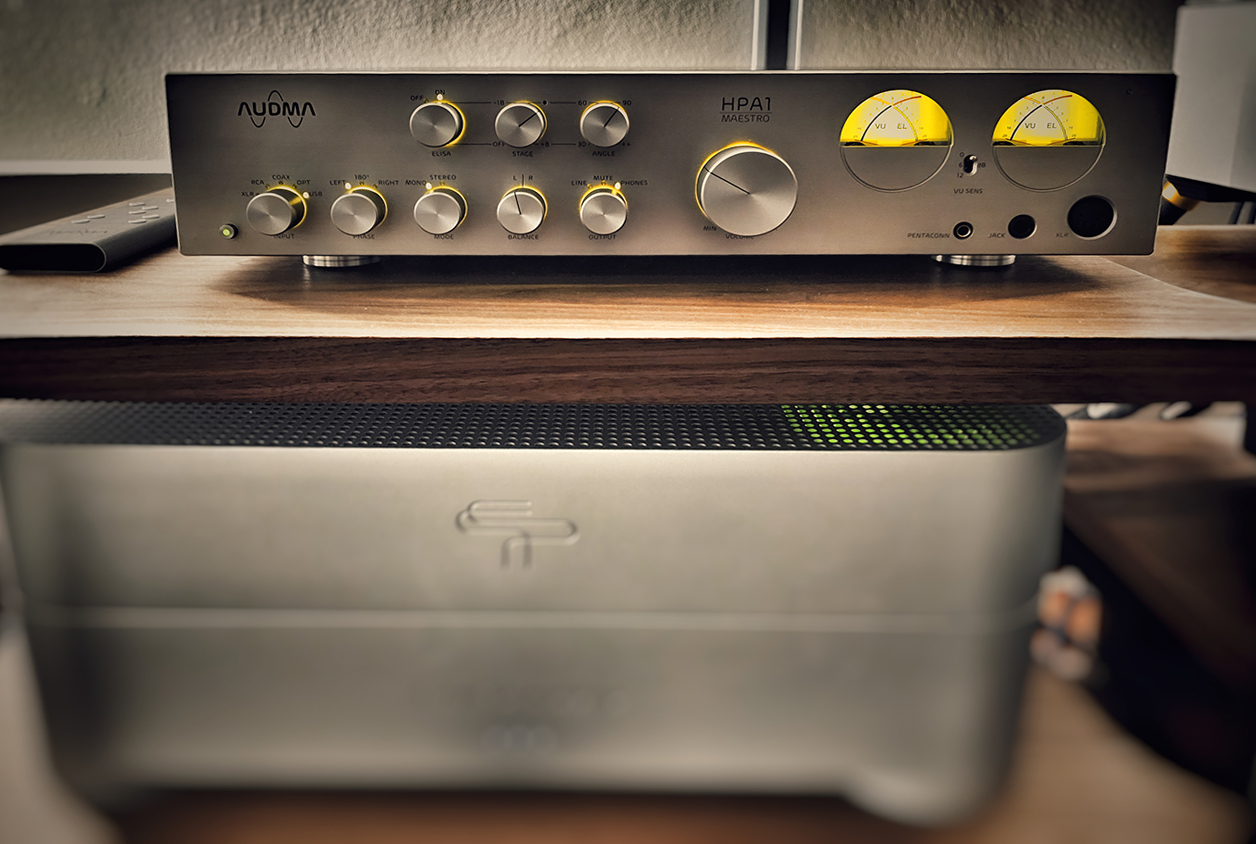
 ELISA stands for Electronic Loudspeaker Imaging Simulating Amplifier, a patent-pending crossfeed Mattoli invented to upgrade the approach based on early studies of Larson, Eargle, Bauer in the 60's and presented in the 1971 Siegfried Linkwitz paper "Improved headphone listening – build a stereo crossfeed circuit". Mattoli's implementation attempts to overcome the subtle timbre shifts and transparency losses related to phase shift produced by traditional crossfeed techniques. Mattoli's approach is based on a time delay to emulate the correct offset between direct and crossfeed signal where the phase relationship between mixed data does not change with frequency.
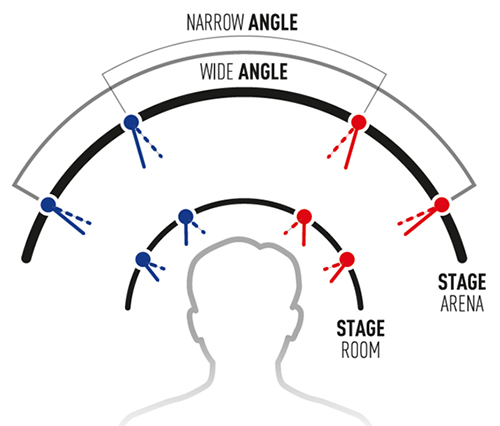
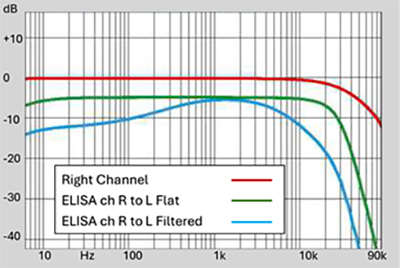
To cause minimal timbre alterations, the crossed signal filters before being injected into the opposite channel: -3dB at 6kHz mainly compensates the HTRF effects, -3dB at 200Hz avoids over-emphasizing the bass where recorded music tends to have equal content in both channels due to the omni-directional nature of low bass, hence an unfiltered crossfeed signal would overegg the LF. The user can also set ELISA for flat as a comparative reference. A peculiar aspect of the Maestro HPA1's crossfeed is just how finely we can tune it. For this purpose two continuous knobs on the front panel or remote are called 'stage' and 'angle'. Stage sets crossfeed loudness, angle the delay. The latter parameter ranges from 150μs to 640μs reflecting typical ear-to-ear distances from 14-18cm. As we'll see in my sound impressions, there is serious benefit in having such a level of control over crossfeed. Aside from preference, the recording at hand may dictate the amount of spatial manipulation which best serves our experience. This ranges from 50s' Jazz recordings where left/right panning was so extreme as to become downright annoying on headphones to make crossfeed highly desirable; to binaural recordings which want no crossfeed at all.

Most of my time with the Maestro HPA1 was spent with my Spirit Torino Valkyria and Raal 1995 Immanis complemented by shorter sessions with a Focal Utopia and HifiMan Susvara in their original incarnations. These loads covered a broad swath of efficiency and the first thing to stress is how dead quiet the HPA1 was with all of them at any volume and gain setting. Susvara as the hardest to drive was handled with ease, authority and control already at intermediate gain (+18dB of a max +30dB), thus asserting in full Maestro's raw drive. In terms of voicing, my headphones were varied enough, with Valkyria being darker but more visceral, Utopia most intimate and edgy, Immanis brighter and more open to assess the versatility and neutrality of the HPA1. I started using the Maestro as an all-in-one by using my Microsoft Surface Pro as USB transport streaming Qobuz via Roon. This minimalistic setup would occupy the bulk of my review as it proved itself the most revealing of the intent behind the HPA1's sound shaping and was the most appealing on value for money. From the very first notes it was clear that the HPA1 belongs to the top tier of headfi gear. Its presentation embodies clarity, high-definition attacks, elastic decays, dynamic swing agility and tonal purity. The Maestro HPA1 presents music in bold fashion without feeling overly heavy and its harmonics texture is like tightly fabricated silk so far from thin or dry yet still compact, luminous and light. The tonal balance is even with just a slight tinge of warmth in the midrange which contributes more elegance than sentimentalism. In its basic form with just a PC as source, the HPA1 was already everything even seasoned audiophiles might ever need. The jump when using a world-class digital server like the Taiko Olympus however was clearly audible. Every aspect took a significant step towards greater realism. Timbres were more vibrant, low-level information previously masked or blurred more apparent and vivid, images bigger, more dimensional and layered etc. This of course was no surprise and mere confirmation that the HPA1 easily scaled up into a finely curated high-end audio system.









A similar upgrade occurred when I added my LampizatOr Horizon360 DAC via XLR to bypass the internal DAC and use the Maestro as amplifier only. I immediately recognized the signature of the Horizon, a combination of resolution and naturalness that is as difficult to explain as it is easy to hear. It falls into that elusive category of audio epiphany where the sound flows in such an obvious way that my brain does not need to interpret or translate to create a connection. That makes listening a most effortless non-analytical experience. Again, the Maestro was up to the scaling task by posing no bottleneck in the process. Furthermore, the core characteristics of the HPA1 mapped in AIO use remained for all configurations I tried. This must mean that the amp section dominates this unit and I had confirmation when comparing the Audma as amplifier to my Riviera Labs AIC-10 to find out how the two have distinctive features that set them apart. All headphones I tried on the Maestro performed close to the best I have heard and most importantly kept their unique traits intact, a tribute to the transparency of this amplifier. Immanis sounded free and pure as high mountain water, its speed registered no impediment from the amplifier, its wide soundstage where big and bold images separated out in intense 3D felt especially clear. Bass conveyed tight, articulated and impactful. For those looking for warmth, body, bloom, saturation, density or intimacy there are more effective alternatives but that's not the nature of Immanis and the HPA1, as respectful as it was, did little to edulcorate or tame it. Valkyria offered the best synergy among all pairings I tried. Their slightly dark closed-in nature blossomed into a lighter, more open projection. Bass and mid-bass swiftness were more apparent, resulting not only in more agile articulation but a clearer more transparent midrange devoid of obfuscation due to LF bleeding effects. Valkyria also demonstrated the ELISA circuitry's overall effect on the listening experience in the most striking way.
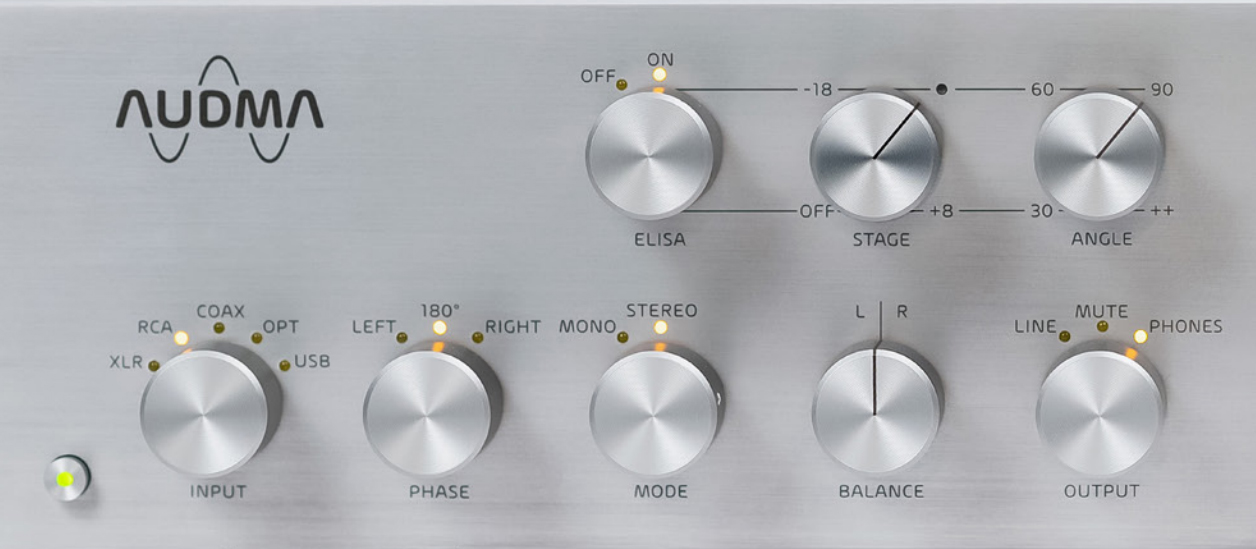
 ELISA's impact on spatial cues is subtle and dramatic at the same time. Audma's xfeed implementation is very tasteful and little invasive, so much so that I believe it strikes the balance between pros and cons of this technique in the most effective way I experienced so far. What you get is an increase of soundstage size in all directions, better separation and a perceptual reorganization of the performers with more frontal directivity. This helps unfold overly congested recordings where musicians may appear to coalesce into a quasi-mono mass of sound and most importantly it relieves the oppressive feeling of direct ear pressurization. In the first part of the stereo era or on certain more recent remasters, sound lateralization was taken to extremes which over headphones becomes, at least for my sensitivity, downright annoying. And that is a pity because some of the titans of Jazz were often recorded like that. With ELISA there is a physical sense of relaxation that invites us to immerse ourselves in the recording, entering the stage instead of feeling the stage entering our skull straight from the ears. Generally speaking, ELISA works best with music recorded in real venues, especially but not only acoustic. In these situations, our brain is greatly helped to recognize the interaction between sound and environment, the peculiar attack and decay signature of each instrument, the deployment of musicians in space. This reduced interpretative brain tax becomes less listening fatigue and ultimately more pleasure or fun. Given my preference for acoustic music and a 5th row concert hall experience, I ended up using the 'stage' at max and the 'angle' at just over 90°. After some initial back and forth mainly made to assess the effect of the system, I settled on engaging ELISA by default.