
 Sir Simon Rattle and the Berlin Philharmonic have produced a first-class recording of Gustav Mahler's 9th Symphony in terms of sound and interpretation. After the music, for a while rather subdued and in muted colours, traces its way back to the harmony from which it so thoroughly departed, this symphony first erupts after about six minutes. Brass and timpani create an initial dynamic wave which breaks then collapses before the message fully articulates. Then far in the back and rather quietly, the timpani play the four-note motif which runs through the entire symphony. With the Emitter I heard several things. The timpani positioned very far back in the orchestra yet pinpoint with centimetre precision so perfect clarity. This sense of space suggested no artificial enhancements. At first the bass drum is still faintly present which is why with some amplifiers, the position of the timpani shifts after that fades out. Not with the Emitter. The horns then introduce some aggressive notes from the right if not quite as far back which doesn't skew the overall spatial impression. It becomes fascinating a few bars later when the timpani insist on their point and repeat the same motif now significantly louder. And almost always, for example with the magnificent Audio Analogue Puccini Anniversary which I enjoyed some time ago, they move slightly forward. While this can be musically engaging to not be condemned, objectively speaking it remains an artificial intervention. With the Emitter, the instrumental positions didn't drift a millimetre. They just got louder, fuller and more robust. Wow. In some recordings the soundstage extended outside the speakers which were non-localizable as sound sources. However, this only happened when the recording dictated it. Some of the counter-phase effects in Roger Waters' Amused to Death moved so convincingly through the room that my peacefully dozing cats were startled to make the purchase of a surround sound system seem pointless.
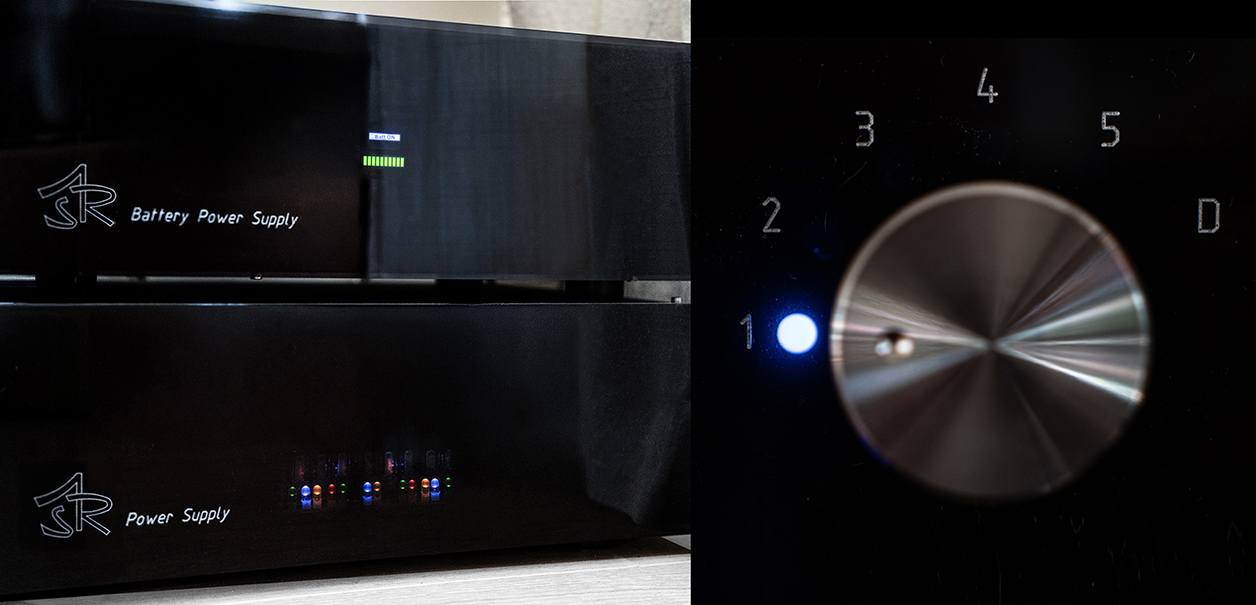
The bass response was undoubtedly one of the Emitter's strongest points. I never heard my speakers or those provided for review perform this well. The ASR seemed to effortlessly extend their lower bandwidth by half an octave yet did so with such control that the resulting sound thanks to neutral leanness and precise control was more reminiscent of an active calibrated subwoofer than passive speaker—even one pushed to its limits. Control, detail and definition prevailed right down into the very lowest frequencies. The aforementioned softly rolled bass drum in the Mahler recording made this obvious. Even with a quite capable amplifier like Electrocompaniet's ECI 6 MkII, I hear decently voluminous rumble. The ASR showed that even with the best drummers using soft well-played mallets, not every attack sounds exactly the same. The Emitter dissected the sonic landscape presented by other amps into its constituent parts without sacrificing musical coherence. In my opinion it fully revealed what actually happened in the low frequencies. This meant that the Emitter deserves a place on the reference podium in terms of bass clarity. Of course one must be able and willing to live with an uncompromising stance. For example, with bass-heavy productions like Flume's HyperParadise, one could certainly wish for gut-hammering bass. The Herborn veteran simply won't goose extra punch even if desired. It's the client's decision whether to accept that.











Looking at the midrange—it made no difference whether an exquisitely nuanced Wagner opera or the gruff voice of a Johnny Cash—the Emitter truly shone. It essentially eliminated itself. By this awkward phrasing I mean that it was neither warm nor bright but simply a musical butler. It projected what the musicians and sound engineers recorded. Now, it's difficult to associate this 'nada' quality with a price range. So let's put it this way. If the performers' intention, their sonic vision and the sound engineer's work are more important than our own ideas on how something should sound, I know no better amplifier. When at the beginning of Wagner's Götterdämmerung the Norns expound at length on the lamentable overall situation, many listeners find it too confusing and long. This is especially true at home without the theatrical stage action. Often however—and I observe this repeatedly with complex music—it is really the lack of differentiation in the performance which causes our minds to wander. At least musical intensity is no issue with Christian Thielemann's reading helming the Bayreuth Festival ensemble. I almost didn't get to the Norns because the very beginning already captivated me. After an initial cry from the woodwinds and horns, a significantly softer chord follows though not considerably quieter. The timbre however changes dramatically. On many systems, this second chord sounds duller, less intense and quieter. But the Bayreuth forces demonstrate that this second gesture doesn't merely radiate outward but glows even more intensely from within. The Emitter 1 once again didn't get in the way but with calm unwavering precision revealed everything the artists wanted to tell us. The worlds that open up here even between two notes leave one speechless.
Finally I managed to get to the Norns who actually had something to say and weren't just droning on like dullards. Every subtle change in breath control, vocal placement and resonance showcased full expressive range. How breath control and thus the intensity of tone shaping changes in preparation for a larger interval is something many other amplifiers miss. As is so often the case, it suddenly became incredibly exciting once I had all this information. When a component can handle complex processes, comparatively simple tasks like a guitar and dry vocal become a minor issue. With Billie Eilish's "Bury a Friend," we're left to our own tastes. The aforementioned Electrocompaniet presented the vocals slightly more forward, separating them a bit from the surrounding soundscape. This created a more intimate atmosphere so very intense connection to the music. The Emitter placed the vocals where the sound engineer likely intended them: farther back and more as part of the band. Of course here too all sonic elements positioned and defined precisely, nothing blurred. This was partly because the ASR, with exemplary transparency, unravelled every trace of the production and, embedded within the overall sound, visualized every detail. For example, I was fascinated to hear how subtly compressors and reverb had been applied to the different tracks. It's pointless to debate right and wrong. It must appeal and speak to us to escape the currently miserable world. Ultimately, whichever path works for you is the right one and that is no matter of judgment.