More dung could seem hung on the wind once we unpack. Given its puny size, this couldn't possibly be more than a beginner's toy. Could it? Installed and hooked up quick, I had positively zero noise. Except for the high pass with its fully counter-clockwise 'off' for bypass, all controls had micro clicks—very unexpected. Nothing wobbled or felt cheesy in the least. Did my ivory tower show first small cracks? In from late October's transit chills, sonics started out extremely detailed. But they were also bright. Think overly fresh unfiltered widebanders that inject too much white. It didn't take too long for the chassis to get hand warm. After a few hours in fact, it got comfortably toasty. Chances were decent that the sound would follow suit. At ~10:30 on the unmarked dial, my 87dB mini monitors produced regular nearfield SPL. The sub stroked along as usual, too. Functionally all worked exactly as advertised. Once the Aiyima had stretched its legs, I compensated its remaining relative leanness with the same small but discrete €359 Audalytic DR70 preamp and its external $390 LHY LPS-80 15VDC linear PSU that had already preceded the benched LAiV monos for all-important master volume control.
With that in play, Aiyima's passive master and sub attenuators could bypass. A small trim on the sub's own attenuator reset correct bass balance. That didn't just resurrect my prior performance standard. Where virtual holography from super-articulated spaciousness was concerned, I actually sat slightly higher. Were those dubious tremors I sensed beneath my tall white tower? To explain them, let's call on genial George, my amateur hifi geologist. He claims that it's all about noise; or rather, its radical absence. A hifi recovers recorded ambiance by catching hold of microscopic spatial cues. The lower its self noise, the deeper its excavation of recorded space will reach. That unmasks data which otherwise bury in the noise floor. George had a point. It's just one which the high-end at large doesn't yet fully acknowledge. ~90% efficient class D gets away with far smaller power supplies than classic circuits. Those switching supplies are quieter than linear jobs operating on 50/60VAC line frequencies. Remaining ultrasonic switching noise filters out far easier and doesn't require large banks of slow-recharge filter capacitors. It makes SMPS faster as well. It's why ultra-posh linear gain circuits from Aavik to CH Precision, Constellation to Soulution and Vinnie Rossi use switching power.
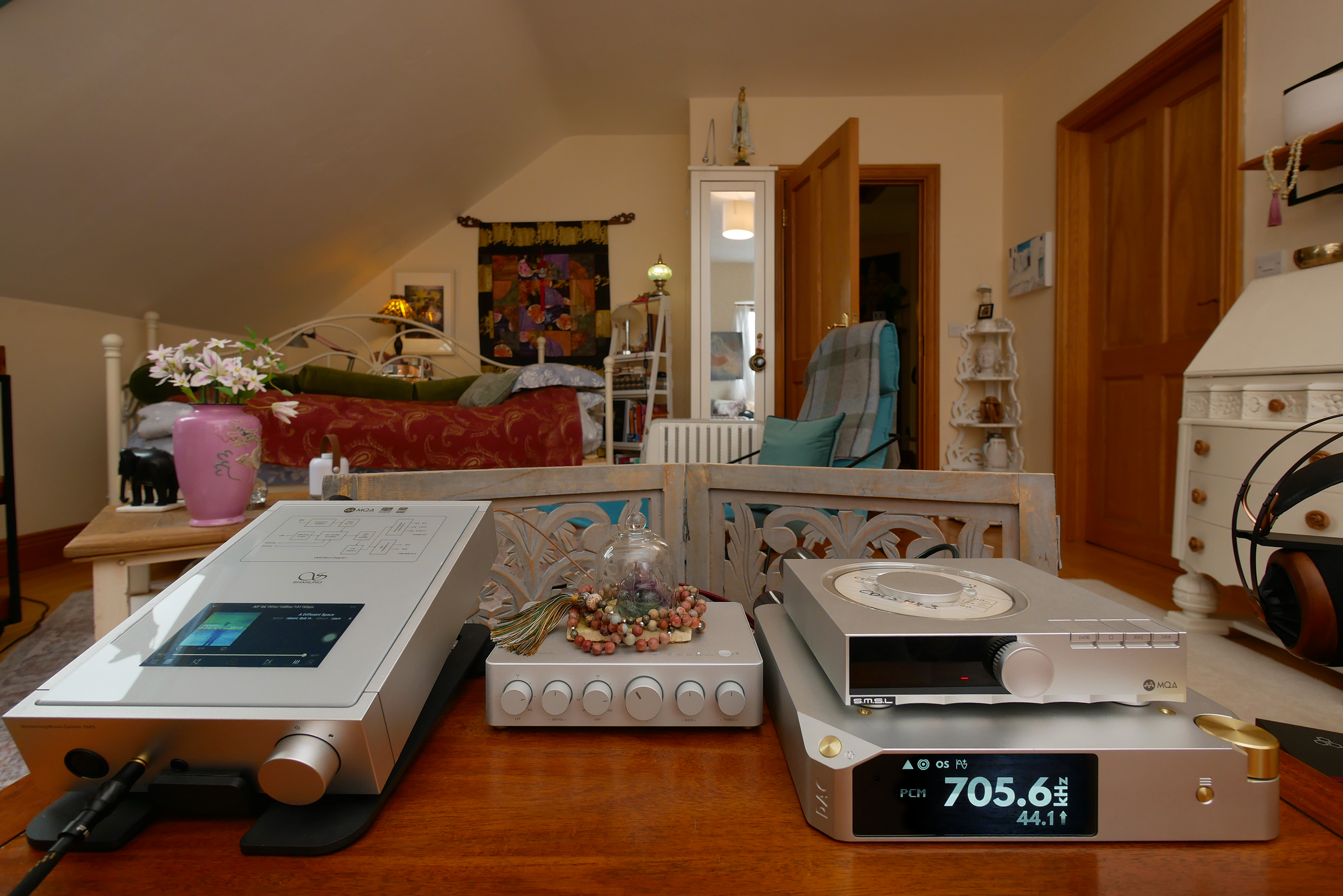
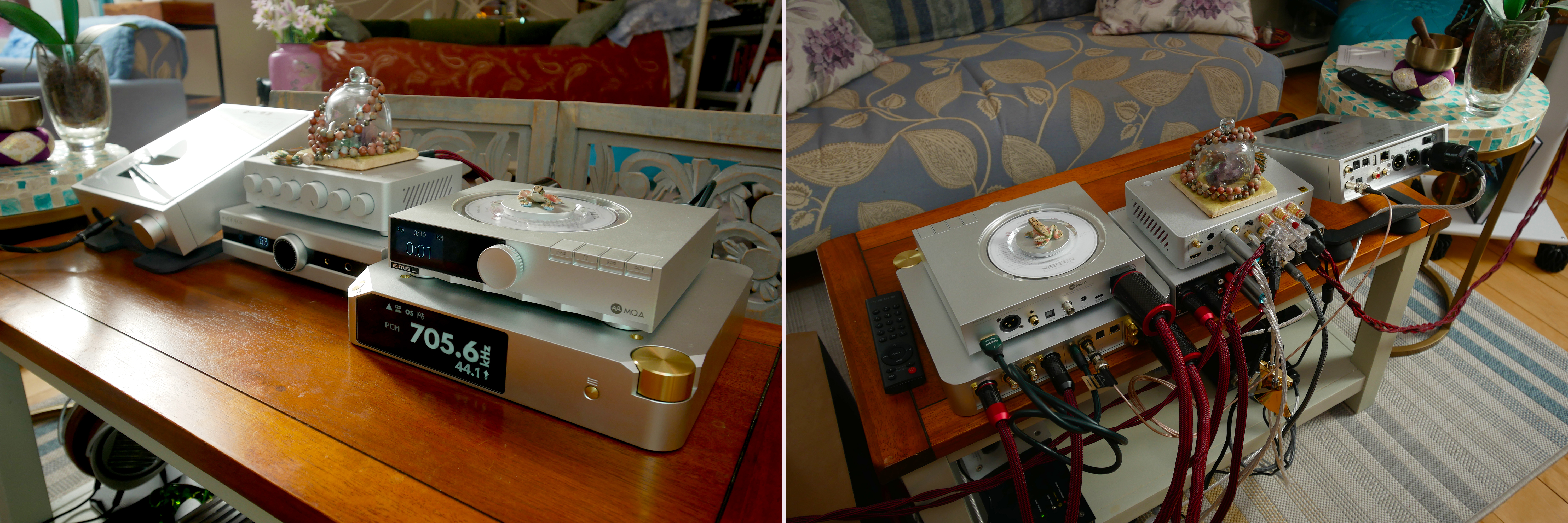
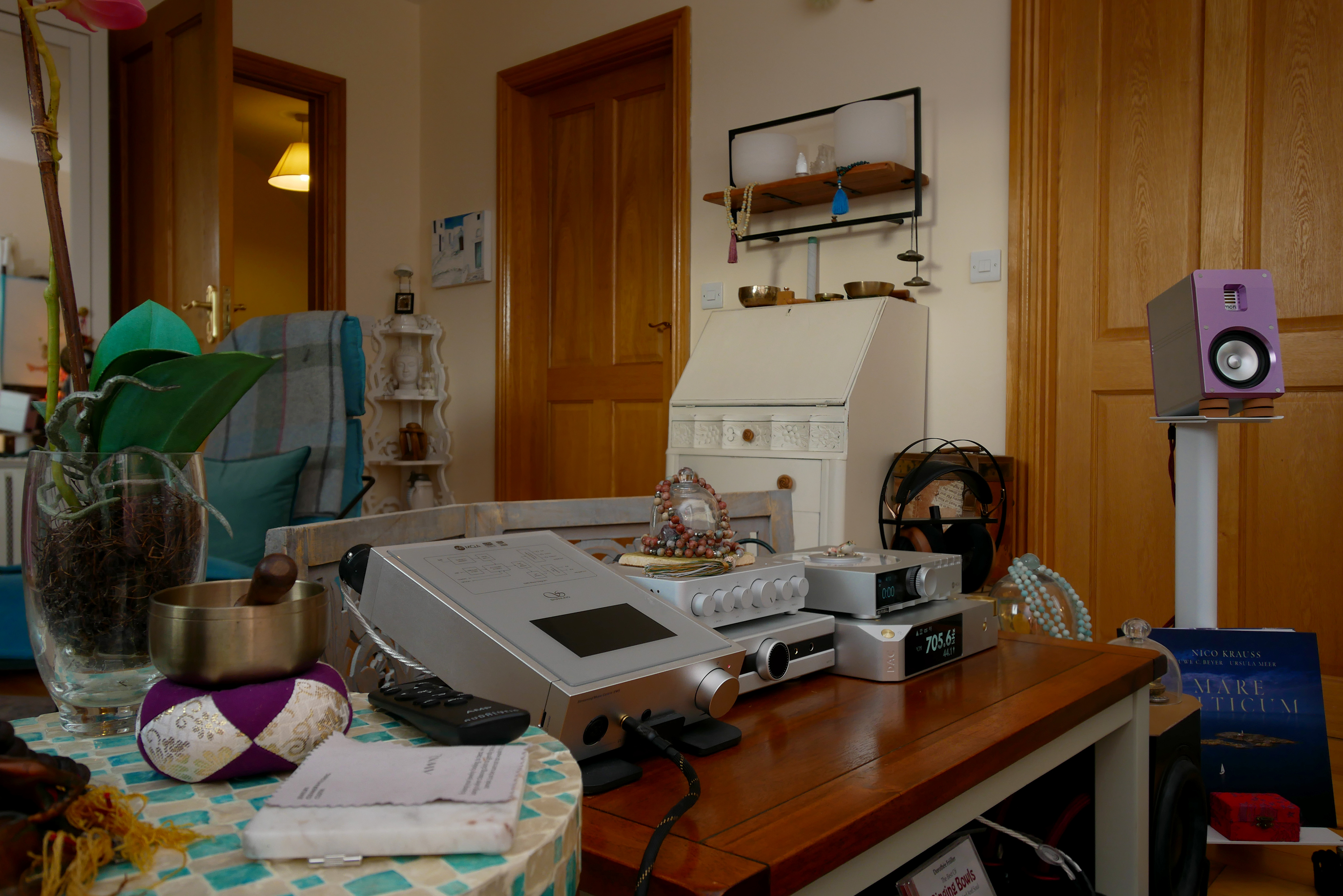 Shanling | Aiyima | Audalytic | LHY (on lower shelf) | smsl | LAiV – the budget rule of Chinese hifi in 2026. Even my Dynaudio sub was built there.
What could irk their clients is that in the carefully curated micro climate which I call the bonsai zone, their advantages can already apply at grotesquely lower price points with fast-switching class D outputs. What could feel even irkier? The B07 Pro accomplishes it with a declassé laptop brick whose replacement will set you back a whistling $36 on Aiyima's accessories page.











Car salesman to punter: "This ride will go from 55mph to 100 in two seconds."
Punter to salesman: "I'm no racer. I'm a conservative family man of four."
Car salesman to punter: "My point precisely, sir. You never know when but this ability to accelerate from freeway speed to a rapid takeover manoeuvre could one day save all of your lives."
It's how many of our purchases are iffy. They're based on the 'if' of a potential eventuality where overkill becomes a difference-making advantage. My bonsai zone eliminates the eventuality. It's why the bijou Aiyima could perform well out of proportion with reasonable expectations. By implication it already called overkill on my LAiV GaN monos whilst operating under such carefully manicured conditions. It didn't make the B07 Pro superior. It made it ideally sufficient, naught else required. That was today's lesson. When we learn what our actual needs are—in this, not a maybe world built on assumptions and insecurities—we needn't buy according to the 'what if' paradigm where only ignorance makes it seem the smart even responsible play. Minimizing excess is its own Zen. Here the B07 Pro really was the zaniest Zen kit I'd had through in a long while—not that my smsl CD transport with I²S is any slouch on said realsization score. Functionally it's simply less loaded. With the Zen hen having laid its egg, let's crack it to describe the taste.
♦ Extreme resolution. That simply means superb visibility from an obvious absence of veils, blur and opacity—like a filterless widebander sans phase shift and mass drag.
♦ High speed. It means decisive transients that rise steeply. From it comes taut timing that's on point and in the pocket.
♦ Surprising treble clarity where earlier class D wasn't fully there yet.
♦ No built-in warmth from higher THD or temporal laziness.
♦ Truly fantastic separation and three-dimensional sorting.
♦ Fine whisper ability which comes on song very early on the dial—another benefit of very low self noise.
These six bullet points explain how any extra measures of mass or blackness must bolt on by what comes pre or post B07 Pro. A price-matched digital source is unlikely to do much on the score. Adding those elements with our choice of speaker should be far easier particularly when the whole built-in subwoofer functionality can easily visit the meatpacking district with the right settings. In my context of super-lucid small widebanders, the bolt-on extras came by active preamp addition. That injected just the right touch of weight and robustness. It admittedly defied Aiyima's attractive all-in-1 concept. But then I saddled this particular ride backwards from the go. I approached it like a seasoned audiophile of mature demands, not a cash-strapped beginner. Still, in the bigger scheme of things, my excess of a half-width fully discrete budget preamp was incredibly contained yet already hit the bull's eye of my prior status quo.
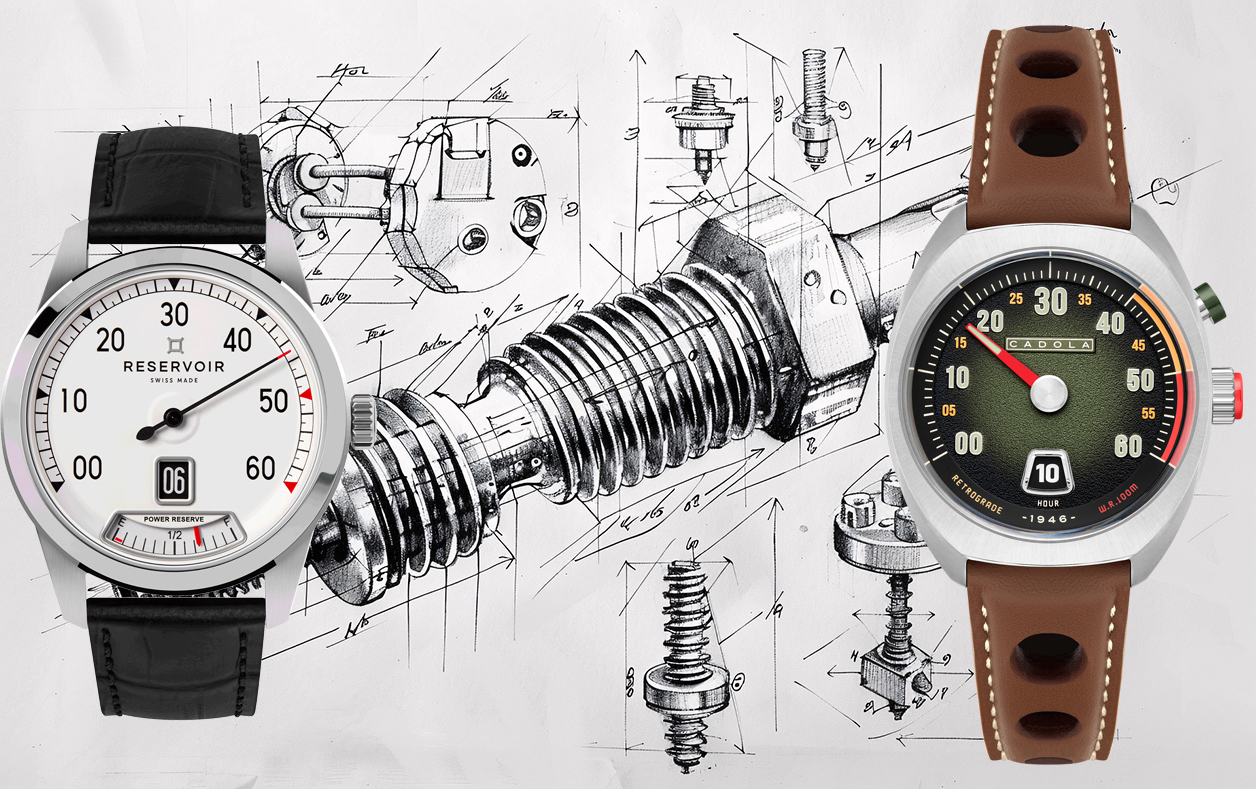
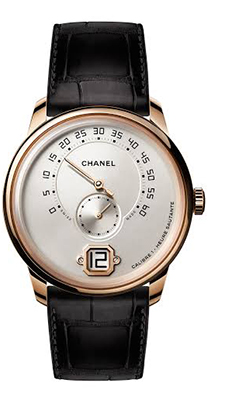 Let's reframe. I like wrist watches, just not the swish stuff's extortionist pricing. At upper left we have the Swiss-made Reservoir Supercharged Classic: €4'950. To its right sits the Chinese-made Cadola Ascent Verdant Vision: €233.65 delivered on 20% early discount. One uses a Swiss mechanical movement with 56-hour power reserve and indicator. The other runs a basic quartz movement. Both implement the same jumping-hour complication with retrograde minute so the hour window never obscures. The cheap watch tells more accurate time. Its power is limited only by its battery to need no flashy reserve indicator. Yet it completely fails Swiss-made cachet and movement cred. For a full hit of that, there's the €40'000 Le Monsieur Chanel, another retrograde jumping hour but with second hand.
When it comes to smart money and knowing our actual needs—these days smartphones tell atomically-clocked time—for most this choice should be easy. To be sure, like the Cadola our Aiyima buys zero cachet. But make no mistake. Under appropriate conditions, it tells musical time just as well. The trick is to know what those conditions are; then generate them.
Here Aiyima's concept does most the work already. High-passing our speakers eases the demands which those place on our mini amp. The RCA sub out can probably harness power well beyond the B07 Pro's own 3rd channel. My €1.3K sub from Dynaudio's Pro division already packs 500 watts. For LF, big power is useful. Next, keep the monitors compact, their crossover simple. Don't do this. Set the high pass to ~100Hz. Play a smaller room at closer distance. Voilà, your own bonsai zone in which anything more than the B07 Pro can quickly begin to reek of excess. That needn't smell like cow crap at first. But to nostrils sensitized by global events, in the end excess doesn't smell that much better. Rephrased, if we all knew how to stay in our lane of actual needs, many things could simplify and normalize. In a Zen aesthetic of less is more, that indeed would be wonderful.
So yes, for the right person even in the higher-end realm, the B07 Pro is such a very beautiful find. Just don't do anything silly with it then claim that I glazed it like a high-priced PR agency. Reading comprehension; it's a thing.
Aiyima? Aye!
Postscript: To nip follow-on inquiries in the bud, yes the B07 Pro will remain in this system for the foreseeable future. I get the same sound I already had—with a bit more spatial suchness or contrast ratio thrown into the bargain—yet enjoy a reduced box count and far lower investiture. Especially in such a small system, I very much enjoy this simplification also on a conceptual or aesthetic level. It's my holiday from ivory-tower syndrome.
PPS: Another way to view the B07 Pro is as a class D descendant of 47Labs' infamous Gaincard and its many clones. Those were ultra-compact class A/B amplifiers with lowly opamps aka ICs for output devices. This Aiyima is like a class D version thereof—a chip amp of zero credibility with haughty buyers or designers. Listening to it in the right context simply prompts a number of quite uncomfortable questions…