
Country of Origin

Reviewer: Srajan Ebaen
Financial interests: click here
 Main system: Sources: Retina 5K 27" iMac (i5, 256GB SSD, 40GB RAM, Tahoe 26), 4TB external SSD with Thunderbolt 3, Audirvana Studio, Qobuz Sublime, Gustard U26 USB bridge, LHY Audio SW-8 & SW-6 switch, Sonnet Pasithea; Preamp: Hattor Audio ARP-S; Active filter: spl Audio Crossover MkII; Power amplifiers: Vinshine/Kinki Dazzle & Audiophonics NCx500 on subwoofer; Loudspeakers: Qualio IQ [on loan]; Subwoofer: sound|kaos D15; Cables: Exact Express Flame, Furutech; Power delivery: 2 x Kinki/Vinshine Tai Hang on amps and source stack, Furutech DPS-4.1 between wall and conditioners; Equipment rack: Artesanía Audio Exoteryc double-wide 3-tier with optional glass shelves, Exoteryc amp stands; Sundry accessories: Acoustic System resonators, AudioQuest FogLifters; Room: 6 x 8m with open door behind listening seat; Room treatment: 2 x PSI Audio AVAA C214 active bass traps
1st upstairs speaker system: Source: Shanling EM7 into Soundaware D300Ref SD transport to Cen.Grand DSDAC 1.0 Deluxe with POW; Preamp/filter: Lifesaver Audio iCon 4SE & Gradient Box 2; Amplifier: Kinki Studio EX-B7 monos; Loudspeakers: sound|kaos Vox3awf; Subwoofer: sound|kaos D12 on twin Nord Acoustic NC500 monos; Cable loom: Exact Express Earth; Power delivery: Vibex Granada/Alhambra, Akiko Audio Corelli Corundum & Castello Solo; Equipment rack: Hifistay Mythology Transform X-Frame [on extended loan]; Sundry accessories: Furutech cable lifts, Furutech NFC Clear Lines; Room: ~3.5 x 8m
1st upstairs headfi system: DAC: Cen.Grand DSDAC 1.0 Deluxe with POW; Headamp: Cen.Grand Silver Fox; Headphones: Raal 1995 Magna, HifiMan Susvara
Desktop system: Source: HP Z2 workstation Win11/64; USB isolator: LHY UIP; LAN distributors: LHY AS6 Pro & SW6-SFP; Ethernet reclocker: Stack SmoothLAN; DACs: Gustard R26II & Audalytic DR70; Preamp: Topping A900; Speaker amps: Topping B200 monos; Headphone amp: Enleum AMP-23R; Loudspeakers: Virtual Hifi Viper; Headphones: Final D-8000, aune SR7000, FiiO FT7, HifiMan Susvara Unveiled
2nd upstairs headfi system: Shanling EM5; Headphones: Meze 109 Pro, Fiio FT3, HifiMan HE1000 Unveiled
2nd upstairs speaker system: Source: smsl PL200T CD transport; DAC: Shanling EM7 w. 1TB microSD; Crossover: Lifesaver Audio Gradient Box II; Amplifiers: LAIV Crescendo Chorus monos; Loudspeakers: MonAcoustic SuperMon Mini with Dynaudio S18 subwoofer
2-channel video system: Source: Oppo BDP-105; All-in-One: Gold Note IS-1000 Deluxe; Loudspeakers: ModalAkustik MusikBoxx; Subwoofer: 2 x Zu Mission; Power delivery: Furutech eTP-8, Room: ~6x4m
Review component retail: $259
 |
 |
 |
 |
 |
 |
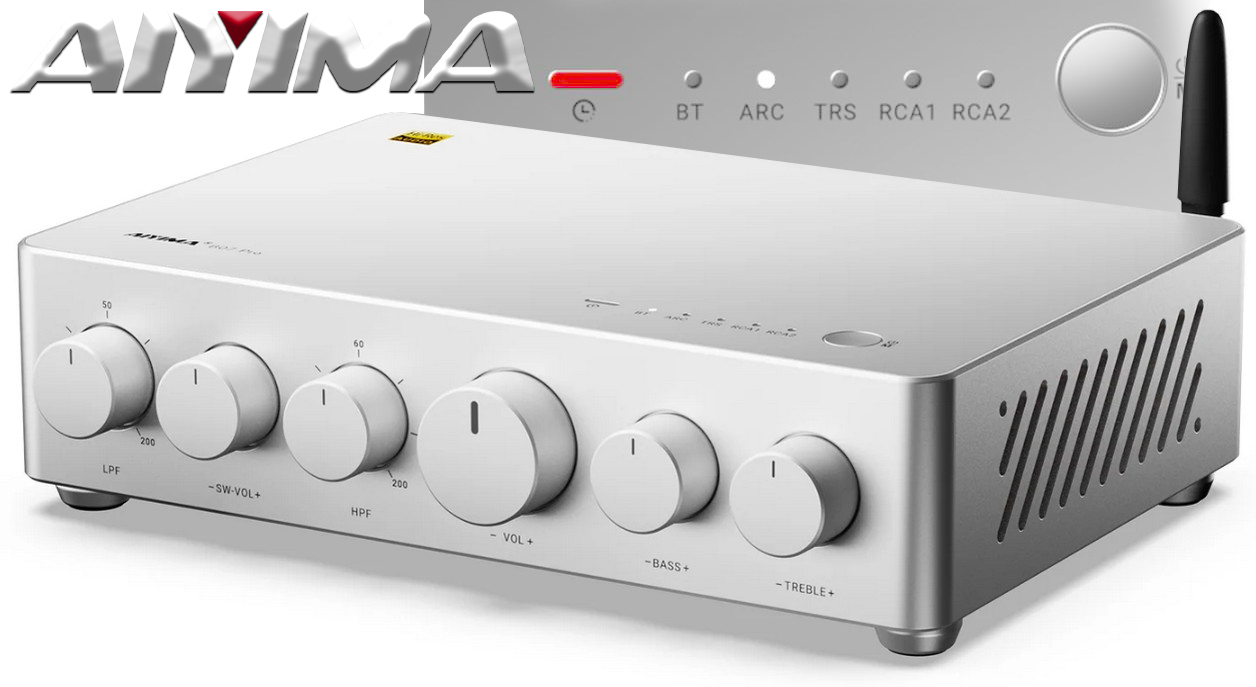
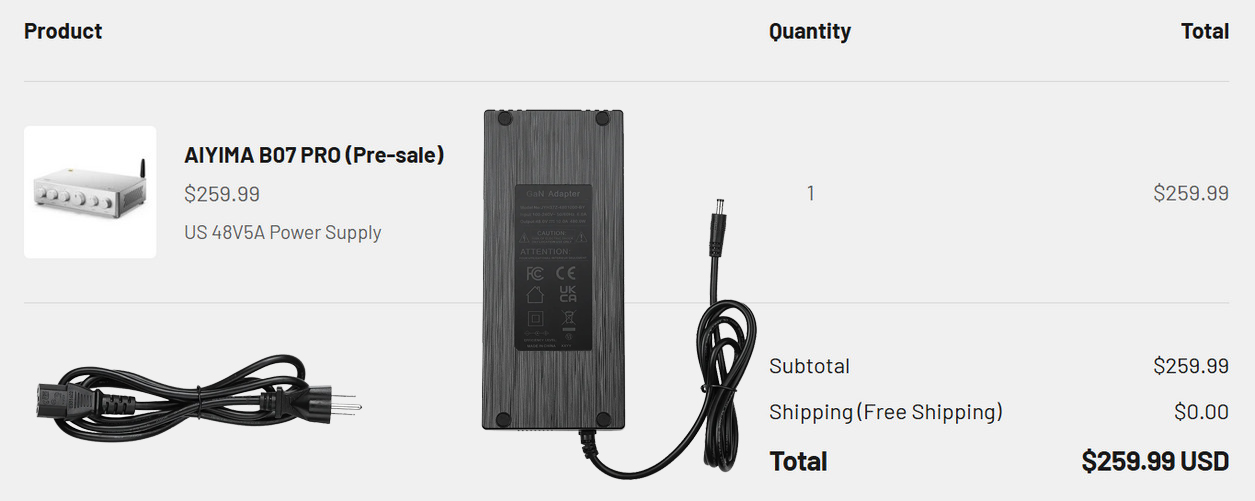
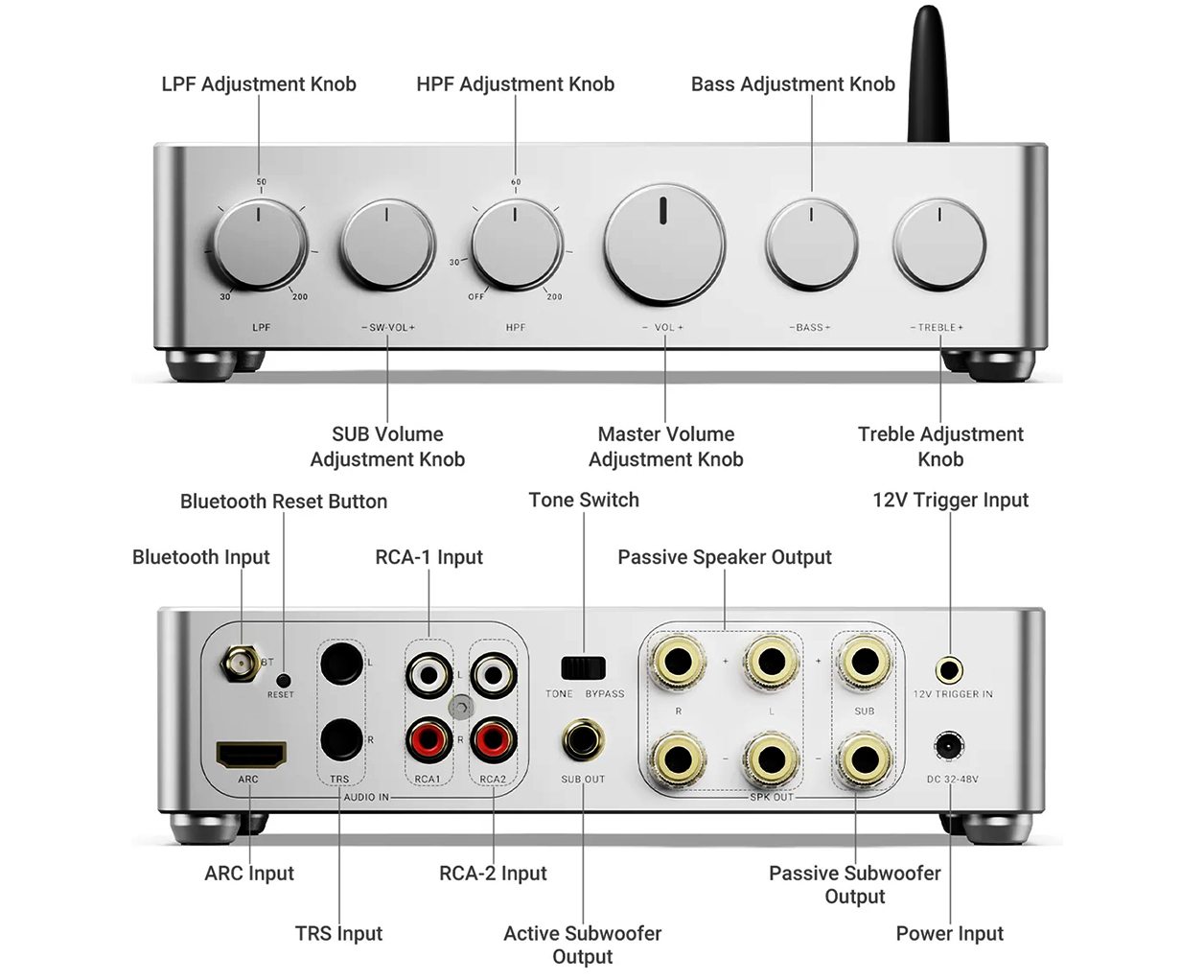
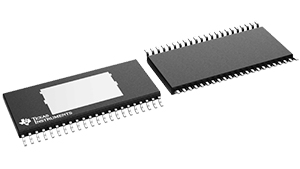 Aye, Aiyima. Owned by Shenzhen YiMa Technology Co. Ltd. Direct sales. Began trading ~2015 according to AI. Aiyima are popular for mini class D integrated amps built around TI TPA3255¹ chips worshipped likewise by Fosi, WiiM and a host of competitors in this space. It's a budgetarian's gold rush reminiscent of the early Tripath bonanza. In today's B07 Pro, two 55 chips with post-filter feedback cover regular stereo outputs and a passive sub. Aiyima call this split labour dual core. Claimed good for ~100/200 watts into 8/4Ω x 3, it's the unusual feature set of 30-200Hz continuously variable lo/hi-pass controls—there's even a high-pass bypass—separate sub attenuator plus 2.7V RCA sub out which really sets this $260 deck apart. All of these adjustments are physical. No touchscreen or menu. Add twin 2Vrms RCA inputs, single 4Vrms balanced TRS, 24/192 ARC and Qualcomm Bluetooth 5.2 with aptX HD. The latter only activates when we hit the top-mounted BT input. It's no constant radiation emitter like an iFi. Powering our multi-tasking compact is an external laptop-style 48V/5A 240W GaN-based switching brick. TI's specs for this chip list compatibility with up to 53.5V; and typically switching at 450kHz though a 10kΩ resistor on the freq_adj pin can set it to hotter-running 600kHz.
______________________
¹ "The TPA3255 is a high-performance class-D power amplifier for true premium sound quality with class-D efficiency. It features an advanced integrated feedback design and proprietary high-speed gate driver error correction (PurePath™ Ultra-HD). This allows ultra low distortion across the audio band and superior audio quality. The device is operated in AD-mode and can drive up to 2x315W into 4Ω at 10% THD and 2x150W unclipped into 8Ω. It features a 2Vrms analog input interface that works seamlessly with high-performance DACs like TI's PCM5242. In addition to excellent audio performance, TPA3255 achieves high power efficiency and very low power-stage idle losses below 2.5W. This is achieved through the use of 85mΩ Mosfets and an optimized gate driver scheme that achieves significantly lower idle losses than typical discrete implementations."
Volume control is by Japanese Nisshinbo Micro Device NJW1194 of Muses fame. That's a resistor ladder on a chip with 0.5dB steps. Its tone control functionality taps with defeatable treble/bass rotaries. The overall 194x132mm footprint is like a notepad's. 45mm height is four notepads stacked. Forget plastic. This case is proper sandblasted aluminium. Think lateral vents in the circumferential extrusion, top and bottom plates connected via four long footer-obscured bolts to show no fasteners. An automated 3.4W standby function activates after 20 minutes sans signal. Despite compact dims and price, THD claims just 0.003%, SNR >114dB. Now think places like Tokyo, Taiwan, Hong Kong, Singapore. Densely populated, with real estate at a premium, most their citizens live in small spaces. It makes headfi a default focus. Many speaker systems in crowded apartments will be more bonsai than beastly. Rather than format an entire room's layout toward a massive altar to hifi, it's more likely that listeners will have nearfield tabletop setups which retain shared-use room logic. That's precisely how I view today's compact deck: as the beating heart of a very smart nearfield stereo 2.1 system with small monitors and compact sub—and not in a home office where subs don't belong. Hence tabletop not desktop system.
Since I operate such a bonsai nearfield system on a tabletop in one of my smaller rooms, I felt ideally placed to review the B07 Pro in its native habitat; under conditions as intended rather than this.










The Aiyima could simplify my set by kicking to the kerb a €3'850 active xover; €349 active preamp; and €2K/pr 120W GaNFet monos. Never mind their interconnects, power cords and linear PSU on the pre. Just benching the main quad would save €6'200. More concisely, €259 delivered—free shipping!—would replace €6.2K. That's a 24-fold reduction; as many hours as there are in a day. Would this seriously pruned-back system sound two dozen times worse? How to measure that? No idea. I'm just making a point—one I was curious about. I'm neither audiophile snob nor prude. Yet having helmed 6moons for now 24 years which amounts to 8'760 days, I've heard my fair share. In the process listening skills honed, tastes distilled, standards snuck up. Would this Aiyima play greedy orchard thief and simply steal far too much to be happy? Or would I invite a fox into my carefully curated henhouse to upend the status quo?
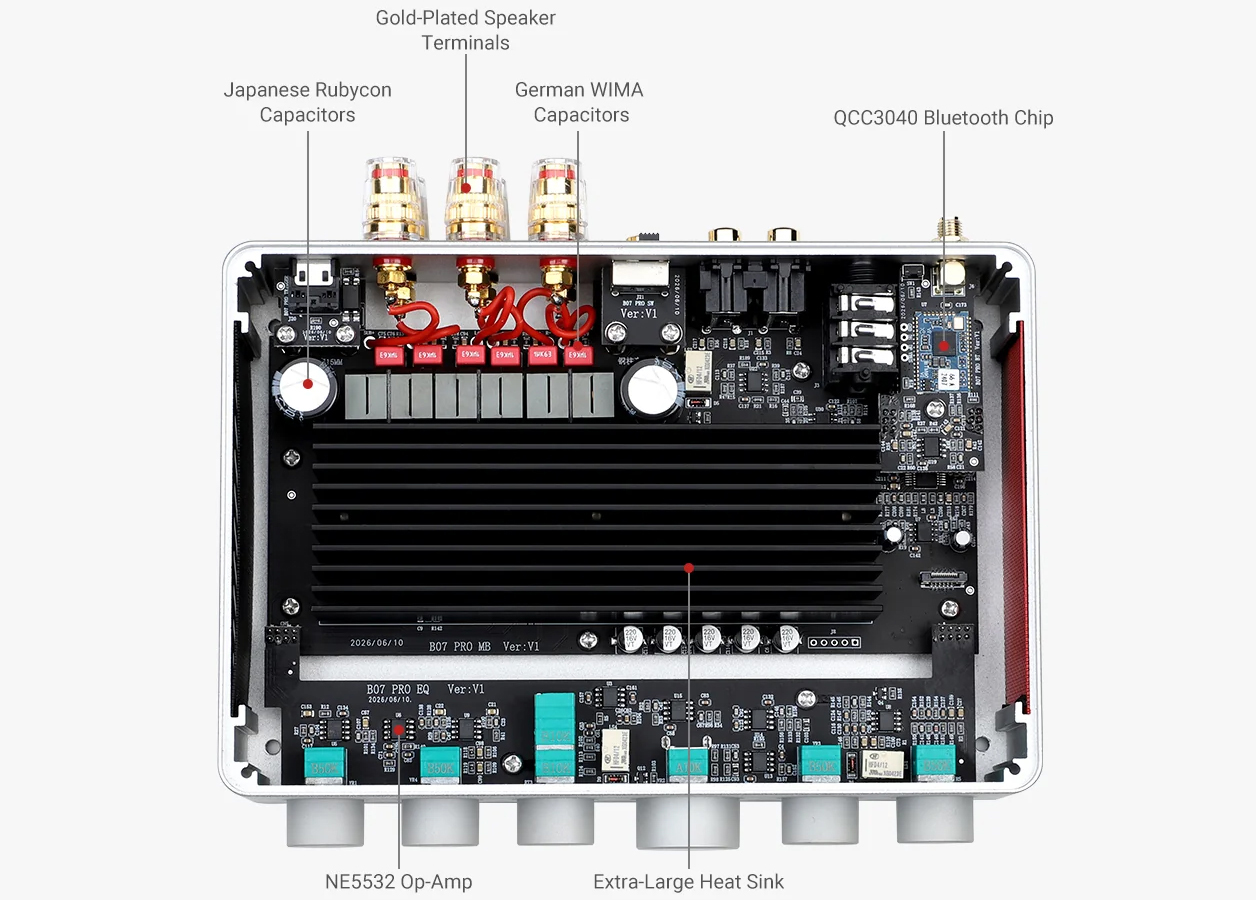
If a fox was inbound, I just might need a gun.
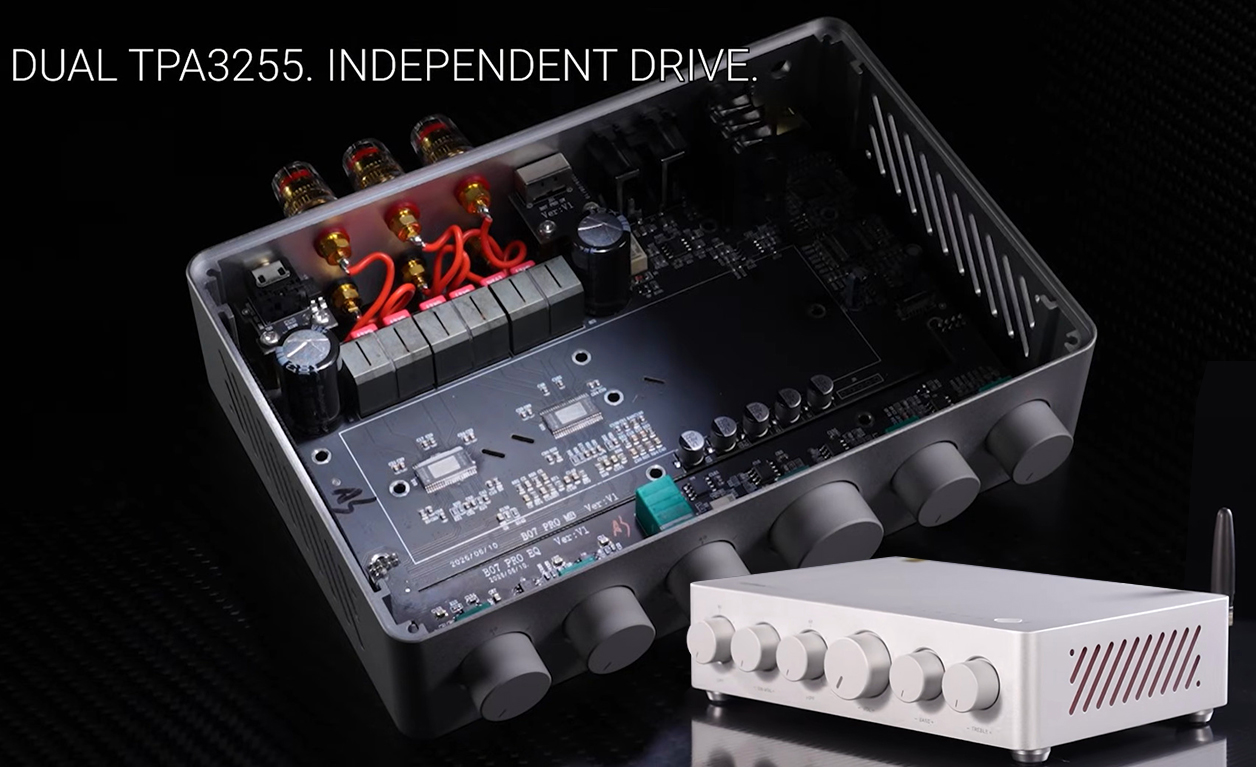 Here we see the dual TI TPA 3255 chips usually covered by the heatsink.