Ahimsa. It's Sanskrit for non-violence, a central concern of India's Jains. No gun then. Like any other job repetition, reviewers enjoy sameness breaks. It means occasional trysts beyond price-point familiars. Whilst spending more doesn't guarantee more, piling on enough typically does. Should a subsequent return to less become too much sobriety, reviewers now inebriated by the finer things trend upward. Eventually they can lose all perspective. Hello ivory-tower syndrome. They've lost touch with what small money can presently buy. The last time our reviewer played there was 30 years ago. He's not checked progress since. If suddenly he came down from his penthouse's fabulous views to a ground-floor flat with none, he'd be too alienated. He'd only hear what the small money can't do. He won't appreciate what it can; or take time to reset expectations then optimize the new normal.
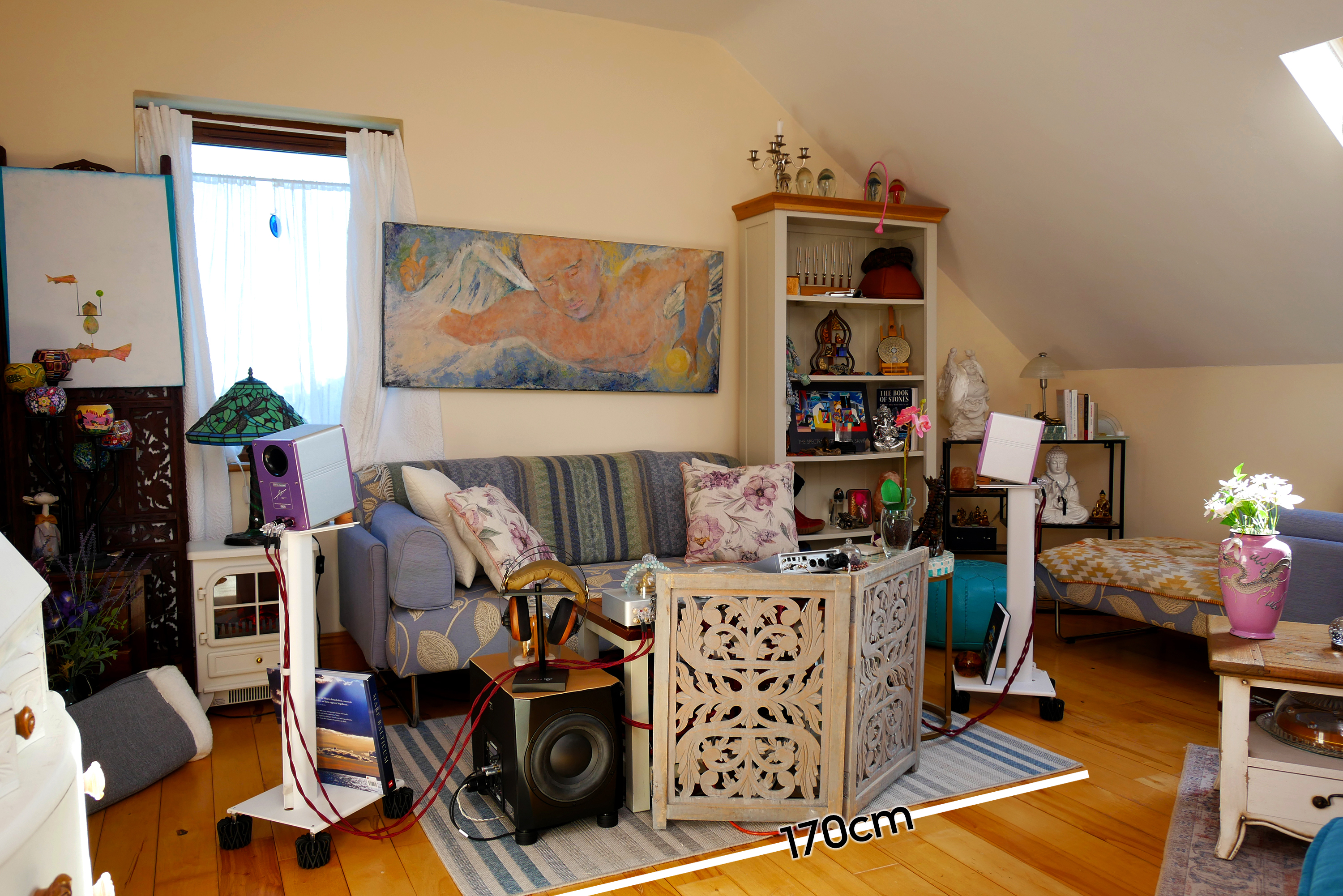
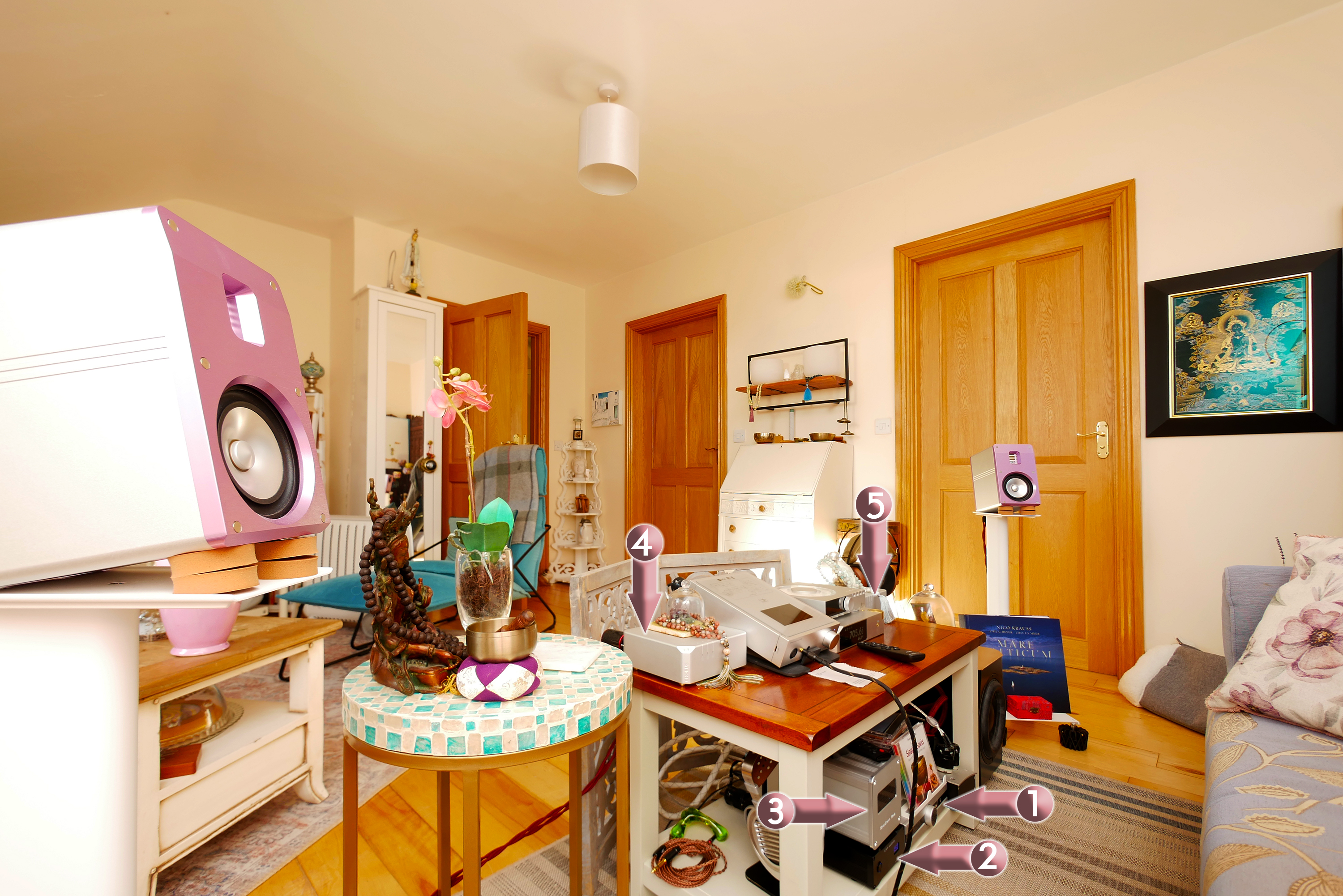
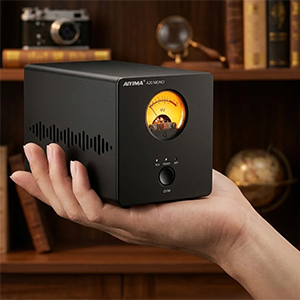 My attempt to combat the worst alienation are two smaller less loaded systems. It's all relative of course. I don't live in an 80m² inner-city flat with a family of five. I'm a widower in a 200m² house. Here's what goes for my bonsai rig. It's anchored by South Korea's SuperMon Mini isobaric 1.5-way monitors. Those actively cross over and out to a 2×9½" sealed force-cancelling Dynaudio sub. As shown below, heading this signal path is Shanling's EM5 fitted with a 1TB microSD local library. It outputs coax to a LAiV 1st-gen Harmony DAC. Alternate source is a small smsl CD transport via I²S into the same DAC. Now the action skips to the lower shelf and its #1 Audalytic DR70 preamp with remote volume and #2 LHY Audio 15VDC supply. That is followed by a #3 Lifesaver Audio Gradient Box II analog active crossover set to 120Hz/4th-order hi/lo-pass division. The high-passed signal then jumps back top deck to feed #4+5 LAiV Chorus monos, the low-pass signal the sub. This system would work fine without external DAC. Shanling embed their own. I simply didn't need the Harmony elsewhere. The incoming Aiyima would play it very cultured and cancel components #1-5. Showing it beats just telling it. We double down on my earlier point. Such adaptive functionality, for a small 2.1 system from a micro component, is simply superb¹. It even includes that 3rd set of speaker terminals I'd want if my sub were passive. The B07 Pro only lacks remote volume. Given my proximity, that was no loss. Was my ivory tower about to crumble, requiring hasty rebuild while nobody watched?
_____________________
¹ Slicing this pie different are Aiyima's tiny $170/ea. A20 monos of one TPA3255. They include a switchable 80Hz high pass. If our sub is active as most are, we'd set its plate-amp's low pass to 80Hz. Et voilà, another very easy way to generate clean 2.1 integration without external crossover. Whiny why can't 'high-end' components give us such useful functionality?
 Because the EM5's touchscreen mounts flat to its top, I use an angled desktop speaker stand to tilt it a bit and easier see the display.













Reality check. My nearfield shrinks SPL so power draw. Its high-passed speakers further unburden their amp/s. Then my active sub's own 500W amp would bypass the B07 Pro's third channel. These were ideal conditions for a micro amp whose rated top power causes 10% THD. At my short speaker distance, I'd consume single-digit watts, not triple digits—ideal for a power supply underrated² for when its three channels redline. That's key. It strategically shrinks demands to quickly relegate the spare potential of pricier gear to overkill; something that sits there fully paid up but never tapped. Escalate demands to greater distances, cubic volumes, SPL. Do standard stereo with big towers, large passive woofers, complex networks. Presto, the extra potential of Dan, Nelson & Co. amps with their load-invariant power supplies reveals itself. Here I'd drive unfiltered spiderless 4" Alpair widebanders kneecapped at 120Hz. It's all about right tool for the job. Bonsai amp. Bijou job. Potential for excellent work. End of small print. Sign here. We're agreed now. If relative to status quo my Aiyima findings were to carry genuine enthusiasm over returns on price vs performance—I wrote this intro before the amp dropped—common sense tempers it in accordance with my application. I wasn't driving passive 4-ways to high SPL in a large room. Whilst this type of hi/lo-passed 2.1 system is far from common, it makes loads of less common sense. It's why I'm doing it in three more rooms. With my Aiyima order placed on a Sunday, I had a tracking # with Yun Express and last-mile dispatch with our Irish post the next day. Better-than-German efficiency. No wonder Europe can't keep up with China. A week later my local postman rang the bell.
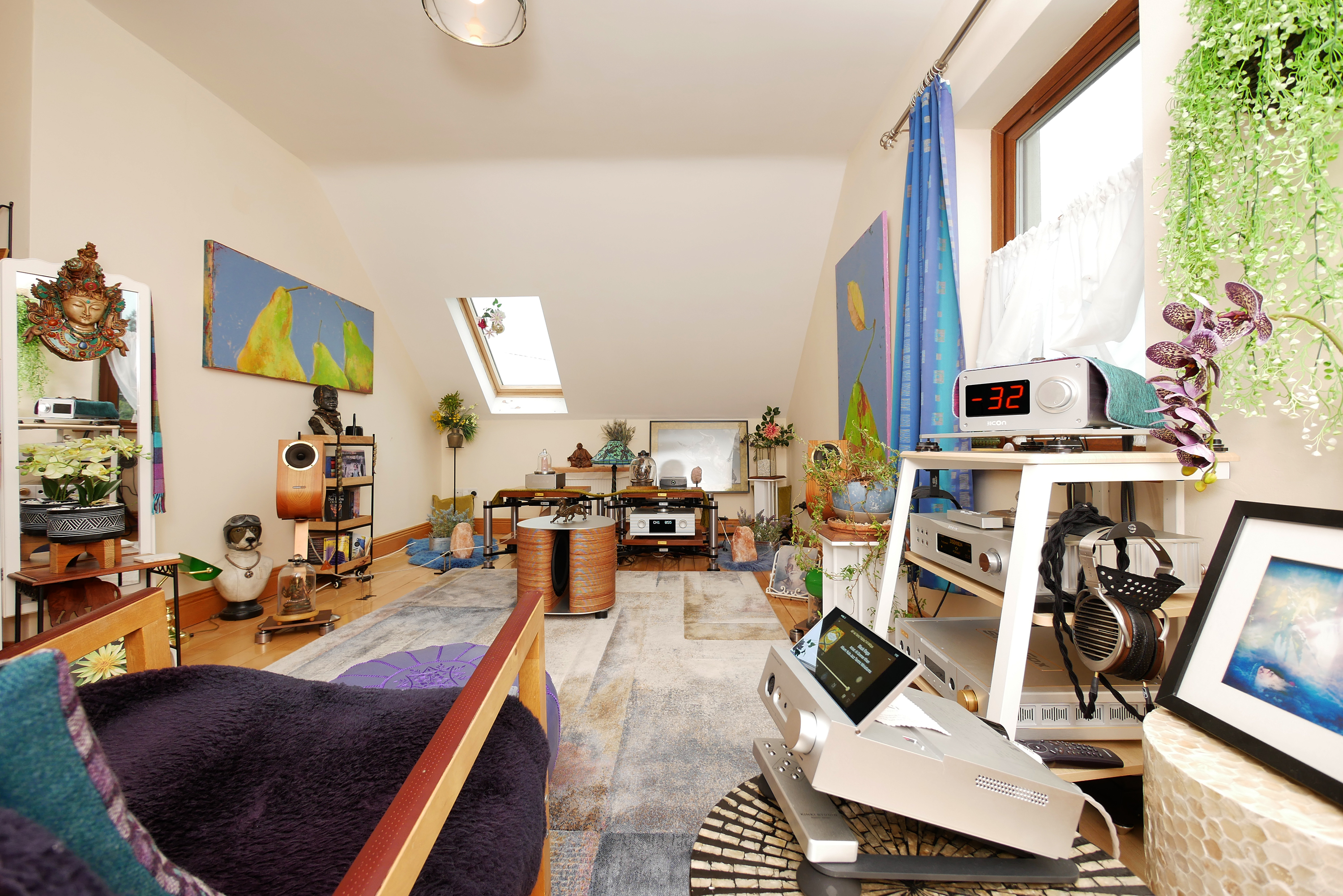 This passive 2×12" RiPol sub powers by external NC500x 2x700w/4Ω amplifier. The active crossover builds into the passive-magnetic preamp. Another amp drives the speakers. Again, these are rather more boxes than one B07 Pro doing the same tasks.
² The pending GaNFet mono from Ixycore rates 200/400W into 8/4Ω on a 1'300W GaN power supply. Each LAiV 120W/4Ω mono runs off its own 160W supply. Aiyima's stock supply is 240W. Even at 90% efficiency it doesn't tally with their power figures. So they mildly condition them with "max 280Wx3 power is measured at 4Ω peak load. Actual output depends on power supply and speaker impedance." AI gets more specific. "Because peak power limits to the physical constraints of an amplifier's power supply rails and instantaneous thermal thresholds, it cannot sustain. Depending on how a spec was written and tested, the implied timeline generally falls into three classes. 1/ instantaneous peak over micro to milliseconds refers to the absolute peak of an audio waveform's voltage. It represents the maximum power delivered for a fraction of a millisecond before the signal clips. 2/ burst testing of dynamic headroom across 10-50 milliseconds hits an amplifier with a transient burst like a 1kHz sinewave to mimic a sudden musical transient like a heavy snare or kick drum hit. The amplifier can only output this maximum rated wattage for a few milliseconds before it drops back down to protect itself. 3/ power supply limits over a few seconds might explicitly tie to a power supply's capacity to handle heavy-duty cycles in rare industrial or high-end PA equipment like a 5-second maximum pulse duration before dropping down to the continuous average power." In short, even mentioning 280Wx3 is equivalent to rating a car's top speed when the small print specifies an extreme downhill gradient of 15°. It's bullshit.