


Country of Origin

 Reviewer: Srajan Ebaen
Financial interests: click here
Main system: Sources: Retina 5K 27" iMac (i5, 256GB SSD, 40GB RAM, Sonoma 14), 4TB external SSD with Thunderbolt 3, Audirvana Studio, Qobuz Sublime, Singxer SU-6 USB bridge, LHY Audio SW-8 & SW-6 switch, Sonnet Pasithea, LAiV Audio Harmony; Active filter: spl Audio Crossover MkII; Power amplifiers: Vinshine/Kinki Dazzle & mono Ncore 500 Nord Acoustic amps on subwoofer; Headamp: Enleum AMP-23R; Phones: Raal 1995 Immanis; Loudspeakers: Qualio IQ [on loan] Cables: Exact Express Flame, Furutech; Power delivery: 2 x Kinki/Vinshine Tai Hang on amps and source stack, Furutech DPS-4.1 between wall and conditioners; Equipment rack: Artesanía Audio Exoteryc double-wide 3-tier with optional glass shelves, Exoteryc amp stands; Sundry accessories: Acoustic System resonators, AudioQuest FogLifters; Room: 6 x 8m with open door behind listening seat; Room treatment: 2 x PSI Audio AVAA C214 active bass traps
2nd system: Source: FiiO R7 into Soundaware D300Ref SD transport to Cen.Grand DSDAC 1.0 Deluxe with POW; Preamp/filter: Lifesaver Audio Gradient Box 2; Amplifier: Kinki Studio EX-B7 monos; Loudspeakers: ModalAkustik MusikBoxx; Subwoofer: Zu Method; Cable loom: Exact Express Earth; Power delivery: Vibex Granada/Alhambra, Akiko Audio Corelli Corundum & Castello Solo; Equipment rack: Hifistay Mythology Transform X-Frame [on extended loan]; Sundry accessories: Furutech cable lifts, Furutech NFC Clear Lines; Room: ~3.5 x 8m
2nd headfi system: DAC: Cen.Grand DSDAC 1.0 Deluxe with POW; Headamp: Cen.Grand Silver Fox; Headphones: Raal 1995 Magna, HifiMan Susvara
Desktop system: Source: HP Z2 workstation Win11/64; USB bridge: LHY UIP; Ethernet bridge: LHY EFI; Ethernet reclocker: Stack SmoothLAN; DACs: Audalytic DR701 & Gustard R26II; Headphone/preamp: FangSound Dionysus; Speaker amps: Topping B200 monos; Loudspeakers: Virtual Hifi Viper; Headphones: Final D-8000, aune SR7000, FiiO FT7
Upstairs headfi system: FiiO R7; Headphones: Meze 109 Pro, Fiio FT3
2nd upstairs speaker system: Source: Shanling EM7; Preamplifier: Hattor ARP; Amplifier: Kinki EX-M7; Loudspeakers: sound|kaos Vox3 with Dynaudio S18 subwoofer
2-channel video system: Source: Oppo BDP-105; All-in-One: Gold Note IS-1000 Deluxe; Loudspeakers: Zu Mission; Subwoofer: Zu Mission; Power delivery: Furutech eTP-8, Room: ~6x4m
 |
 |
 |
 |
 |
 |
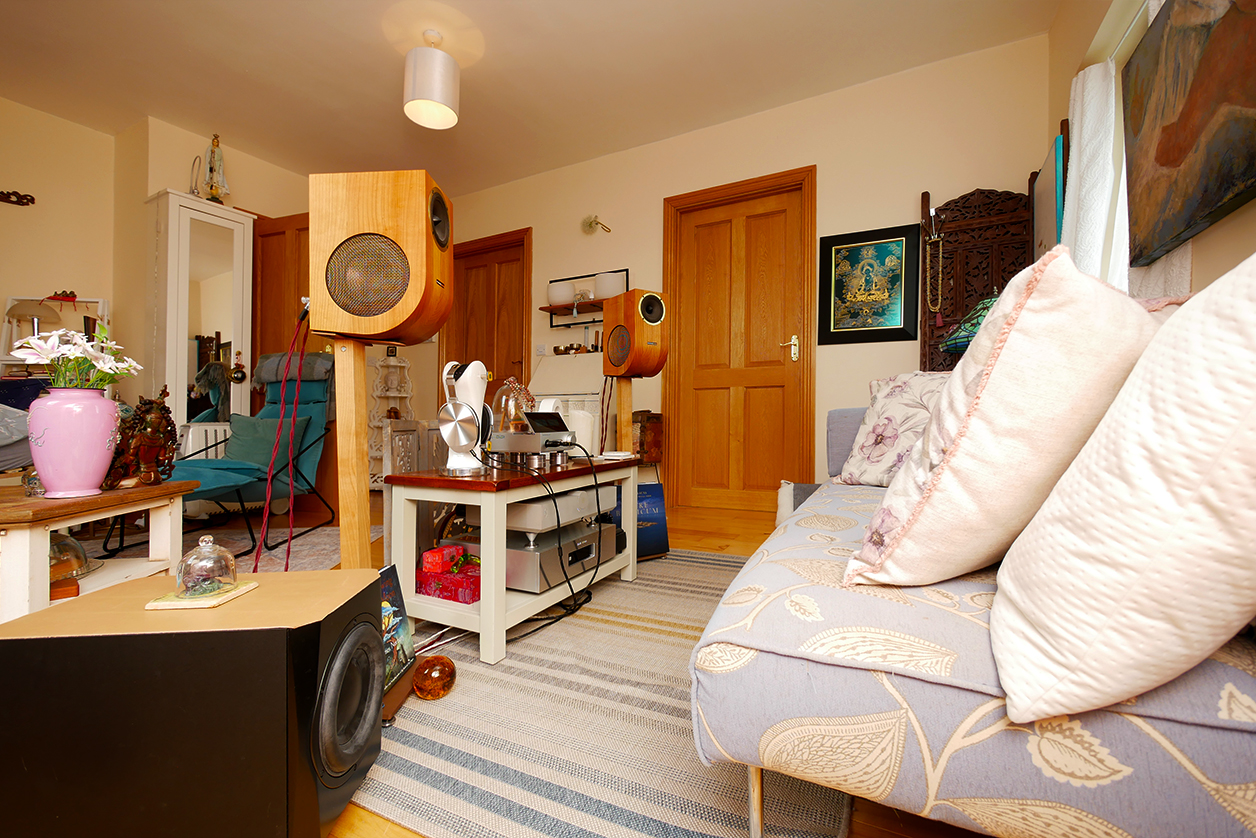
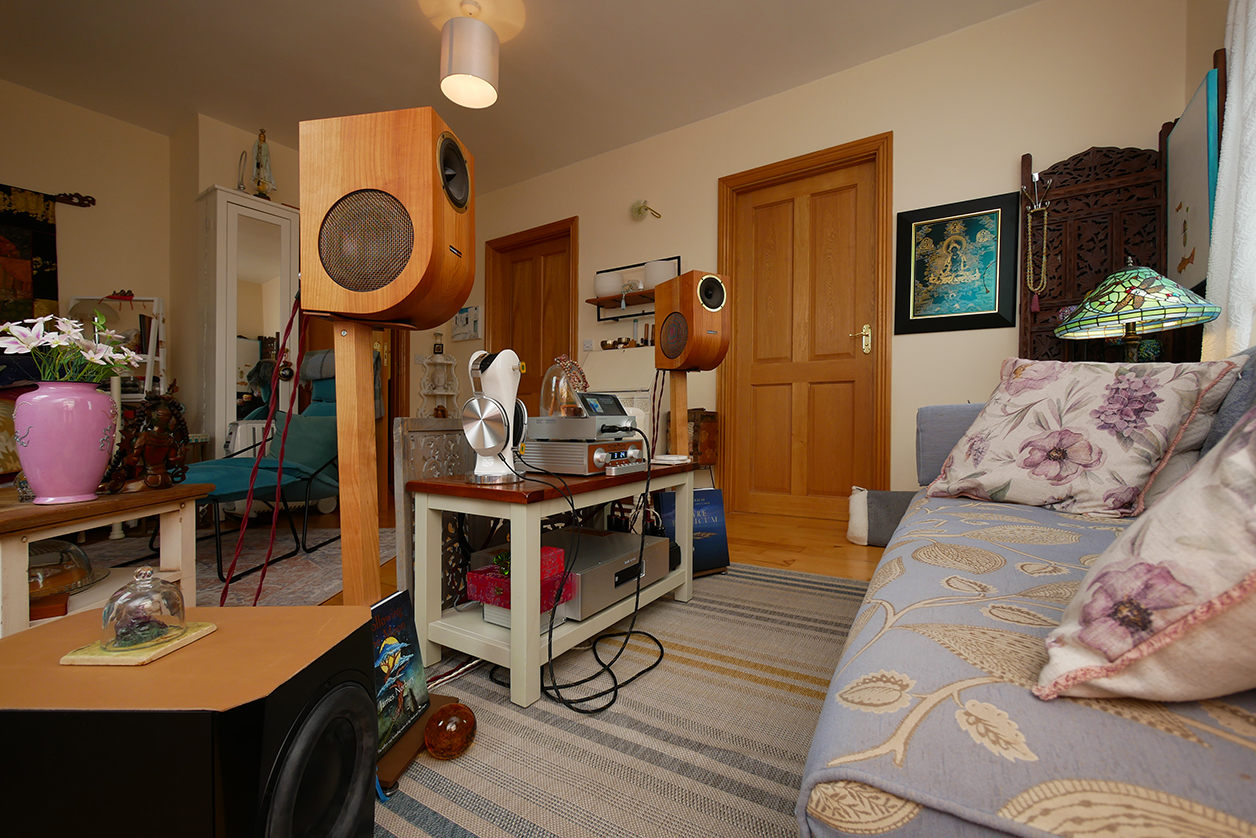
Stuff. Having it isn't all that cracked up. You'll discover so when a loved one dies to leave behind theirs. It meant something to them. To you it could be an albatross; or three. It's a solid reminder. Don't identify too much with this stuff. It's very temporary and ultimately far less meaningful than it could seem now. But, while I'm still into my stuff before, being mystified by all the hifi paraphernalia, someone else must sort through it, there's ongoing opportunity to relearn past lessons; or mint new ones. So there I am minding business as usual. Suddenly a thought hits like a heat-tracking torpedo. My new Shanling EM7's USB output connects to a COS D1 as shown above. That serves double duty as DAC and analog preamp. It fronts a Kinki EX-M7 amplifier and Dynaudio S18 subwoofer. The speakers are sound|kaos Vox3a. Okay. So where's the thought torpedo? What if instead I ran the EM7 as a DAC not just digital transport? What if its fixed pre-outs ran into Hattor's ARP-S, all else unchanged? Remote control would switch from COS to Hattor. The salient difference? Silver-wired autoformers for true balanced magnetic attenuation. This torpedo hit had my mental boat take on water. 'What if' demanded an answer before I could patch the hole. Now, many reviews of active preamps segue into their subject with a declaration. Whilst technically redundant for voltage gain, this component category, they say, still beats source-direct connections on body, solidity and dynamics. Denizens of Direct.Town look at their variable source with R2R or digital volume and wonder. Are they missing half the fun? I've been there and done that including a Nagra tube preamp, even a direct-coupled 300B Vinnie Rossi I still own. But today I favour the direct route if its source has proper current drive; and analogue volume. Once that's in play and the overall system voiced to harness desired dynamics and density by other means, I hear the insertion of an active preamp as a loss of speed, resolution and veracity. Energy steps on the brakes. There's gelatine in the stew. And yes, I also hear the additive gains. I just don't want them at this cost when I already account for those qualities elsewhere. To be sure, that's just my preference. Today isn't about converting yours. Today just makes some noise again over a 3rd alternative—one smack between no preamp and a classic preamp. Shall we call it the neoclassic preamp?
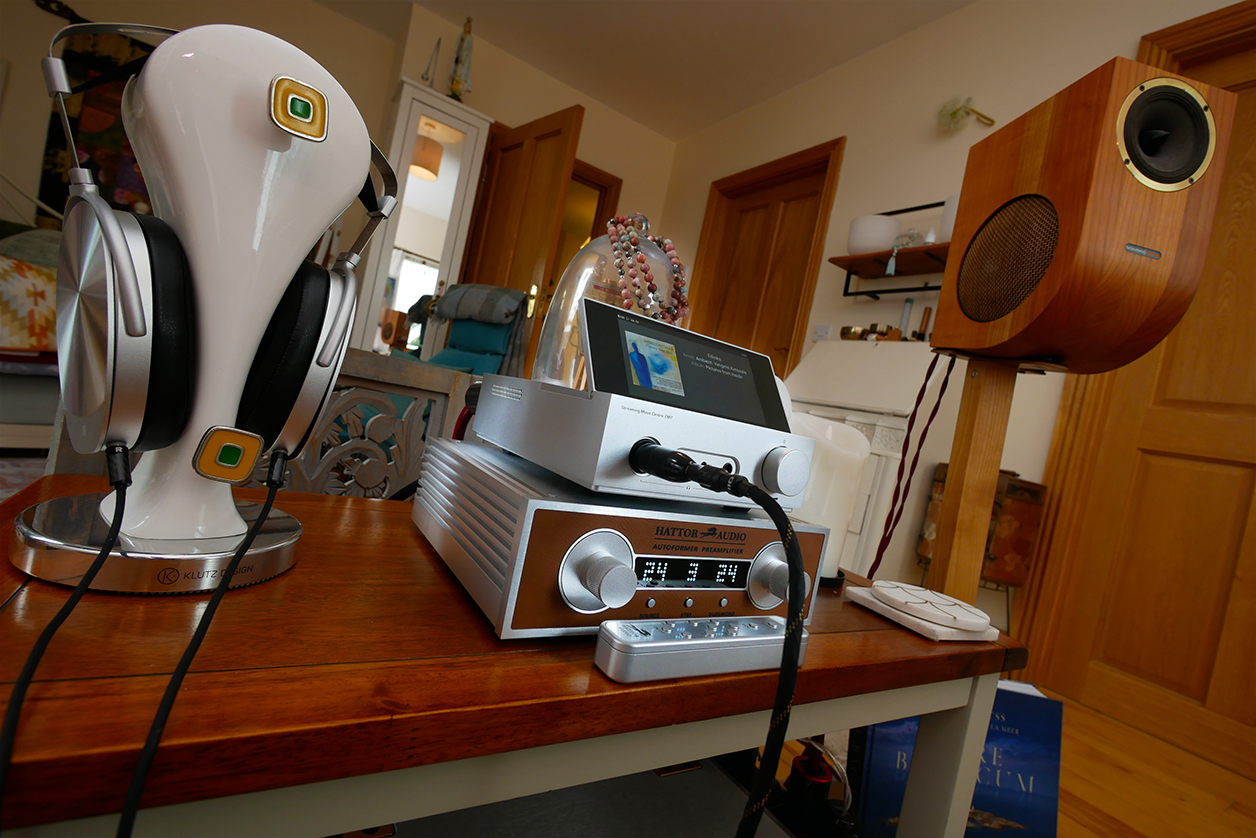
Why that term could suit is because impedance step-down transformers are standard equipment on 98.7% of all tube amps made whilst step-up transformers for passive voltage gain are a classic interface for low-output cartridges. Using wire coils around magnetic cores to increase voltage or reduce impedance are early-to-mid last-century tricks so perfectly proven. If we must reduce or step down voltage because we want a volume-control function, we can invert a phono step-up transformer fitted with multiple tabs. Each represents a fixed step-down ratio of x input voltage turns to y output voltage. Hello passive-magnetic attenuation. It can execute with transformers or autoformers. Those can ally to clunky switches and stepper motors; or micro-processor-controlled tap combinations for more and smaller steps noiselessly switched by remote. My introduction to this game came by way of a Bent Audio TAP-X, continued with Music First Audio, Audio Music, Bespoke, Lifesaver Audio icOn, Townshend, Akustika Eterna, Hattor and others whose names I forgot. These are all passive preamps that work below our source's output voltage. Basically, if our 4Vrms source meets an amp with 0.8V input sensitivity for full output, we need no extra gain. We just need reliable means to diminish our source voltage in fine gradations. This neoclassic preamp is not a resistive passive like my Wyred4Sound STP-SE; nor any form of digital attenuation including lossless Leedh code à la Lumin. It's magnetic attenuation converting voltage to current in an inverse log function. The more voltage we cut, the more current we send across the interconnect which links our neoclassic preamp to our amplifier. No signal burns off as heat. That has very real benefits.










Tracking my torpedo hit back to whence it came, I conclude the following. About a decade ago my COS D1 traded for ~€9K. It's a dual BurrBrown-based DAC with analog inputs and analog volume. The Shanling EM7 I just bought at full retail cost me less than 1/7th yet adds a 7wpc/32Ω headphone amp and comprehensive streamer with high-resolution touchscreen. Given the price gap compensated by a micro boutique's maiden project from hi-rent Taiwan vs an established brand with Chinese labour advantage, I can't believe that Shanling's converter and analog output stage beat the COS. Why then does the Shanling now sound even more resolved, spacious and energetically charged than the D1? It's the insertion of Hattor Audio's four silver-wired autoformers handling remote-switched volume in silent 1dB increments. It confirmed a lesson I'd learnt and forgotten multiple times already: passive attenuation executed with top-quality autoformers works as accelerator and energizer so quickening and clarifying agent. It's not the pale listless winter-is-coming notion which passive preamps in general parade around particularly for those who haven't investigated the genre at more depth. It's the polar opposite. I might call it stealthily active because it goes faster and livelier, not thicker and puffier—and increases small-signal recovery despite extra stuff over source-direct.
If your hifi vocabulary wasn't yet familiar with passive-magnetic preamps, today might be a brief reminder? There exists a retro class of device right between a passive wiper pot with sockets (or classy resistor ladder) and an active tube or transistor linestage. Like valves and solid state; electrostats, planarmagnetics and dynamics; multi-ways and widebanders; direct radiators, dipoles and omnis; passive or active bass; dome tweeters, AMT or ribbons; class A and class D; 1st vs 4th-order filters; negative feedback or none… this component category is a rite of passage which any audiophile with comprehensive aspirations should undergo. After all, we can't know what we like until we've tried it. So next time you digest the review of an active preamp heaping praise on its virtues over source-direct, hit 'pause' and ask yourself whether this reviewer has ever tried a proper autoformer volume control for greater context. If not, that picture—on hifi stuff others may not know what to do with—is still incomplete. Who knows. You might just find passive passion if you try. If not, your hifi literacy will still be more complete than before. Either outcome would be a more well-rounded win than equating generic public perception with always-so reality – of passive preamps sucking as bad as going source direct; and active preamps being the most important part of any system. We can certainly build one where that last sentiment fits perfectly. I've simply built most of mine to call it untrue; and one that slips into an in-between crack most audiophiles don't know exists. But now you do…

Hattor Audio's website
