
Country of Origin

Reviewer: Srajan Ebaen
Financial interests: click here
 Main system: Sources: Retina 5K 27" iMac (i5, 256GB SSD, 40GB RAM, Sonoma 14), 4TB external SSD with Thunderbolt 3, Audirvana Studio, Qobuz Sublime, Singxer SU-6 USB bridge, LHY Audio SW-8 & SW-6 switch, Sonnet Pasithea, LAiV Audio Harmony; Active filter: spl Audio Crossover MkII; Power amplifiers: Vinshine/Kinki Dazzle & mono Ncore 500 Nord Acoustic amps on subwoofer; Headamp: Enleum AMP-23R; Phones: Raal 1995 Immanis; Loudspeakers: Qualio IQ [on loan] Cables: Exact Express Flame, Furutech; Power delivery: 2 x Kinki/Vinshine Tai Hang on amps and source stack, Furutech DPS-4.1 between wall and conditioners; Equipment rack: Artesanía Audio Exoteryc double-wide 3-tier with optional glass shelves, Exoteryc amp stands; Sundry accessories: Acoustic System resonators, AudioQuest FogLifters; Room: 6 x 8m with open door behind listening seat; Room treatment: 2 x PSI Audio AVAA C214 active bass traps
2nd system: Source: FiiO R7 into Soundaware D300Ref SD transport to Cen.Grand DSDAC 1.0 Deluxe with POW; Preamp/filter: Lifesaver Audio Gradient Box 2; Amplifier: Kinki Studio EX-B7 monos; Loudspeakers: ModalAkustik MusikBoxx; Subwoofer: Zu Method; Cable loom: Exact Express Earth; Power delivery: Vibex Granada/Alhambra, Akiko Audio Corelli Corundum & Castello Solo; Equipment rack: Hifistay Mythology Transform X-Frame [on extended loan]; Sundry accessories: Furutech cable lifts, Furutech NFC Clear Lines; Room: ~3.5 x 8m
2nd headfi system: DAC: Cen.Grand DSDAC 1.0 Deluxe with POW; Headamp: Cen.Grand Silver Fox; Headphones: Raal 1995 Magna, HifiMan Susvara
Desktop system: Source: HP Z2 workstation Win11/64; USB bridge: LHY UIP; Ethernet bridge: LHY EFI; Ethernet reclocker: Stack SmoothLAN; DACs: Audalytic DR701 & Gustard R26II; Headphone/preamp: FangSound Dionysus; Speaker amps: Topping B200 monos; Loudspeakers: Virtual Hifi Viper; Headphones: Final D-8000, aune SR7000, FiiO FT7
Upstairs headfi system: FiiO R7; Headphones: Meze 109 Pro, Fiio FT3
2nd upstairs speaker system: Source: FiiO R7; DAC/pre: COS D1; Amplifier: Kinki EX-M7; Loudspeakers: sound|kaos Vox3 with Dynaudio S18 subwoofer
2-channel video system: Source: Oppo BDP-105; All-in-One: Gold Note IS-1000 Deluxe; Loudspeakers: Zu Mission; Subwoofer: Zu Mission; Power delivery: Furutech eTP-8, Room: ~6x4m
Review component retail: €1'690 incl. VAT with audiophonics.fr
 |
 |
 |
 |
 |
 |
 Why does it say 1Bits, plural?
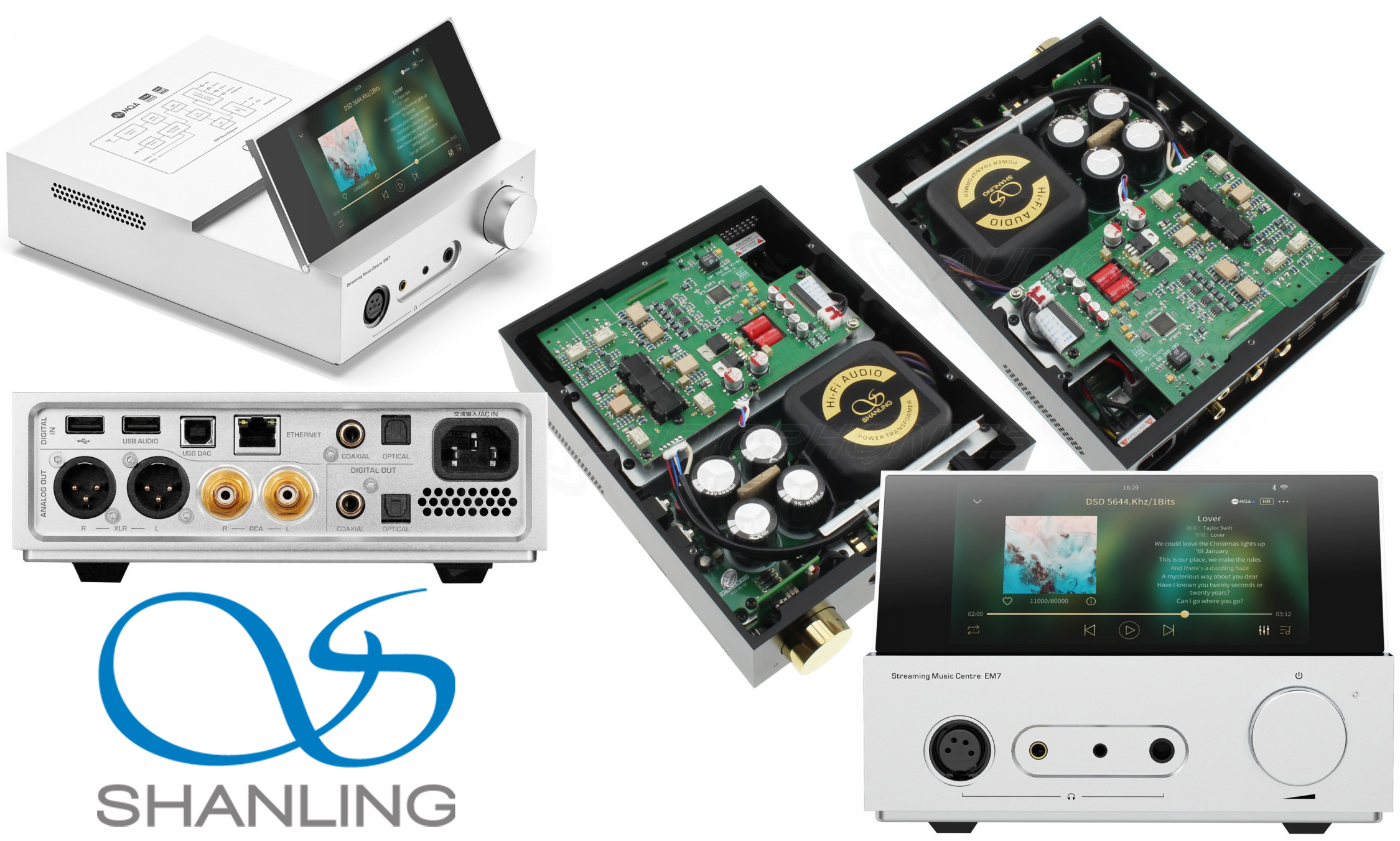
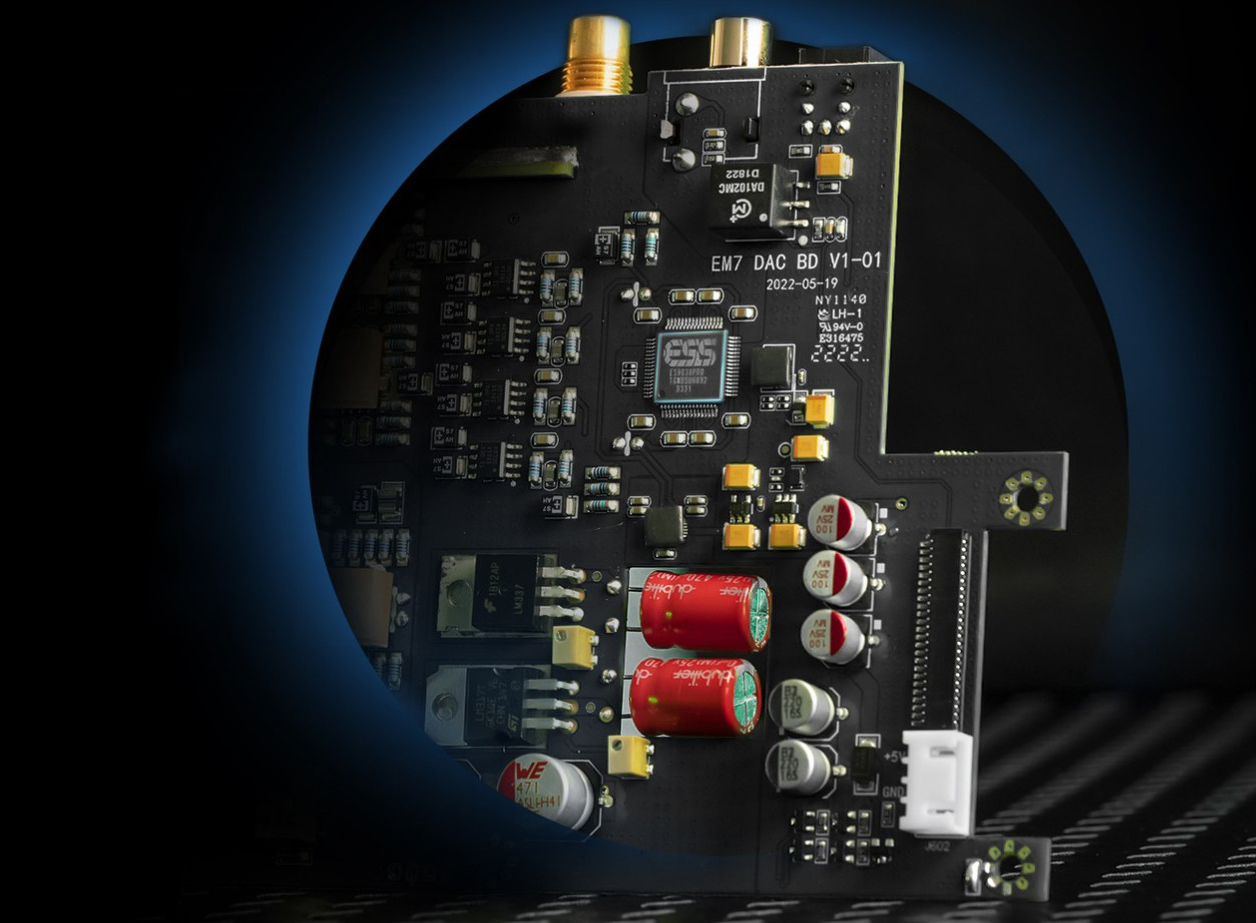
Oldie but goodie? I first reported on Shanling's EM7 in an August 2022 feature. Four years later it remains au courant. When I spotted a discounted 'last' unit, I bought it. Once I did, the site refreshed, showed renewed availability of 15-25 days upon order; and a considerably higher price. Why might you want to be current, too? If you want to acquire a compact all-in-one music centre for D/A conversion, preamplitude and headphone drive whilst your inconvenient WiFi allergy means no upstairs Internet. There you want an up to 2TB SD-card based transport with tiltable touchscreen and 7wpc/32Ω of balanced power for your über cans. The EM7 sez, bon appetite. Networking surfers could balk at the older closed Android OS which will eventually lose security updates yet my offline usage couldn't care less. Computing freaks will frown at the Qualcomm octa-core Snapdragon 665 processor when the most current 2026 versions are the 8 Elite Gen 5 for mobile or X2 Elite for laptops. Again, I wouldn't perform AI-powered multi-tasking, just tunes. Via USB the EM7 can connect to an external DAC, RCA/XLR 2.2/4.4V analog outputs feed a power amp. The internal linear power supply with Norwegian Noratel toroid runs the audio half. A switcher handles the Android half. Size is 19cm so half width. D/A conversion is by ES9038Pro with matching ES9311 voltage reg and TI OPA1611 current/voltage stage. Clock oscillators are by Japan's KDS combined with a 3rd-gen FPGA. The USB transceiver is an XMOS XU208 for 32/768+DSD512 compliance. A CT7302CL sample-rate converter allows for on-the-fly PCM⇔DSD resampling. Capacitance is via a quad of 6'800µF/35V Panasonics. Headphone drive combines Texas Instruments OPA2211 operational amplifiers with eight each STMicroelectronics BD139+140 discrete bipolar transistors. The EM7 ticked all my boxes to replace a competing unit of similar functionality which had started to misbehave. Age. It does cock things up. Hifi isn't exempt. At least there we can shop replacements. "I'd like a set of new lungs. And if you still have, I take a new eye as well, preferably blue." Bionic hifi. Stereo man. Which is it?
Rather than a formal oldie review, this is just a brief proof of life should the EM7's functionality suit your bill but you need assurance that all works as advertised and remains current so isn't passé, eclipsed and irrelevant. Once mine landed, I performed an immediate firmware update to be as au courant as anything hifi can be after four years. Some consider it a tech eternity. Meanwhile old Krell and McIntosh amps still fetch good 2nd-hand coin. So do cj and Marantz preamps. Hifi geezers or legacy legends? Don't expect me to answer that. What I can say is that conceptually, FiiO's R9 is probably closest to today's Shanling. Meanwhile full MQA support backdates the EM7 to when that was still something makers of DACs had to have. From high fashion to fossil in just a few years? Quite. I just didn't expect to feel that way about the machine itself. In fact, Shanling's M3+ portable player had me well familiar with their Android-based nav system allied to a micro SD card library. Functionally I knew exactly what to expect. What I didn't know was the sound quality and its innate style, only that it was discrete not purely IC-based like my FiiO R7's THX modules.









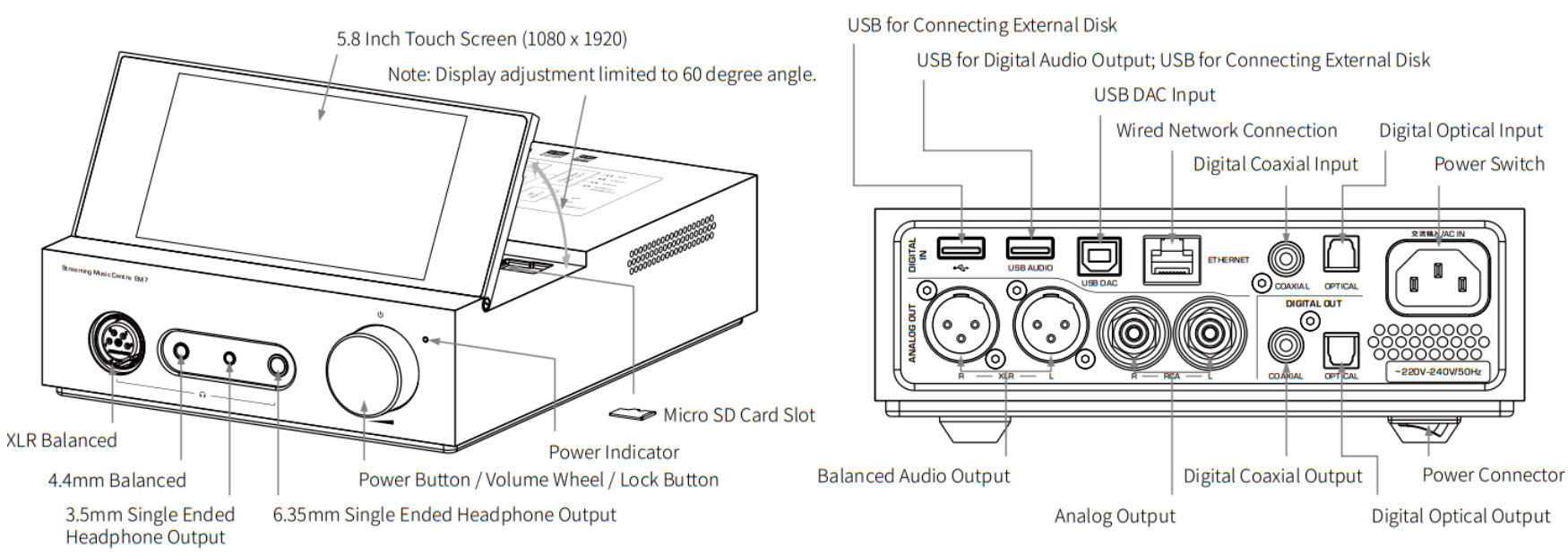
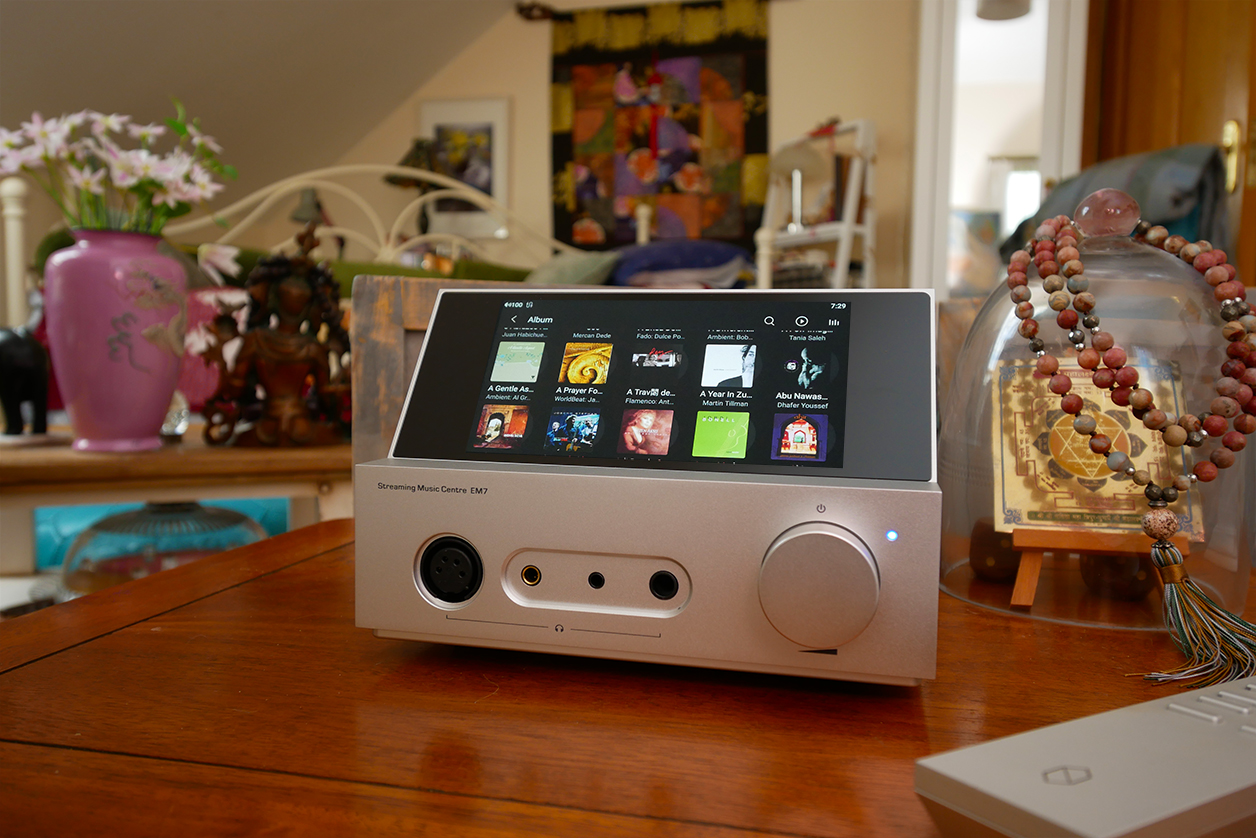
The manual firmware update—copy .zip file to microSD card from Shanling's website, load onto EM7, enter 'update'—took just a few minutes to unpack then asked me to reboot to complete the update. Next I inserted my 1TB condensed upstairs music-library SD card and scanned it in. This went fast as shown by the display's track counter. Below we see how 10 album covers show at a time. Whilst I love belly-mounted power buttons right behind the front panel to declutter it, Shanling strangely put theirs against the rear panel where some installs will make it hard to reach. Just as peculiar is the absence of a hard control to select between headfi, preamp and line-out modes. For that one must swipe down from the top of the screen then select the output mode icon and from it pick between headfi, fixed line-out and variable pre-out. FiiO's €699 R7 shows how to do that with a single chassis knob. If we select headphone mode then turn on a USB-connected DAC, it takes precedent and automatically kills the headfi ports. Once we power the DAC down, the headphone outputs revive again, no manual switching involved. All else is intuitive and easy, including the short press on the rotary to manually turn off the display. I wasn't impressed by a number of Jinglish incidents where any native English speaker could have assisted Shanling with language errors. When one sells globally, catching typos and outright wrong words is important. Today's certainly isn't the only Chinese brand guilty of not bothering.
A landscape-mode display obviously means that flying the currently playing album cover leaves plenty of blank space to the right which Shanling's coding of Android 10 populates with the album's basic meta data. It serves the purpose but doesn't look completely current. We have two views, either album art with basic meta data; or art plus extended meta data plus a status bar with back/next and pause commands plus icons for repeat/shuffle modes and more. Data too long for the display run ticker-tape style. We can also fly software VU meters in white, blue or yellow which replace the album art but leave the meta data in play. And that's all there is to the particular functionality my installation uses. For Ethernet/WiFi streaming, consult other reviews. As is my custom, I defeated both WiFi and Bluetooth in the menu to avoid their UHF radiation. If a component can't defeat those, I won't review it and certainly never buy it. The SRC can re-render all our files up to PCM768 or DSD512 but it is unclear whether that happens with even multiples for 44.1kHz-based data or always converts to the 48kHz sample-rate multiple. Sound next.

12
