Country of Origin

 This review first appeared in April 2026 on fairaudio.de. By request of the manufacturer and permission of the author, it is hereby syndicated from the German original to reach a broader English audience. Ed.
Reviewer: Ralph Werner
Analog sources: SME Model 15 with SME 309 arm and MC Denon DL-103R, Dynavector DV-20X2 H, Transrotor Figaro or MM Shelter 201; other Flux-HiFi needle cleaner, Stack Audio Serene Mat & Stabiliser, VPI HW-16.5 record cleaner
Digital sources: Rockna Wavelight+, Antipodes K22 G4, MinimServer/MPD with JPLAY-App, Squeeze-Server/Player with Material iPENG, Roon plus Network Acoustics Eno2 Ethernet-Filter, Pink Faun LAN Isolator, Silent Angel Bonn N8 switch
Preamps: Electrocompaniet EC 4.8 MKII, BMC Audio MCCI Signature ULN phono
Power amps: Electrocompaniet AW 800 M
Loudspeakers: Acapella High BassoNobile MK2
Headphones: Audeze LCD-2, Beyerdynamic DT-990, Sennheiser HD 800S, Sony MDR-1000X, Teufel Supreme In
All-In-One: Ruark Audio R4
Cables: Dyrholm Audio Phoenix, fis Audio Studioline & Livetime, Boaacoustic Blueberry Signal.xlr, Vovox; Audioquest Cinnamon Toslink, Vodka 48 HDMI/I²S, Boaacoustic Silver Digital Xeno (USB), fis Audio Magic (LAN), Wireworld Series 7 Starlight Gold (caxial); fis Audio Blackmagic, Studioline
Rack: Creaktiv Trend 3, Stack Audio Auva EQ
Accessories: Audes ST-3000 AC isolation transformer
Listening room: 40m² with 2.45m ceiling
Review component retail prices: €19'990
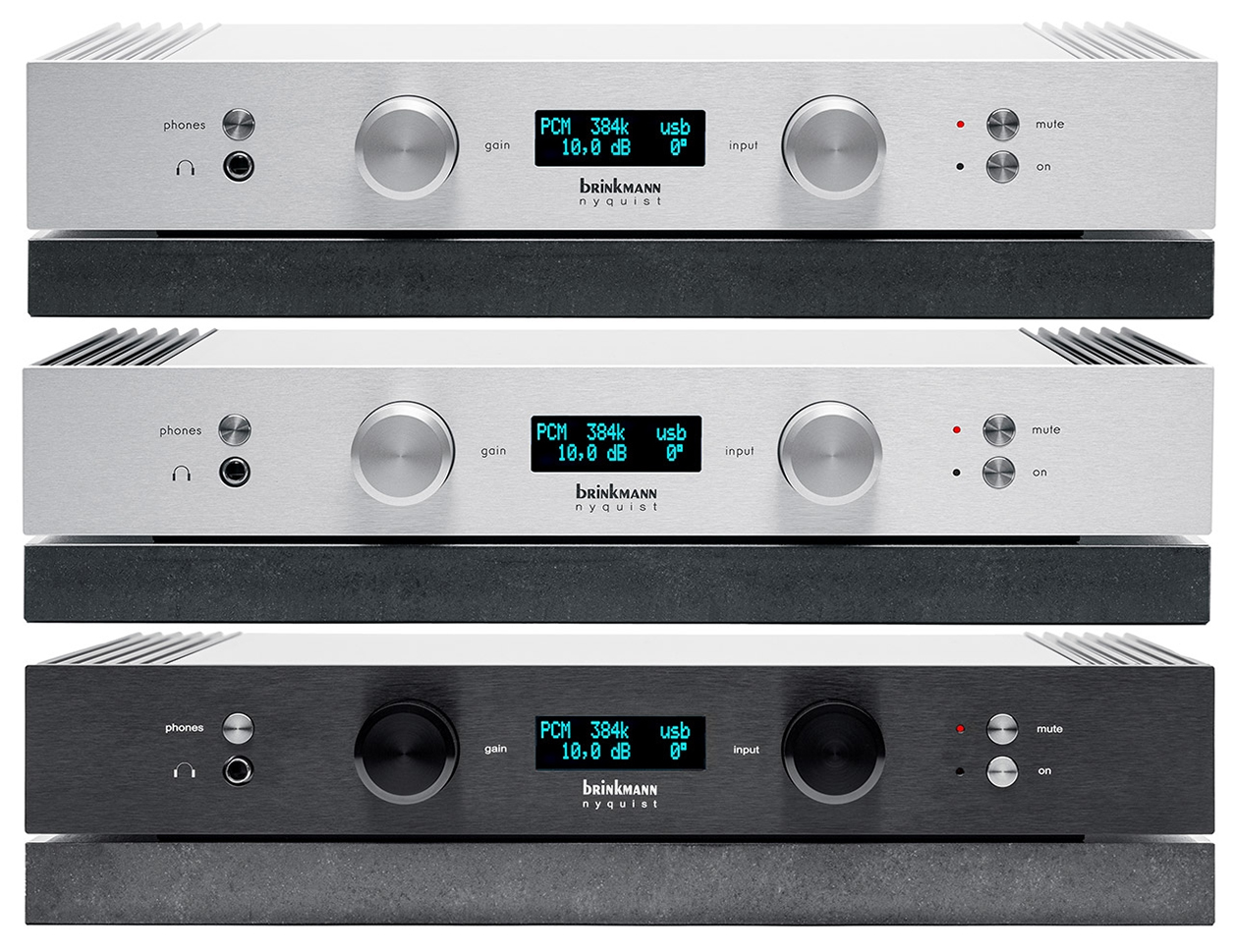
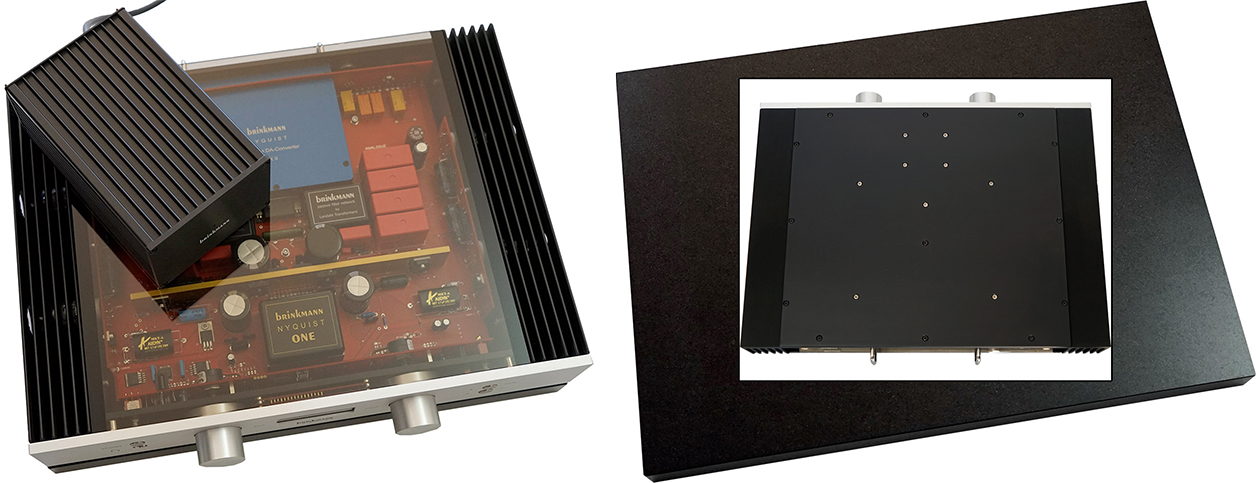
View unobstructed. The digital module of Brinkmann Audio's new D/A converter Nyquist One clearly bears the Analog DA-Converter inscription. We may interpret that two ways: as a sonic promise; or link to the brand's past. Whilst the company's first DAC released 40 years ago, audiophiles primarily know and appreciate this Baden Württemberg-based manufacturer for their turntables, tonearms and amplifiers so analogue gear. Perhaps this statement even embeds a technical clue when the analog circuitry of a DAC is just as crucial to the sound as the digital circuitry. The latter actually converts an analog signal of rapidly alternating voltage states which represent the square waves of digital. Regardless, the Nyquist One is this catalogue's new "analog digital". Unveiled at Munich High End 2025, it is based on the original Nyquist model of 2016. The new model not only features the digital module first updated in 2018—the original Nyquist version can be upgraded to MKII status level for €800—but a thoroughly redesigned analog output stage and power supply, two updates which unfortunately can't retrofit. Now let's take a closer look. That's easy because "if you build a circuit so beautifully, why hide it?" is apparently what Brinkmann felt when their streaming DAC features a glass not metal cover to offer a view unobstructed at the innards. A nice touch is the 12kg granite base to minimize resonances. It's only logical that the machine itself eschews footers. The base plate thus is in full contact with the stone plinth. And that's how it should stay, you inveterate sound tuners. Granite base and DAC were developed as a sonically optimized unit.
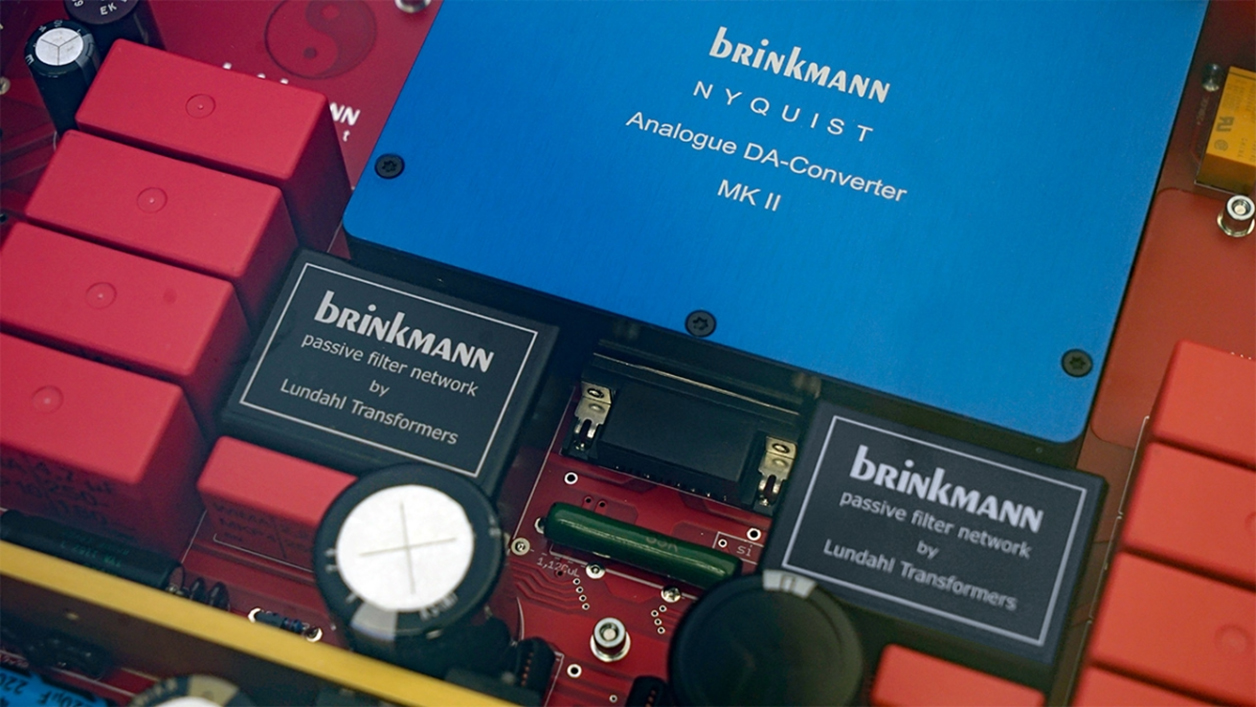
As indicated already, the actual converter is a dedicated replaceable module. In fact, the manual includes a small illustrated "how-to" guide for exactly such a scenario which might arise if technological advancements warrant an overhaul of the digital circuitry. This modular approach is a real advantage especially for a device in this price range. It insures greater investment security. There are even small handles on the module's back end to make a swap easy. The digital inputs—USB, Toslink, AES/EBU, coax, RJ45—are an integral part of the module as are the clocks and converters. Yes, plural because PCM and DSD enjoy separate paths, the latter a proprietary discrete 1-bit converter. As company co-owner Matthias Lück explained who developed the digital section, this avoids the common signal degradation of on-the-fly resampling to PCM. The latter meets dual ES9018S chips, not their latest but a chip of many advantages. "The choice of DAC chip is generally overrated in terms of sound quality. It certainly has an influence but no greater than that of the components in the voltage regulation or the analog filter etc. This chip externalizes many of the power supply lines of the internal parts, making them accessible for optimization. Furthermore, all filters and signal processing can be switched off which enabled us to use our own digital filters."











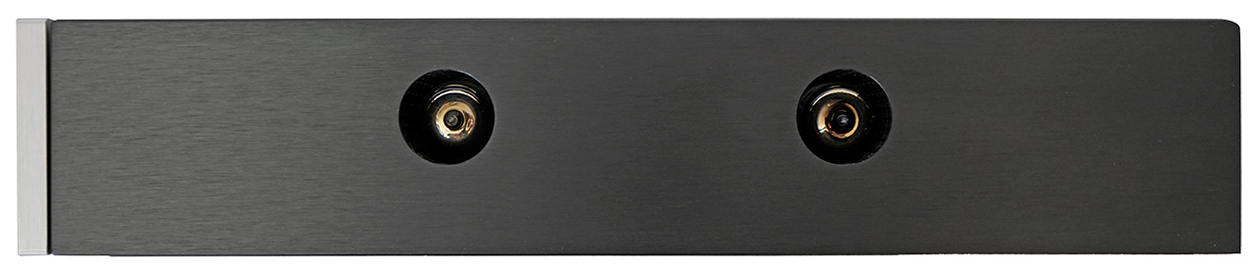 Side view on the militarily so horizontally mounted tubes.
In the immediate vicinity of these converters, two high-precision oscillators/clocks support low-jitter operation. The in-house written digital filters run on separate processors for more computing power than converter chips. These too were customized to optimally mesh with the external analog filters outside the digital module. Stripping any remaining high-frequency conversion artifacts from the signal, these are transformers from Sweden's Lundahl wound to Brinkmann specs. Lück explained that such filtering is significantly more complex and expensive than conventional capacitors but sonically superior. The Lundahl magnetics couple to a fully symmetrical hybrid circuit with NOS Telefunken PCF803 in the output so a compound triode/pentode. Primarily used in televisions of the 1960s, these valves are said to possess audiophile merits not only according to Brinkmann but Frank Blöhbaum who uses them in the Vincent SA-T7 Diamond preamplifier. The PCF803 lifespan is easily 10 years or more. If a replacement comes due, Brinkmann maintain a large stock for their clientele. The headphone output uses the same tube circuit then adds a headphone driver. The display provides information about the incoming data, selected input and gain setting among other things. The rear panel sports RCA and XLR outputs, the digital module's sockets and to the left of it the seven-pin PSU interface. Incidentally, don't put the power supply on top. There's a reason it's been removed from the signal path in the first place.
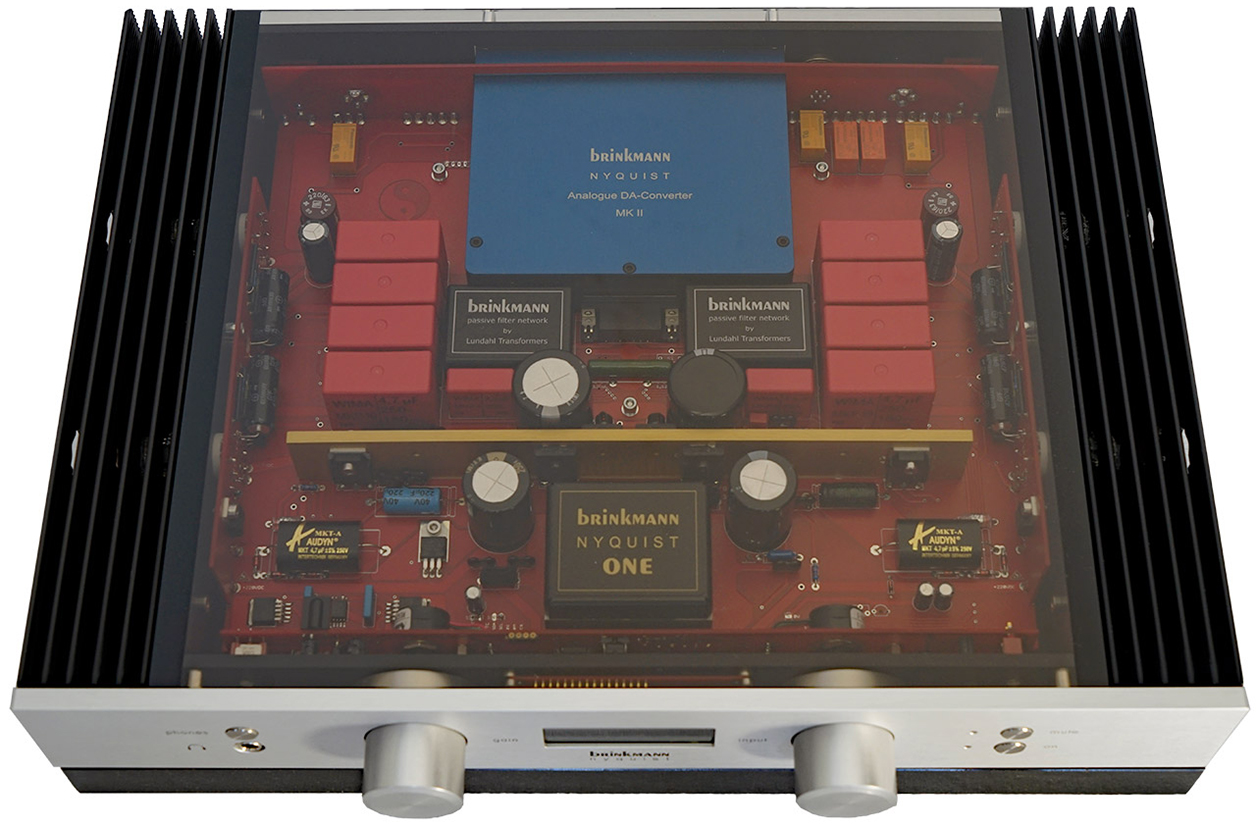
The circuit board was fundamentally redesigned for "significantly improved grounding, resulting in even better S/NR and reduced jitter". The newly designed power supply contributes as well. Its basic structure with a transformer in a separate enclosure connected via 7-pin umbilical remains unchanged. However, extensive experience gained with Brinkmann's tube power supply RöNt—which has undergone continuous development since 1995 and figures in the company's turntable drives—as well as recent expertise with the transistor version TraNt introduced in 2024 both incorporate fully in today's machine. Brinkmann don't elaborate much on the exact nature of these improvements just as they smoothly evade transformer and filter capacitance specifications, only allow for "the right types of capacitors with the right values must be in the right place." Brinkmann prioritize precision. The current digital module now uses 12 discrete voltage regulators instead of 11 and it is precisely this extra regulator of the revised power supply section which achieves even better decoupling of the DAC's clock from the rest of the circuit, resulting in reduced jitter especially during USB and Ethernet playback. This is what improved the sound of the streaming DAC, not shiny 'digital' specs for their own sake.