Country of Origin

Reviewer: Simone Ragionieri
Source: Generic 5G router into Taiko Audio network switch both powered by a Zayin Audio Suprareg; Taiko Olympus XDMI Server; LampizatOr Horizon 360 DAC
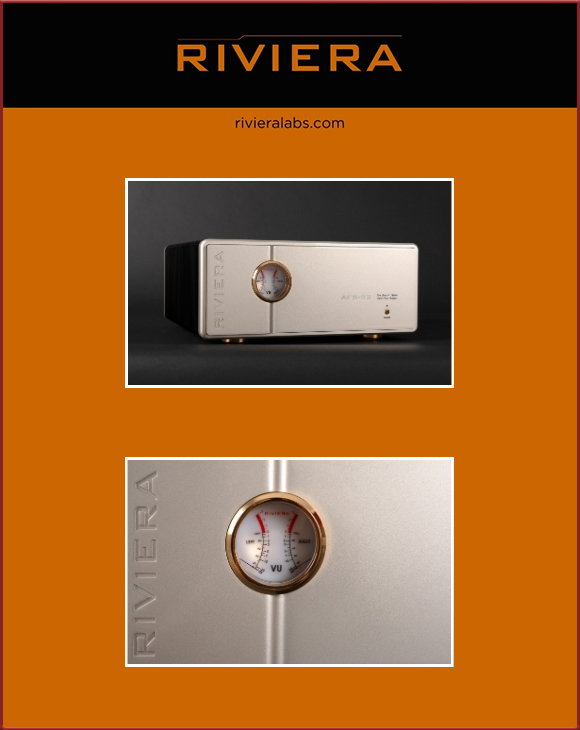
Headphone/speaker amplifier: Riviera Audio Labs AIC-10
Headphones: Spirit Torino Valkyria, Raal 1995 Immanis
Loudspeakers: Diesis Audio Aura SE
Cables: complete Faber's Cables La Potenza loom
Power delivery: Faber's Cables La Potenza power distributor and ground box, Furutech NCF AC wall plugs on a dedicated spur
Room size: 5 x 4.5 x 2.7m
Room treatments: Eight ceiling diffusers, floor-to-ceiling acoustic curtains on sidewalls, Vicoustic VicTotem Ultra VMT in front corners
Review component retail ex VAT: €16K
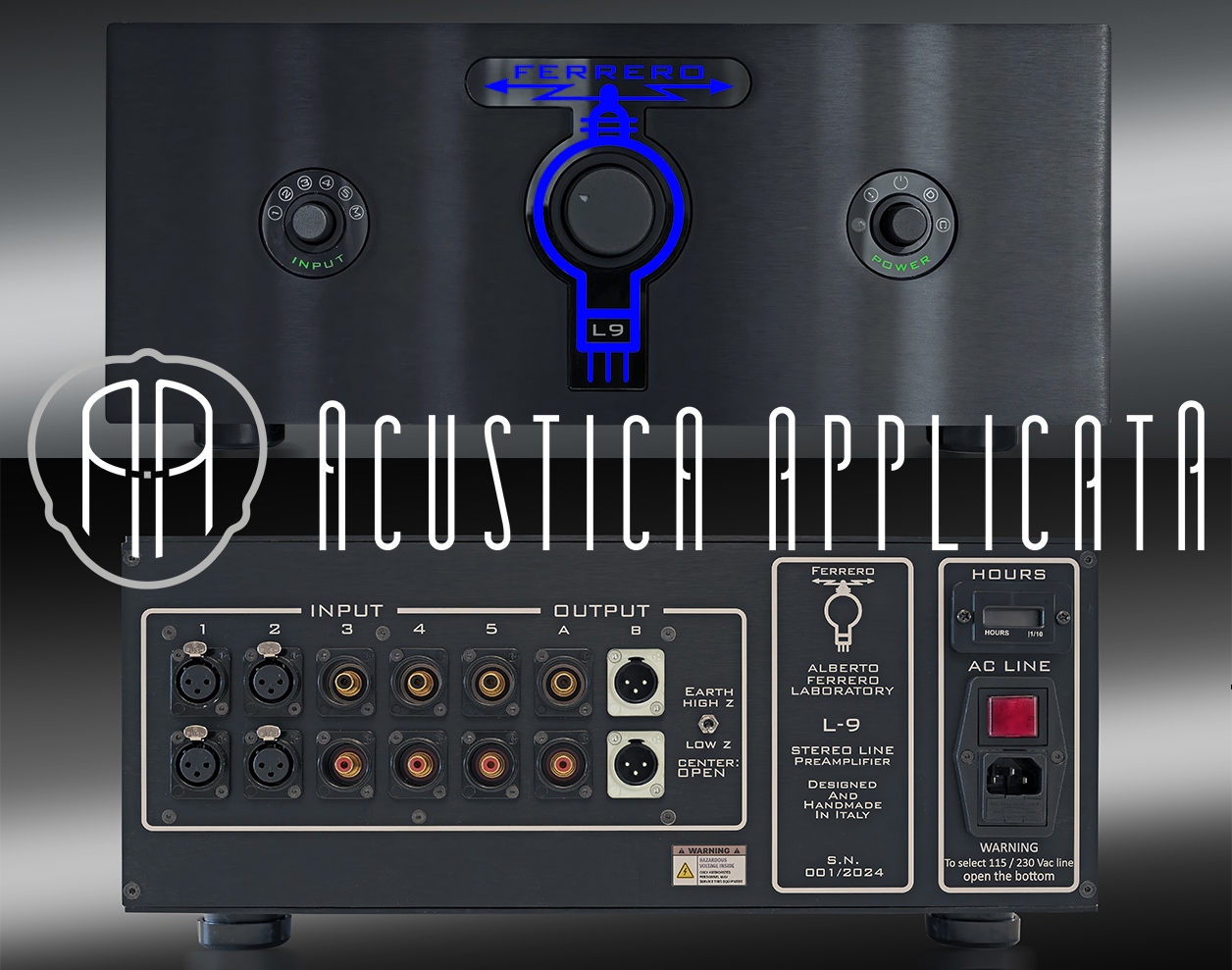
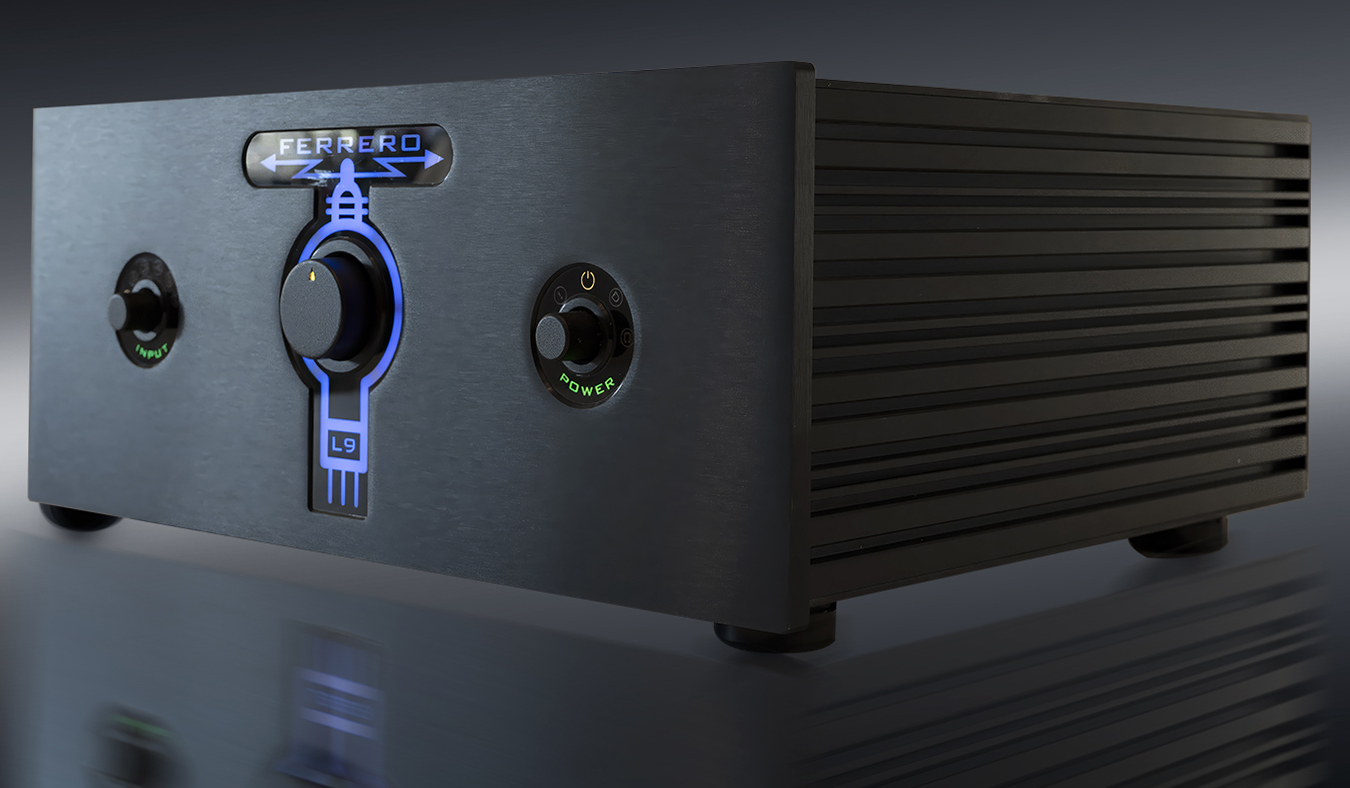
At hifi shows it's relatively unlikely to experience great sound. The most challenging aspect for exhibitors is to make the hotel room, exhibition-hall cubicle or glass-lined penthouse suite they've been assigned work synergistically within the limited set-up time and realistic room treatment options at their disposal. Given this plain fact, I bring relatively low expectations when I attend and focus more on meeting audio friends in the industry and the pleasure of seeing in the gleaming metal some exotic gear we typically only see in photos or videos. Whenever I enter Acustica Applicata rooms I always marvel at how Italo Adami, the man behind the company, achieves at least very decent but often very good results on tonal balance, 3D soundstaging and especially depth of field in relatively cramped spaces. The reason of course is that they specialize in acoustic treatments and have developed their own product line and consultancy skills across the last 30+ years. It's why I usually spend longer in Italo's room/s than most others and never miss a chance to seek him out. It was during one of these visits in 2025 that I noticed a preamplifier prototype from new brand Ferrero Audio of which Acustica Applicata had just taken exclusive dealership. Alberto Ferrero, the designer and brand owner, was also present and keen to discuss his creation which intrigued me with its design choices, the sound and the person behind it. I had a chance to listen to his L9 for 9th-gen linestage multiple times, including during a visit to Acustica Applicata's permanent showroom where equipment can express its full potential. Italo was especially proud of the L9 due to his own involvement with the circuit's ultimate fine tuning during prolonged auditions and proposed that I premiere the L9 on global media, a request I embraced enthusiastically. The necessary disclaimer is that during my time with the L9 in my home, I could only combine it with two integrated amplifiers, my Riviera Labs AIC-10 and a SPEC RSA-EX1000 in for review. I don't yet own a dedicated power amplifier. However, given my previous experience combining Riviera Labs' own APL-1 preamplifier with the AIC-10 which significantly elevated the latter, I was confident that I could appreciate what the L9 would bring to the table. In SPEC's case, their integrated is a power amp plus volume control so doesn't include an active preamp stage. Being the first public exposure of brand and model. I was especially interested to learn more about Ferrero Audio's background and design credo. Alberto was kind enough to share his thoughts during a pleasant conversation.
Can you talk about your background as an engineer and audio designer and how this arrived you at creating Ferrero Audio?
I've always been passionate about audio circuits. From a very early age I was never in a home without a hifi system. I started experimenting and building audio amplifiers at a young age which led me to study electronic engineering. After completing my studies, I specialized first in electronics and sensor design for space applications, then power conversion circuits for our military's naval sector. Today I work on the design of all electronics— analogue, digital and power—for degaussing systems on Navy vessels and submarines. In the audio field I pursue a continuous process of R&D into new circuit topologies, components and materials, drawing on my academic background and professional experience to develop innovative solutions. I have always dreamt of creating my own brand, an audio company with a product line that could fully express my technical and creative spirit. I believe that in audio circuits, technology and art coexist. Any good engineer can design an amplifier but making an amplifier that sounds good is not purely an engineering matter. In 2024 I met Italo Adami and Fabio Liberatore which led to a close collaboration with Acustica Applicata then the founding of Ferrero Audio. Our shared goal is to create high-quality audio electronics that go beyond technical excellence and are capable of rendering the musical message with naturalness, coherence and emotion.
What is your relationship with music in general and what kind of music do you enjoy the most?
I don't have one favourite genre. I genuinely listen to everything. It may sound vague but is a sincere reply. I appreciate classical music as much as electronica, jazz or singer-songwriter fare. Each genre offers something different, another balance between emotion, technique, rhythm and creative exploration. This openness to music has influenced how I design audio equipment. I try to build amplifiers capable of reproducing all music with naturalness and emotion without favouring any one musical syntax.
Are there hifi designers or brands that inspire you?
Throughout my career I have drawn inspiration from very different brands and designers, often encountered directly in repairs and restorations. My approach is to absorb as much as I can from whatever technologies and design philosophies I come across then reflect on how to reinterpret them according to my own vision. Among the brands most significant to me are Conrad-Johnson, Shindo Laboratory, Convergent, Audio Tekne, Krell and Leak. They're very different from one another yet each has a strong technical and sonic identity. I also draw great inspiration from vintage amplifiers particularly early McIntosh, Audio Research and the historic Western Electric electronics. In vintage equipment I often find remarkable attention to the simplicity of the signal path and the overall essentiality of a design.









What are your priorities when designing a new piece of hifi electronics?
My motto is innovation by tradition. Innovation always comes first. It can take the form of a completely original circuit, the search for particular components or the use of new materials. For me, audio design is above all a passion. Each project must involve a genuine creative process, not merely rehash well-known schematics. Tradition follows closely. My designs are purely analogue, built on a minimalist philosophy. Every component in the circuit must be indispensable and make a concrete positive contribution to the sound.
What makes your designs different?
Every part, be it a tube or transistor, has inherent limitations on distortion, power, noise, gain, impedance, bandwidth and stability. My work is to find ways to work around these limitations, designing circuits that achieve unprecedented performance. This means first of all conceiving entirely new circuits and modes of use but also employing carefully selected, uncompromising special parts. It is in these aspects that I find the margin to make a difference.
How do you combine measurements and listening tests during the development of a new product?
I always start with an instinctive idea of a circuit or technology. The design on paper follows, then computer simulations. As soon as the circuit is sketched out and capable of functioning, I move to listening. The engineering part is the easiest. The challenge lies in making things sound good. That is where an intensive process of auditions and fine-tuning begins. The process is strongly iterative. Measurements and listening continuously influence each other until the desired result emerges. At this stage a technical and cultural interchange becomes fundamental. Developing a high-end audio product demands rigorous tools that match the ambition. Having access to a listening room with high-quality acoustics for example is rare among designers yet a primary necessity. But tools alone, however accurate, are not enough. What matters is the ability to interpret what you hear and understand the direction in which your project should evolve. For the development of the L9—and the same will be true for future products—the contributions of Italo Adami and Fabio Liberatore of Acustica Applicata were decisive. This went beyond the far from negligible opportunity to make free use of their certified listening room but also was about their knowledge built over decades of research and work in the field of domestic sound reproduction.
Do you have a reference system and reference playlist for your R&D?
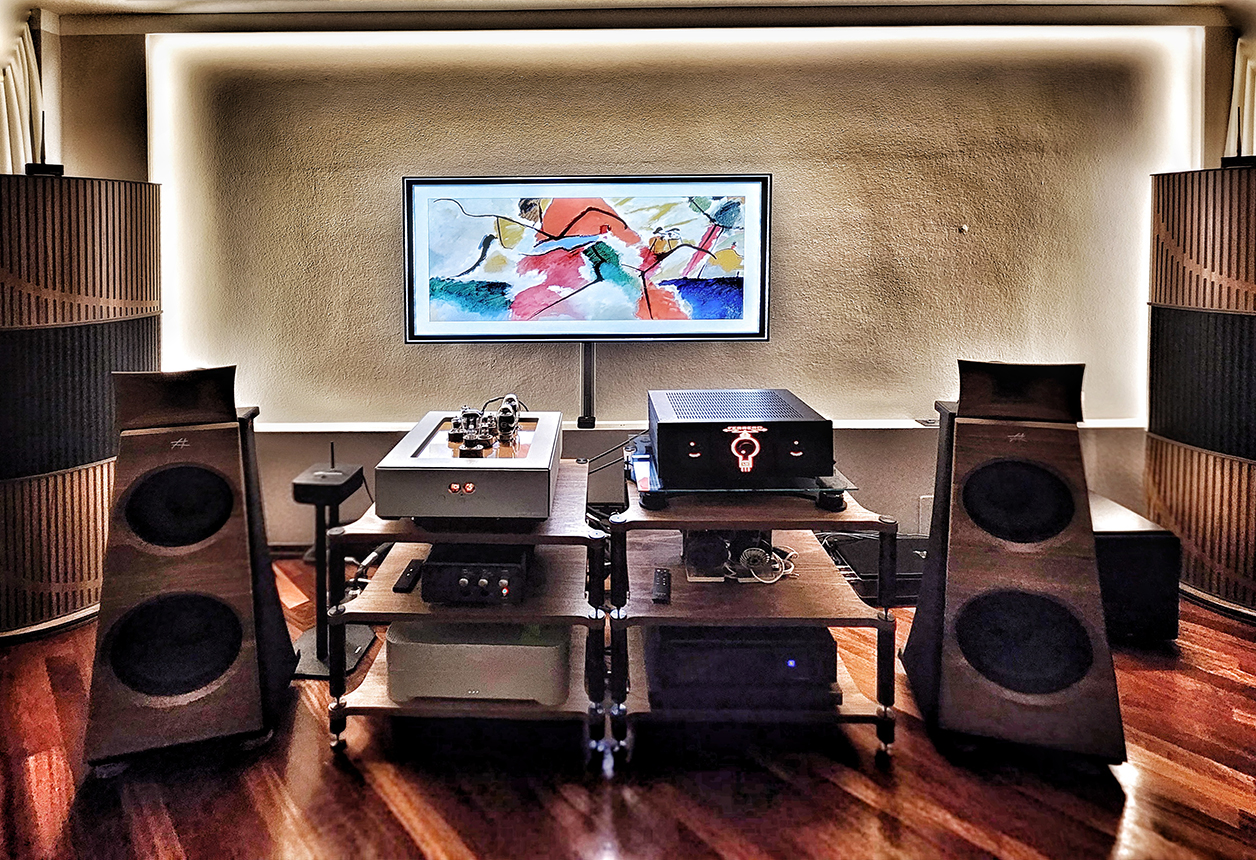
It is essential that listening tests be conducted in an acoustically treated environment which is why mine always take place in one of Acustica Applicata's certified rooms. My primary reference system is always my most recent project because each new piece of electronics is born with the goal of surpassing the previous one. I then compare the product with other systems I know well and consider relevant for the type of evaluation I carry out. As for music, I have no rigid audiophile playlist. I use music I know deeply and listen to regularly, spanning very different genres. This allows me to evaluate the amplifier across a wide range of musical situations and judge how effectively it conveys the musical message in a natural credible way.
Is there something about the L9's topology or component selection that you would like to highlight as a special achievement?
The L9 fully embodies my "innovation by tradition" philosophy. It is a fully tube-based preamplifier with zero feedback and exceptional bandwidth, distortion and output impedance performance. At the heart of the design is a novel circuit configuration in which a triode is biased by two EL84 power tubes typically used in output stages to fully express the harmonic spectrum and achieve a very low output impedance with a minimum number of components in the signal path. It is a single-stage circuit: nothing superfluous, no compromises. Equally refined is the power supply stage, entirely tube-regulated and built with extreme components and special materials to achieve an exceptionally low noise floor. In a preamplifier, the quality of the power supply is not a detail. It is an integral part of the sound.
Is there a lineup of electronics in the works to complement the L9 and, if yes, what are the main objectives you have for their combination?
Yes, the L9 is the first building block of a complete line. The natural next step is a power amplifier that shares the same design philosophy: innovation, zero feedback, circuit minimalism and components chosen without compromise. The objective is not simply to pair two products but to design a system in which the preamplifier and power amplifier are conceived as a single distributed circuit whose every design choice in one takes the other into account. Impedances, gain, topology – everything must interact coherently. A phono preamplifier will follow to complete the analogue chain. The ultimate goal is to offer a cohesive system from beginning to end, with a precise and recognizable sonic identity.
What are the peculiar challenges of designing preamplifiers vs power amplifiers?
The two challenges are inherently very different. In a power amplifier, the main difficulties concern energy management: thermal stability, efficiency, the ability to drive complex and unpredictable loads such as loudspeakers. You are working with significant amounts of power and the circuit must remain stable and controlled yet natural-sounding under all conditions. In a preamplifier, the challenge shifts to the opposite extreme. You are working at very low signal levels where every imperfection in a component, every trace of noise in the power supply, every non-linearity in the circuit becomes audible. This is why the power supply design in a preamplifier is as critical as the signal path itself and why the choice of components and circuit architecture becomes almost obsessive.