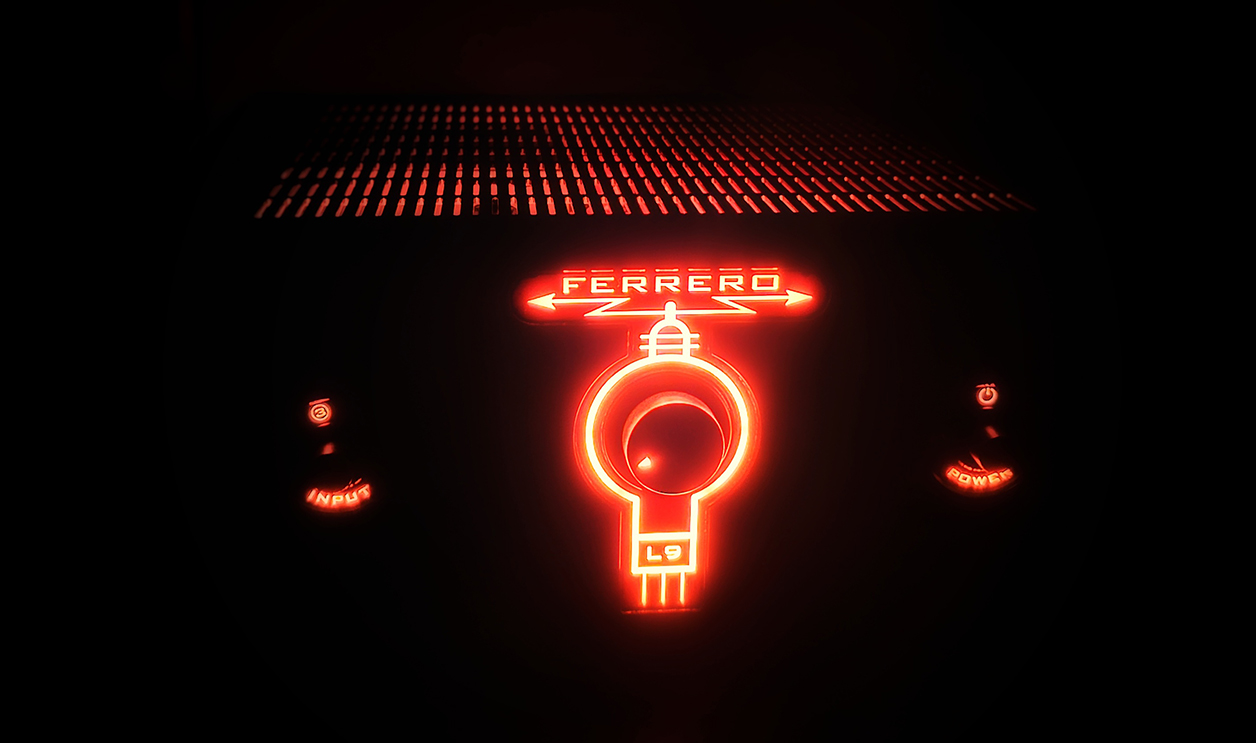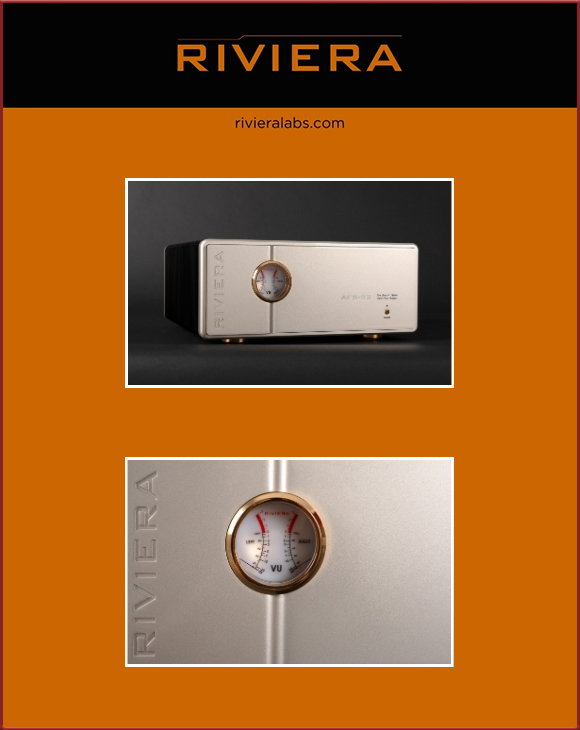

 Rewiring my rig for the L9 was easy. I used Faber's Cable La Potenza for power and unbalanced interconnects on both input and output. A pair of RCA went to my subwoofer et voilà, I could turn the LampizatOr volume to the max in quasi bypass and use the L9 as the controller of my SPL. My Riviera Labs AIC-10 acted as power amp and given the high combined gain of DAC and L9 I set it to ~11:00 instead of my usual 13:00. This gave the LP manageable range up to 9-11:00. The first impression was surprise as among various changes the most immediate was an increase of transparency. How adding electronics and cables could do this was beyond me but it happened and two of my most effective tests for this are Mandell/Ars Nova's Stravinsky Histoire du Soldat [HDTT DSD256 version] and "Stompin' at the Savoy" from Frigo et al. Live from Studio A in New York [Chesky 96/24]. Both recordings have that tactile musicians-in-the-room quality that almost violates our privacy when there is nothing between us and the performers. The L9 reinforced that thanks to a combination of effects. Dynamic contrast was starker especially with percussions and the spatial separation between instruments—one of the most impressive features of these albums already—took a further step towards being able to imagine not only the position and shape of the musicians but thinking that I could walk amongst them. As my listening tests continued, I began to picture the L9's impact on the sound more at a high level. If I had only word to qualify it, it would be masculine. Some gear evokes perceptual cues of transparency or airiness often combined with clearer identification of details through a tonal balance that slightly tilts towards the treble but the L9 did it differently. It created space more in the style of Caravaggio than Botticelli. The music carved out as a sculpted substance in a poetic struggle between darkness and light rather than project in an illuminated landscape where everything is hyper-realist as though the light came from an infinitely far uniformly powerful source.

 Muddy Waters voice on "My Home is in the Delta' from Folk Singer came across more present and throaty than usual, with an almost burnished texture which intensified the charismatic effect of the storytelling combined with a more accentuated strengthening of the venue's resonances. The L9's ability to add weight to the sound without making it thicker, highlighting both colour and macrodynamic contrast without losing nuance resolution, did not limit its charm to vocal music. In fact it extended its fascinating powers to orchestral material, providing a tasteful densifying action to strings and a stronger vibrancy to brass sections. A perfect example was the legendary 1973 Bohm/Vienna Philharmonic version of Bruckner's 4th Symphony. The scale and intensity of its stentorian brass chorales built upon massed strings reached almost terrifying levels with no hardness, chaotic blend or loss of control.
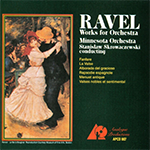
Bass and especially sub-bass control was another strength of the L9, its muscular grip of attack and decay apparent in tracks like the "Alborada del Gracioso" from the epic version of the Minnesota Orchestra conducted by Stanislaw Skrowaczewski [Analogue Production] where the double basses and timpani seemed more articulated and precise over my slightly boomier direct-driven AIC-10 without losing their magniloquence. A similar impression was offered by "Gimme something good" from Ryan Adams' 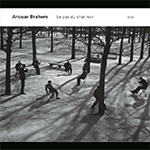 Live at Carnegie Hall where a generally darker depiction of the tonal balance provided a captivating feeling of
 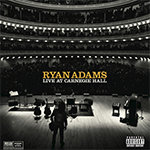 physical presence to both guitar and voice. The hefty, resonant yet clearly resolved low bass notes provided a solid foundation to the performance, enhancing its scale. On the same track I was very impressed by the relationship between voice and guitar, with the former precisely localized in the vertical dimension and the latter at a very credible relative position to form a spookily realistic three-dimensional shape of the musician. Where the Riviera APL-1 had made the AIC-10 sound like a better version of itself by enhancing its strengths, the L9 imparted a slightly different character—more martial and focused. A certain loss in sweetness and lateral diffusion of the sound were compensated by clearer textures between lower midrange and upper bass and more structured layering enhancing depth perception.
In combination with the SPEC RSA-EX1000, the L9 expressed its nature even more manifestly. The Japanese integrated is inherently more neutral than the AIC-10 and comparatively more light-footed. The autumnal colours of my Italian amp leave room for a sunnier palette where the L9 added an intriguing cast of shades on the musical landscape just as a variegated early spring sky populated by scattered but potentially stormy clouds which are illuminated by unobscured sunlight make the scenery more  interesting. For those who believe that doubt is more stimulating than certainty, the combination of Ferrero L9 tube preamplifier and atypical Japanese class D muscle amp was one feast of a proposition. Take for example Mother of Light – Armenian Hymns and Chants in Praise of Mary and "Leila au Pays du Carrouse" from Anouar Brahem's Le Pas du Chat Noir. Both present sparse music with few instruments and soprano Isabel Bayrakdarian's voice in the former playing in reverberant venues. Dynamic range is relatively small, most energy concentrates in the midrange and sonic images have a certain blur. With the Horizon360 driving the RSA-EX1000, my ear-brain attention was guided by clarity, the airy scenery, ease of access to details and finely chiselled nuance absorbed by a feeling of purity. Inserting the L9 shifted the mood from the uplifting to the more visceral with an increase of temperature and density, with the emotional side playing a stronger role compared to the contemplative serenity experienced without it. I cannot tell which presentation was more technically accurate. Both were utterly engaging if in a different way. What I can say is that they were distinct enough to make a case for a particular listener preference.









Eventually, both amplifiers benefited in their own ways from having the L9 condition their signal which answered my earlier 'to pre or not to pre' dilemma. The common traits characterizing the L9 sound were authority, density and a slightly smoky tonal shift combined with a talent for organic detailing, image focus and instrumental separation – all traits I am especially sensitive to in a good way. I admit that as my ears age, I'm increasingly drawn towards darker tonalities, slower and more complex sound fabrics and hypnotically repetitive patterns. Think of a musical analogy to a fine Persian carpet where tactile feelings mix with visual information, where structural macro and micro detail take you on a fractal journey as you dive into the intricately knotted text. It may hide a crystallized aphorism or it may deploy a recursive tale à la The Arabian Nights but in either case, the beauty lies in the mystery it invites us into.
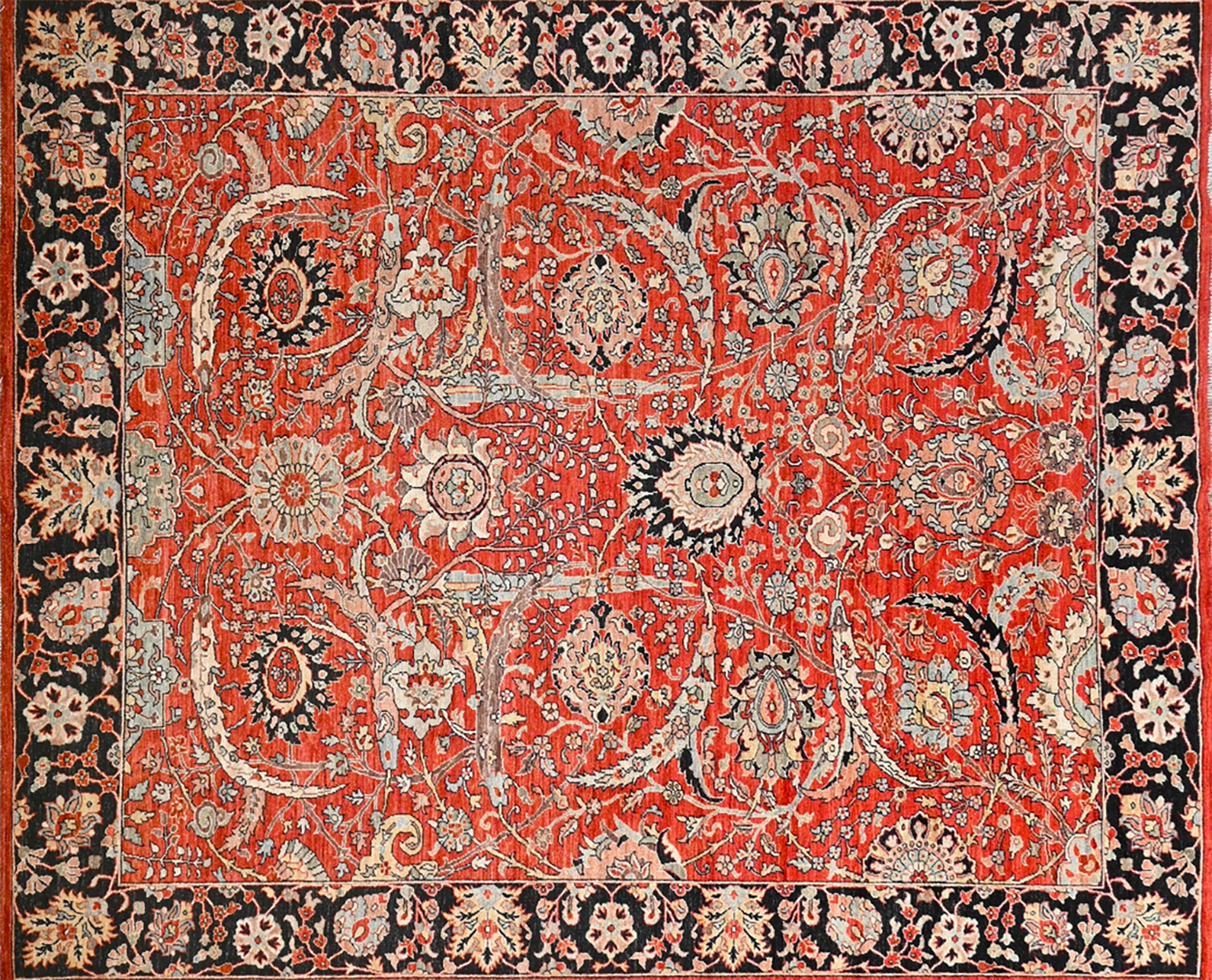
The L9 shares with carpets of the Safavid era clean curves so transients and details that stay clean even under magnification, deep and stable colour palettes and dense weaves with crisp pattern edges, multi-material textural complexity where silk, wool and even metallic threads—here their sonic equivalent—integrate seamlessly. It presents a sound to be felt first. It demands attention in a firm, steady and inclusive fashion. It injects flesh and blood into the music not by editorializing but giving it shape and contrast. As the debut offspring of the brand, the Ferrero L9 has been a thrilling surprise, a promise of future success for Ferrero Audio and I look forward to revisiting it with the matching power amplifier Alberto is preparing for next year. Well done!