
Country of Origin

 This review published in March 2026 on HifiKnights.com. By request of the manufacturer and permission of the author, it is hereby syndicated to reach a broader audience. – Ed.
Reviewer: Dawid Grzyb
Transport: Innuos Statement, fidata HFAS1-S10U
DAC: LampizatOr Horizon360 w. Stradi 5U4G + Psvane Art TIII 4x KT88 / 2x 6SN7
USB components: iFi audio Mercury3.0
Network: Fidelizer EtherStream, Linksys WRT160N
Preamplifier: Trilogy 915R, Thöress DFP
Amplifier: Trilogy 995R, FirstWatt F7, Enleum AMP-23R
Speakers: Boenicke Audio W11 SE+, sound|kaos Vox 3afw
Headphones: HifiMan Susvara
Interconnects: LessLoss Entropic Process C-MARC, Boenicke Audio IC3 CG
Speaker cables: Boenicke Audio S3, LessLoss C-MARC
Speaker signal conditioning: LessLoss Firewall for Loudspeakers, Boenicke ComDev
Anti-vibration conditioning: 12x Carbide Audio Carbide Base under DAC, preamp and speakers
Power delivery: Gigawatt PC-3 SE EVO+/LC-3 EVO, LessLoss C-MARC, LessLoss Entropic Process C-MARC, Boenicke Audio Power Gate, ISOL-8 Prometheus
Equipment rack: Franc Audio Accessories Wood Block Rack 1+3
Review component retail: M size €59/4; L size €99/4; XL size €159/4
If I were squeezed hard to name the Polish audio brand I'm fondest of, local outfit LampizatOr would take the crown. Right behind however sit two speaker houses that have long enjoyed a special place in my reviewerverse: Cube and Qualio. Both are cut from similar cloth. They share the same origin story, founders and—perhaps most importantly—a willingness to pursue ideas that don't necessarily follow the mainstream script. For a reviewer, this is always interesting because it often means products that aren't generic. And that's typically good fun. Cube Audio are the very reason why I've grown fond of purist 1-way widebanders. In one of my recent reviews, I opined that such designs often appear defined by dogma and stubborn purism. For me, Cube managed to humanize that breed. Their speakers demonstrated what happens when their self-made drivers partner with an amplifier of suitably high output Ω. Long story short, that outcome is lively, musically persuasive and packed with all the virtues this concept potentially holds. Instead of acting like a purist manifesto though which turns the listening experience into a test of ideological loyalty, Cube designs are very easy-going. Yet their makers didn't stop there. Their second outfit Qualio Audio offers models which only at first glance seem more traditional. The basic architecture built upon regular vented box bass resembles countless other speakers. But then come clever dipole arrangements mounted to a transparent acrylic baffle on top. This unorthodox hybrid topology blends conventional box loading with open-baffle radiation for results as unusual as they're very entertaining.
That dipole twist transforms what could otherwise seem fairly standard designs into something far more distinctive. Dipole radiation introduces a different spatial behaviour yielding a more open less confined presentation than typical monopoles. Combine that with carefully chosen drivers and thoughtful tuning and the result is a speaker line that offers something genuinely unusual for its ask. It also helps that Qualio sell factory direct to keep costs refreshingly sane in a market where distribution layers can easily inflate prices beyond reason. Today however we narrow our scope to one of the two men behind both brands. Grzegorz Rulka is co-founder of Cube and Qualio but not long ago decided to establish a third brand of his own named Virtual Hifi. Before unpacking what that's about, it's worth explaining how it came to be. Although Cube and Qualio designs already step out of the crowd with topology and pedigree, Grzegorz is a restless soul and genuine out-of-box thinker. Those who know him likely agree that some of his ideas drift comfortably into turf where few conventional audio engineers feel entirely safe. That happiness to experiment is both blessing and challenge. While it generates fascinating concepts, it requires a platform that welcomes executions beyond the boundaries of established catalogues. Virtual Hifi became that platform. I remember well the first time Grzegorz mentioned working on something beyond Cube and Qualio. Back then he revealed that combined operational amplifiers—components far outside the speaker zone—would be his first offering. I liked the idea and applauded the initiative yet wondered whether such a niche product could realistically find a foothold in the market. Long story short, it could. As it turned out, that op-amp project was merely the opening move. Grzegorz had far bigger chess planned.






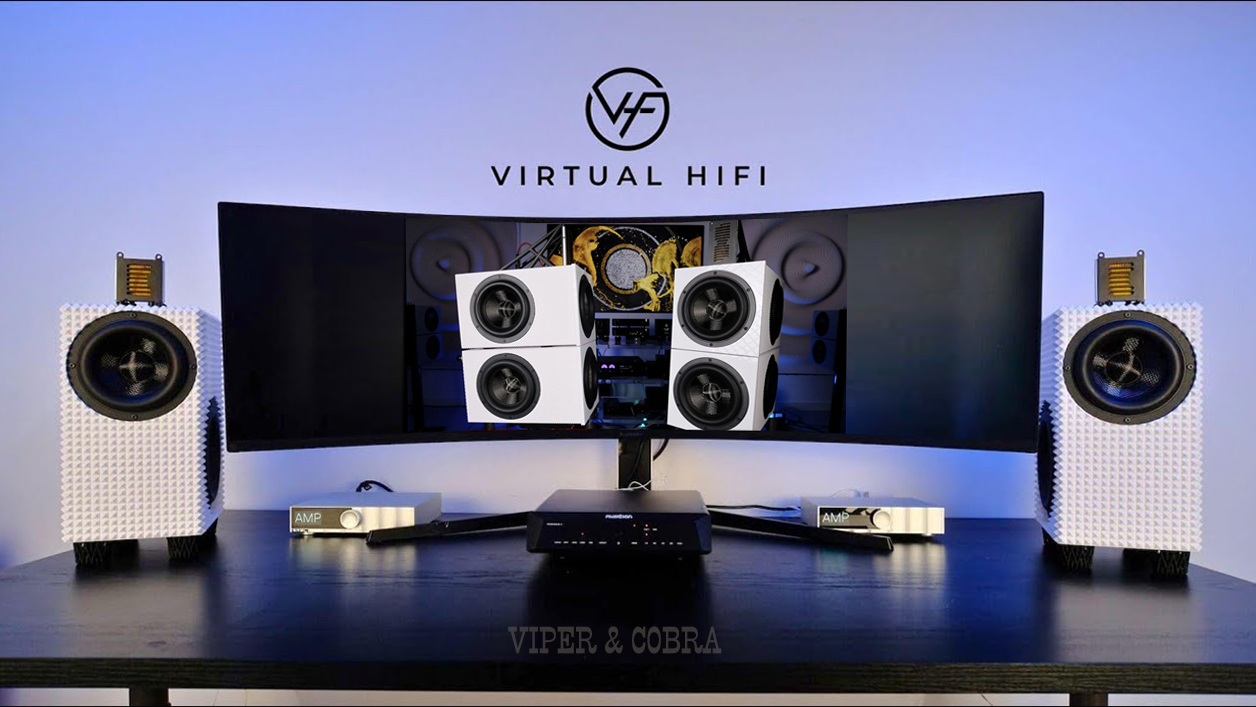
One thing worth noting now is that he was never particularly fascinated by extravagant price tags. Quite the opposite. Over the years he compared enough very expensive kit with modestly priced cherry-picked alternatives to realize that the law of diminishing returns is no mere theory. Spending more never guarantees better sound. How we connect the dots does. This awareness plus non-mainstream one-man R&D shape Virtual's portfolio. Its products aim squarely at delivering meaningful performance without drifting into the financial nose-bleed zone. Grzegorz has genuine appreciation for gear that punches above its upbringing so his designs reflect it. For enthusiasts who enjoy clever engineering but prefer to keep at least one foot on fiscal terra firma, that's refreshing. Of course loudspeakers remain his natural habitat. He's a speaker designer first yet appears comfortable exploring unconventional manufacturing methods. His Viper and Cobra monitors below illustrate that. Both employ sealed fully 3D-printed textured enclosures, carefully selected mid/woofers run wideband, passive radiators and dipole AMT tweeters perched atop. These clearly aren't your dad's compacts. They combine unusual construction with equally unconventional acoustic thinking. Another aspect of Grzegorz's philosophy is to not shy away from practical tweaks wherever they make sense. Upper-tier Qualio speakers thus come with IsoAcoustics Gaia 2 footers, a detail that reveals how serious he takes mechanical grounding and vibration management. That interest in isolation solutions eventually led to another idea.
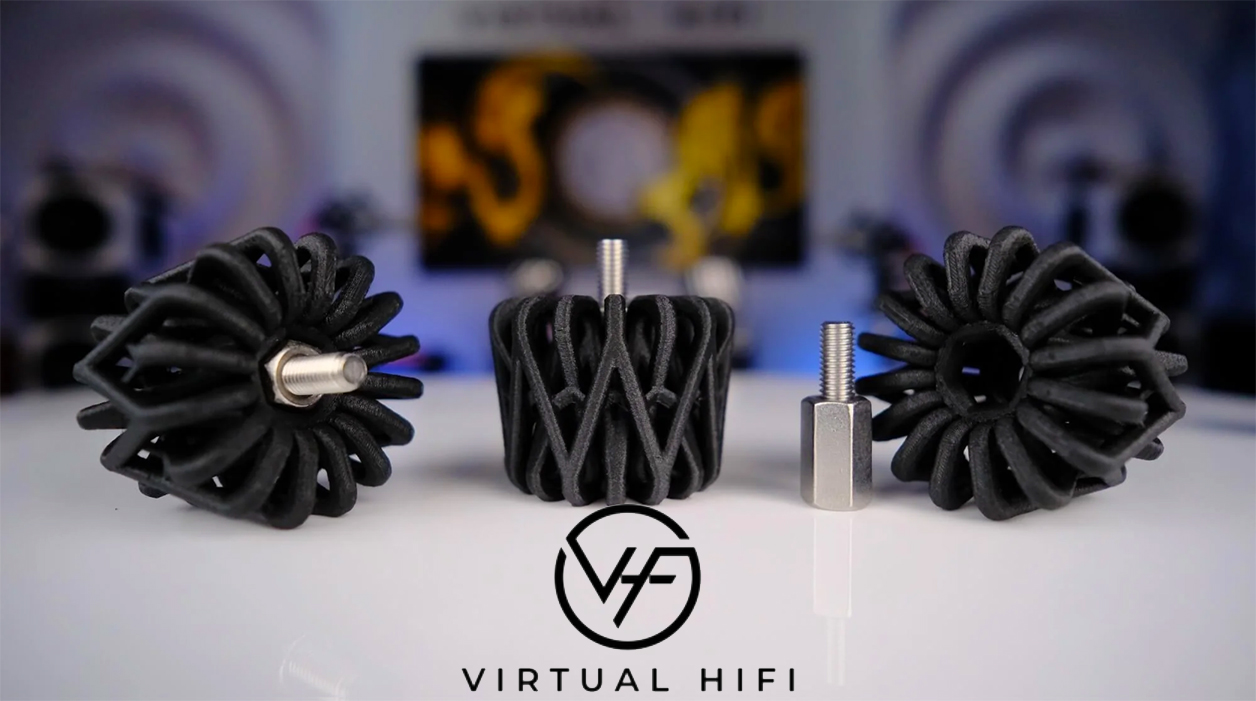
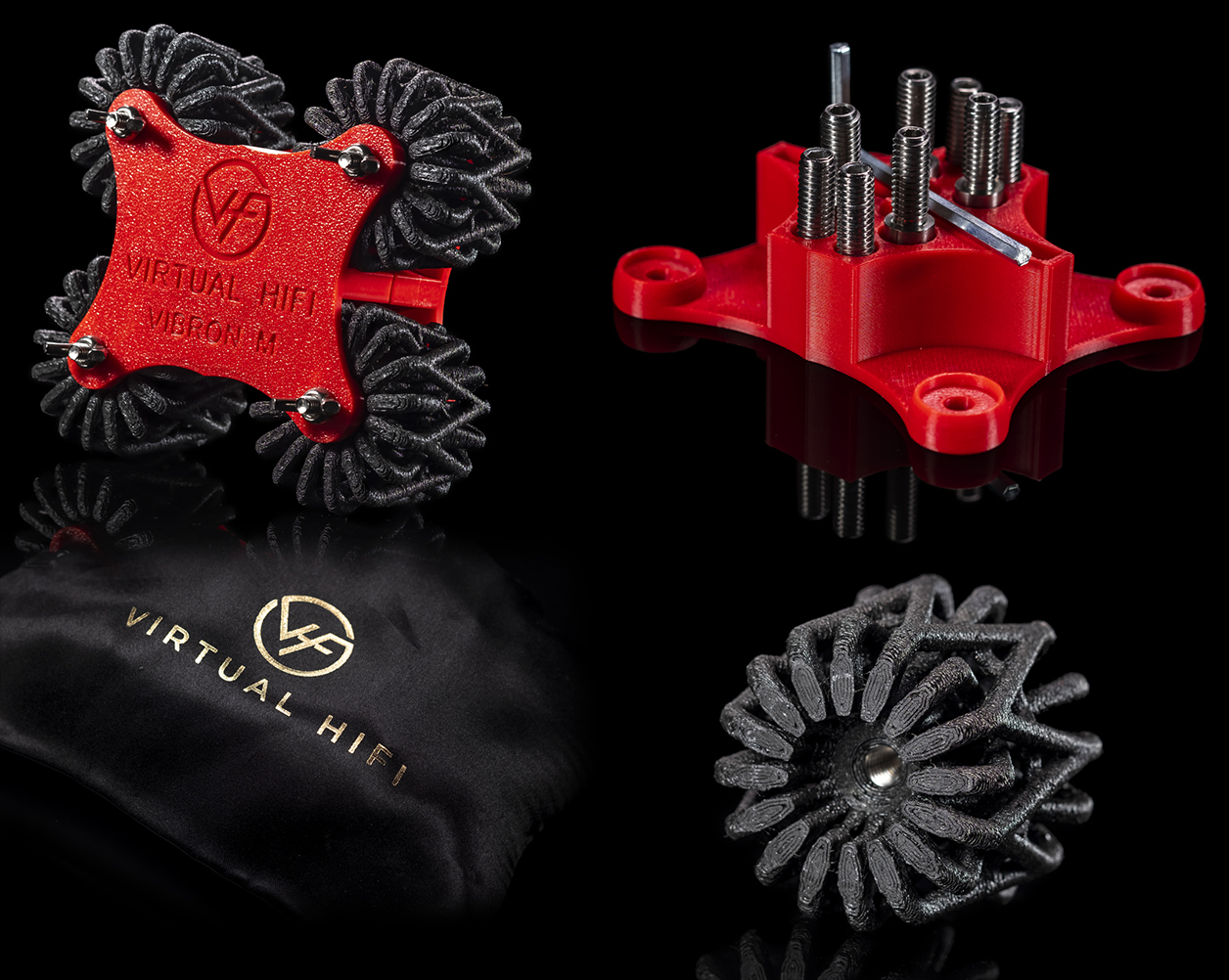
Not long after debuting his hot-rodded op-amps and shortly before the release of his first Virtual Hifi speaker, Grzegorz introduced a set of isolation footers named Vibron. At first glance they look quite unlike typical pucks, spikes or elastomeric pads that litter our accessories market. Their form, material and internal structure hint at a rather different way of dealing with mechanical energies. I hadn't seen anything quite like it before. Chances are, neither have you. Vibron footers quickly became one of the more intriguing items in the Virtual Hifi catalogue not least because they seem to combine engineering smarts with the company's usual price-to-performance pragmatism. As someone who has long appreciated the audible benefits of isolation devices, I was naturally curious to see what Grzegorz's iteration of the concept brings to the table. That's how this unusual little puck became the subject of today's review. I should also mention that Srajan's own Vibron story provided strong incentive to try them for myself.