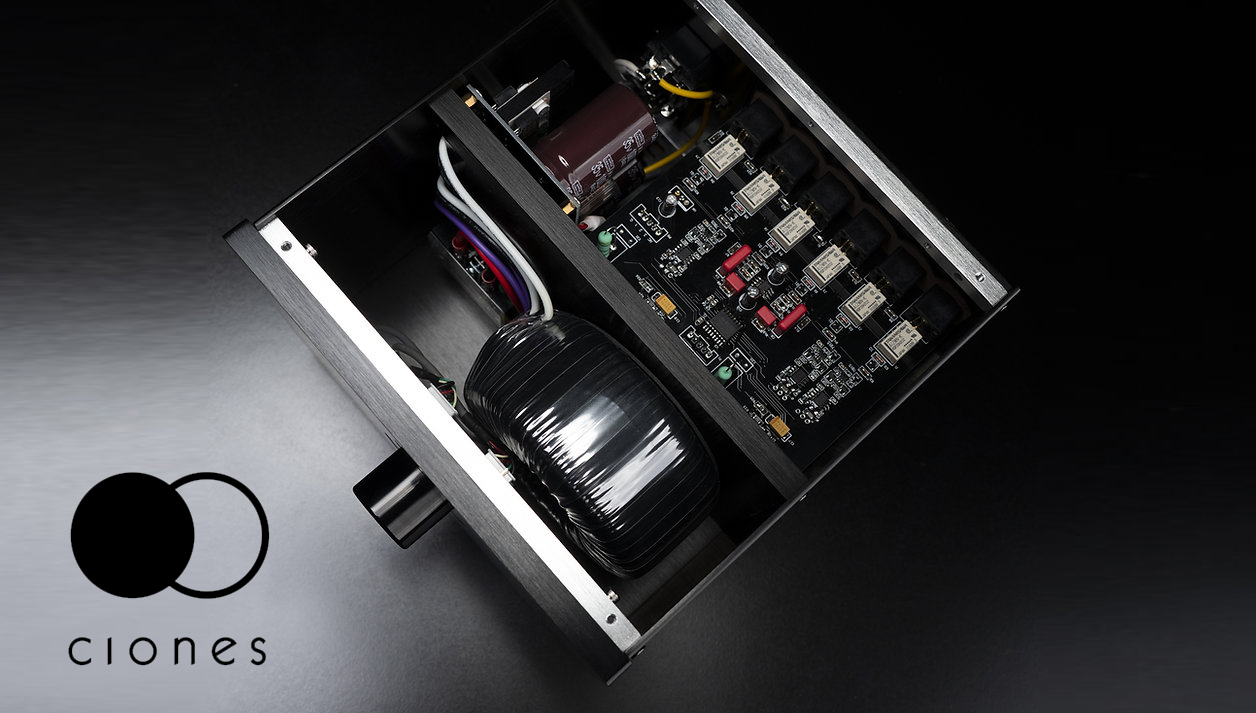
25iRX. 25 for watts. i for integrated. RX for the Latin recipe. It means 'to take'. It's become the universal symbol for pharmaceutical prescriptions. Not a bad name for a hifi pill. Take it. Feel better. Get well; though today's meds have a bitter aspect. Founded 12.12.2012 by Matthew Tang aka FunJoe in Hong Kong, his original 25i amplifier traded direct at €629. 14 years later, living with two kids in post-Covid Taiwan of very present AI resource choking so parts shortages and price hikes plus severe volatilities in the Middle East and Ukraine, his 25iRX successor asks €1'775—nearly thrice. Says AI that your money today buys about 22% less than it did 14 years ago. That of course doesn't yet factor general cost-of-living increases, subsidy cutbacks or rises in fuel costs as current mass demonstrations in France illustrate. I recently spilled plenty of cyber ink on Aiyima's B07 Pro €259 chip amp. It's somewhat of a high-power flash on the turn-of-the-century Tripath bonanza. Its TI TPA3255 IC also factors with 3e 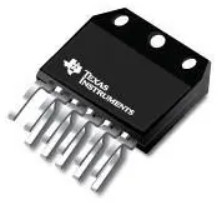 Audio, Fosi, smsl, Topping and WiiM. It could be seen as a 450kHz-switching version of Junji Kimura's original linear 47Lab Gaincard. Once inside photos of that Japanese micro revealed 18 basic parts of very low cost, DIYers got busy rolling their own. Enter the gainclone. It was a minimalist class AB amplifier in which one TI high-feedback LM3875, LM3886 or LM4780 power IC became a channel's output. For years I proudly listened to Peter Daniel's Audiosector Patek version. Minting gainclones remains an underground DIY thing. On the commercial side, the lack of discrete cred, the 25-30wpc power limits and known low parts costs all hit the brakes for a mostly full stop. To my knowledge, only Moonriver Audio continue to use TI's Overture-series LM3886 amp-on-a-chip as output devices; and Clones. Where Aiyima's 100wpc switching chap with outboard laptop brick is cheap as chips, the 6kg far heavier RX gets a vault-like 6061 aluminium box, outsized linear toroid, discrete regulators for its active three-stage preamp, premium socketry, a minimalist volume display and remote. Whilst only doing a nominal 30wpc/8Ω, 30dB voltage gain compensates; somewhat. With a 19x17cm WxD footprint—a CD jewel case is 14.2×12.5cm—plus 13cm height, the black-only RX on its triple-footer wooden plinth remains a bonsai-class component. But is it still a classic from bygone times? Or has it become a relic?
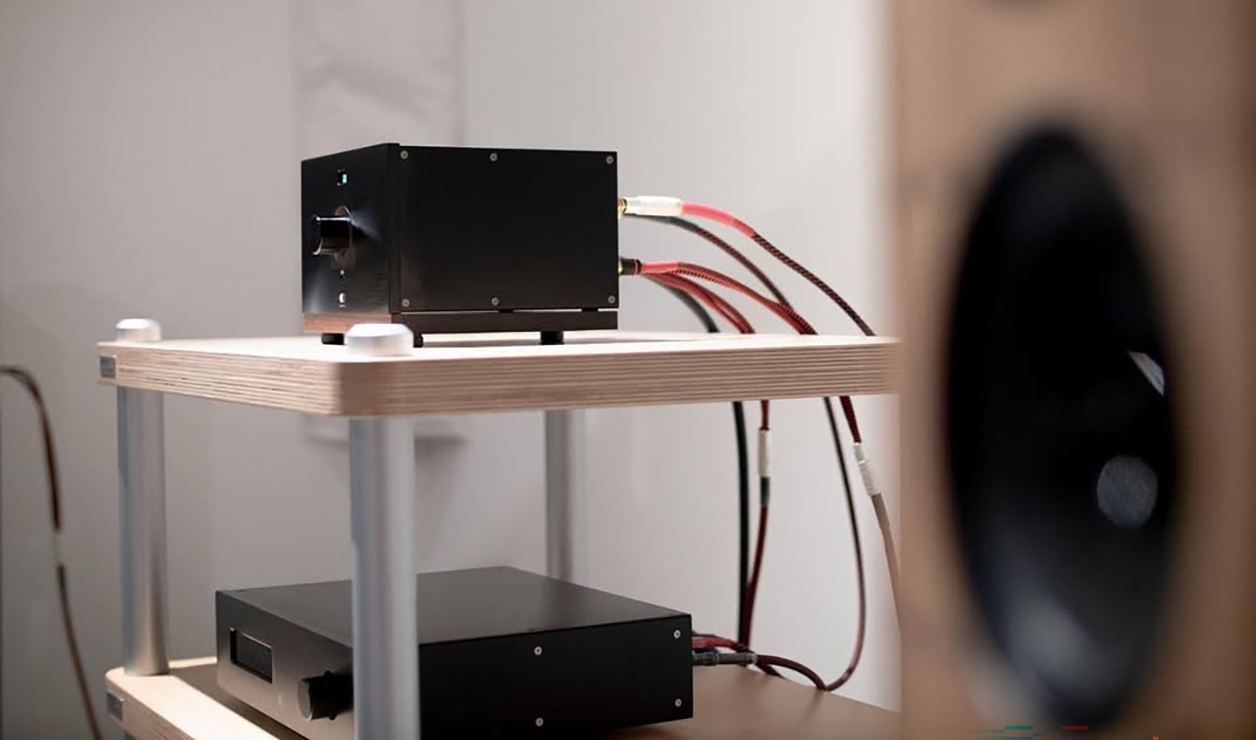
Its current and final incarnation is the 3rd. The original's pot became a remote-actuated PGA2311 so ladder-on-a-chip IC. It and the associated display needed their own power feeds without intruding on sonics. That added costs. Far more serious increases came from shifting production and parts sourcing to Taiwan whilst revisiting the quality of the metal and workmanship which previously outsourced to China. As a famously simple circuit, Matthew spent years fine-tuning his LM3875 minutiae whilst honouring the general 47lab precedent. When that part discontinued, he repeated the lengthy exercise with the LM3886. His seeming overkill construction isn't merely for cosmetics or perceived luxury. Like Peter Daniel, he found that paying careful attention to chassis execution had a big sonic impact. The rest is a small black PCB with Wima caps, six Takamisawa relays to switch the three RCA inputs, a vertical aluminium plate as heatsink for the power IC and the wood-encircled rotary executing input switching when pushed. This model launched November 19th, 2020. Is the oldie still a goodie? Enleum's AMP-23R makes equivalent power. It sells for a whopping $6'500. With it we up cred to a discrete current-mode circuit with a quad of lateral Exicon Mosfets; gain a premium headfi function; and enjoy design-award styling. For that there's been a clear market. Does it disqualify a linear chip amp at less than 1/3rd? As to my clear and present Aiyima, I'm on record that to maximize its appeal to my no longer beginner's ears meant upgrading from source-direct to a preamp connection. I had fine results with a €349 Audalytic HP70 then settled on a more deluxe €2'500 Simon Audio Lab i5's pre-out just because my hifi closet had it unemployed. That mention is key. The 25iRX isn't just a chip amp with a passive pot like my past Patek. It packs an active preamp to decommission an external one.
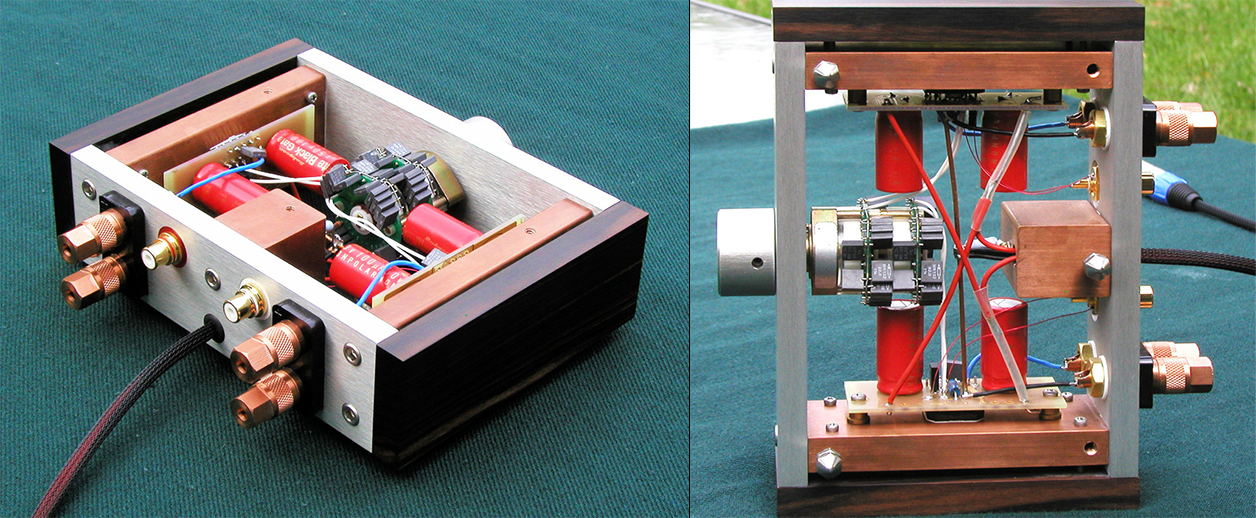 Solid wood, solid aluminium, solid copper, Cardas socketry – the Audiosector Patek was perhaps the most extreme 'purist' so single-input take on the gainclone phenom.
 For more context as told to me back when, 1999's original 47lab 4706 Gaincard outgrew its designer's need for a laboratory amp whose sonics he intimately knew—because he built it. It was never intended to sell. It was just a scrappy little kit cobbled together from TI's application notes to check on other serious stuff like the 4704 PiTracer CD transport then on his bench. Producing the amp only happened in response to pressure from people who'd heard it.
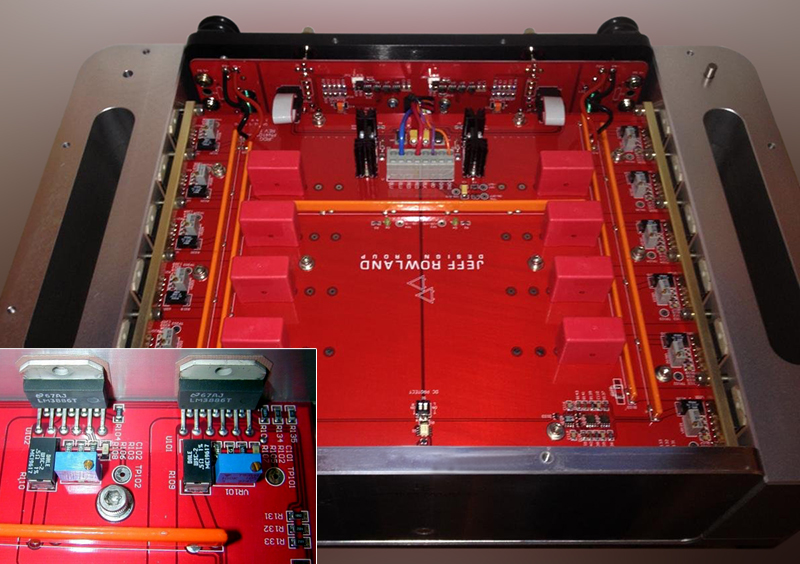
Also in 1999 came Jeff Rowland's 150/275wpc into 8/4Ω Model 10 [right] which ran six LM3886 per side in a complex parallel/bridged network heatsinked with a massive chassis, with a custom 'Power Buss' DC transfer and input transformers to achieve high-current output. His models 12, 112, Concentra I and II configured similarly.
My takeaway is simplistic. Unlike the raw grunt of Kimura-San's solitary chip per speaker, LM3886 sonics were plenty good for Jeff Rowland. High praise indeed. Arcam's FMJ A19 and Micromega's MyAmp too ran this TI IC. Yet RX's 30wpc (60W/4Ω) can only do so much. This is arguably the contrarious-most part of its small print. To not turn into an undesirable side effect needs the right loads; and SPL within its purview.
Of course the SET brigade of 300B to 845 fanciers knows all about it. They often squeak by with fractional power when their speakers come on song very quickly. It's their solid-state kin labouring sweat-free under the 'power is cheap' maxim of potent class D who either don't; or simply call it unacceptable. Now the 25iRX is a special-ed subject shunned by the manosphere. When all real men with heavy-coned 15" woofers bolted paragraphs ago, all the unreal wo/men can consider the matter at hand.
Being unreal reminds me of the 1999 movie Just the Ticket. Andy Garcia plays a street-smart ticket scalper. He tries to strike out big one final time when the Pope comes to Yankee Stadium for premium-priced hustle ops. Tired of his empty promises, girlfriend Andie MacDowell considers an exit. To impress her, Andy tries to go legit with a social security card. But he can't produce neither birth cert nor driver's license. To the dragon lady prepping the line of waiting applicants, he "doesn't exist". Whilst she looks him straight in the eye, his lack of official papers might as well make him a ghost. With five years having passed since the 25iRX last made the rounds, has it become a ghost? I feel quite confident that in 2026 there's still an audience somewhere for it who doesn't consider its lower double-digit paper power summary disqualification for a transistor specimen; who digs its Zen-like minimalism; and who lives in the present moment to not reference old Sino pricing unsustainable in Taiwan's present economy. Matthew tells me that a small inventory of 25iRX remains. If you've always wanted a premium turnkey gainclone, time seems of the essence now. I didn't get the sense that once his stash cleans out, there'll be more…
Clones Audio website