The Soul VI's smoothness mustn't be mistaken for dullness. Au contraire. These are fast and very dynamic. They can go from quiet to ear-splitting level in a heartbeat and hit hard when called for. Percussive sounds from piano to drum kits project with visceral impact. They seem to despise stasis to instead long for action of small or large amplitude which triggers the listener's emotional even physical reaction. The Riviera Labs AIC-10 with its earthy, energetic yet refined personality easily drove the Soul VI. I never approached 12'00" on the dial even in the most enthusiastic sessions, mostly staying between 9-11. The command over the chunky drivers seemed perfect on all occasions although I had no more powerful amplifiers to compare apart from the modest Marantz AV receiver that seemed leaner and weaker. Bass was a fair balance between articulation, speed, extension and volume, oomph and decay. It had life, rhythm and impact. I measured around 40Hz at -3dB reflected in my listening satisfaction. Electric bass, lower piano and upright all rendered well in colour and timing. Meanwhile low bass drones electronic or acoustic, the resonant tails of tympani, organ and a piano's left-most register were all subdued or missing. This is where my sub came to help. While its speed leaves things to be desired and seamless balance with the 100dB Zu is a challenge, it made the presentation more complete and persuasive. In fact, with all three loudspeakers I had on hand, I felt that the sub added a necessary layer of realism to atmospheric effects and my connection with the music. Being addicted to world-class headphones where full 20Hz-20kHz bandwidth is almost taken for granted, I miss an important part of emotional engagement if the first octave goes on holiday. I in fact plan to experiment with two subwoofers regardless of which speakers I end up with.
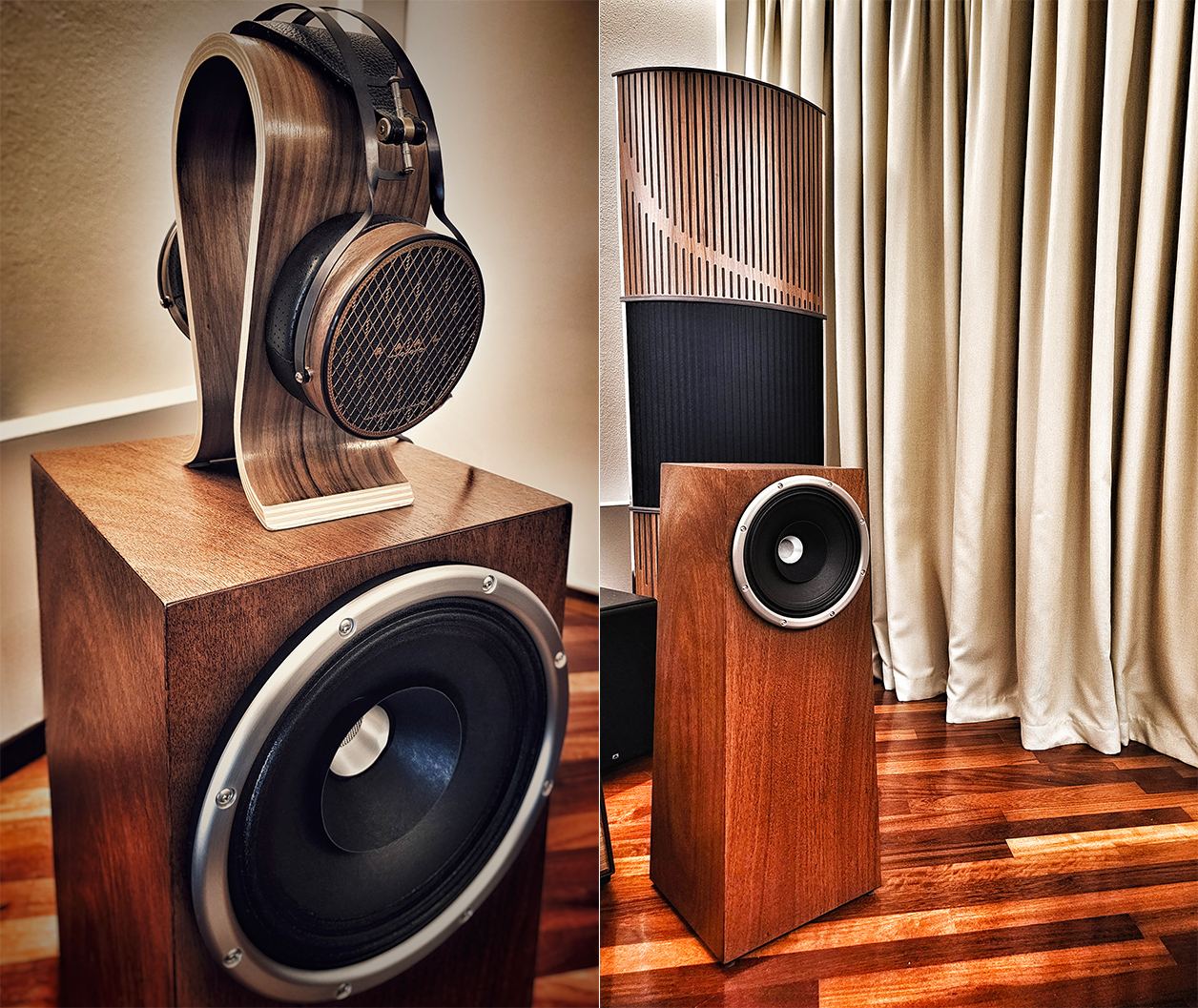
Soundstage and imaging are often claimed strong suits of point sources and the Soul VI didn't disappoint. The sound seamlessly fills the speaker-to-speaker width with decent depth. Images are of proportionate size if a bit inflated, with smooth contours and good separation. The positioning of the Soul VI affects the balance between width and focus. I chose a trade-off which prioritizes the size and airiness of the soundscape over ultimate pinpoint localization. It is worth noting that the stability of imaging was very sensitive to even small movements of my head. Given the compact size of the Soul VI and relatively small distance at which I listen, I was concerned about soundstage height. In reality, the small upwards tilt I dialled in combined with my relatively low couch developed sufficient height whilst not being wholly realistic. The type of presentation I obtained favours a certain bloom, expansion and texture over transparency and clarity. Sounds have a halo to them that works very well for live performances while intricated pieces by small ensembles recorded in a studio somewhat smear the layering and articulation of attacks. Because the Soul VI allowed me to reacquaint with proper speakers after a hiatus of more than three decades, I fell victim to repeat attacks of nostalgia to dig up albums and entire music genres I'd not listened to since forever. I reached for pop, heavy metal, progressive rock, indie, Italian singer/songwriters mostly from the 70s to early 90s and that was a revelation. It exposed one of the best attributes of the Soul VI. These tracks sounded engaging, inviting and ultimately fun to listen to. I was shocked by how so much of this music sounded far better than remembered. I reminded myself that part of why I no longer listen to it was that my 'audiophile' headphones made it sound so bad. It was like a reconciliation with a part of myself. I recently read the landmark Daniel Goleman book Emotional Intelligence where via numerous experiments and statistical data he shows that people with emotional and social skills are most likely happier and more successful in life than people with a high IQ as our conventional measure of intelligence designed to highlight mainly logical skills. This made me think about the audiophile dilemma which reflects our psychological and emotional life: do we always want to be told the unvarnished truth? Or do we need comforting help to accept the evils of this world and our own weaknesses? I do not have the answer but for sure the Soul VI are like people who always find the good in others thus build social bonds and increase happiness wherever they operate.











For comparisons, my first are versus two reference headphones, the Spirit Torino Valkyria and Raal 1995 Immanis. I have grown increasingly impressed by how our brain can rebuild a fairly realistic listening experience from sounds produced in a tiny ear cavity. After some brain training, high-end headphones will deliver a listening experience that combines detail retrieval, timbre realism across the full bandwidth and intimacy as the most obvious traits associated with HeadFi with skills usually attributed to loudspeakers like ambient reconstruction, separation, visceral dynamics and immersive staging. With the help of DSP or binaural recordings, headphones can generate a truly out-of-head experience. However, two major things headphones cannot do is provide a realistic frontal image; or full-body physicality wherein all our skin is exposed to sound waves. For somebody like me whose playback aim is the illusion of a live acoustic concert, these are serious limitations. Once I had the Soul VI properly set up, I had several glimpses of that magical suspension of disbelief which ignited my early hifi passion. Those phantom images floating in three-dimensional space, the swift changes in air pressure hitting my chest with a drum strike, the subterranean growl of almost subsonic notes rolling across the room to be heard or felt during an organ performance with subwoofer on – these added that layer of realism and participation I was striving for. The personality of the Soul VI is closer to Valkyria than Immanis in tonal colour and dynamic impact. Both are slightly dark with a full-bodied sound and hard punch. They also share a certain rawness which works very well with percussion, strings, electrical guitar and prioritizes density of energy over openness and clarity. Immanis has a specular set of talents as they are extremely open, transparent and liquid, eagle eyes for detail with a more neutral frequency response but lack some of the tonal weight and saturation of the Soul VI or Valkyria.

Compared to my LS3/5a, the Soul VI sound significantly bigger. The BBC shoebox has the edge on clarity and midrange neutrality. Also, their ability to disappear into a room and present solid well-delineated images is astonishing. However, the tonal weight and saturation of the Soul VI makes the LS3/5a sound dry by direct comparison. And the immediacy of the Zu is apparent with trumpet and percussion where jump factor is indeed more realistic. I must remark that the AIC-10 is far from best for the 81dB/15Ω English stand mount. Another area where the Soul VI moves ahead is low-volume listening. Now microdetails are more exposed and greater bandwidth makes for a more satisfying experience similar to an embedded loudness effect. The other speaker I had at home was the Diesis Aura Special Edition. As a three-way open baffle complemented by horn-loaded compression tweeter, the Aura is a totally different animal than the Zu. Being over five times costlier, they also address a different market segment. The Aura have room-filling power that makes listening extremely immersive and impresses with a 3D soundstage populated by strongly solidified images. The tonal palette is cooler, the bass tighter, the treble more prominent. The Aura are less forgiving than the Soul VI and require more SPL to perform their best. For critical listening especially with genres that strongly rely on spatial reconstruction, the increase of technical abilities is proportional to the price uptick while for a more laid-back approach, the Soul VI hold their own.
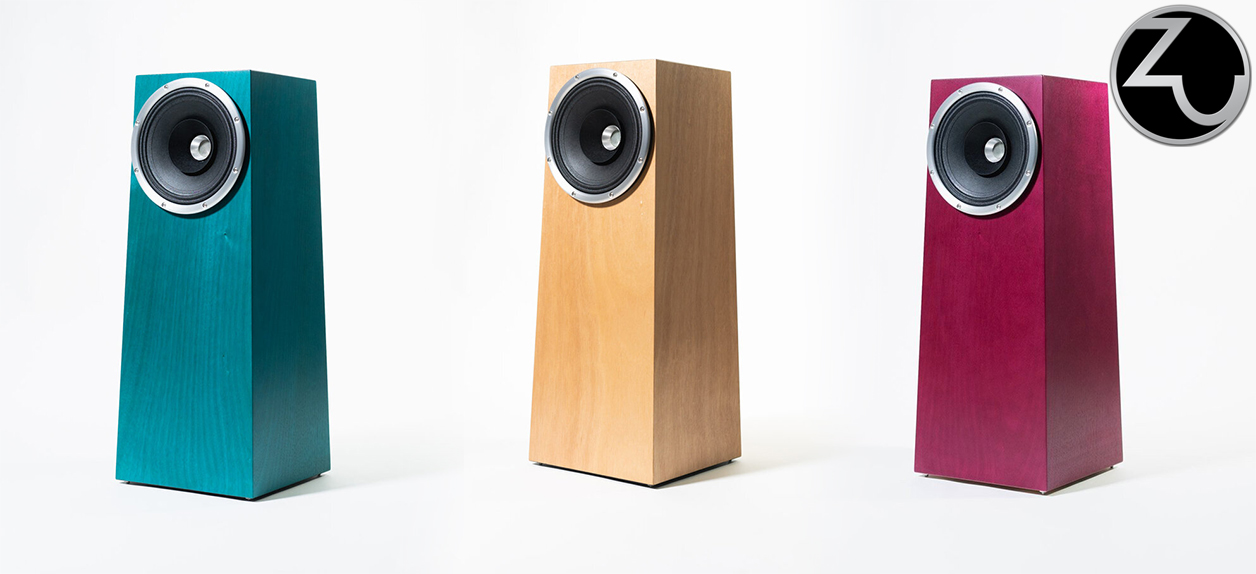
The wrap. I will always be grateful to Sean Casey for giving me the chance of a long-term loan of his Soul VI during this special stage of my audiophile journey where I am coming back to a proper speaker system after three decades of abstinence. Even the methodical positioning guidelines included in the user's manual were like gold to avoid getting lost in tedious trial 'n' error tinkering. As I stated going in, I don't yet remotely have the experience to elevate this article to the level of a formal review. What I can say is that these unimposing floorstanders are capable of injecting life and joy into the music, combine a competent set of technical features like timbral correctness, soundscape reconstruction, layering, micro/macro dynamics contrast plus ease of listening which invites longer and longer sessions regardless of genre or SPL. I could not have hoped for a better new beginning of how I experience music at home. As my merely first step, I'm sure many more exciting discoveries await. Stay tuned!